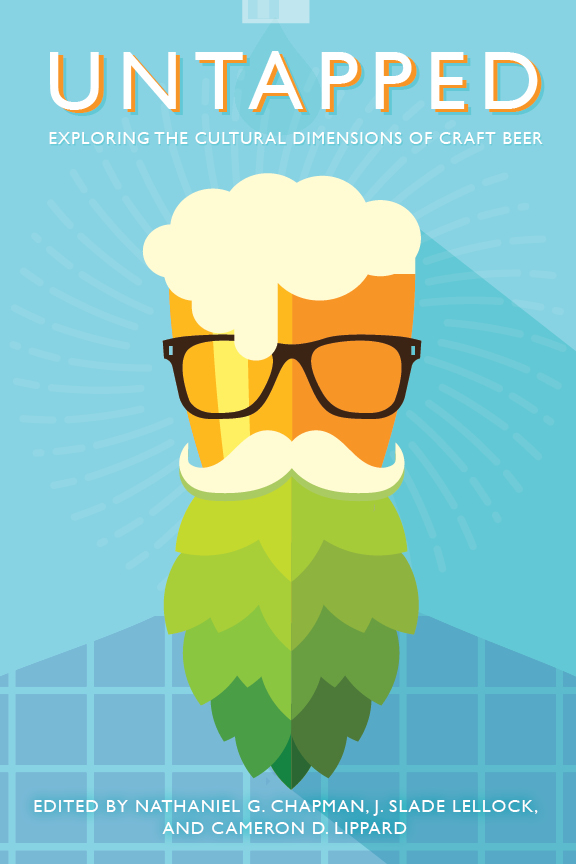
Untapped: Exploring the Cultural Dimensions of Craft Beer

Untapped

Edited by Nathaniel G. Chapman, J. Slade Lellock, and Cameron D. Lippard 

May 2017
292pp
PB 978-1-943665-68-6
$29.99
HC 978-1-943665-67-9
$79.99
ePub 978-1-943665-69-3
$29.99
PDF 978-1-943665-70-9
$29.99

Summary

Untapped collects twelve previously unpublished essays that analyze the rise of craft beer from social and cultural perspectives.

In the United States, the United Kingdom, and Western Europe there has been exponential growth in the number of small independent breweries over the past thirty years – a reversal of the corporate consolidation and narrowing of consumer choice that characterized much of the twentieth century. While there are legal and policy components involved in this shift, the contributors to Untapped ask broader questions. How does the growth of craft beer connect to trends like the farm-to-table movement, gentrification, the rise of the “creative class,” and changing attitudes toward both cities and farms? How do craft beers conjure history, place, and authenticity? At perhaps the most fundamental level, how does the rise of craft beer call into being new communities that may challenge or reinscribe hierarchies based on gender, class, and race?

Contents

Foreword 
Ian Malcolm Taplin

Exploring the Cultural Dimensions of the Craft Beer Revolution: Introduction and Overview
Nathaniel G. Chapman, J. Slade Lellock, and Cameron D. Lippard

Part I: Global Political Economy

1. Storytelling and Market Formation: An Exploration of Craft Brewers in the UK
Jennifer Smith Maguire, Jessica Bain, Andrea Davies, and Maria Touri

2. A Pint of Success: How Beer Is Revitalizing Cities and Local Economies in the United Kingdom
Ignazio Cabras

3. The Rationalization of Craft Beer from Medieval Monks to Modern Microbrewers: A Weberian Analysis
Michael A. Elliott

4. Entrepreneurial Leisure and the Microbrew Revolution: The Neoliberal Origins of the Craft Beer Movement
J. Nikol Beckham

Part II: Space and Place

5. Crafting Place: Craft Beer and Authenticity in Jacksonville, Florida
Krista E. Paulsen and Hayley E. Tuller

6. Ethical Brews: New England, Networked Ecologies, and a New Craft Beer Movement
Ellis Jones and Daina Cheyenne Harvey

7. Atmosphere and Activism at the Great British Beer Festival
Thomas Thurnell-Read

8. Neighborhood Change, One Pint at a Time: The Impact of Local Characteristics on Craft Breweries
Jesus Barajas, Geoff Boeing, and Julie Wartell

9. The Spatial Dynamics of Organizational Identity among Craft Brewers
Tünde Cserpes and Paul-Brian McInerney

Part III: Intersecting Identities

10. The Cultural Tensions Between Taste Refinement and Middle-Class Masculinity
Andre F. Maciel

11. You Are What You Drink: Gender Stereotypes and Craft Beer Preferences within the Craft Beer Scene of New York City
Helana Darwin

12. Brewing Boundaries of White/Middle-Class/Maleness: Reflections from Within the Craft Beer Industry
Erik T. Withers

Glossary
List of Contributors
Index

Author

Nathaniel G. Chapman is an assistant professor of sociology in the department of behavioral sciences at Arkansas Tech University. His research focuses on craft beer and the production of culture in the United States. He has also researched racial dynamics at Electronic Dance Music (EDM) festivals, and EDM more broadly. Currently, he is conducting research on gender and consumption in the craft beer industry, and the construction of authenticity in craft brewing.

J. Slade Lellock is a PhD student in the department of sociology at Virginia Tech. His research interests include culture, digital sociology, consumption, taste, and qualitative methodologies. His work generally focuses on the symbolic and expressive realms of culture such as music, art, film, and dress as well as social and symbolic boundaries. Given his interest in the cultural dimensions of digital social life, he has conducted ethnographic fieldwork in multiple online communities.

Cameron D. Lippard is an associate professor of sociology at Appalachian State University in Boone, North Carolina. His teaching and research interests are in social inequality, focusing on the social problems and racialization Latino immigrants face while living in the American South. Recent publications include two books: Building Inequality: Race, Ethnicity, and Immigration in the Atlanta Construction Industry and Being Brown in Dixie: Race, Ethnicity, and Latino Immigration in the New South. He also has researched the connections between immigrant labor and growing industries in the American South including the construction, meatpacking, and Christmas tree industries.

Reviews

"Untapped speaks to important aspects of beer and food culture. It is well researched and documented and adds to our understanding of a largely understudied field."
Carolyn Keller, Keene State College

"A valuable and teachable book that will appeal to anyone interested in social science perspectives on craft brewing."
Andrew Shears, Mansfield University

EmailFacebookInstagramPinterestTwitter

Victorian Poetry: Volume 54, Issues 1-4


Image

Victorian Poetry: Volume 54, Issues 1–4
Editor: John B. Lamb, West Virginia University
E-ISSN: 1530-7190
Print ISSN: 0042-5206

Click on listed price to corresponding product to order:
Institution (US): $110.00
Individual (US): $50.00
Institution (Outside US, including Canada): $130.00
Individual (Outside US, including Canada): $75.00


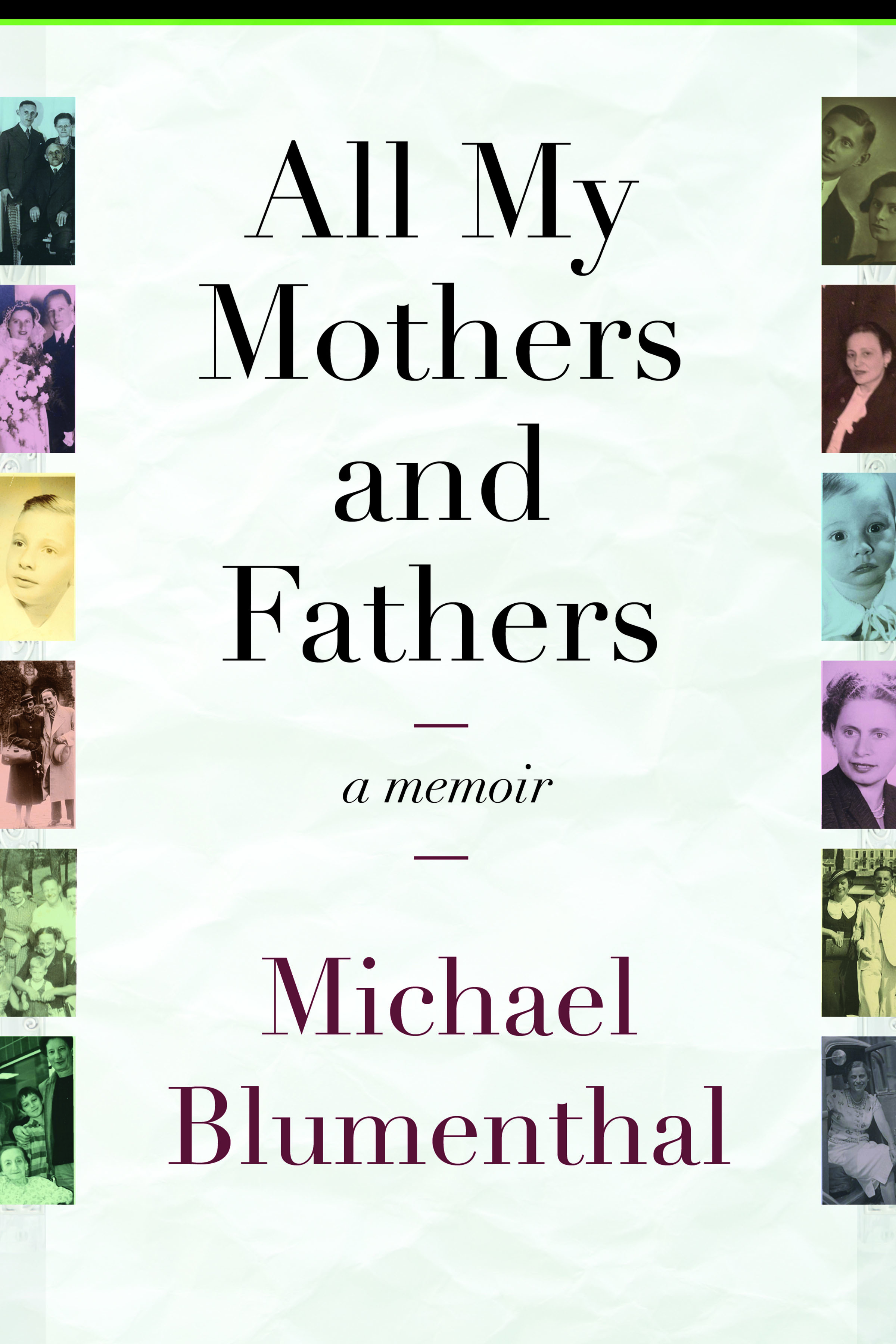
All My Mothers and Fathers

The Rope Swing

Michael Blumenthal 

September 2016         
272pp
PB 978-1-943665-26-6
$16.99
epub 978-1-943665-27-3
$16.99
PDF 978-1-943665-28-0
$16.99


Summary

Shortly after his mother dies of breast cancer when he is ten years old, Michael Blumenthal discovers that she was not his biological mother, and that his aunt and uncle, immigrant chicken farmers living in Vineland, New Jersey, are really his parents.

As fate would have it, his adoptive father, a German-Jewish refugee raised by a loveless and embittered stepmother after his own mother died in childbirth, has inflicted on his stepson a fate uncannily—and terrifyingly—similar to his own: Having first adopted Michael, in part, to help his dying wife, he then imposes on him the same sort of penurious and loveless stepmother whom he himself had had to survive. With these revelations, the "mysteries" that seem to have permeated Michael's childhood are laid bare, triggering a quest for belonging that will infiltrate the author's entire adult life.

Contents

Coming Soon 

Author

Michael Blumenthal is a visiting professor of law and codirector of the Immigration Clinic at West Virginia University College of Law. A former director of creative writing at Harvard University, he is the author of eight books of poetry, as well as The Greatest Jewish-American Lover in Hungarian History, Because They Needed Me: The Incredible Life of Rita Miljo and Her Struggle to Save the Baboons of South Africa, Weinstock Among The Dying, and When History Enters the House.

Reviews

"Michael Blumenthal's astonishing book has a Dickensian power quite unlike anything we're used to in modern American memoir. . . . Here is a book that turns the familiar immigrant story on its ear, and makes of that American tale a profound meditation on family and history."
Patricia Hampl, author of A Romantic Education and The Florist’s Daughter

"The touching story of [Blumenthal's] search for his true identity."
Library Journal

EmailFacebookInstagramPinterestTwitter

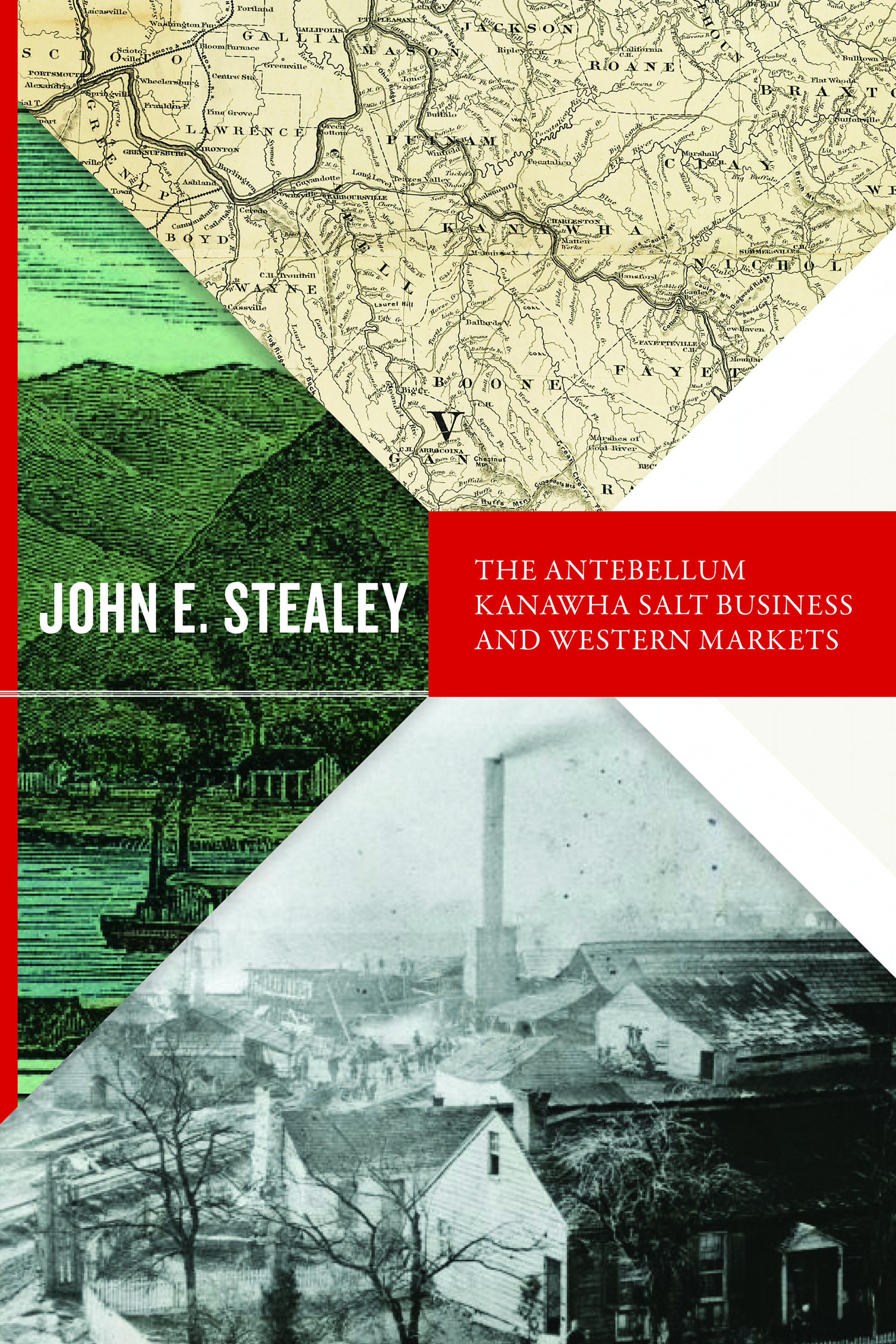
The Antebellum Kanawha Salt Business and Western Markets

The Rope Swing

John E. Stealey 

September 2016
280pp
PB 978-1-943665-29-7
$24.99
PDF 978-1-943665-31-0
$24.99


Summary

In the early nineteenth century, a ten-mile stretch along the Kanawha River in western Virginia became the largest salt-producing area in the antebellum United States. Production of this basic commodity stimulated settlement, the livestock industry, and the rise of agricultural processing, especially pork packing, in the American West. Salt extraction was then and is now a fundamental industry.

In his illuminating study, now available with a new preface by the author, John Stealey examines the legal basis of this industry, its labor practices, and its marketing and distribution patterns. Through technological innovation, salt producers harnessed coal and steam as well as men and animals, constructed a novel evaporative system, and invented drilling tools later employed in oil and natural gas exploration. Thus in many ways the salt industry was the precursor of the American extractive and chemical industries. Stealey's informative study is an important contribution to American economic, business, labor, and legal history.

Contents

Coming Soon 

Author

John Stealey is Distinguished Professor Emeritus of History, Shepherd University and the author of Kanawhan Prelude to Nineteenth-Century United States Monopoly: The Virginia Combinations, Porte Crayon’s Mexico: David Hunter Strother’s Diaries in the Early Porfirian Era, 1879-1885, and West Virginia’s Civil War-Era Constitution: Loyal Revolution, Confederate Counter-Revolution, and the Convention of 1872.

Reviews

"A piece of meticulous scholarship and an outstanding reconstruction, mostly from primary sources, of one of the first major manufacturing industries to develop in what is now southern West Virginia. . . .This is a well-told story of entrepreneurship, revealing how innovators in a frontier industry both anticipated and adapted to change by introducing new technologies and forms of business organization."
West Virginia History

EmailFacebookInstagramPinterestTwitter

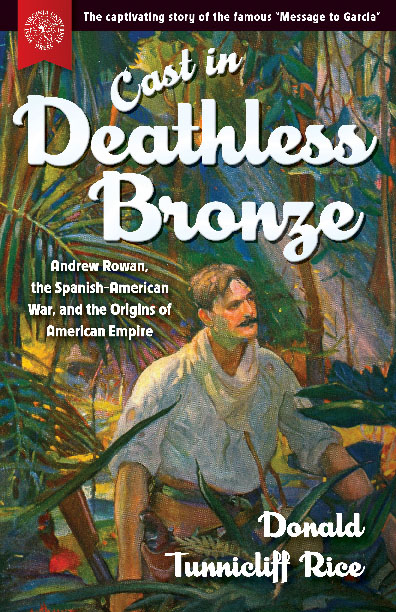
Cast in Deathless Bronze: Andrew Rowan, the Spanish-American War, and the Origins of American Empire

Donald Tunnicliff Rice 

December 2016          
384pp
PB 978-1-943665-43-3
$27.99
Cl 978-1-943665-42-6
$99.99
epub 978-1-943665-44-0
$27.99
PDF 978-1-943665-45-7
$27.99

Summary

In 1898, when war with Spain seemed inevitable, Andrew Summers Rowan, an American army lieutenant from West Virginia, was sent on a secret mission to Cuba. He was to meet with General Calixto García, a leader of the Cuban rebels, in order to gather information for a U.S. invasion. Months later, after the war was fought and won, a flamboyant entrepreneur named Elbert Hubbard wrote an account of Rowan’s mission titled “A Message to Garcia.” It sold millions of copies, and Rowan became the equivalent of a modern-day rock star. His fame resulted in hundreds of magazine and newspaper articles, radio shows, and two movies. Even today he is held up as an exemplar of bravery and loyalty. The problem is that nothing Hubbard wrote about Rowan was true.

Donald Tunnicliff Rice reveals the facts behind the story of “A Message to Garcia” while using Rowan’s biography as a window into the history of the Spanish-American War, the Philippine War, and the Moro Rebellion. The result is a compellingly written narrative containing many details never before published in any form, and also an accessible perspective on American diplomatic and military history in the late nineteenth and early twentieth centuries.

Contents

Preface                                    

Introduction                

1. “It is meritorious to be a boy at West Point”                    

2. Becoming an Intelligence Officer                

3. “A Most Perilous Undertaking”                 

4. America Takes a Step towards Empire                  

5. The Creation of an American Myth                       

6. Exactly Where Are the Philippines?                       

7. A Glorious Undertaking                 

8. Captain Rowan in Command                     

9. An Idyllic Spot to Spend the War              

10. Major Rowan in Love and War              

11. The Complexities of Retirement   

12. The Myth Lives On        

Epilogue                      

Endnotes                     

Selected Bibliography 

Index                           

Author

Donald Tunnicliff Rice is the author of The Agitator and How to Publish Your Own Magazine, and the winner of an Ohio Arts Council Individual Achievement Award. He has been employed as a history textbook writer, technical editor, and advertising copywriter. His writings have appeared in periodicals ranging from the New York Times to the Journal of Caribbean Literature.

Reviews

“Rice interweaves personal and national history to outline major shifts in expansionist activity under McKinley and Roosevelt. . . . Readers who thrill to the particulars of life in military camps will find much to enjoy here.”
Publishers Weekly

"Both authoritative and entertaining."
Caribbean Studies

“The story of Andrew Summers Rowan is very much worth telling, and it's difficult to imagine it being told better than in this book.”
Peter Hulme, author of Cuba’s Wild East: A Literary Geography of Oriente

“What makes this book so fascinating is the way in which the author weaves Andrew Rowan’s personal story into the greater history of American imperial expansion under McKinley and Roosevelt. Both general readers and scholars interested in West Virginia history and, especially, in the complex history of the U.S.’s war against Spain and subsequent ascension over the Philippines will find a great deal to admire.”
Brady Harrison, author of Agent of Empire: William Walker and the Imperial Self in American Literature

“Cast in Deathless Bronze is well worth reading. Rowan's story not only intersects with West Virginia history, but it reconstructs early military efforts at intelligence-gathering, reveals the many aspects—the tedious and lonely, the fulfilling and frustrating—of military life on the late nineteenth-century western frontier and in Cuba and the Philippines, and illustrates effectively the way history is often twisted into a myth that overwhelms both the actions of its original participants and truth itself.”
West Virginia History

EmailFacebookInstagramPinterestTwitter

The Contradictions of Neoliberal Agri-Food: Corporations, Resistance, and Disasters in Japan

The Rope Swing

Kae Sekine and Alessandro Bonanno

August 2016
248pp
PB 978-1-943665-19-8
$32.99
epub 978-1-943665-20-4
$32.99
PDF 978-1-943665-21-1
$32.99

Summary

Employing original fieldwork, historical analysis, and sociological theory, Sekine and Bonanno probe how Japan’s food and agriculture sectors have been shaped by the global push toward privatization and corporate power, known in the social science literature as neoliberalism. They also examine related changes that have occurred after the triple disaster of March 2011 (the earthquake, tsunami, and meltdown of the Fukushima Daiichi nuclear reactor), noting that reconstruction policy has favored deregulation and the reduction of social welfare.

Sekine and Bonanno stress the incompatibility of the requirements of neoliberalism with the structural and cultural conditions of Japanese agri-food. Local farmers’ and fishermen’s emphasis on community collective management of natural resources, they argue, clashes with neoliberalism’s focus on individualism and competitiveness. The authors conclude by pointing out the resulting fundamental contradiction: The lack of recognition of this incompatibility allows the continuous implementation of market solutions to problems that originate in these very market mechanisms.

Table of Contents

Acknowledgments

Introduction

1. Agri-food in Japan: A Literature Review

2. Agriculture and Fisheries in Japan from the Post-World War II High Fordism to the Neoliberal Era (1945–2010)

3. Neoliberal Agri-food Policies in the Aftermath of the 2011 Earthquake, Tsunami, and Nuclear Meltdown

4. The Evolution of Corporate Agri-food Industrial Policies in Japan: The Cases of Dole Japan, Kagome, IBM, and Sendai Suisan

5. Dole Japan’s Agricultural Production

6. Corporate Agri-food Industrial Strategies in the Aftermath of the Disasters

7. Fisheries and SZR

8. Agri-food Corporations, the State, Resistance, and Disaster Reconstruction under Neoliberalism

9. Neoliberalism in Japanese Agri-food: A Systemic Crisis

Notes

Bibliography

Author

Kae Sekine is associate professor of economics at Aichi Gakuin University, Nagoya, Japan.

Alessandro Bonanno is Texas State University System Regents’ Professor and Distinguished Professor of Sociology at Sam Houston State University.

Reviews

"At a time when there is much over-generalization about neoliberalism and its global impacts, this provocative and revealing book provides a detailed case study of Japan, presenting a clear picture of how neoliberal settings—in supporting a corporate agri-food agenda—have worked against small farmers and fisher-folk. It is a fascinating, illuminating, and, ultimately, sobering analysis."
Geoffrey Lawrence, University of Queensland

"A novel and incisive analysis of the corporatization of Japanese agriculture and its acceleration after the triple disaster of March 2011. Groundbreaking."
Shuzo Teruoka, author of Agriculture in the Modernization of Japan, 1850–2000

EmailFacebookInstagramPinterestTwitter

Oil and Nation: A History of Bolivia’s Petroleum Sector

The Rope Swing

Stephen C. Cote 

December 2016
224pp
PB 978-1-943665-47-1
$26.99
epub 978-1-943665-48-8
$26.99
PDF 978-1-943665-49-5
$26.99


Summary

Oil and Nation places petroleum at the center of Bolivia’s contentious twentieth-century history. Bolivia’s oil, Cote argues, instigated the largest war in Latin America in the 1900s, provoked the first nationalization of a major foreign company by a Latin American state, and shaped both the course and the consequences of Bolivia’s transformative National Revolution of 1952. Oil and natural gas continue to steer the country under the government of Evo Morales, who renationalized hydrocarbons in 2006 and has used revenues from the sector to reduce poverty and increase infrastructure development in South America’s poorest country.

The book advances chronologically from Bolivia’s earliest petroleum pioneers in the nineteenth century until the present, inserting oil into historical debates about Bolivian ethnic, racial, and environmental issues, and within development strategies by different administrations. While Bolivia is best known for its tin mining, Oil and Nation makes the case that nationalist reformers viewed hydrocarbons and the state oil company as a way to modernize the country away from the tin monoculture and its powerful backers and toward an oil-powered future.

Contents

Introduction

1. Discovery

2. Standard Oil and Eastern Bolivia   

3. Oil and the Chaco War

4. Oil and Nation

5. Oil and the Revolutionary State

6. Fall and Rise of the Oil State

Notes

Bibliography

Index

Author

Stephen Cote obtained his PhD in Latin American history from the University of California, Davis, in 2011. He has taught history at Ohio University and Western Washington University, and he is currently employed by the National Park Service. He lives in the San Francisco Bay Area. 

Reviews

"There is nothing like this book at all in English, so it will be a wonderful addition to the literature. It is well researched and documented, and the style makes for a comfortable read for undergraduates and an interested non-academic public too."
Myrna Santiago, author of The Ecology of Oil: Environment, Labor, and the Mexican Revolution, 19001938

EmailFacebookInstagramPinterestTwitter

After Oil

The Rope Swing

Imre Szeman and the Petrocultures Research Group

April 2016
78pp
PB 978-0-9950420-0-1
$12.99

Summary

After Oil explores the social, cultural, and political changes needed to make possible a full-scale transition from fossil fuels to new forms of energy. Written collectively by participants in the first After Oil School, After Oil explains why the adoption of renewable, ecologically sustainable energy sources is only the first step of energy transition.

Energy plays a critical role in determining the shape, form, and character of our daily existence, which is why a genuine shift in our energy usage demands a wholesale transformation of the petrocultures in which we live. After Oil provides readers with the resources to make this happen.

Contents

Coming Soon 

Author

Imre Szeman is Canada Research Chair in Cultural Studies and Professor of English, Film Studies, and Sociology at the University of Alberta. His recent books include Fueling Culture: 101 Words for Energy and Environment and The Energy Humanities Reader. He is the codirector and cofounder of the Petrocultures Research Group.

Reviews

"An indispensable, accessible cluster of essays that ponder how leaving oil behind could—with careful and collective thought, imagination, and action— be an opportunity to create a world more just and equal than the one that oil has made. Pathbreaking both for what it says and how it was written, this little book demonstrates the value of interdisciplinary conversation about the social, ecological, aesthetic, libidinal, economic, and political aspects of the oil-soaked present and about the impasses that stand in the way of life after oil. Essential reading for everyone."
Jennifer Wenzel, Columbia University

EmailFacebookInstagramPinterestTwitter