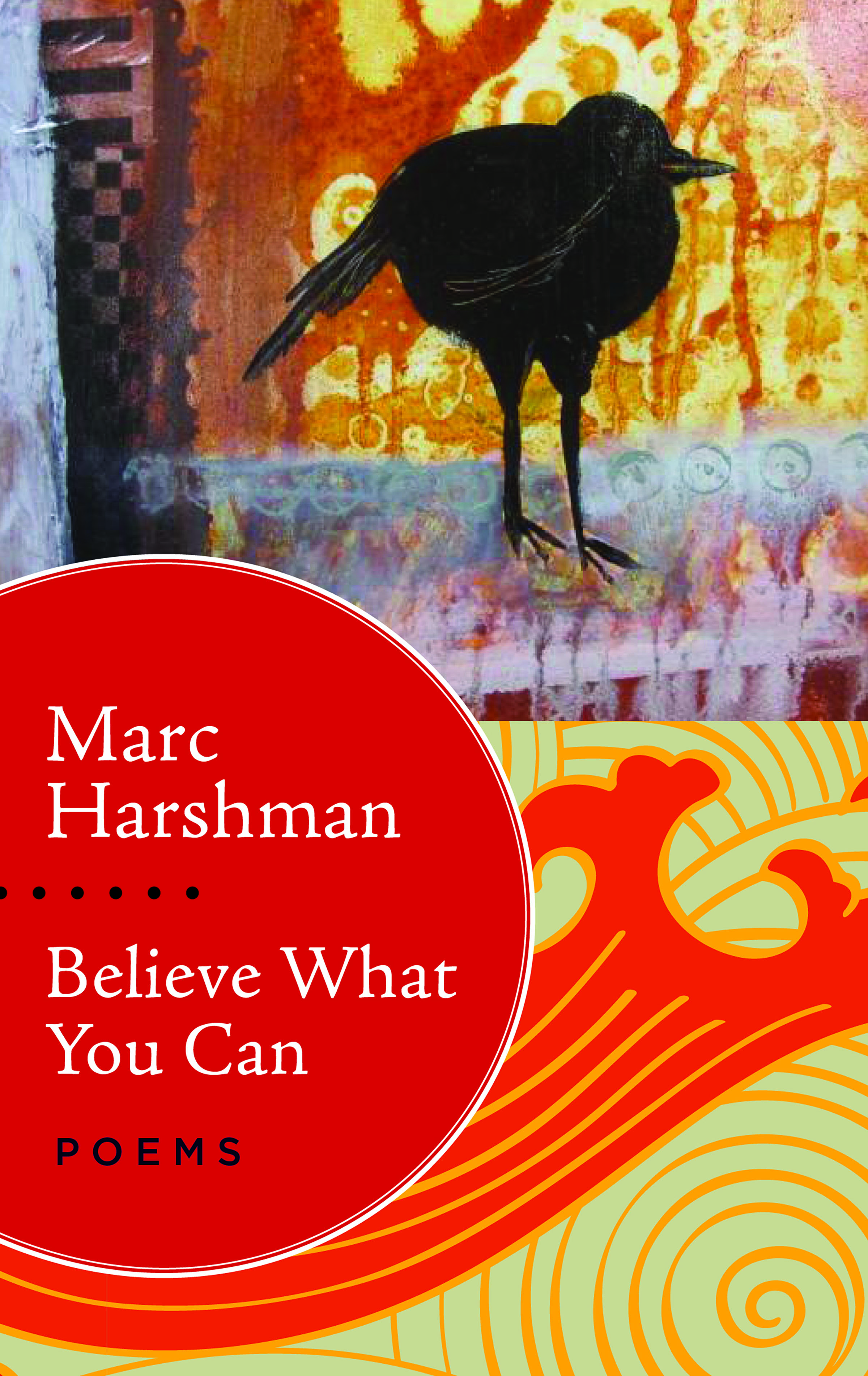
Believe What You Can: Poems

The Rope Swing

Marc Harshman

September 2016
104pp
PB 978-1-943665-22-8
$16.99
epub 978-1-943665-23-5
$16.99
PDF 978-1-943665-24-2
$16.99

Summary

Mountain Heritage Literary Festival Appalachian Book of the Year, poetry
Weatherford Award winner, poetry

This collection of poetry by West Virginia Poet Laureate Marc Harshman explores the difficulty of living with an awareness of the eventual death of all living things. Each of its four sections suggests a coping mechanism for this inevitable predicament, from storytelling, to accepting darkness and death as a creative force, to enjoying disruption and chaos, and finally to embracing the mystery of life as the most triumphant story of all.

These difficulties come “not quite haphazardly” and not without a “last light”—something “beyond” and as “sweet as apples.” With these moments of grace, Harshman taps into the satisfying richness that comes from unexpected revelations, helping us rise above the fragile recesses of life and death, all while portraying the lost rural worlds of the Midwest and Appalachia in ways untouched by sentiment or nostalgia.

Contents

Coming Soon 

Author

Marc Harshman is the poet laureate of West Virginia. He is the author of Green-Silver and Silent and Rose of Sharon. His thirteen highly acclaimed children’s books include The Storm, a Smithsonian Notable Book. He is the host of The Poetry Break, a monthly show for West Virginia Public Broadcasting.

Reviews

“To enter this work is to remain open to the haphazard, the lopsided, the fragile, and the bracing details that tell our times as we both know and fear them. Believe What You Can is an astonishing and generous book that gives a credible 'map of true witness.'”
Maggie Anderson, author of Windfall: New and Selected Poems and Dear All

Believe What You Can overflows with rich lines and vivid images as the poet laureate of West Virginia speaks to classic concerns of loving the land, struggling to thrive, and holding on to what can be believed.”
Ron Houchin, author of The Man Who Saws Us In Half: Poems

“Harshman manages to get to the heart of the matter in this collection—less like an arrow though and more like a mountain stream—winding its way through the Appalachian Mountains to the source of the music.”
NewPages.com

“Harshman’s poetic sophistication is clear and shows the insight and wisdom of an experienced poet who treats the forces of death, disruption, and dissonance with the seriousness and humor they deserve.”
Eddy Pendarvis, author of Like the Mountains of China and Ghost Dance Poems

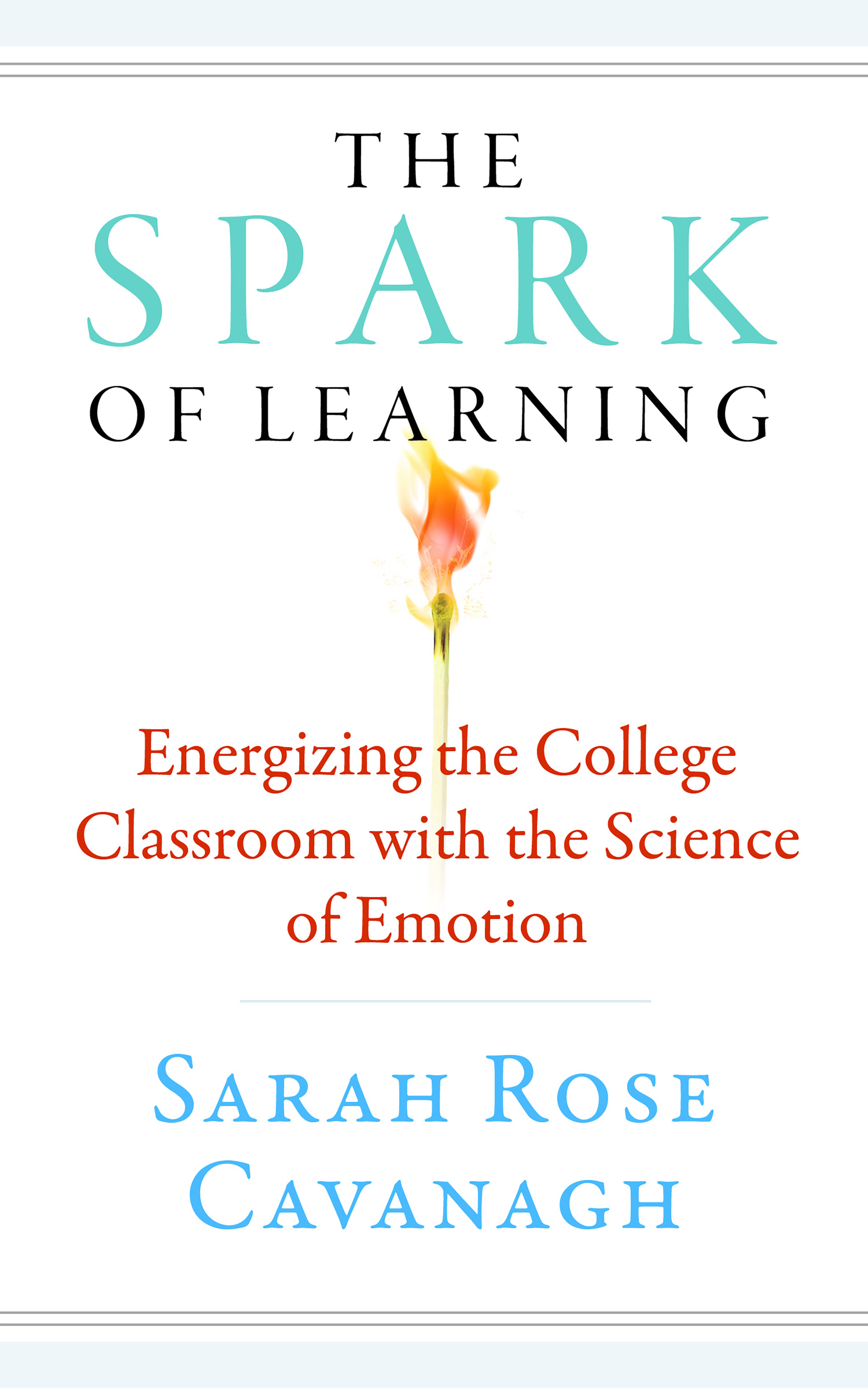
The Spark of Learning: Energizing the College Classroom with the Science of Emotion

The Rope Swing

Sarah Rose Cavanagh 

October 2016 
256pp
PB 978-1-943665-33-4
$22.99
CL 978-1-943665-32-7
$79.99
epub 978-1-943665-34-1
$22.99
PDF 978-1-943665-35-8
$22.99

Teaching and Learning
in Higher Education Series

Summary

Historically we have constructed our classrooms with the assumption that learning is a dry, staid affair best conducted in quiet tones and ruled by an unemotional consideration of the facts. The field of education, however, is beginning to awaken to the potential power of emotions to fuel learning, informed by contributions from psychology and neuroscience. In friendly, readable prose, Sarah Rose Cavanagh argues that if you as an educator want to capture your students' attention, harness their working memory, bolster their long-term retention, and enhance their motivation, you should consider the emotional impact of your teaching style and course design. To make this argument, she brings to bear a wide range of evidence from the study of education, psychology, and neuroscience, and she provides practical examples of successful classroom activities from a variety of disciplines in secondary and higher education.


Receive a 30% discount on orders of 10 or more copies of this title with code HIGHEREDBULK30 at checkout.

Contents

Acknowledgments

Preface

Introduction: Once More, With Feeling

Part I. Foundations of Affective Science

1. The Science (and Neuroscience) of Your Emotions

2. The Well-Spring: Emotions Enhance Learning

Part II. Affective Science in Action

3. Be the Spark: Crafting Your First (and Lasting) Impression

4. Burning to Master: Mobilizing Student Efforts

5. Fueling the Fire: Prolonging Student Persistence

6. Best-Laid Plans: When Emotions Challenge or Backfire

Conclusion

Notes

References

Index

Author

Sarah Rose Cavanagh is an associate professor of psychology at Assumption College, where she also serves as associate director of grants and research in the Center for Teaching Excellence. She contemplates the connections between emotions and quality of life in her writing, teaching, and research, blogs on affective neuroscience for Psychology Today, and has appeared on The Martha Stewart Show.

Reviews

"A phenomenal contribution to the scholarship on teaching and learning. Cavanagh immediately engages her audience through narrative and humor and manages to cover almost every major insight from the literature. This book can be profitably read by anyone who cares about teaching."
Elizabeth Barre, Rice University

"Cavanagh urges us to take seriously the role of emotions in student learning, offering research-driven advice on how to grab students' attention, motivate them, keep them engaged, and maximize chances of learning. This book will be of significant interest to faculty concerned about effective pedagogy."
Jay R. Howard, Butler University

We've got a winner!

Thanks to all who voted for the cover design of West Virginia Poet Laureate Marc Harshman's forthcoming collection of poetry Believe What You Can. 

This winning design will be the cover of this book, which will be published this October.

Believe What You Can explores the difficulty of living with an awareness of the eventual death of all living things. Each of its four sections suggests a different coping mechanism for this predicament, from storytelling, to accepting darkness and death as a creative force, enjoying disruption and chaos, and embracing the mystery of life as the most triumphant story of all. Despite this seemingly gloomy theme, the collection is not overly morose and contains an Appalachian sensibility.


West Virginia History: An Open Access Reader

West Virginia University Press and the West Virginia University Libraries have launched West Virginia History: An Open Access Reader, a free, online collection of previously published essays drawn from the journal West Virginia History and other WVU Press publications.

The collection covers the history of the territory that became West Virginia from European settlement to mountaintop removal, and is especially suitable for use in courses on state history. It is available at https://textbooks.lib.wvu.edu/index.html.

“I love everything about this project–serving the needs of students, sharing the history of West Virginia, harnessing the power of technology, and collaborating between West Virginia University and Marshall,” WVU President Gordon Gee said. “This is the kind of responsive and innovative work that we want to become the ‘new normal’ for higher education in meeting the needs of our state.”

Ken Fones-Wolf, professor of history and Stuart and Joyce Robbins Chair at WVU, selected essays for the project along with Kevin Barksdale, associate professor of history at Marshall University.

“We hope that this open access reader will encourage everyone in the state to become more knowledgeable about West Virginia's past so that together we might imagine a brighter future," Fones-Wolf said. "Moreover, this reader can constantly evolve to address new concerns and stimulate new responses."

Barksdale said, "Ken and I believe very strongly about providing open access to the most current and significant scholarship about West Virginia's history to students, faculty, teachers, West Virginia residents, and anyone else interested in the history of the Mountain State,” said Barksdale. “By partnering with WVU Press and Libraries, this open access reader will hopefully inspire current and future state historians to advance our understanding of West Virginia's past and to promote a deeper appreciation of our state's cultural and historical significance to the larger world."

WVU Press Director Derek Krissoff agreed. “WVU Press is committed to helping address the problem of high textbook costs. We’re excited to team up with the WVU Libraries to make important work on West Virginia’s history freely available.”

Marshall University President Jerome A. “Jerry” Gilbert added, "As a history buff, an educator and a new resident of West Virginia, I can immediately see the value and appeal of this new open-access reader. Not only will it make these relevant articles about our state's history available to everyone online at no cost, but it also will promote West Virginia scholars, including the outstanding faculty members we have at Marshall and WVU. I am excited to endorse this collaborative project."

To learn more about this project, visit West Virginia History: An Open Access Reader.


In Place

West Virginia University Press is pleased to announce In Place, a new book series.

In Place emerges from a desire to uncover more books about the complexity and richness of place. This series will publish literary nonfiction in various forms—narrative nonfiction, memoir, essay collections, cultural mediation, and others—focusing on books firmly rooted in place. In Place creates a space to explore lives, history, and landscapes.

The series will seek manuscripts that are both artful and accessible by emerging and established authors, and it will value work that explores the world in all of its detail and subtlety in order to uncover the universal within the particular.

Series editors are especially interested in places that are sometimes overlooked, in particular complex regions loaded with stories that seem somewhat voiceless in the current literary landscape. This series will embody Eudora Welty’s idea that “One place understood helps us understand all places better.”

Series Editors:
Jeremy Jones (M.F.A., University of Iowa) is the author of Bearwallow: A Personal History of a Mountain Homeland, which won the gold IPPY in memoir and was named the 2014 Appalachian Book of the Year in nonfiction. His essays appear in Oxford American, Brevity, and The Iowa Review, among others, and have been named Notable in Best American Essays. He is an assistant professor of English at Western Carolina University.

Elena Passarello (M.F.A., University of Iowa) is the author of Let Me Clear My Throatand the forthcoming Animals Strike Curious Poses, both from Sarabande Books. Her essays have been published in Oxford American, Creative Nonfiction, Slate and the Iowa Review, among other journals, as well as the anthologies After Montaigne and Cat is Art Spelled Wrong. Elena received fellowships from the MacDowell Colony, the Hambidge Center, the Oregon Literary Arts Foundation, and she recently won the 2015 Whiting Award in Nonfiction. She is an assistant professor of English at Oregon State University. 

Advisory Board:

Sarah Einstein (Ph.D., Ohio University) is the author of Mot: A Memoir (Georgia, 2015), Remnants of Passion(Shebooks, 2014), and numerous essays and short stories. Her work has been awarded a Pushcart Prize, a Best of the Net, Notable Essay status in Best American Essays, and the AWP Prize in Creative Nonfiction. She is an assistant professor of creative writing at the University of Tennessee at Chattanooga. She is also the prose editor for Stirring: A Literary Collective and the special projects editor for Brevity Magazine.

Stephanie Elizondo Griest (M.F.A, University of Iowa) is the author of the award-winning memoirs Around the Bloc: My Life in Moscow, Beijing, and Havana and Mexican Enough: My Life Between the Borderlines, as well as the guidebook 100 Places Every Woman Should Go. She is Assistant Professor and Margaret R. Shuping Fellow of Creative Nonfiction at the University of North Carolina-Chapel Hill. She has won a Hodder Fellowship to Princeton, a Viebranz Professorship to St. Lawrence University, the Margolis Award for Social Justice Reporting, and a Lowell Thomas Travel Journalism Gold Prize.

Silas House (M.F.A., Spalding University) is the author of five novels, three plays, and is the co-author of a creative nonfiction book about social protest. He serves as the NEH Chair of Appalachian Literature at Berea College and on the fiction faculty at Spalding University. House is a frequent contributor to several publications including The New York Times, Oxford American, The Southeast Review, and Newsweek. He is the winner of numerous awards, including the E.B. White, Appalachian Book of the Year, Chaffin Prize for Literature, and Audie awards; he is a two-time finalist for the Southern Book Critics Circle Prize, a two-time winner of the Kentucky Novel of the Year and recipient of the Lee Smith Award, the Hobson Medal for Literature, and the Award for Special Achievement from the Fellowship of Southern Writers. For his environmental activism House received the Helen Lewis Community Service Award in 2008 from the Appalachian Studies(link is external) Association.  

Bret Lott (M.F.A., University of Massachusetts-Amherst) is the author of fourteen books, most recently the essay collection, Letters and Life: On Being a Writer, On Being a Christian (Crossway, 2013) and the novel Dead Low Tide (Random House, 2012). He is the nonfiction editor of Crazy Horse and a professor of English at the College of Charleston.

Peggy Shumaker is the author of seven books of poetery, most rectenly Toucan Nest (Red Hen Press, 2014) and the memoir Just Breathe Normally (Nebraska, 20). Professor emerita from University of Alaska Fairbanks, Shumaker teaches in the Rainer Writing Workshop. She is founding editor of Boreal Books, publisher of fine art and literature from Alaska, and edits the Alaska Literary series at University of Alaska Press. She was the Alaska State Writer Laureate for 2010-2012.

Ryan Van Meter (M.A., DePaul and M.F.A. University of Iowa) is an assistant professor in University of San Francisco’s MFA program. He is the author of the essay collection If You Knew Then What I Know Now (Sarabande, 2011). His work has appeared in The Gettysburg Review, Iowa Review, Ninth Letter, andFourth Genre, among others. A recent finalist for the Lambda Literary Award, which celebrates the best LGBTQ books of the year, he has also been awarded residences by The MacDowell Colony and the Virginia Centre for the Creative Arts.

Wendy S. Walters (M.F.A./Ph.D., Cornell) is the author of Multiply/Divide: On the American Real and Surreal (Sarabande Books, 2015), Troy Michigan (Futurepoem Books, 2014), and Longer I Wait, More You Love Me (Palm Press, 2009). Walters was a 2011 New York Foundation for the Arts Fellow, and her work has appeared in The Iowa Review, Bookforum, FENCE, Harper’s, and elsewhere. She is Co-Chair and Associate Professor of Literary Studies at Eugene Lang College of The New School University.

For more information: 
Authors interested in submitting proposals for consideration should contact WVU Press Editor at Large Andrew Berzanskis at aberzanskis@wvupressonline.com

Scholarly Publishing Workshop with West Virginia University Press

How do you publish a book? Derek Krissoff, the director of West Virginia University Press, and Abby Freeland, sales and marketing manager and acquisition editor at WVU Press, will lead a workshop, panel discussion, and Q&A session about scholarly publishing for MA, PhD, and post-doc students at West Virginia University.

The panel will include professors Cheryl Ball (Digital Publishing Studies/English), Travis Stimeling (Music), and Jason Phillips (History). A light breakfast will be served. 

When and where:
February 18, 2016, 9-11am
Rhododendron Room, Mountainlair

RSVP to abby.freeland@mail.wvu.edu by 2/11/16.

American Historical Association

West Virginia University Press will exhibit at the annual meeting of the American Historical Association January 7­­–9 in Atlanta. Stop by booth 1709 to meet our director, Derek Krissoff.

While you’re there you can check out WVU’s latest titles in history, including George Washington Written Upon the Land by Philip Levy, a book that contributes to studies of historical memory, landscape and environmental studies, and “big” history. Ari Kelman, winner of the Bancroft Prize for A Misplaced Massacre, calls the book “extraordinary” and says is it “casts one of the most famous and influential figures in American history in an entirely new light.”

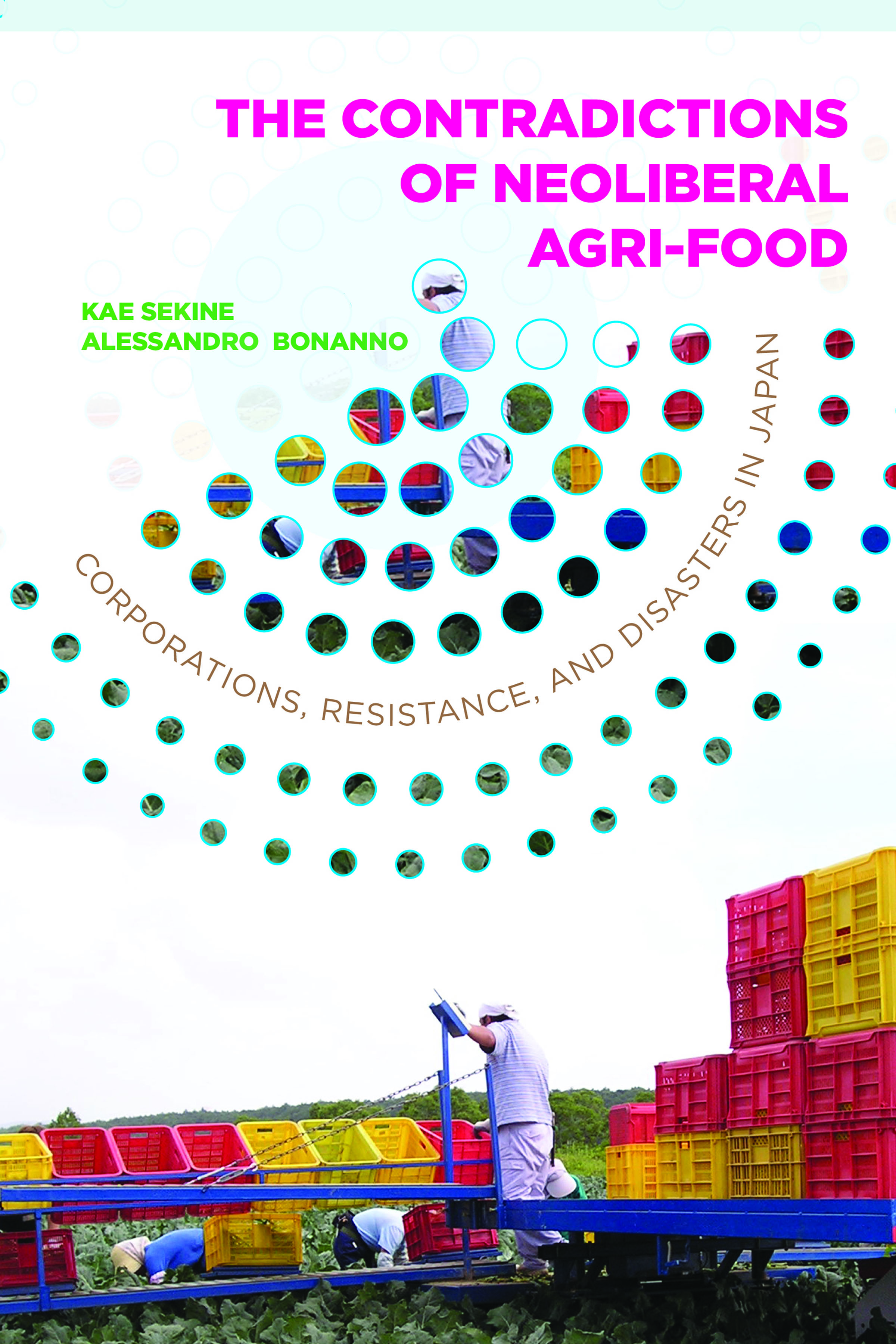
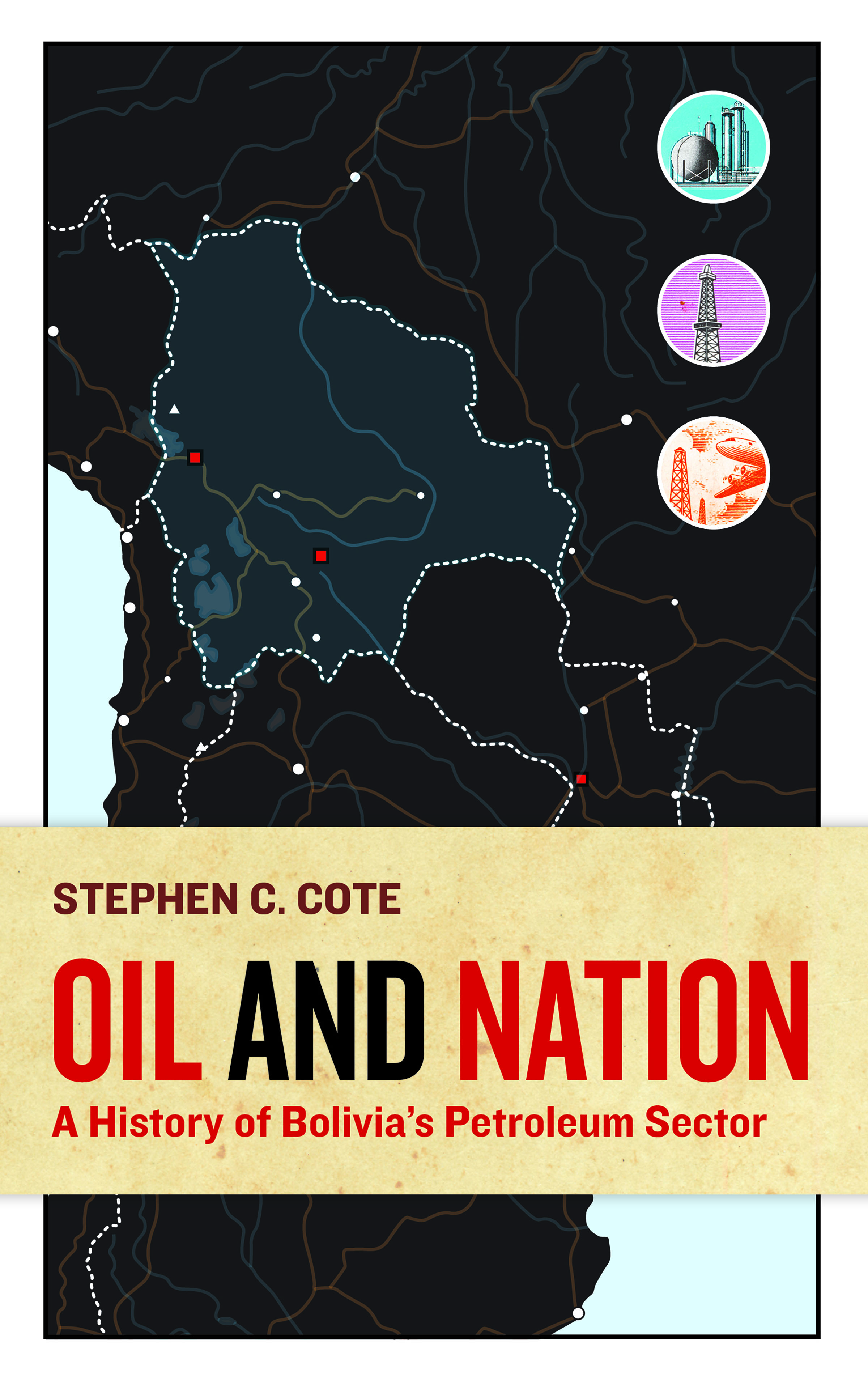
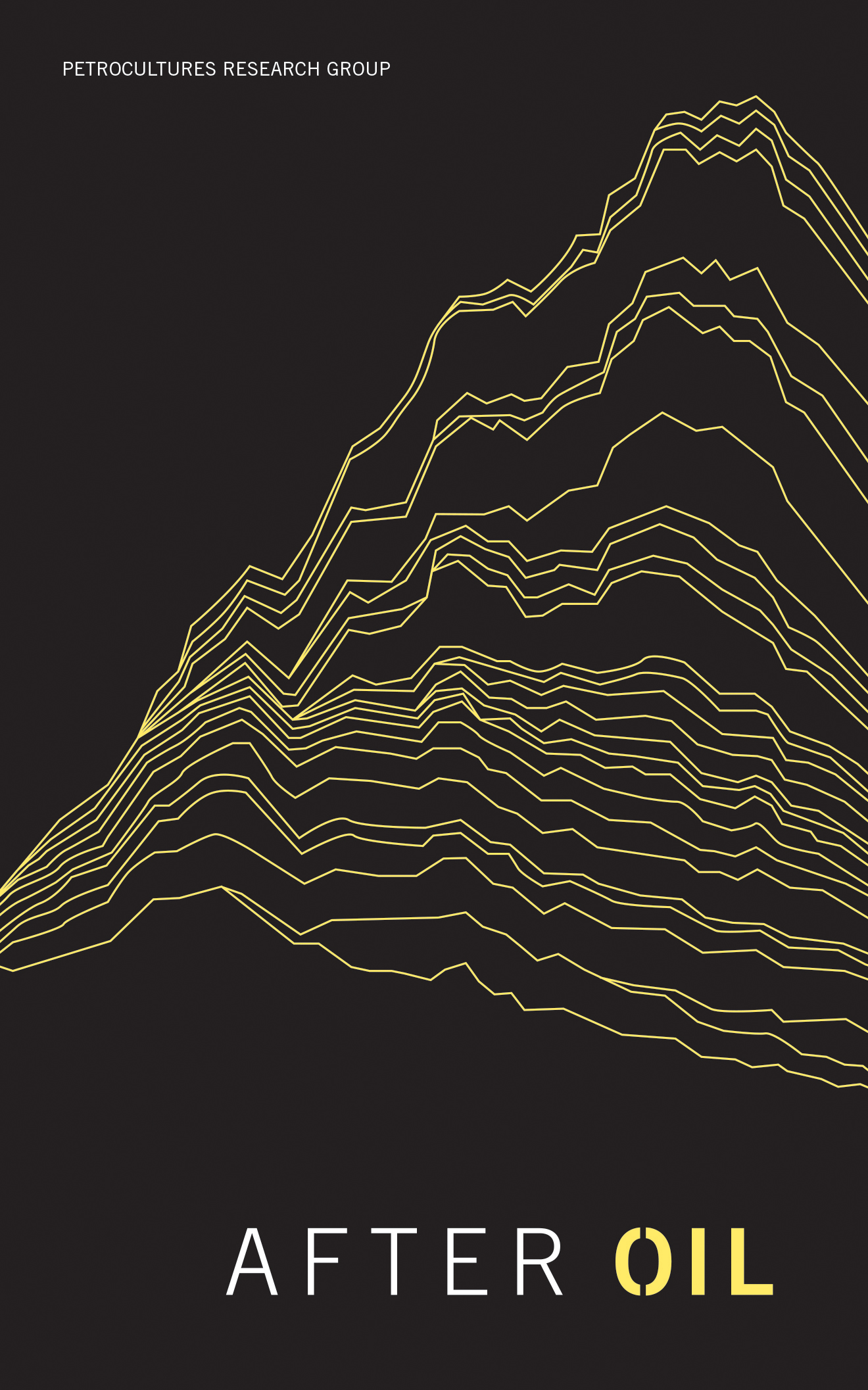
You can also learn more about two new book series. Histories of Capitalism and the Environment is edited by Bart Elmore, author of Citizen Coke: The Making of Coca Cola Capitalism. Brian Black – author of many books on environment and energy, including Petrolia: The Landscape of America's First Oil Boom – edits our other new series, Energy and Society.

We’re excited to roll out these important new series and books and look forward to seeing you in Atlanta.