A Room of Rain

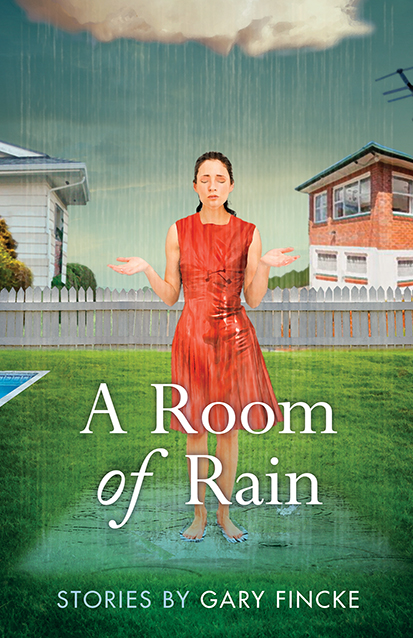
A Room of Rain

Gary Fincke

March 2015
200pp
PB 978-1-940425-20-7 $16.99
ePub 978-1-940425-22-1 $16.99


Summary

The narratives throughout Gary Fincke’s sixth collection of short stories contain newsworthy events that are chronicled secondhand: the shooting of a policeman, the murder of a house flipper, the firing of a teacher for punching a violent student, the accidental drowning of a gay man in a flood, and a fire somewhat accidently set by a juvenile smoker in a school.

Despite these surprising events, the narrator of each story is an ordinary person caught up in the action but preoccupied by other things, whether zombie movies, collecting unusual words, the oddity of other people’s sexual habits, or what to do in retirement. 

These shocking incidents become both central and peripheral to the narrative, as Fincke portrays the fluctuating emotions and self-protective reflections of fathers, sons, and husbands, creating a world where individuals rarely understand each other, yet still arrive at moments of compassion, tolerance, perseverance, and familial love.

Contents

Coming Soon.    

Author

Gary Fincke is the Charles Degenstein Professor of English and Creative Writing at Susquehanna University. Winner of the 2003 Flannery O’Connor Award for Short Fiction, the 2003 The Ohio State University Press/The Journal Award in Poetry, and the 2010 Stephen F. Austin Poetry Prize for recent collections. He has published twenty-seven books of short fiction, poetry, and nonfiction as well as the novel How Blasphemy Sounds to God. He is the author of The Proper Words for Sin, a finalist for the 2014 Paterson Fiction Prize.

Reviews

"A Room of Rain is a group of seamless short stories, by an old master of the form.  Gary Fincke has never hesitated to ask hard questions in his work, and these stories are determined to take the toughest situations by the horns."
Madison Smartt Bell is the author of twelve novels, including the Haitian Revolutionary trilogy of All Soul's Rising, Master of the Crossroads, and The Stone That The Builder Refused

For years, Gary Fincke has quietly built a reputation as one of the nation's finest storytellers. This glorious collection shows him at the peak of his powers--funny, gritty, provocative."
Cary Holladay, author of The Deer in the Mirror

"Gary Fincke is one of the most reliable and prolific writers out there, and A Room of Rain is clearly one of his strongest collections. In this world that seems so quick to stick labels on everything, Fincke goes around ripping off all the stickers. He convincingly blurs the line between what is taboo and what is not, refusing to allow readers to back away into safety; these stories illustrate the notion that we are all have taboo thoughts, that beneath the surface, none of us are “ordinary,” none of us “pure.” At his best, he reminds me of Richard Yates—Fincke flat out knows how to write."
Jim Daniels, author of Eight Mile High and other collections

"This collection is provocative yet subtle; gritty yet humorous. The characters are round and the short stories are complete, though often feel like the tip of an iceberg. I wanted more because of how drawn I was to the characters, not because the tales left me unsatisfied. These stories continue to stick with me long after closing the book, beautifully rendered reminders of what we each hold untold."
Genevieve Shifke Ali, Independent Publisher
 

EmailFacebookInstagramPinterestTwitter

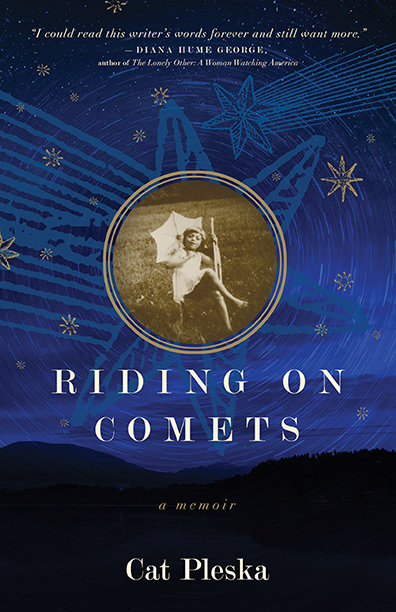
Riding on Comets: A Memoir

Riding on Comets

Cat Pleska

May 2015
236pp
PB 978-1-940425-51-1
$16.99
epub 978-1-940425-52-8 $16.99

Summary

Riding on Comets is the true story of an only child growing up in a working-class family during the 1950s and ‘60s. 

As the family storyteller, Cat Pleska whispers and shouts about her life growing up around savvy, strong women and hard-working, hard-drinking men. Unlike many family stories set within Appalachia, this story provides an uncommon glimpse into this region: not coal, but an aluminum plant; not hollers, but small-town America; not hillbillies, but a hard-working family with traditional values. 

From the dinner table, to the back porch, to the sprawling countryside, Cat Pleska reveals the sometimes tender, sometimes frightening education of a child who listens at the knees of these giants. She mimics and learns every nuance, every rhythm—how they laugh, smoke, cuss, fight, love, and tell stories—as she unwittingly prepares to carry their tales forward, their words and actions forever etched in her mind. And finally, she discovers a life story of her own. 

Contents

Introduction

                        IMAGES

Chapter 1        No Salt

Chapter 2        Trick or Treat

Chapter 3        A Tone

Chapter 4        Give Me My Hat

Chapter 5        Big Earl’s

Chapter 6        A Brush with the Law

Chapter 7        In Mommaw’s Kitchen

                        AWAKENING

Chapter 8        What We Called Home

Chapter 9        From a Time Before

Chapter 10      Night Light

Chapter 11      Cicada Buzz

                        AWARENESS

Chapter 12      I Spy

Chapter 13      Shelter

Chapter 14      Back Home

Chapter 15      Devil Faces

Chapter 16      Something Gathers ‘Round Me

Chapter 17      House of Leaves

Chapter 18      Plunder

REACTION

Chapter 19      Alarm Clock

Chapter 20      My Civic Duty

Chapter 21      The Nervous Hospital

Chapter 22      My Kingdom for a Horse

Chapter 23      Night on Cheat Mountain I

Chapter 24      Night on Cheat Mountain II

Chapter 25      CarniVAL

Chapter 26      War

Chapter 27      The Sailor man

                        LOSS

Chapter 28      In the Cellar

Chapter 29      Reckoning

Chapter 30      Exception to the Rule

Chapter 31      Charmed

Chapter 32      I’ve Drawed up a Mite

Chapter 33      900 Degrees Celsius

Chapter 34      Twin Haloes

Chapter 35      The Phone Rings

Chapter 36      Attention K-Mart Shoppers! Do the Dead Wear Underwear?

Chapter 37      We Shall Gather

Chapter 38      Riding on Comets

Chapter 39      Night on Cheat Mountain III

Chapter 40      Fall

                        STRENGTH

Chapter 41      Liminal

Chapter 42      Dragon’s Tale

Epilogue          
 

Author

Cat Pleska is a seventh generation West Virginian, and she is a writer, editor, educator, publisher, and storyteller. She holds an MFA in Creative Nonfiction from Goucher College. She is an essayist for West Virginia Public Radio and a book reviewer for the Charleston Gazette. She coedited the anthology Fed from the Blade: Tales and Poems from the Mountains. Pleska has been published in literary magazines and newspapers throughout the Appalachian region. She lives in Scott Depot, West Virginia, with her husband, Dan, one dog, four cats, and with a daughter, Katie, in nearby St. Albans. 

Reviews

“In voice, in person, on the radio, on the page, Cat Pleska has for years been one of my favorite writers. I carry the rhythms of her honeyed voice inside me. I have felt the reassurance of her grandmother’s lap on the night-porch, listening to the thump of maternal heartbeats that made Cat feel safe then and forever, and I’ve been gripped by her father’s hands, less reliable but just as beloved, driving like crazy down Cheat Mountain. Cat herself stands fearless wherever she is among the grownups, the way only a greatly loved child can stand, alone on the front seat of the truck, curious to see roosters fighting while her grandpa goes inside at the bootlegger’s. I’ve tagged along after her mother (who made her bed tight enough to bounce a dime off) and her aunt as they circle the old family homestead, remembering their own childhoods. Never patronizing or pathologizing, always with compassion, knowing that her amazing, enduring, flawed family gave her the gift of unconditional belonging, Cat Pleska tells the story of her people with steady awareness of their hardships and foibles, their greatness of heart, and the smoking or alcohol that killed some of them, cut off in the midst of their stories while their inheritor, Cat, listens and faithfully records their voices for herself, for them, and for us. I could read this writer’s words forever, and still want more."
Diana Hume George, author of The Lonely Other: A Woman Watching America

"The gifts of Cat Pleska’s Riding on Comets are many: it is fresh, candid, gently humorous, tautly lyrical, and deeply moving.Cat Pleska writes masterfully and movingly about herself, her West Virginia home, and her colorful kin. But the greatest pleasure in reading Riding on Comets is that Pleska’s prose refuses to stay on the page. Rather, it insists on being read aloud and filling the room with its rich rhythms, resonances, syntax, and family diction. Cat Pleska is a natural, graceful, spellbinding storyteller."
Lisa Knopp, What the River Carries: Encounters with the Mississippi, Missouri, and Platte

“Cat Pleska’s memoir of a childhood lived among the ‘giants’ of her West Virginia family is by turns humorous, touching, and achingly beautiful. This is a storyteller who knows how to piece together shards of story into a brilliant mosaic of a life. A joy to read.”
Janice Gary is the author of Short Leash: A Memoir of Dog Walking and Deliverance, winner of two Silver 2014 Nautilus Awards and a 2014 Eric Hoffer Prize for Memoir.

Riding on Comets is not only a personal memoir, it is the story of a family embedded in West Virginia for many generations. . . .Cat Pleska’s restrained but graceful prose allows us to witness four generations through the eyes of the author, first as a child and then through the years that followed as her people live, age, and die. The details Pleska offers have the immediacy of truths well told, with a resolute eye and spacious heart, neither shying away from family and personal dysfunction, nor sentimentalizing the bonds of fear and love that held her family together.”
Geoffrey Cameron Fuller is an author of the true crime Pretty Little Killers and the crime thriller Full Bone Moon

“This compelling memoir illumines a challenging childhood rooted in the town and countryside of West Virginia. It is an identifiably Appalachian life insightfully revealing a broader view of the region than stereotypes portray. It is, as well, pervaded with a razor-sharp honesty that brings heartfelt empathy to both the sweet and the wicked. I could not stop cheering for this spunky little girl who becomes a spirited and resourceful woman, a woman who never gives up on herself or those she loves.”
Marc Harshman, Poet Laureate of West Virginia and children’s book author

“Cat Pleska is a natural storyteller, a storied child. Growing up in West Virginia in the ‘50s and ‘60s, her life was steeped in family stories, and she was the one entrusted to retell them. Her own memories and experiences of small-town Appalachia deepen this candid and compelling coming-of-age memoir, and she captures our hearts in the process.”
Laura Treacy Bentley, author of The Silver Tattoo and Lake Effect

“Image by image, each unquestionably whole and mysterious. . . . Those images—her grandmother offering a ‘slice of apple from the edge of her knife,’ the ‘curing tobacco leaves hanging in bunches from the ceilings wooden beams’ in a long abandoned house, or her ‘Dad leaning over [her] mother's pristine, white enamel kitchen sink and throwing up blood’—tenderly sear themselves into both Cat’s heart and the reader’s.  All these images reflect, compound, and resonate with one another until they carry us forward like a leaf swirling in the October wind.”
Chris Green, Director of the Loyal Jones Appalachian Center, Berea College 

“Cat Pleska’s memoir seamlessly moves through moments in time to discover that her story is her family’s story of struggle and forgiveness against the backdrop of her native West Virginia mountains. Like stars that become constellations if we know how to look at them, this fine and engaging book shows us how to find and read the stories of our lives.”
Rob Merritt, author of The Language of Longing

“Sometimes comedic, sometimes heart wrenching . . . Cat Pleska writes with the graceful succinctness of a poet—whether she’s describing a bike ride home ‘pedaling fast against the dark’ or just listening to the peepers ‘calling out for someone to love them.’”
Cheryl Ware, author of Flea Circus Summer, Catty-Cornered, Venola in Love, Venola the Vegetarian, and Robert Price Has Head Lice

EmailFacebookInstagramPinterestTwitter

Beowulf and the Grendel-kin: Politics and Poetry in Eleventh-Century England

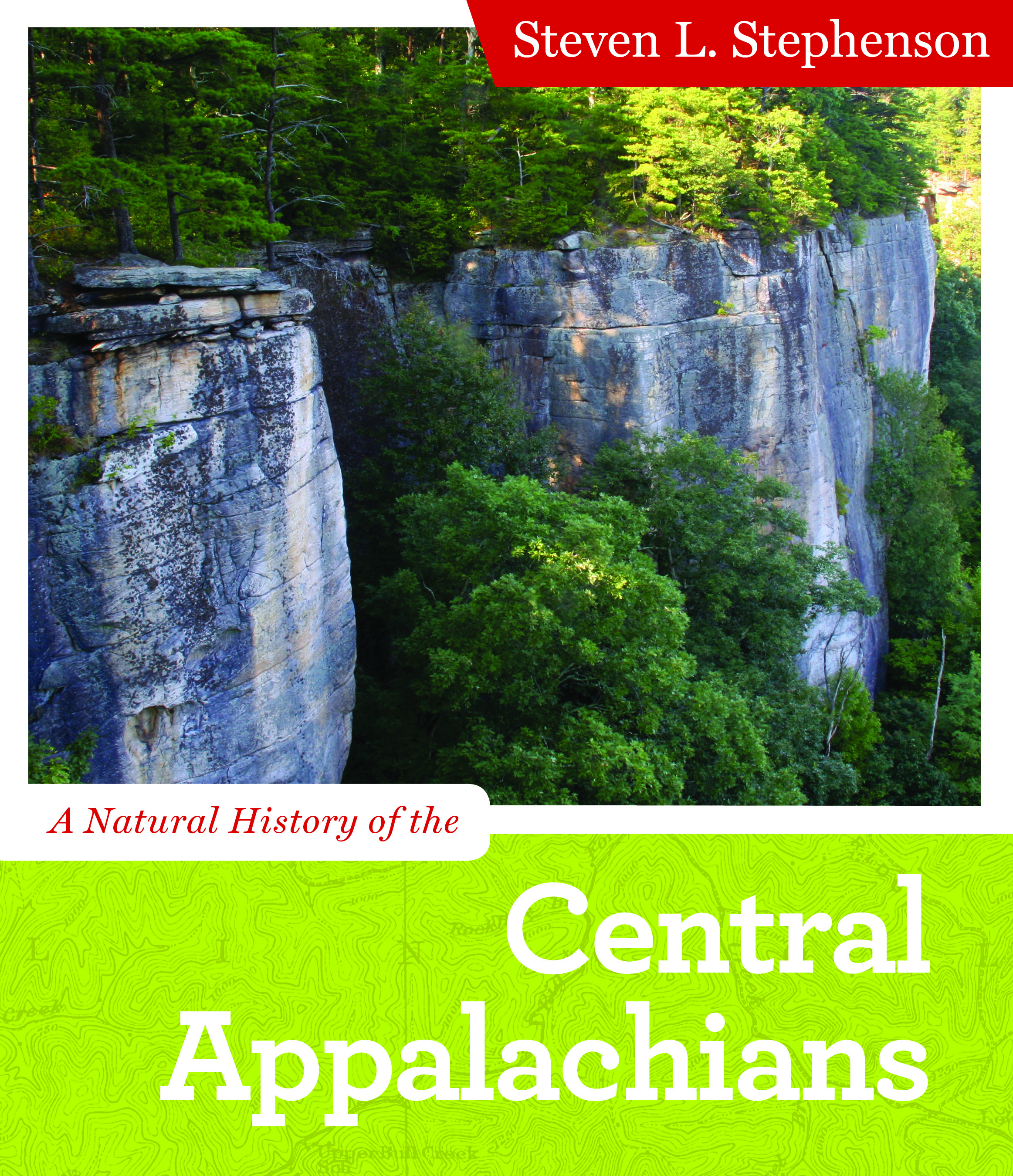
A Natural History of the Central Appalachians

Helen Damico

January 2015
345pp
PB 978-1-938228-71-1 
$49.99
ePub 978-1-938228-72-8
$49.99
PDF 978-1-938228-73-5
$49.99

Summary

In Beowulf and the Grendel-kin: Politics and Poetry in Eleventh-Century England, Helen Damico presents the first concentrated discussion of the initiatory two-thirds of Beowulf’s 3,182 lines in the context of the sociopolitically turbulent years that composed the first half of the eleventh century in Anglo-Danish England.

Damico offers incisive arguments that major historical events and personages pertaining to the reign of Cnut and those of his sons recorded in the Anglo-Saxon Chronicle, the Encomium Emmae Reginae, and major continental and Scandinavian historical texts, hold striking parallels with events and personages found in at least eight vexing narrative units, as recorded by Scribe A in BL, Cotton Vitellius A.xv, that make up the poem’s quasi sixth-century narrative concerning the fall of the legendary Scyldings. 

Given the poet’s compositional skill—widely relational and eclectic at its core—and his affinity with the practicing skalds, these strings of parallelisms could scarcely have been coincidental. Rather, Damico argues that examined within the context of other eleventh-century texts that either bemoaned or darkly satirized or obversely celebrated the rise of the Anglo-Danish realm, the Beowulfian units may bring forth a deeper understanding of the complexity of the poet’s compositional process.

Damico illustrates the poet’s use of the tools of his trade—compression, substitution, skillful encoding of character—to reinterpret and transform grave sociopolitical “facts” of history, to produce what may be characterized as a type of historical allegory, whereby two parallel narratives, one literal and another veiled are simultaneously operative. 

Beowulf and the Grendel-kin lays out the story of Beowulf, not as a monster narrative nor a folklorish nor solely a legendary tale, but rather as a poem of its time, a historical allegory coping with and reconfiguring sociopolitical events of the first half of eleventh-century Anglo-Saxon England.

Contents

Coming Soon.

Author

Helen Damico is Professor Emerita of English Medieval Language and Literature at the University of New Mexico, where she was twice selected as Outstanding Teacher and honored as UNM Presidential Teaching Fellow. She is a founder of its Institute for Medieval Studies, a recipient of the New Mexico Humanities Award for Lifetime Contributions to the Humanities, and a member of The Medieval Academy of America and recipient of its CARA Award for Outstanding Service to Medieval Studies. She is also an Honorary Member of the International Society of Anglo-Saxonists. She edited the three volumes of Medieval Scholarship: Biographical Essays in the Formation of a Discipline and is the author of Beowulf’s Wealhtheow and the Valkyrie Tradition.

Reviews

"Debate about the dating of Beowulf has raged among scholars for many years, and it shows no sign of abating. The suggestion advanced here, with control, commitment, and clarity, is that the poem incorporates passages that can be read as allegories or reflexes of the period beginning with the Viking raids on England in the late tenth century, leading to the Danish conquest in 1016, and, following Cnut’s death in 1035, to the emergence of Queen Emma in a role that animates the joint and separate reigns of Harald Harefoot and Harthacnut. To say any more would be to spoil the ride. . ."
Simon Keynes, Elrington and Bosworth Professor of Anglo-Saxon, University of Cambridge

“Damico makes an elegant and thought-provoking case for Beowulf as a political allegory of late Anglo-Saxon England. She weaves a subtle argument for her provocative thesis, and in doing so she illuminates not only the poem but the eleventh-century world of Cnut, Emma, and their offspring, the original audience for Beowulf and perhaps its hidden subject.”
R. M. Liuzza, University of Toronto

“Although paleographers have always included the early eleventh century in dating the script of the Beowulf manuscript, historians and literary scholars have studiously neglected this period in their otherwise wide-ranging theories on the composition of Beowulf.  Now Helen Damico has bravely ventured forth with the first book-length study of how the historical context of the manuscript might have influenced the making of the epic poem.  Thoroughly researched and cogently argued, Damico's revolutionary thesis and supporting documents demand the attention of all serious students of Beowulf.”
Kevin Kiernan, author of Beowulf and the Beowulf Manuscript, The Thorkelin Transcripts of Beowulf, Electronic Beowulf and Professor Emeritus, University of Kentucky

“Damico demonstrates that historical allegory need not be a passively reflexive or coyly cryptic mode of poetic invention, but can also serve as an imaginative technique of active political thought and critical analysis.”
Craig R. Davis,Professor of English Language & Literature and Comparative Literature, Smith College

EmailFacebookInstagramPinterestTwitter

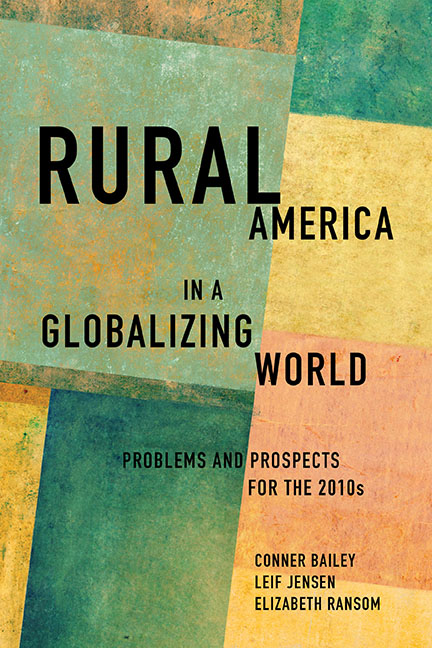
Rural America in a Globalizing World: Problems and Prospects for the 2010s

Rural America in a Globalizing World

Edited by Conner Bailey, 
Leif Jensen, and
Elizabeth Ransom

August 2014
816pp
PB 978-1-940425-10-8
$49.99
ePub 978-1-940425-12-2
$49.99
PDF 978-1-949425-11-5
$49.99


Summary

This fourth Rural Sociological Society decennial volume provides advanced policy scholarship on rural North America during the 2010’s, closely reflecting upon the increasingly global nature of social, cultural, and economic forces and the impact of neoliberal ideology upon policy, politics, and power in rural areas.

The chapters in this volume represent the expertise of an influential group of scholars in rural sociology and related social sciences. Its five sections address the changing structure of North American agriculture, natural resources and the environment, demographics, diversity, and quality of life in rural communities.

Contents

Preface

Rural America in a Globalizing World:  Introduction and Overview

Conner Bailey, Leif Jensen & Elizabeth Ransom

Part I Changing Structure of Agriculture

Agriculture and Food in the 2010s, Alessandro Bonanno

1. Economic Concentration in the Agrifood System: Impacts on Rural Communities and Emerging Responses

Douglas H. Constance, Mary Hendrickson, Philip H. Howard, William D. Heffernan

2. The Declining Middle of American Agriculture: A Spatial Phenomenon

Amy Guptill and Rick Welsh

3. Land Ownership in American Agriculture

Douglas Jackson-Smith and Peggy Petrzelka

4. Mexican-born Farmworkers in U.S. Agriculture

Eric B. Jensen

5. Agricultural Technologies and the Structure of the North American Agrifood System

Leland L. Glenna and Christopher R. Henke

6. Food Safety and Governance of the Agrifood System

Michelle R. Worosz and Diana Stewart

7. Changing Animal Agriculture and the Issue of Farm Animal Welfare

Jeff Sharp and Dani Deemer

8. Agrifood Movements: Diversity, Aims, and Limits

Clare Hinrichs and John Eshleman

Part II Natural Resources and the Environment

Connections: The Next Decade of Rural Sociological Research on Natural Resources and the Environment, Louise Fortmann, Merrill Baker-Médard and Alice Kelly

9. Impacts of Climate Change on People and Communities of Rural America

Lois Wright Morton and Tom Rudel

10. Contemporary Water Issues in Rural North America

Courtney G. Flint and Naomi Krogman

11. Resource Dependency in Rural America: Continuities and Change

Richard S. Krannich, Brian Gentry, A.E. Luloff, and Peter G. Robinson

12. The Gulf: America’s Third Coast

Robert Gramling and Shirley Laska

13. Biofuels and Rural Communities: Promises, Pitfalls and Uneven Social and Environmental Impacts

Theresa Selfa and Carmen Bain

14. New Natural Gas Development and Rural Communities: Key Issues and Research Priorities

Abby Kinchy, Simona Perry, Danielle Rhubart, Richard Stedman, Kathryn Brasier, and Jeffrey Jacquet

15. Got Coal? The High Cost of Coal on Mining-Dependent Communities in Appalachia and the West

Suzanne E. Tallichet

Part III Population Change in Rural North America

Rural Population Change in Social Context, David L. Brown

16. Demographic Trends in Nonmetropolitan America: 2000 to 2010

Kenneth M. Johnson

17. Population Shifts Across U.S. Nonmetropolitan Regions

John Cromartie and Timothy S. Parker

18. Rural Families and Households and the Decline of Traditional Structure

Jessica A. Carson and Marybeth J. Mattingly

19. Children and Youth in Rural America

Diane K. McLaughlin and Carla Shoff

20. Concentrations of the Elderly in Rural America: Patterns, Processes and Outcomes in a Neoliberal World

Peter B. Nelson

21. New Rural Immigrant Destinations: Research for the 2010s

Martha Crowley and Kim Ebert

Part IV Diversity in Rural America

Gender, Race, Ethnicity, Class, and Sexuality in Rural America, Carolyn Sachs

22. The Status of African Americans in the Rural United States

John J. Green

23. Hispanic Immigration, Global Competition, and the Dairy Industry in Rural Communities

J.D. Wulfhorst, Priscilla Salant, Leigh A. Bernacchi, Stephanie L. Kane, Philip Watson, and Erinn Cruz

24. Native Nations in a Changing Global Economy

Sarah Dewees

25. The Past is the Present: Gender and the Status of Rural Women

Cynthia B. Struthers

26. Rolling in the Hay: The Rural as Sexual Space

Julie C. Keller and Michael M. Bell

27. Rural Poverty: The Great Recession, Rising Unemployment, and the Underutilized Safety Net

Jennifer Sherman

Part V Rural Economies, Community, and Quality of Life

Economic Change, Structural Forces and Rural America: Shifting Fortunes across Communities, Linda Lobao

28. Education and Schooling in Rural America

Kai A. Schafft and Catharine Biddle

29. Work in Rural America in the Era of Globalization

Tim Slack

30. Rural Entrepreneurship

Lori A. Dickes and Kenneth L. Robinson

31. Community Organization and Mobilization in Rural America

Cornelia Butler Flora and Jan L. Flora

32. Community as Moral Proximity: Theorizing Community in a Global Economy

Todd L. Goodsell, Jeremy Flaherty, and Ralph B. Brown

33. Food Insecurity and Obesity in Rural America: Paradoxes of the Modern Agrifood System

Keiko Tanaka, Patrick H. Mooney and Brett Wolff

34. Thinking About Rural Health

E. Helen Berry

35. Housing in Rural America

Katherine MacTavish, Ann Ziebarth, and Lance George

Author

Conner Bailey is Professor of Rural Sociology at Auburn University. He is a past President of the Rural Sociological Society. His primary research interests are in natural resources and the environment as well as questions of poverty and power in the southeastern United States.

Leif Jensen is Distinguished Professor of Rural Sociology and Demography at Pennsylvania State University. His primary interests are in rural sociology, social stratification, demography, and international development.

Elizabeth Ransom is Associate Professor of Sociology at the University of Richmond. Her primary research interests are in international development, global agriculture and food systems with an emphasis on Southern Africa, and science and technology studies especially in relation to agriculture and food. 

Reviews

Coming Soon.

EmailFacebookInstagramPinterestTwitter

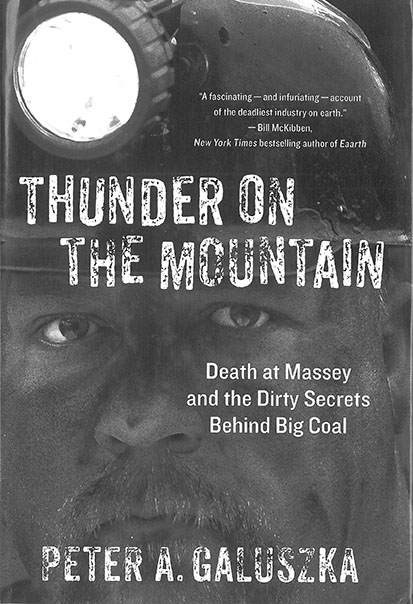
Thunder on the Mountain: Death at Massey and the Dirty Secrets behind Big Coal

Thunder on the Mountain

Peter A. Galuszka
With a foreword by
Denise Giardina

November 2014
300pp
PB 978-1-940425-24-5
$19.99

Out of Print


Summary

On April 5, 2010, an explosion ripped through Massey Energy’s Upper Big Branch Mine, killing twenty-nine coal miners. This tragedy was the deadliest mine disaster in the United States in forty years—a disaster that never should have happened. These deaths were rooted in the cynical corporate culture of Massey and its notorious former CEO Don Blankenship, and were part of an endless cycle of poverty, exploitation, and environmental abuse that has dominated the Appalachian coalfields since coal was first discovered there. And the cycle continues unabated as coal companies bury the most insidious dangers deep underground, all in search of higher profits, and hide the true costs from regulators, unions, and investors alike.

But the disaster at Upper Big Branch goes beyond the coalfields of West Virginia. It casts a global shadow, calling into bitter question why coal miners in the United States are sacrificed to erect cities on the other side of the world, why the coal wars have been allowed to rage, polarizing the country, and how the world’s voracious appetite for energy is satisfied at such horrendous cost.

With Thunder on the Mountain, Peter A. Galuszka pieces together the true story of greed and negligence behind the tragedy at the Upper Big Branch Mine, and in doing so he has created a devastating portrait of an entire industry that exposes the coal-black motivations that led to the death of twenty-nine miners and fuel the ongoing war for the world’s energy future.

This new paper edition contains a foreword by Denise Giardina that provides an update on Massey Energy and Donald Blankenship, Chairman and CEO of Massey Energy Company during the UBB disaster, and recounts her own experiences with Massey Energy and the United Mine Workers Association in the 1980s. This edition also includes a notes section and a bibliography.

Contents

Coming Soon.

Author

Peter A. Galuszka is a veteran journalist who has covered worldwide energy issues, especially coal, for several decades. A former West Virginia resident, he logged thousands of miles on the windy mountain roads of Central Appalachia and traveled to Mongolia, China, and Japan to track down the Massey story. The former Moscow bureau chief for BusinessWeek, he now lives in Chesterfield, Virginia.

Denise Giardina grew up in a coal camp in McDowell County, West Virginia. She is a writer, ordained Episcopal Church deacon, and community activist. Her novels include Storming Heaven and The Unquiet Earth, both of which are set in the Appalachian coalfields.

Reviews

“Scathing exposé of the coal industry . . . [Galuszka’s] reporting is impressive, from the painstakingly reconstructed hours leading up to the disaster, to the starkly silhouetted Donald Blankenship, the cost-cutting, anti-environmentalist former head of Massey Energy.”
New York Times Sunday Book Review

“The 2010 tragedy at the Upper Big Branch Mine resonated nationwide and has resulted in a great deal of soul-searching among Americans over the price paid for our dependence on ‘Big Coal’ . . . Beyond the mining catastrophe at its core, this is a book about working America and how one industry has conquered a landscape’s body and soul. Bracing, powerful, and pertinent, this is a timely and clarion call for myth-busting change.”
Booklist (Editor's Choice 2012. Starred Review)

“A fascinating—and infuriating—account of the deadliest industry on earth. Deadly for its workers and the people unfortunate enough to live near its mines, but deadlier still for the planet. You can't understand our moment in time without understanding the coal industry.”
Bill McKibben, New York Times bestselling author of Earth: Making a Life on a Tough New Planet

“Appalachia may be blessed with the ‘world’s best metallurgical coal,’ but as journalist Galuszka’s powerful book shows, this coal is both ‘a curse and a prize . . . ’ He convincingly excoriates the safety record of Massey Energy and its controversial former CEO, Don Blankenship . . . Drawing on his personal experience of Appalachia, Galuszka offers a sympathetic but unsentimental portrait of the region’s people and their struggles.”
Publishers Weekly

“Scrupulously researched . . . Galuszka’s thoroughness provides readers a clear sense of the complex class issues at play in Appalachia and the difficult politics within coal-mining communities; he is attuned to both the lives of the miners and the maneuvers of the energy industry. . . . A disturbing and pessimistic narrative documenting little-known problems of fossil-fuel dependence.”
Kirkus Reviews

“Natural gas, renewables, and efficiency are positioned to be the sources of America’s energy expansion, while coal represents the nation’s past. Galuszka’s Thunder on the Mountain highlights the disturbing and often deadly impacts of this highly polluting energy source and why Big Coal might just be losing its power.”
Ron Pernick, managing director of Clean Edge, Inc. and co-author of The Clean Tech Revolution and Clean Tech Nation

“Peter Galuszka has absolutely nailed his subject on every level. He displays an intimate understanding of the people in Appalachia including those who work in coal mines. Yet at the same time, he understands how global energy demand and financial pressures created the conditions in which Massey’s Don Blankenship cut corners at the Upper Big Branch mine, resulting in twenty-nine deaths. It is a devastating portrait of an individual, and an industry. No one has put this story together as well as Galuszka has.”
William J. Holstein, author of The Next American Economy and Why GM Matters

“With measured and dogged reporting, Galuszka persuasively reveals how corporate greed and mismanagement, Appalachian underdevelopment, insatiable global demand for coal, and the right-wing backlash against government regulation and labor organization resulted in tragedy at Upper Big Branch. Essential reading for anyone interested in the past, present, and future of Big Coal.”
Thomas G. Andrews, Bancroft Prize winning author of Killing for Coal: America's Deadliest Labor War

“Peter Galuszka exposes a seam that runs deep in American history—the corporate indifference of Big Coal, its neglect of worker safety, and the fight waged by miners and their families for dignity and quality of life.”
Philip Dray, author of There Is Power in a Union: The Epic Story of Labor in America

“Peter Galuszka has written a powerful book that lays bare the corporate greed behind one of the worst mining disasters in modern times. Thunder on the Mountain puts a human face on tragedy, and Galuszka’s own ties to West Virginia provide poignant context to both mine workers’ plight and the environment for which Massey Energy showed what can only be described as contempt. Every member of Congress should read this book and then ask themselves why they failed to pass a mine safety bill in the wake of such unabashed disregard for safety and human life.”
Loren C. Steffy, author of Drowning in Oil: BP and the Reckless Pursuit of Profit

“Peter Galuszka has a deep appreciation of Appalachia and its damaged beauty, having grown up in West Virginia and filed decades of coal stories as a reporter. In Thunder on the Mountain he draws vivid portraits of all the characters in the ongoing tragedy of Appalachian mining, from the twenty-nine victims of Upper Big Branch to the watery-eyed, self-righteous CEO of Massey Mining, Don Blankenship, whose brutal ways brought such misery to so many.”
Michael Shnayerson, author of Coal River

“Thunder on the Mountain is an important book about a coal mining disaster and it is also a timely reminder of the dangers of putting profits before safety in the energy business.”
Stanley Reed, former London bureau chief of BusinessWeek and co-author of In Too Deep: BP and the Drilling Race That Took It Down

EmailFacebookInstagramPinterestTwitter

California Dreaming: Boosterism, Memory, and Rural Suburbs in the Golden State

California Dreaming

Paul J.P. Sandul

October 2014
220pp
PB  978-1-938228-86-5
$27.99
ePub 978-1-938228-87-2
$27.99
PDF 978-1-938228-88-9
$27.99

Summary

At the turn of the 20th century, the California dream was a suburban ideal where life on the farm was exceptional. Agrarian virtue existed alongside good roads, social clubs, cultural institutions, and business commerce. The California suburban dream was the ultimate symbol of progress and modernity.

California Dreaming: Boosterism, Memory, and Rural Suburbs in the Golden State analyzes the growth, promotion, and agricultural colonization that fed this dream during the early 1900s. Through this analysis, Paul J. P. Sandul introduces a newly identified rural-suburban type: the agriburb, a rural suburb deliberately planned, developed, and promoted for profit. Sandul reconceptualizes California’s growth during this time period, establishing the agriburb as a suburban phenomenon that occurred long before the booms of the 1920s and 1950s.

Sandul’s analysis contributes to a new suburban history that includes diverse constituencies and geographies and focuses on the production and construction of place and memory. Boosters purposefully “harvested” suburbs with an eye toward direct profit and metropolitan growth. State boosters boasted of unsurpassable idyllic communities while local boosters bragged of communities that represented the best of the best, both using narratives of place, class, race, lifestyle, and profit to avow images of the rural and suburban ideal.

This suburban dream attracted people who desired a family home, nature, health, culture, refinement, and rural virtue. In the agriburb, a family could live on a small home grove while enjoying the perks of a progressive city. A home located within the landscape of natural California with access to urban amenities provided a good place to live and a way to gain revenue through farming.

To uncover and dissect the agriburb, Sandul focuses on local histories from California’s Central Valley and the Inland Empire of Southern California, including Ontario near Los Angeles and Orangevale and Fair Oaks outside Sacramento. His analysis closely operates between the intersections of history, anthropology, geography, sociology, and the rural and urban, while examining a metanarrative that exposes much about the nature and lasting influence of cultural memory and public history upon agriburban communities. 

Contents

Acknowledgments

Introduction: Bourgeois Horticulturists in an Agricultural Wonderland

Part One: The Suburban Ideal and the California Dream

The Market Revolution and Romanticism

Chapter One: The Suburban Ideal

Boosterism

Chapter Two: The California Dream

Part Two: Harvesting Suburbs

Suburban Definitions, Archetypes, and Limitations

Chapter Three: The Model Colony of Ontario as the Model Agriburb

Chapter Four: The Agriburbs of Sacramento

Welcome to the Growth Machine

Chapter Five: The Boosters

Part Three: Cultivating Memory

Coming to Terms with Memory

Chapter Six: The Ongoing Legacies of Boosterism

Chapter Seven: Collected Memory and the Continued Legacies of Boosterism

Conclusion: Harvesting Suburbs, Cultivating Memory

Notes

Selected Bibliography

Index

Author

Paul J. P. Sandul is an Assistant Professor of History at Stephen F. Austin State University where he co-directs the public history program. Sandul is heavily involved in public history projects and local heritage organizations and oral history, which often provide opportunities for students, and serves on advisory committees and boards for both professional and local historical societies and journals.

Reviews

“A bold debut by a talented and energetic Generation X historian who dares think for himself.  A fresh interpretation of rural life and the rise of the agriburb as a variation of sub/urban America in the 19th and early 20th century."
Kevin Starr, University of Southern California

“The agriburb is a historic suburban landscape virtually overlooked until now.  In California Dreaming, Paul Sandul recovers its rich history, situating this quintessential California landscape within the broad narrative of suburban history. This book extends our working concept of “suburb” by adding a new, fascinating dimension.”
Becky M. Nicolaides, author of My Blue Heaven: Life and Politics in the Working-Class Suburbs of Los Angeles, 1920-1960

“If you want to know out of what stuff the California Dream was made, this book is for you. In his vigorous and searching analysis, Sandul shows how special California landscapes he calls “agriburbs” took hold of collective imagination, convincing many that their quest for success and well-being could best be met by moving to these places where growing fruit and growing the good life seemed to go hand in hand. Looking closely at three agriburbs from northern and southern California—Ontario, Orangevale, and Fair Oaks (my hometown)—Sandul uncovers who had a hand in the creation of these communities, and how they profited by transforming their visions into realities on the ground. Moreover, Sandul passionately argues that we all have a stake in how society remembers these landscapes, for those memories reflect power as well as shape our dreams for the future.”
Douglas C. Sackman, University of Puget Sound, author of Orange Empire: California and the Fruits of Eden.

"As the title suggests, Paul Sandul's California Dreaming is an ambitious attempt to harness the three great forces in the development of the Golden State – land speculation, agriculture and suburbanization – to drive the story of three agro-urban colonies.  It is, at the same time, a far-reachng disquisition on American habits of mind concerning agrarianism, suburbia and historical memory, as filtered through the myth-making machinery of local boosters.  The unified vision of northern and southern California here should be particularly welcome to those attuned to the schismatic nature of so much of the state's historiography.”
Richard Walker, University of California, Berkeley, author of The Conquest of Bread: 150 Years of California Agribusiness and The Atlas of California: Mapping the Challenges of a New Era.

“Paul Sandul’s book offers a pivotal, innovative expansion of our understanding of the process of town building in America. In rich detail, he reveals how diverse trajectories of multiple interests, such as agribusiness, real estate development, boosterism, the suburban ideal, the California dream, and regional growth, all intersect in the private and collective efforts of settlers and residents to establish and maintain their civic enterprise. Focusing pointedly on the efforts and actions of local actors, Sandul shows how their work in town-building is instrumental in generating and realizing broader economic interests and social currents.

In this incisively detailed examination of the California agriburb, Sandul also radically expands our understanding of suburbs, demonstrating how they encompass a much broader and more varied typology than traditionally presented. Through fine-grained investigation of diverse modes of “local meaning-making,” including pageantry, memorialization, historic preservation, public performances, and other forms of public history, Sandul produces a penetrating analysis of the social processes by which place and local identity are constituted and maintained, and simultaneously a recognition of the diversity of locales in which suburban place and community are established.”
John Archer’s prize-winning book Architecture and Suburbia (2005) examines the history of suburbia from late seventeenth-century England to its emergence as the ideal of the American dream.

“This is a fine-grained and very thoughtful exploration of the horticultural worlds and horticultural ideals of California’s “agriburbs” lying just beyond the metropolitan core.  What’s especially insightful here is the author’s careful rendering of what constituted “agriburban” boosterism.”  We have a better portrait of landscape change, memory, and nostalgia thanks to Paul Sandul’s careful scholarship. Thoughtful and thorough, this is an excellent portrait of “agriburban” memory, nostalgia, and boosterism across the mental and horticultural landscapes of rural California.

What’s especially good about Paul Sandul’s work is that he reminds us of the complexities and variables that cut across any monolithic understanding of the California Dream.  Here’s a variant of that Dream: rural, “agriburban,” tinged with equal parts exuberant boosterism and wishful nostalgia.  I learned a lot from this book.”
William Deverell, Director, Huntington-USC Institute on California and the West

“By developing a new concept--agriburb--and integrating it into the literature, Paul Sandul argues, convincingly and engagingly, that rural and suburban development in California in the late nineteenth and twentieth century must be understood as interlinked processes--each drove the other. This book is a must read for agricultural, urban, and environmental scholars alike interested in the Golden State’s controversial history. Those looking to liven up their reading lists for their California and U.S. history seminars would also do well to consider it.”
David Vaught, Professor & Head Department of History, Texas A&M University

“Today we see suburbs and farms as worlds apart, inherently at odds.  But Paul Sandul’s California Dreaming uncovers how, in late nineteenth- and early twentieth-century California, they did more than just get along; they were one and the same.    With wry forthrightness, rich detail, and scholarly discernment, he plumbs the agricultural visions that animated suburban development in this time and place, as well as the forgetting that accompanied the ways these places came to be remembered.  A unique and vital addition to a “new suburban history,” California Dreaming broadens our awareness of what “suburbia” has been in ways that suggest new alternatives for our suburbs’ future, in which crops and chickens may proliferate among the lawns.”  
Christopher C. Sellers, author of Crabgrass Crucible: Suburban Nature and the Rise of Environmentalism in 20th-Century America

“Sandul uses the lens of memory to help us better understand the origins and development of Ontario and other of California’s “agriburbs,” filling a gap in the history of the state’s suburbanization. While many imagine suburban California filled just with bedrooms, Sandul thoughtfully brings agriculture back into the discussion.”
David C. Sloane, Professor, Price School of Public Policy, University of Southern California

“Sandul unearths three fascinating case studies to examine the origins and legacies of California’s “agriburbs” – early twentieth-century suburban developments marketed with equal parts romantic agrarianism and genteel urbanism.  California Dreaming makes provocative connections between booster visions for the future and the creation of local memory in later decades, writing the imagined picturesque rural aesthetic, nostalgia for small-scale horticulture, and exclusively white pioneer identity into the history.  These insights contain valuable lessons for today’s exurban entrepreneurs and public historians alike.” 
Phoebe S.K. Young is Associate Professor of History at the University of Colorado at Boulder and author of California Vieja: Culture and Memory in a Modern American Place

“Sandul provides an insightful examination of the power of the historical narrative and the production of history.  It compels us to reconceptualize how the California Dream influenced local communities that lay beyond the southern part of the state and consider boosters’ tremendous influence to define landscapes and market lifestyles.”
Lydia R. Otero is an associate professor in the Department of Mexican American Studies at the University of Arizona and author of La Calle: Spatial Conflicts and Urban Renewal in a Southwestern City

"Sandul has a lot to offer readers interested in Caliornia's urban past."
Lisa Krissoff Boehm, The Public Historian

"California Dreaming makes a provocative addition to the history of the American West and to suburban studies, and is essential reading in both fields."
Matthew Gordon Lasner, The Journal of American History

"An important contribution to the history of the Golden State, as well as the fields of U.S. urban and the "new suburban" history, memory studies, and the interpretation of the historic cultural resources."
Tom Sitton, American Historical Review

EmailFacebookInstagramPinterestTwitter

The Psalms of Israel Jones

The Psalms of Israel Jones

Ed Davis

September 2014
218pp
PB  978-1-940425-13-9
$16.99
ePub 978-1-94025-14-6
$16.99
PDF 978-1-94042-15-3
$16.99

Summary

The Psalms of Israel Jones is the story of a father and son’s journey towards spiritual redemption. This novel tells the tale of a famous father trapped inside the suffocating world of rock and roll, and his son who is stranded within the bounds of conventional religion.

When Reverend Thomas Johnson receives an anonymous phone call, he learns his Dylanesque rock star father is acting deranged on stage, where he’s being worshipped by a cult of young people who slash their faces during performances. In his declining years, Israel Jones has begun to incite his fans to violence. They no longer want to watch the show—they want to be the show.

Eager to escape troubles with his congregation as well as gain an apology from his dad for abandoning his family, Reverend Thom leaves town and joins Israel Jones’s Eternal Tour. This decision propels him to the center of a rock and roll hell, giving him one last chance to reconnect with his father, wife, congregation—and maybe even God.

The Psalms of Israel Jones is the 2010 Hackney Literary Award winner for the novel.

Contents

Coming Soon.

Author

Ed Davis taught writing and humanities courses at Sinclair Community College in Dayton, Ohio for thirty-five years before retiring in 2011. He has also taught both fiction and poetry at the Antioch Writers’ Workshop and is the author of the novels I Was So Much Older Then and The Measure of Everything, four poetry chapbooks, and many published stories and poems in anthologies and journals. He is also the author of Time of the Light, a poetry collection. 

Learn more about Ed Davis on his website.

Reviews

“In this outstanding novel Ed Davis takes a deep, dark look at the sometimes fatal wounds that separate parent from child, husband from wife, and body from soul.  In setting hard-core religion against hard-core rock & roll, he demonstrates that the line between death and redemption can be a fine one, indeed. I loved this book.” 
Clint McCown, author of HaintsWar Memorials, The Member-Guest, and The Weatherman

“The Psalms of Israel Jones is a raucous yet spiritual journey where religion and rock ‘n roll duke it out in the hearts and minds of a father and son trying to find new identities, or to reclaim the identities they’ve lost. You might think you know how religion and rock ‘n roll are connected, but Ed Davis tells a unique story here that’s going to spin those connections into their own funky dance full of moves you’ve never seen before. It’s a rollicking read with a great big heart.”
Jim Daniels, author of Eight Mile High and Birth Marks

“Is Israel Jones a nearly mythic figure come to redeem us?  Sure.  But he’s also a fellow who respects an art form born of anger and woe and desperate times.  His story obliges us to look back even as we drift farther and farther from the promises we once upon a time made. I love this book, not least for the zillion writers and religious thinkers I find in it, among them Dickens, Melville, Jonathan Edwards, Increase Mather, Jimmy Swaggart, and Walker Percy. The plot is straight out of On the Road with the same moral risk and ambiguities and the prose is rich.”
Lee K. Abbott, author of Dreams of Distant Lives, Strangers in Paradise, and Love is the Crooked Thing

“An excellent, lively read.”
William J. Cobb, author of The Bird Saviors and The Lousy Adult

“Reading Ed Davis’s elegant prose is a little like listening to a Bob Dylan album: it’s nearly impossible to choose a favorite line. Between the tears and the laughs is a moving story of two men seeking to understand the world and to be understood themselves. That’s the heart of songwriting, and storytelling. With The Psalms of Israel Jones, Davis contributes to this greater understanding of ourselves and our world with a masterpiece that hits all the right notes.”
Sheila M. Trask, ForeWord Reviews

“From the opening power chord to the feedback echoes that keep crashing through the mind after the last sentence, this novel is a rock testament to the power of music and the Word. Tight as a spring coiled to release and generous as an open hand, this is a book for fathers and sons, lovers, losers, doubters and believers – in short, for us all. “
Valerie Nieman, author of Blood Clay and Fidelities

“Reverend Thomas Johnson has a lot of reconciling to do. Estranged from his wife, under suspicion by the deacons of Suffering Christ Church of Holy Martyrs for carrying on an illicit affair with a parishioner, he’s been summoned to join the tour of Israel Jones, fading rock legend. Israel happens to be Thom’s father and happens to have abandoned his son at an early age. Thom blames him for his mother’s suicide and many other sins. Ed Davis’ novel The Psalms of Israel Jones takes us on a wild ride—from snake handling holy rollers in a West Virginia chapel, to sleazy roadhouses in Ohio, Kentucky, and North Carolina, pursued by Furies, a self-destructive tribe of Israel’s fans. A particularly American blend of religion and rock & roll infuses the book with lyricism and rage on the road to the protagonist’s salvation.”
Deborah Clearman, author of the novel Todos Santos

“If you’ve ever wondered how the transport of searching, Bob Dylanesque rock and roll differs or is similar to what religion aspires to, this novel of healing through faith and music is for you. It’s also at heart a raw and absorbing father-son combat. Just imagine Abraham as the lead singer of an edgy Appalachian band and Isaac the admiring, angry, terrified son, with his very own knife, standing in the wings.”
Allan Appel, author of High Holiday Sutra and The Hebrew Tutor of Bel Air

"The Psalms of Israel Jones travels to the universal intersection of personal and cultural legacy, both of which have wounds that fester up through the blood of offspring. Music and performance become rituals of redemption for father, son, and a host of interesting, flawed, and interconnected characters that illuminate the deepest sense of human conflict in juxtaposition to the urgent desire for a Heavenly boon."
J. Frederick Arment, author of Backbeat: A Novel of Physics, The Elements of Peace, and The Economics of Peace

“This tightly woven novel, full of surprising reversals and sudden drops into new layers of understanding, carries the passions of Appalachia in its bones.”
Susan Streeter Carpenter, author of Riders on the Storm

"The book is many things, and delightful in many ways. It's a funny, scary road trip/love story/religio-socio portrait of America set to roots-rock music. Put some old LP's on the record player and enjoy."
Independent Publisher

EmailFacebookInstagramPinterestTwitter