The Argument about Things in the 1980s: Goods and Garbage in an Age of Neoliberalism

Tim Jelfs  

216pp 
PB  978-1-946684-24-0
$29.99
Epub  978-1-946684-25-7
$29.99
PDF  978-1-946684-26-4
$29.99


Summary

First Book Award, British Association for American Studies

In the late 1970s, a Jeff Koons art exhibit featured mounted vacuum cleaners lit by fluorescent tube lighting and identified by their product names: New Hoover Quik Broom, New Hoover Celebrity IV. Raymond Carver published short stories such as “Are These Actual Miles?” that cataloged the furniture, portable air conditioners, and children’s bicycles in a family home. Some years later the garbage barge Mobro 4000 turned into an international scandal as it spent months at sea, unable to dump its trash as it was refused by port after port. 

Tim Jelfs’s The Argument about Things in the 1980s considers all this and more in a broad study of the literature and culture of the “long 1980s.” It contributes to of-the-moment scholarly debate about material culture, high finance, and ecological degradation, shedding new light on the complex relationship between neoliberalism and cultural life. 

Contents

Acknowledgements               
Introduction                

1. The Triumph of Neoliberalism                   
2. After the Great Transformation                 
3. Rhopography and Realism            
4. Matter Unmoored               
5. At Peace with Things?                    
6. All that Fall             

Conclusion                  
Notes             
Index                


Author

Tim Jelfs is assistant professor of American studies at the University of Groningen in the Netherlands. He has previously published work on American literature and culture in the Journal of American Studies and Comparative American Studies. 

Reviews

“This is a superb book—sharply argued, theoretically astute, richly researched, and beautifully written. I think it will make a real contribution to the study of American literature and culture, contemporary fiction, and potentially to emergent fields that are challenging entrenched ways of understanding materiality.  I can easily imagine this book being taught in graduate seminars and think it will gain a readership among students and scholars of US culture.”
Stephanie Foote, editor of Histories of the Dustheap: Waste, Material Cultures, Social Justice

"Quite brilliantly, and most entertainingly, Tim Jelfs’s new book troubles at and unpicks the ways in which things and an argument about things is conducted across a range of different American fiction written in the 1980s. The book develops a crucially important argument that masterfully demonstrates the importance of the 80s in determining our understandings of contemporary America. It also complicates, significantly and importantly, our appreciation of how neoliberalism inflects older versions of American materialism. Fiction, the book argues, attends to things, everyday objects especially, so as to deliver new ways of reading America and its culture in fascinating aesthetic, political and philosophical ways. As intelligent as it is beautifully written, Jelfs’s book will significantly shape debates about materiality in America."
Nick Selby, University of East Anglia

"Anyone tired of the usual 'Age of Reagan,' rise-of-the-right narratives that have for too long defined our understanding of the period after the Sixties will be grateful for Tim Jelfs's intervention in The Argument about Things in the 1980s. Jelfs takes up the 'long 1980s' by drawing upon an astonishing range of literature, music, and visual art, and he forces us to consider the period not as defined merely by Reagan and neoliberalism, but by the material things present in American culture at the start of our present neoliberal age. It is an incredibly important distinction, and every page bristles with fresh insight."
Michael Stewart Foley, author of Front Porch Politics: The Forgotten Heyday of American Activism in the 1970s and 1980s

EmailFacebookInstagramPinterestTwitter

Rebecca Harding Davis: A Life among Writers

Sharon M. Harris 

516pp 
PB 978-1-949199-18-5
$28.99
CL 978-1-946684-30-1
$59.99
Epub 978-1-946684-32-5
$28.99
PDF 978-1-946684-33-2
$28.99

Summary

2018 Choice Outstanding Academic Title

Rebecca Harding Davis is best known for her gritty short story “Life in the Iron-Mills,” set in her native Wheeling, West Virginia. Far less is known of her later career among elite social circles in Philadelphia, New York, and Europe, or her relationships with American presidents and leading international figures in the worlds of literature and the stage. In the first book-length biography of Davis, Sharon M. Harris traces the extraordinary life of this pioneering realist and recovers her status as one of America’s notable women journalists. Harris also examines Rebecca’s role as the leading member of the Davis family, a unique and nationally recognized family of writers that shaped the changing culture of later nineteenth-century literature and journalism. 

This accessible treatment of Davis’s life, based on deep research in archival sources, provides new perspective on topics ranging from sectional tensions in the border South to the gendered world of nineteenth-century publishing. It promises to be the authoritative treatment of an important figure in the literary history of West Virginia and the wider world.

Contents

Acknowledgments                  
Preface:  The Real Rebecca Harding Davis         
       
1. Southern Roots (Ancestry to mid-1861)                
2. Treason and Fame (April 1861-March 1863)                   
3. A New Life (May 1863-May 1865)                    
4. New Ventures (June 1865-December 1867)                       
5. A National Author (1868–1870)              
6. A Conservative Progressive (1871–1875)             
7. Centennial Celebrations and The Failure of Reconstruction (1876–1879)             
8. Exposing Government Corruption (1880–1884)               
9. An Era of Nonfiction (1885–1889)                                    
10. “A Message to Be Given” (1890–1893)             
11. A Return to Novel-Writing (1894–1896)             
12.  War Years (1897–1899)               
13. Transitions (1900–1904)           
14. The Widowed Writer  (1905–1910)                    
15. Final Pages:  Richard, Charles, and Nora                          

Notes            
Index              


Author

Sharon M. Harris is professor emerita of English at the University of Connecticut. She is the author of A Feminist Reader: Feminist Thought from Sappho to Satrapi, Dr. Mary Walker: An American Radical, and Rebecca Harding Davis’s Stories of the Civil War Era.

Reviews

"Remarkable."
Los Angeles Review of Books

"Masterful."
Choice 

"The most exhaustive biography to date on this pioneering and yet understudied American author."
The Journal of Southern History

“An important and exciting biography of a major literary figure. Harris’s detective work fills many gaps in Davis’s life and work, and her book should appeal to readers interested in nineteenth-century literature, American women writers, and the history of print culture and the book.”
Alicia Mischa Renfroe, Middle Tennessee State University

"A welcome addition to Davis scholarship. Harris's depth of research is extraordinary, providing new material for those wishing to advance the study of Davis's work."
Robin L. Cadwallader, St. Francis University of Pennsylvania

EmailFacebookInstagramPinterestTwitter

12 Rounds in Lo’s Gym: Boxing and Manhood in Appalachia

Todd D. Snyder 

240pp 
PB 978-1-946684-12-7 
$26.99
Epub 978-1-946684-13-4
$26.99
PDF 978-1-946684-14-1
$26.99


Summary

Questions of class and gender in Appalachia have, in the wake of the 2016 presidential election and the runaway success of Hillbilly Elegy, moved to the forefront of national conversations about politics and culture. From Todd Snyder, a first generation college student turned college professor, comes a passionate commentary on these themes in a family memoir set in West Virginia coal country.

12 Rounds in Lo’s Gym is the story of the author’s father, Mike “Lo” Snyder, a fifth generation West Virginia coal miner who opened a series of makeshift boxing gyms with the goal of providing local at-risk youth with the opportunities that eluded his adolescence. Taking these hardscrabble stories as his starting point, Snyder interweaves a history of the region, offering a smart analysis of the costs—both financial and cultural—of an economy built around extractive industries.

Part love letter to Appalachia, part rigorous social critique, readers may find 12 Rounds in Lo’s Gym—and its narrative of individual and community strength in the face of globalism’s headwinds—a welcome corrective to popular narratives that blame those in the region for their troubles. 

Contents

Prelude: Mountain Violence

Part I: Corner Men: The Eden Story of Lo’s Gym Boxing Club
1. Fighting Noah Milton                
2. Tough Men                       
3. Lo’s Gym             
4. Flex and the Rumble on the Hill                
5. Street Preacher                 

Part II: Counter Punchers: Parables of Coal Country Pugilism
6. The Unlikely Reincarnation Story of Rick Cogar               
7. Jeremiah and the Three Bears                     
8. Ring Girls                
9. Appalachian Underdogs of the Squared Circle                 

Part III: Split Decisions: Stories from the Championship Rounds
10. Prizefighters                    
11. Hillbilly Jefferson                         
12. Premature Stoppage                    

Dedication: Fighting Naton Leslie                 
Notes and References                                  
Index                         


Author

Todd Snyder is associate professor of rhetoric and writing at Siena College and author of The Rhetoric of Appalachian Identity. 

Reviews

"An affecting testimonial to the power of action and of storytelling—to say nothing of a good right hook—to make real change."
Kirkus Reviews

"This is a very special book, both in its focus on one man who did work that mattered and in its portrayal of a distressed region whose economy is based on a dying industry."
Booklist, starred review

“Snyder’s discerning eye and well-tuned ear help turn his exploration of boxing in coal country into a resonant account of work, church, masculinity, family, and more. It’s on the lowest levels of the fight world—DIY gyms, Toughman competitions, amateur cards at local venues—that the social and cultural embedding of boxing in everyday life comes most vividly alive, and Snyder introduces us to some unforgettable scenes and characters.”
Carlo Rotella, author of Cut Time: An Education at the Fights

“This memoir will appeal to many readers: those in gender studies who study manifestations of masculinity, scholars who examine the collapse of the coalfields and the rampant unemployment found in Central Appalachia, and West Virginians who possess a fierce pride in the Mountain State and celebrate small-town triumphs.”
Jeff Mann, author of Loving Mountains, Loving Men

EmailFacebookInstagramPinterestTwitter

Songwriting in Contemporary West Virginia: Profiles and Reflections

Travis D. Stimeling

288pp / 22 images
PB  978-1-946684-27-1
$28.99
Epub  978-1-946684-28-8
$28.99
PDF  978-1-946684-29-5
$28.99

Sounding Appalachia Series


Summary

Songwriting in Contemporary West Virginia: Profiles and Reflections is the first book dedicated to telling the stories of West Virginia’s extensive community of songwriters. Based on oral histories conducted by Stimeling and told largely in the songwriters’ own words, these profiles offer a lively overview of the personalities, venues, and networks that nurture and sustain popular music in West Virginia.

Stimeling is attentive to breadth and diversity, presenting sketches of established personalities like Larry Groce, who oversees Mountain Stage, and emerging musicians like Maria Allison, who dreams of one day performing there. Each profile includes a brief selected discography to guide readers to recordings of these musicians’ work.

Contents

Acknowledgments             
A Note on Sources                  
Introduction              

Part I: Charleston—West Virginia’s Songwriting Capital

Ron Sowell               

Larry Groce               

Julie Adams              

John Lilly                 

Dina Hornbaker                    

Mike Pushkin         

Colleen Anderson                 

Mike Arcuri            

Roger Rabalais                       

Part II: The Ohio Valley—Rivers of Song

Todd Burge              

Lionel Cartwright                  

Taryn Thomas                     

Patrick Stanley                      

Jim Savarino               

Part III: The Eastern Panhandle—Roots and Branches

Adam Booth              

Chelsea Mcbee                       

Part IV: The Southern Coalfields—The Spiritual Home

Elaine Purkey            

Shirley Stewart Burns            

Roger Bryant             

Scott Holstein             

Part V: The Tamarack Scene—Beckley, Bluefield, Lewisburg

Doug Harper              

Clinton Collins                        

Mark Spangler                     

Andrew Adkins                   

Part VI: Morgantown—Songwriting in the University City

Maria Allison              

Pam Spring               

Chris Haddox            

Steve Smith              

Dan Cunningham                   

Interviews                  


Author

Travis D. Stimeling is associate professor of musicology at West Virginia University, where he also directs the WVU Bluegrass and Old-Time Bands. His previous books include Cosmic Cowboys and New Hicks: The Countercultural Sounds of Austin’s Progressive Country Music Scene, The Country Music Reader, and Fifty Cents and a Box Top: The Creative Life of Nashville Session Musician Charlie McCoy, published by WVU Press.

Reviews

“Travis Stimeling has painted a representative, pointedly contemporary portrait of West Virginia songwriters.”
Jewly Hight, author of Right by Her Roots: Americana Women and Their Songs

“West Virginia’s hills are alive with the sound of music. And with Travis Stimeling as Mountain State music tour guide, audiences can now explore the work of songwriters who call these coalfields, creeks, and cities their home.”
Joni Deutsch, creator of Change of Tune on West Virginia Public Broadcasting
EmailFacebookInstagramPinterestTwitter

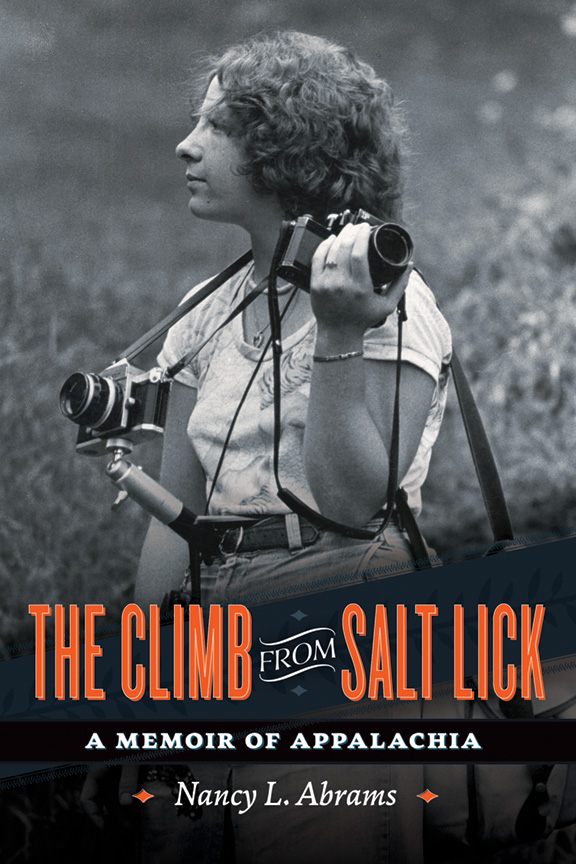
The Climb from Salt Lick: A Memoir of Appalachia

Nancy L. Abrams

 
276pp / 36 images
PB 978-1-946684-18-9
$26.99
ePub 978-1-946684-19-6
$26.99
PDF 978-1-946684-20-2
$26.99


Summary

In the mid-1970s, Nancy L. Abrams, a young photojournalist from the Midwest, plunges into life as a small-town reporter in West Virginia. She befriends the hippies on the commune one mountaintop over, rents a cabin in beautiful Salt Lick Valley, and falls in love with a local boy, wrestling to balance the demands of a job and a personal life. She learns how to survive in Appalachia—how to heat with coal and wood, how to chop kindling, plant a garden, and preserve produce.

The Climb from Salt Lick is the remarkable memoir of an outsider coming into adulthood. It is the story of a unique place and its people from the perspective of a woman who documents its burdens and its beauty, using words and pictures to tell the rich stories of those around her.

Contents

Prologue

Section I: A Home
1          Carpetbagger               
2          Salt Lick and Calamity                        
3          Non Compos Mentis              
4          Embedded                   
5          I Grow Fond              
6          Take Me Home, Country Roads                   
7          Real Life                     
8          Salt Lick                    
9          Through Calamity                   
10        A Doctor! And He’s Jewish!            
11        Ramps             
12        The Commune Down Salt Lick, Part 1                    
13        Pot Roast                    

Section II: A Mate
14        Switching Gears                  
15        Judy Judy Judy                    
16        Diamonds Are a Girl’s Best Friend              
17        Disaster Practice                   
18        West Virginia Brigadoon                  
19        The Commune Down Salt Lick, Part 2                     
20        Civil War                  
21        Deer Dear Friend                   
22        Happy Daze             
23        Why Is This Night Different?                       
24        Black Power               
25        The Murderer and Me                       
26        Buckwheat Baby                   
27        Apple Cider               
28        Busted            
29        Dilettante       
30        The Nesting Instinct
31        Experiments with Utopia      
32        Changes in Altitude               
33        The Cheat 1               
34        The Cheat 2
35        The Climb from Salt Lick      

Author

Nancy L. Abrams is a graduate of the University of Missouri School of Journalism, where she trained as a photojournalist. She has worked as a photographer, writer, and editor at The Preston County News and the Dominion Post, where she edited the Sunday magazine Panorama. She holds an MFA in creative writing-nonfiction from The New School and has been a professional writer and photographer for four decades.

Reviews

"The Climb from Salt Lick is sort of a reverse Hillbilly Elegy, the story of a young woman who flummoxes her family back in St. Louis by settling in remote, rural West Virginia, giving us a glimpse into hardscrabble living, small-town characters, and a slice of history. Especially charming is the chapter in which Abrams recalls the preparations for the fiftieth anniversary of Arthurdale, the planned community funded by the New Deal and championed by Eleanor Roosevelt. This is an endearing memoir of a relatively prosperous time (the 1970s were good for West Virginia coal), a woman who drives too fast chasing after stories, and a landscape that is long overdue for some appreciation."
Booklist

"Abrams's work is a great corrective to ugly caricatures of Appalachia such as J.D. Vance's Hillbilly Elegy. She shows that a newcomer can flourish even in the most unforgiving terrain, and that curiosity can trump narrow-mindedness even in the most remote climes."
Chicago Reader

“This memoir is a love story—for a West Virginia man, for a West Virginia journalism career, and ultimately, for the state itself. Abrams’s palpable love for West Virginia allows her to combine the wonder of an intelligent, respectful outsider with the passion of an Appalachia native.”
Sarah Beth Childers, author of Shake Terribly the Earth: Stories from an Appalachian Family

“A must-read for West Virginians. For journalists and would-be journalists. For feminists, young and old. And mothers. For old hippies and anybody who came of age in the sixties and seventies. For anybody who’s taken a toke or two. For anybody who has tried to balance integrity with duty, dropping out with pursuing a career while trying to succeed as a breadwinner and parent.”
Sara Pritchard, author of Help Wanted: Female and Crackpots

“Abrams writes sharply and passionately, with a journalist’s skill at laying out compelling facts, and with an artist’s ability to make us experience this life with her.”
Meredith Sue Willis, author of Out of the Mountains: Appalachian Stories

EmailFacebookInstagramPinterestTwitter

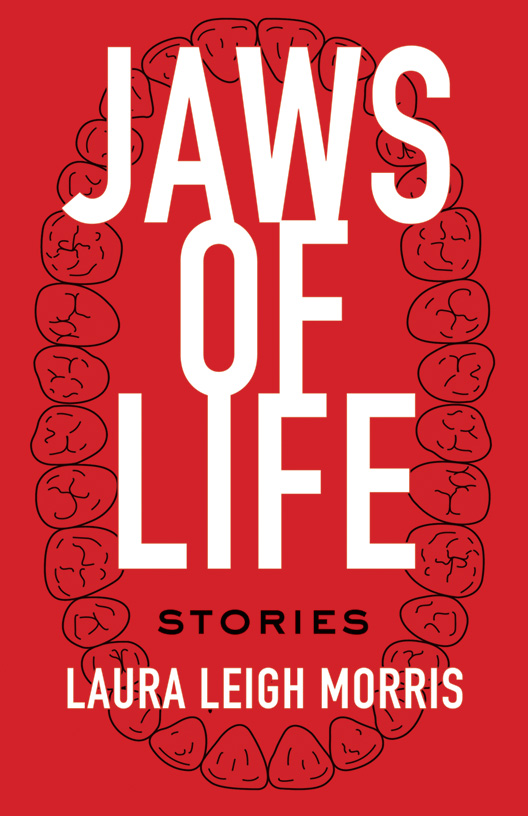
Jaws of Life: Stories

Laura Leigh Morris

168pp 
PB 978-1-946684-15-8
$18.99
ePub 978-1-946684-16-5
$18.99
PDF 978-1-946684-17-2
$18.99


Summary

In the hills of north central West Virginia, there lives a cast of characters who face all manner of problems. From the people who are incarcerated in West Virginia’s prisons, to a woman who is learning how to lose her sight with grace, to another who sorely regrets selling her land to a fracking company, Jaws of Life portrays the diverse concerns the people of this region face every day—poverty, mental illness, drug abuse, the loss of coal mines, and the rise of new extractive industries that exert their own toll.

While these larger concerns exist on the edges of their realities, these characters must still deal with quotidian difficulties: how to coexist with ex-spouses, how to care for sick family members, and how to live with friends who always seem to have more.

Contents

Frackers
Brickton Boys
A Room with a Door
Winners
House of Tires
Fat Bottomed Girls
The Dance
The Tattoo
Grief
The Dollar General
Controlled Fall
Popular
Jaws of Life
Muddin’
May Ours Be as Happy as Yours
Photographing the Dead

Author

Laura Leigh Morris is an assistant professor at Furman University in Greenville, South Carolina, where she teaches creative writing and literature. Before that, she spent three years as the National Endowment for the Arts/Bureau of Prisons Artist-in-Residence at Bryan Federal Prison Camp in Bryan, Texas. She’s previously published short fiction in Appalachian Heritage, the Louisville Review, the Notre Dame Review, and other journals. She is originally from north central West Virginia. This is her first book. Learn more at lauraleighmorris.com.

Reviews

“Laura Leigh Morris proves to us that stories are, indeed, everywhere. She tells them with the sharp eye and wit of a master storyteller. Superb.”
Larry Heinemann, winner of the National Book Award for Paco’s Story

“A very fine work with plenty of surprises, clever setups, satisfying payoffs, and vivid characters and mise en scene.”
Robert Gipe, author of Trampoline: An Illustrated Novel

Jaws of Life surges beyond Appalachian literature, or regional literature, straight into the heart of what matters on the universal level.”
George Singleton, author of The Half-Mammals of Dixie

“‘Look for something no one else sees,’ says one character in this fine debut, in which the people of Brickton lose many things—loved ones, their tempers, a good night’s sleep, five years of freedom—but never their power.”
Joni Tevis, author of The World Is On Fire

EmailFacebookInstagramPinterestTwitter

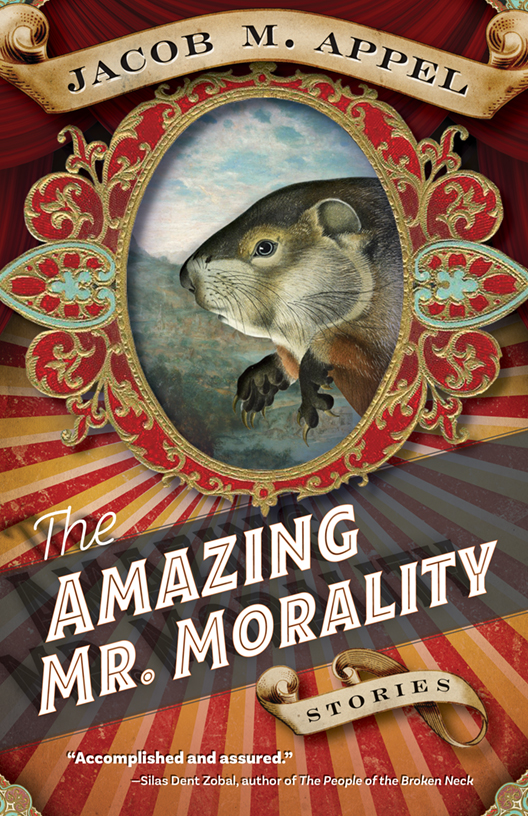
The Amazing Mr. Morality: Stories

Jacob M. Appel

February 2018
180pp 
PB 978-1-946684-04-2
$18.99
Epub 978-1-946684-05-9
$18.99
PDF 978-1-946684-06-6
$18.99


Summary

Eric Hoffer Award, 1st Runner-Up, Short Story/Anthology category

The Amazing Mr. Morality features tenacious men and women whose determination to buck middle-class social convention draws them toward unforeseen challenges. A failed television producer insists upon having a woodchuck relocated from his lawn, only to receive desperate letters in which the woodchuck begs to return. An overconfident ne’er-do-well obtains a lucrative lecture invitation intended for a renowned ornithologist and decides to deliver the speech himself. An innocuous dispute over whether to rename a local street opens up racial fault lines that prove deadly. 

The collection concludes with the title novella in which two unscrupulous ethicists, writing rival newspaper columns, seek to unseat each other by addressing questions such as: If you’re going to commit a murder, is it worse to kill when the victim is sleeping or awake?

Contents

The Children’s Lottery  
Jury of Matrons  
Gable’s Whiskers  
Burrowing in Exile  
Tracking Harold Lloyd  
Next of Kith 
Right of Way 
A Change of Plumage 
The Desecration at Lemming Bay 
The Amazing Mr. Morality  

Author

Jacob M. Appel is a physician, attorney, and bioethicist in New York City, where he teaches at the Mount Sinai School of Medicine. His publications include four novels and seven collections of short fiction. He is the winner of numerous awards, including the Hudson Prize, the Dundee International Book Prize, the Robert Watson Literary Prize, and the Devil’s Kitchen Reading Award. Learn more at jacobmappel.com.

Reviews

“These short stories and novella explore, with Appel’s trademark dark humor, contemporary life and its ethical dilemmas. As in his previous, fine collections, the author draws on his experiences as a physician, attorney, and bioethicist to inform these tales. Another excellent Appel collection of intelligent, humanistic, and witty stories that bite.”
Kirkus (starred review)

"Every single story in The Amazing Mr. Morality contains a nugget of insight into modern life, and some facet of each story’s ending—be it an unexpected twist or a good ironic joke—lingers in the memory long after reading."
Foreword Reviews

“Accomplished and assured.”
Silas Dent Zobal, author of The People of the Broken Neck

“In this collection of disturbing, addictive, provocative stories, the situations bristle with the reach of unrepentant longing and unexpected persistence. Appel’s stories never fail to impress; they never fail, period.”
Karen Heuler, author of The Inner City and In Search of Lost Time

“The characters in The Amazing Mr. Morality sing like so many sirens, wailing their desires, plotting, misguiding, and deceiving for causes noble and base. With wit and tenderness, Jacob Appel’s stories illuminate the awkward truths of what it means to be human.”
Tyrone Jaeger, author of So Many True Believers

EmailFacebookInstagramPinterestTwitter

The Book of the Dead

Muriel Rukeyser
Introduction by
Catherine Venable Moore

144pp 
PB 978-1-946684-21-9
$17.99


Summary

Written in response to the Hawk’s Nest Tunnel disaster of 1931 in Gauley Bridge, West Virginia, The Book of the Dead is an important part of West Virginia’s cultural heritage and a powerful account of one of the worst industrial catastrophes in American history. The poems collected here investigate the roots of a tragedy that killed hundreds of workers, most of them African American. They are a rare engagement with the overlap between race and environment in Appalachia.

Published for the first time alongside photographs by Nancy Naumburg, who accompanied Rukeyser to Gauley Bridge in 1936, this edition of The Book of the Dead includes an introduction by Catherine Venable Moore, whose writing on the topic has been anthologized in Best American Essays.

Contents


Author

Muriel Rukeyser (1913–1980) was a prolific American writer and political activist. In 1935 her first collection of poetry, Theory of Flight, won the Yale Younger Poets Prize, and she went on to publish twelve more volumes of poetry. She received a National Institute of Arts and Letters award, a Guggenheim Fellowship, the Levinson Prize for Poetry, and the Shelley Memorial Award, among other accolades. Rukeyser’s writing consistently emphasized and utilized cinematic and graphic techniques, and she explored various connections between the visual and literary aspects of art. She originally intended The Book of the Dead to be published with multiple photos by Naumburg.

Catherine Venable Moore is a writer and producer in Fayette County, West Virginia. A graduate of Harvard University and the University of Montana, Moore is the recipient of fellowships from the MacDowell Colony, the Vermont Studio Center, the Highlander Center, the West Virginia Humanities Council, and others. Her nonfiction has recently appeared in Best American Essays, Oxford American, VICE, Columbia Journalism Review, and Yes! She is also an honorary member of the United Mine Workers of America. Currently, she is at work on a collection of essays.

Reviews

"Innovative, gorgeous, and deeply moving."
Publishers Weekly (starred review)

“If Rukeyser had left us only The Book of the Dead and The Life of Poetry, she would have made a remarkable contribution to American literature. But the range and daring of her work, its generosity of vision, its formal innovations, and its level of energy are unequalled among twentieth-century American poets.”
Adrienne Rich, introduction to Muriel Rukeyser, Selected Poems

“Muriel Rukeyser’s words are a painful, haunting memorial to an American crime. Catherine Venable Moore’s graceful essay sets the work in its time and place, and ties it to today’s struggles.”
Jedediah Purdy, author of After Nature: A Politics for the Anthropocene

"A poetic account of the value of human life in a world of commodity and extraction."
Elizabeth Catte, Literary Hub

EmailFacebookInstagramPinterestTwitter

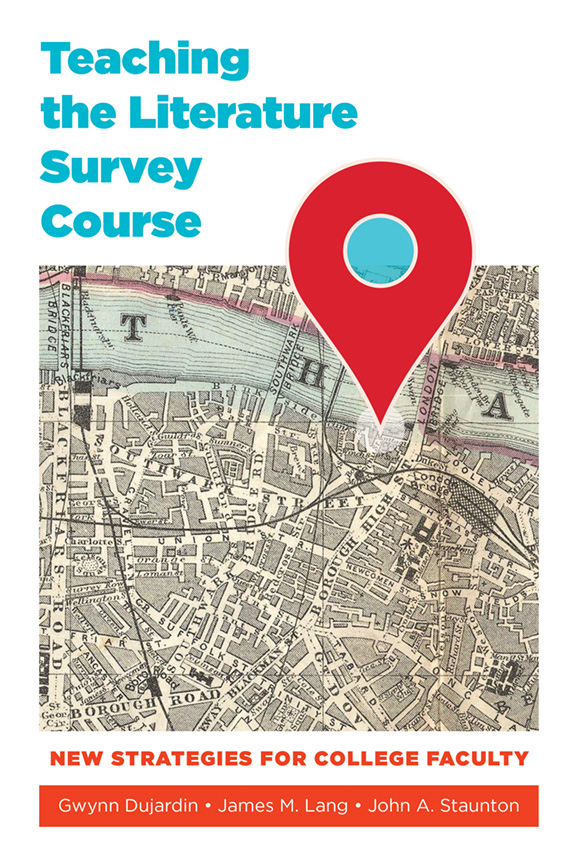
Teaching the Literature Survey Course: New Strategies for College Faculty

Edited by 
Gwynn Dujardin,
James M. Lang,
and John A. Staunton

January 2018
276pp 
PB  978-1-946684-09-7
$28.99
CL  978-1-946684-08-0
$99.99
Epub  978-1-946684-10-3
$28.99
PDF  978-1-946684-11-0
$28.99

Teaching and Learning in Higher Education


Summary

Teaching the Literature Survey Course makes the case for maintaining—even while re-imagining and re-inventing—the place of the survey as a transformative experience for literature students. Through essays both practical and theoretical, the collection presents survey teachers with an exciting range of new strategies for energizing their teaching and engaging their students in this vital encounter with our evolving literary traditions.

From mapping early English literature to a team-based approach to the American survey, and from multimedia galleries to a “blank syllabus,” contributors propose alternatives to the traditional emphasis on lectures and breadth of coverage. The volume is at once a set of practical suggestions for working teachers (including sample documents like worksheets and syllabi) and a provocative engagement with the question of what introductory courses can and should be.


Receive a 30% discount on orders of 10 or more copies of this title with code HIGHEREDBULK30 at checkout.

Contents

Introduction, James M. Lang

Part One: Pedagogies
1. Mapping the Literature Survey: Locating London in British Literature I, Kevin Bourque
2. Creative Imitation: The Survey as an Occasion for Emulating Style, Scott L. Newstok
3. Bingo Pedagogy: Team-Based Learning and the Literature Survey, Desirée Henderson
4. Extended Engagement: In Praise of Breadth, Aaron Rosenfeld

Part Two: Projects
5. “Reacting to the Past” in the Survey Course: Teaching the Stages of Power: Marlowe and Shakespeare, 1592 Game, Joan Varnum Ferretti
6. The Blank Survey Syllabus, Chris Walsh
7. Errant Pedagogy in the Early Modern Classroom, or Prodigious Misreadings in and of the Renaissance, Melissa J. Jones
8. Digital Tools, New Media Survey, and the Literature Survey, Jennifer Page

Part Three: Programs
9. Thematic Organization and the First-Year Literature Survey, Kristin Lucas and Sarah Fiona Winters
10. Fear and Learning in the Historical Survey Course, Gwynn Dujardin
11. The Survey as Pedagogical Training and Academic Job Credential, Tim Rosendale
12. Revisioning the American Literature Survey for Teachers and Other Wide-Awake Humans, John A. Staunton
Contributor Biographies
Notes S

Editors

Gwynn Dujardin is assistant professor of English at Queen’s University in Kingston, ON, Canada.

James M. Lang is a professor of English and director of the Center for Teaching Excellence at Assumption College.

John A. Staunton is professor of English education and American literature at Eastern Michigan University.

Reviews

“An effectively organized collection that I believe will benefit college—and potentially, some high school—instructors at many levels and institutions. Even as I was reading it, I felt the gears in my mind turning and trying to think of ways to adapt some of its ideas right away.”
Jesse Kavadlo, Maryville University

EmailFacebookInstagramPinterestTwitter

The News Untold: Community Journalism and the Failure to Confront Poverty in Appalachia

Michael Clay Carey

252pp 
PB 978-1-943665-97-6
$26.99
CL 978-1-943665-96-9
$79.99
ePub 978-1-943665-98-3
$26.99
PDF 978-1-943665-99-0
$26.99

Summary

Association for Education in Journalism and Mass Communication Tankard Book Award winner
Weatherford Award winner, nonfiction

The News Untold offers an important new perspective on media narratives about poverty in Appalachia. It focuses on how small-town reporters and editors in some of the region’s poorest communities decide what aspects of poverty are news, how their audiences interpret those decisions, and how those two related processes help shape broader understandings of economic need and local social responsibility. Focusing on patterns of both media creation and consumption, The News Untold shows how a lack of constructive news coverage of economic need can make it harder for the poor to voice their concerns.

Critical and inclusive news coverage of poverty at the local level, Michael Clay Carey writes, can help communities start to look past old stereotypes and attitudes and encourage solutions that incorporate broader sets of community voices. Such an effort will require journalists and community leaders to reexamine some of the professional traditions and social views that often shape what news looks like in small towns.

Contents

Acknowledgments

1. Poverty and Community Media in Rural Appalachia

2. Greenburg, Priorsville, and Deer Creek: Community Case Studies

3. Dominant Frames in Local Poverty Coverage

4. Pressures, Philosophies, and the Encoding of Media Messages

5. Decoding Poverty Coverage and Broader Images of Appalachia

6. How Local Media’s Silence Influences Views of Poverty

Appendix A: Research Methodology

Appendix B: Action Steps for Journalists 0

Notes

Bibliography

Index

Author

Michael Clay Carey is an assistant professor of journalism and mass communication at Samford University in Birmingham. He researches the impacts of stereotypes and the roles media play in the formation and maintenance of individual and group identity. Carey spent ten years working as a newspaper reporter and editor.

Reviews

“Carey’s meticulously researched and beautifully written account of how local news outlets chronicle life in three Appalachian towns gets at the ways in which journalists sometimes cover poverty, and sometimes ignore it. He helps us understand how local people respond to those news discourses and to their disempowering silences. And he uses the research to make concrete suggestions for how a more inclusive, context-sensitive journalism can reinvigorate the local civic sphere.”
Linda Steiner, University of Maryland

“A compassionate and thoughtful exploration of an important topic. Carey draws on his skills as a journalist to create an intimate portrait of these three communities, while using his training as a scholar and social scientist to give us a rigorously researched book.”
John Hatcher, coeditor of Foundations of Community Journalism

EmailFacebookInstagramPinterestTwitter