Oil and Urbanization on the Pacific Coast: Ralph Bramel Lloyd and the Shaping of the Urban West


Michael R. Adamson

384pp 
PB 978-1-946684-36-3
$29.99
eBook 978-1-946684-44-8
$29.99


Summary

Oil and Urbanization on the Pacific Coast tells the story of oilman Ralph Bramel Lloyd, a small business owner who drove the development of one of America’s largest oil fields. Lloyd invested his petroleum earnings in commercial real estate—much of it centered on automobiles and the fuel they require—in several western cities, notably Portland, Oregon. Putting the history of extractive industry in dialogue with the history of urban development, Michael R. Adamson shows how energy is woven into the fabric of modern life, and how the “energy capital” of Los Angeles exerted far-flung influence in the US West.

A contribution to the relatively understudied history of small businesses in the United States, Oil and Urbanization on the Pacific Coast explores issues of interest to multiple audiences, such as the competition for influence over urban development waged among local growth machines and outside corporate interests; the urban rivalries of a region; the importance of public capital in mobilizing the commercial real estate sector during the Great Depression and World War II; and the relationships among owners, architects, and contractors in the execution of commercial building projects.

Contents

List of Figures
List of Tables  
Acknowledgments      
List of Abbreviations  
Introduction: The Role of the Independent Oil Operator       
1. Developing the Ventura Avenue Field       
2. Local Elites, Outside Companies, and Ventura’s Oil Boom         
3. Making Portland a Wonderful City            
4. False Start: Ralph Lloyd’s East Side Dream Falls Short   
5. The Lloyd Corporation Becomes an Independent Operator         
6. Depression-Era Commercial Real Estate Development and Management            
7. Public Capital and the Development of Portland’s East Side        
8. The Suburbanization of Urban Space: The Lloyd Center  
Conclusion      
Collections     
Notes  
Index   

Author

Michael R. Adamson is the author of A Better Way to Build: A History of the Pankow Companies. Based in the San Francisco Bay Area, he is an independent scholar whose essays on business and urban history and US foreign economic policy have appeared in many peer-reviewed journals and scholarly collections.

Reviews

“This meticulously researched biography makes a valuable contribution to American business history by showing how Ralph Lloyd navigated a changing energy and real estate environment. It explores the interactions between oil field development and urban development, both on the scene in Ventura as a boom town and away from the scene in Los Angeles and Portland as opportunities for investment.”
Carl Abbott, author of How Cities Won the West: Four Centuries of Urban Change in Western North America 

“A tour de force. Adamson’s command of business history and the depth of his research are stunning. This is, hands down, the most meticulous study of an independent oilman I have ever read.”
Diana Hinton, author of Shale Boom: The Barnett Shale Play and Fort Worth

EmailFacebookInstagramPinterestTwitter

After Coal: Stories of Survival in Appalachia and Wales

Tom Hansell

264pp
PB 978-1-946684-55-4
$27.99
eBook 978-1-946684-56-1
$27.99


Summary

What happens when fossil fuels run out? How do communities and cultures survive?

Central Appalachia and south Wales were built to extract coal, and faced with coal’s decline, both regions have experienced economic depression, labor unrest, and out-migration. After Coal focuses on coalfield residents who chose not to leave, but instead remained in their communities and worked to build a diverse and sustainable economy. It tells the story of four decades of exchange between two mining communities on opposite sides of the Atlantic, and profiles individuals and organizations that are undertaking the critical work of regeneration.

The stories in this book are told through interviews and photographs collected during the making of After Coal, a documentary film produced by the Center for Appalachian Studies at Appalachian State University and directed by Tom Hansell. Considering resonances between Appalachia and Wales in the realms of labor, environment, and movements for social justice, the book approaches the transition from coal as an opportunity for marginalized people around the world to work toward safer and more egalitarian futures.

Contents

Acknowledgments      
Introduction     
1. Why Appalachia and Wales?          
2. Historical Context   
3. Turning Points        
4. Exploring Regeneration      
5. Back in the USA    
6. The Next Phase of the Exchange    
7. Conclusions             
Production Credits for the After Coal Documentary  
Notes   
Bibliography   
Index   

Author

Tom Hansell is an award-winning documentary filmmaker whose work has been broadcast on public television and screened at international film festivals. Hansell has more than two decades of experience working with coalfield residents to create collaborative media projects. He began his career at the Appalshop media arts center, and he currently teaches at Appalachian State University.

Reviews

"Visually appealing . . . . Hansell promises no easy answers, but his optimistic work showcases multiple community-building efforts."
Publishers Weekly

"After Coal is an inspiring record of community-driven change that shows us what a great debt we owe to artists, organizers, and visionaries who approach the often overwhelming task of economic transition with clear eyes and a desire for a better future.”
Elizabeth Catte, author of What You Are Getting Wrong About Appalachia

“A badly needed analysis of the situation where post-coal Appalachia finds itself. Books like Hansell’s are necessary to help the region move forward.”
Denise Giardina, author of six novels, including Storming Heaven

After Coal is a deeply moving account of a long-term exchange between miners in the coalfields of central Appalachia and south Wales where, between 1980 and 2000, both regions lost thousands of mining jobs. Tom Hansell captures their struggles through the voices of miners and their families. He brings the reader face to face with Appalachian and Welsh coal miners whose stories will touch the reader’s heart.”
William Ferris, author of The South in Color: A Visual Journal

Elizabeth Catte Interview

Elizabeth Catte—editor at large at West Virginia University Press and author of What You Are Getting Wrong About Appalachiatalks with author and filmmaker Tom Hansell about After Coal: Stories of Survival in Appalachia and Wales.


Attachment
EmailFacebookInstagramPinterestTwitter

Victorian Poetry: Volume 55, Issues 1-4


Image

Victorian Poetry: Volume 55, Issues 1–4
Editor: John B. Lamb, West Virginia University
E-ISSN: 1530-7190
Print ISSN: 0042-5206

Click on listed price to corresponding product to order:
IInstitution (US): $110.00
Individual (US): $50.00
Institution (Outside US, including Canada): $130.00
Individual (Outside US, including Canada): $75.00


A year-end message from WVU Press

At West Virginia University Press we're wrapping up a year of firsts – our first time in the New York Times, the Atlantic, No Depression, and PBS NewsHour online; our first time winning the Weatherford Award and landing finalists for the Southern Book Prize and the Lambda Literary Award. And while we've been reviewed in Publishers Weekly many times, we've never before had one of our titles held up in PW as evidence of the value of university press publishing.

More firsts: our director in the Chronicle of Higher Education, our marketing manager named a 40 under 40, and our art director chosen for a committee that judges the country's best book covers. We hired a new managing editor who has a master’s in professional writing and editing from WVU – our first full-time colleague from that nationally renowned program.

We exhibited our titles at conferences in seven states and one Canadian province. Our authors toured all 120 counties in Kentucky, presided over pepperoni roll contests, and held readings everywhere from the International Center for Photography in New York to the Country Music Hall of Fame in Nashville. We published books by scholars from the United States, Canada, and Europe; from big universities like Virginia Tech and Indiana University and smaller ones like Samford and West Virginia Wesleyan; and, of course, from WVU. In one book alone we published work by more than 60 West Virginians.

It was our first time sharing exhibit space with WVU's Department of Geography and our first time granting free digital access to a classic backlist book. Our titles were spotted in bookstores across the country and also (likely a first) at MoMA, the National Museum of African American History and Culture, and the Met.

Amid all the firsts, we've also enjoyed continuity, especially in our dynamic collaborations with partners across the university, the state, and the world, from the Cheat River Review to the West Virginia Humanities Council to the Association of American University Presses. Those relationships – with you, our supporters, authors, readers, and friends – help make us the largest publisher in the state of West Virginia and a vital intellectual, cultural, and literary resource. We’re enormously grateful and wish you all the best this holiday season.

Derek, Abby, Than, Sara, Floann, Kat, and Andrew

2018 Bah Humbug Book Sale

Extended until January 11, 2019!

Save 30% on all WVU Press titles with promo code HUMBUG2018 during our third annual Bah Humbug book sale. 

Search books by title or browse books by the series or subject areas listed in the sidebar. Over five hundred WVU Press books are on sale until January 11, 2019.*

HOW TO ORDER AND SAVE 30%:

  1. Enter promo code HUMBUG2018 in the shopping cart on wvupress.com.

    OR

  2. Phone (800) 621-2736 and quote promo code HUMBUG2018 while ordering.

*The 2018 Bah Humbug sale excludes forthcoming WVU Press books, all ebooks, and all journals.


Bah Humbug Book Sale

Save 30% on all WVU Press titles with promo code HUMBUG2017 during our third annual Bah Humbug book sale. 

Search books by title or browse books by the series or subject areas listed in the sidebar. Over four hundred WVU Press books are on sale until January 5, 2018.*

HOW TO ORDER AND SAVE 30%:

  1. Enter promo code HUMBUG2017 in the shopping cart on wvupress.com.

    OR

  2. Phone (800) 621-2736 and quote promo code HUMBUG2017 while ordering.

*The 2017 Bah Humbug sale excludes forthcoming WVU Press books and all journals.


Third Annual Bah Humbug Book Sale

Save 30% on all WVU Press titles with promo code HUMBUG2017 during our third annual Bah Humbug book sale. 

Search books by title or browse books by the series or subject areas listed in the sidebar. Over four hundred WVU Press books are on sale until January 5, 2018.*

HOW TO ORDER AND SAVE 30%:

  1. Enter promo code HUMBUG2017 in the shopping cart on wvupress.com.

    OR

  2. Phone (800) 621-2736 and quote promo code HUMBUG2017 while ordering.

*The 2017 Bah Humbug sale excludes forthcoming WVU Press books and all journals.

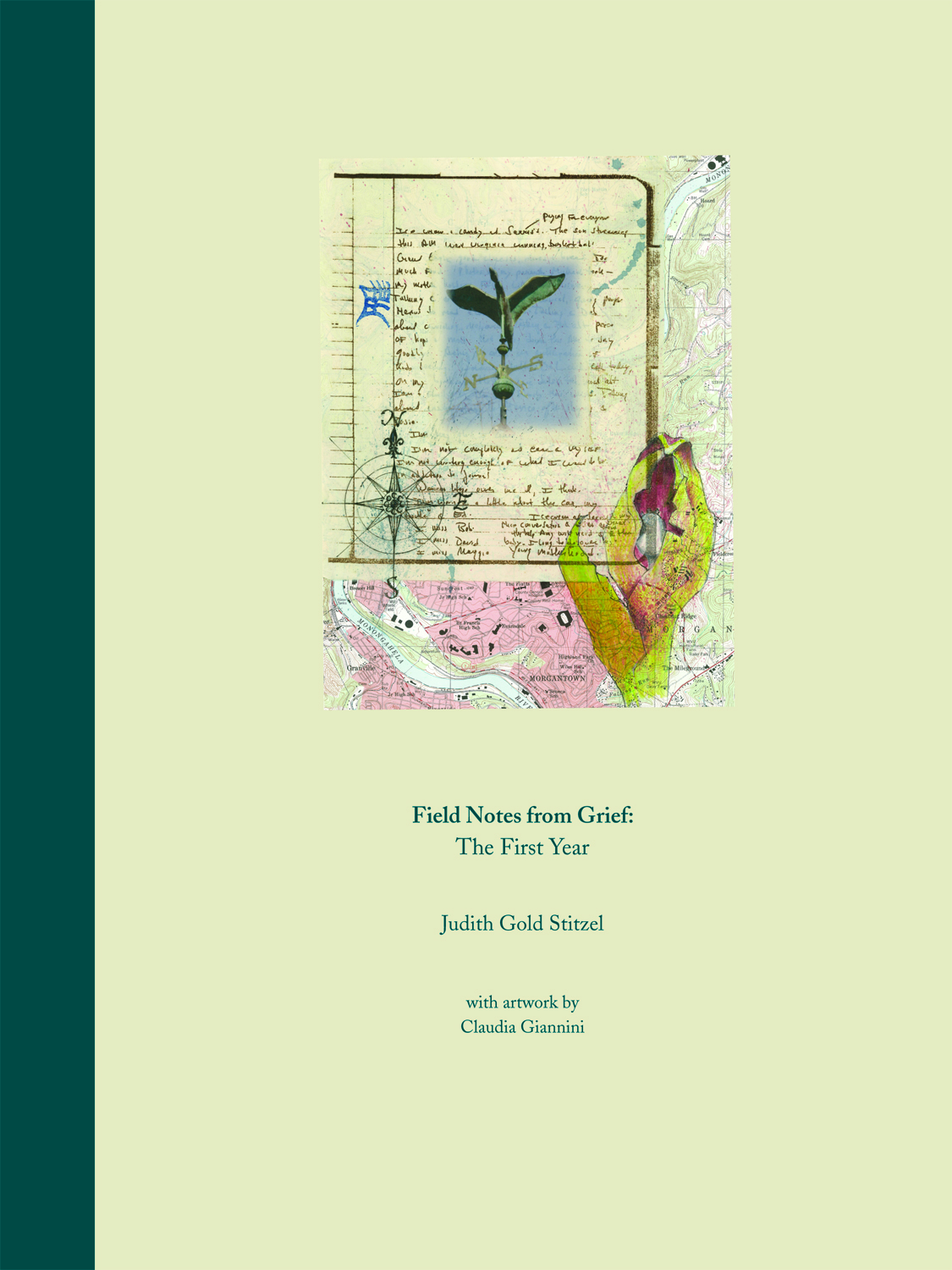
Field Notes from Grief: The First Year

Judith Gold Stitzel

140pp 
PB 978-1-595717-53-5
$18.00
Published by Word Association Publishers


Summary

Field Notes From Grief: The First Year is drawn from the pages of the journal that Judith Gold Stitzel kept the year following the death of her husband Bob after forty-six years of their shared life. The entries begin a few days before Stitzel’s husband died and are accompanied by collages by artist Claudia Giannini. Like the entries of different lengths, the collages—one for each month of the year—allow readers frequent pauses to reflect on their own lives and losses.  

What differentiates this book from self-help books and from other accounts of survival and recovery are the immediacy and self-revelation the journal format allows, the frequent humor in Stitzel’s exploration of the incongruities and rhythms of grief, and her exploration of “the couple”—that remarkable entity—and how it does and does not continue after death.  

Field Notes from Grief does not attempt to explain or educate but to share the rawness of experience while providing evidence to all who grieve, or fear grief, that they will once again want to go on.  

Contents


Author

Judith Gold Stitzel is a retired professor of English and women’s studies at West Virginia University and the founding director of the WVU Center for Women’s Studies. Her work has appeared in Colorado Quarterly, Frontiers: A Journal of Women Studies, College English, Green Mountain Review, and elsewhere. She has an MFA in creative writing from Vermont College.

Reviews

“A story of love is encapsulated like a seed in a story of loss and then blooms on Judith Stitzel’s pages, accompanied by Claudia Giannini’s gorgeous images. Grief requires its own syntax and vocabulary, Stitzel tells us in this chronicle of the first year after her husband’s death, and then proceeds to learn the language like a native. She rejects the clichés customarily offered to and by the bereaved, instead gleaning her own complicated, honest, and resilient art.”
Natasha Sajé, author of Bend 

EmailFacebookInstagramPinterestTwitter