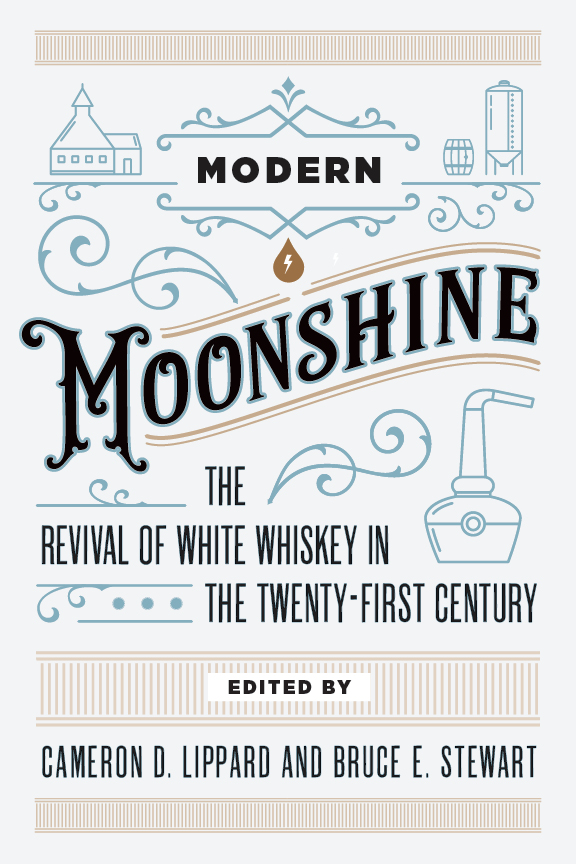
Modern Moonshine: The Revival of White Whiskey in the Twenty-First Century

Edited by Cameron D. Lippard and Bruce E. Stewart

252pp
PB 978-1-946684-82-0
$29.99
CL 978-1-946684-81-3
$99.99
eBook 978-1-946684-83-7
$29.99


Summary

The craft of making moonshine—an unaged white whiskey, often made and consumed outside legal parameters—nearly went extinct in the late twentieth century as law enforcement cracked down on illicit producers, and cheaper, lawful alcohol became readily available. Yet the twenty-first century has witnessed a resurgence of artisanal distilling, as both connoisseurs and those reconnecting with their heritage have created a vibrant new culture of moonshine. While not limited to Appalachia, moonshine is often entwined with the region in popular understandings.

The first interdisciplinary examination of the legal moonshine industry, Modern Moonshine probes the causes and impact of the so-called moonshine revival. What does the moonshine revival tell us about our national culture? How does it shape the image of Appalachia and rural America? Focusing mostly on southern Appalachia, the book’s eleven essays chronicle such popular figures as Popcorn Sutton and explore how and why distillers promote their product as “traditional” and “authentic.” This edited collection draws from scholars across the disciplines of anthropology, history, geography, and sociology to make sense of the legal, social, and historical shifts behind contemporary production and consumption of moonshine, and offers a fresh perspective on an enduring topic of Appalachian myth and reality.

Editors

Bruce E. Stewart is an associate professor of history at Appalachian State University. He is the author or editor of several books, including Moonshiners and Prohibitionists: The Battle over Alcohol in Southern Appalachia.

Cameron D. Lippard is a professor of sociology at Appalachian State University. He is the author or editor of several books, including Building Inequality: Race, Ethnicity, and Immigration in the Atlanta Construction Industry and Untapped: Exploring the Cultural Dimensions of Craft Beer (West Virginia University Press).


Contents

List of Illustrations      

Introduction: The Revival of Moonshine in Southern Appalachia and the United States     

Bruce E. Stewart and Cameron D. Lippard

Part I: Socially Constructing the Origins of the Modern Moonshine Revival

1. Fire Up the Stills: A Brief History of Moonshining in Southern Appalachia before the Twenty-First Century   

Bruce E. Stewart

2. Jim Tom Hedrick, Popcorn Sutton, and the Rise of the Postmodern Moonshiner

Daniel S. Pierce

3. Moonshiners and the Media: The Twenty-First-Century Trickster          

Emily D. Edwards

4. Making Criminals, Making Ends Meet: Constructing Criminality in Franklin County, Virginia

Robert T. Perdue

Part II: The Legalization and Marketing of Modern Moonshine

5. The Rise of “Legal” Moonshine: Breaking Down the Legal Barriers to Craft Distilling in the United States    

Kenneth J. Sanchagrin

6. From the Appalachian Mountains to the Puget Sound and Beyond: Distilling Authenticity in Modern Moonshine       

Kaitland M. Byrd, J. Slade Lellock, and Nathaniel G. Chapman

7. Entrepreneurial Family Values and the Modern Moonshiner: Appalachian Craft Distilling beyond Its Neoliberal Frame         

Jason Ezell

8. The “Uncatchables”: A Case Study of Call Family Distillers in Wilkes County, North Carolina

Cameron D. Lippard

Part III: Historic Preservation and Tourism in the Name of Moonshine

9. Distilling Commercial Moonshine in East Tennessee: Mashing a New Type of Tourism           

Helen M. Rosko

10. Heritage Spirits in Heritage Spaces        

Kristen Baldwin Deathridge

11. Automotive Heritage and the Legacy of High-Octane Moonshiners: A Unique Cultural Intersection of Alcohol and Motor Vehicles            

Barry L. Stiefel

Contributor Biographies         

Reviews

“I like this book very much. The editors have brought together a wide range of scholarly voices, and their essays, taken together, give an excellent overview of the state of modern moonshine.”
Michael Lewis, author of The Coming of Southern Prohibition


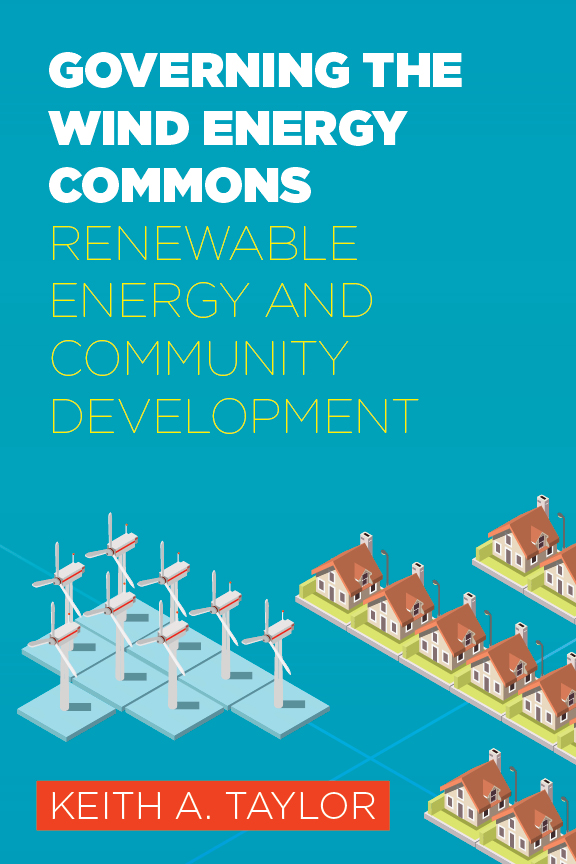
Governing the Wind Energy Commons: Renewable Energy and Community Development

Keith A. Taylor

Rural Studies Series
July 2019
180pp
PB 978-1-946684-85-1
$29.99
eBook 978-1-946684-86-8
$29.99


Summary

Wind energy is often framed as a factor in rural economic development, an element of the emerging “green economy” destined to upset the dominant greenhouse- gas-emitting energy industry and deliver conscious capitalism to host communities. The bulk of wind energy firms, however, are subsidiaries of the same fossil fuel companies that wrought havoc in shale-gas and coal-mining towns from rural Appalachia to the Great Plains. On its own, wind energy development does not automatically translate into community development.

In Governing the Wind Energy Commons, Keith Taylor asks whether revenue generated by wind power can be put to community well-being rather than corporate profit. He looks to the promising example of rural electric cooperatives, owned and governed by the 42 million Americans they serve, which generate $40 billion in annual revenue. Through case studies of a North Dakota wind energy cooperative and an investor-owned wind farm in Illinois, Taylor examines how regulatory and social forces are shaping this emerging energy sector. He draws on interviews with local residents to assess strategies for tipping the balance of power away from absentee-owned utilities.

Author

Keith A. Taylor is community economic development specialist faculty in the department of human ecology at the University of California, Davis. He holds a PhD in human and community development from the University of Illinois at Urbana-Champaign

Contents

Introduction

Community Development & Institutional Fit

Case Study - The Investor-Owned Wind Farm

Case Study - The Co-operative-Owned Wind Farm

Comparing the Investor & Co-operative Owned Firms

Why Not Policy From Below?

Reviews

“This is a groundbreaking work that addresses the potential and limitations of alternative economic models for delivery of a key service: electricity.”
Cornelia Flora, Iowa State University


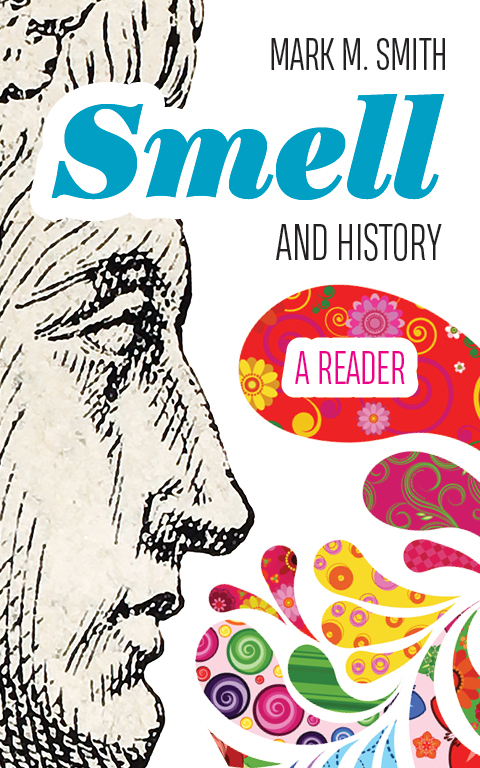
Smell and History: A Reader

Edited by Mark M. Smith

264pp
PB 978-1-946684-68-4
$26.99
eBook 978-1-946684-69-1
$26.99


Summary

Smell and History collects many of the most important recent essays on the history of scent, aromas, perfumes, and ways of smelling. With an introduction by Mark M. Smith—one of the leading social and cultural historians at work today and the preeminent champion in the United States of the emerging field of sensory history—the volume introduces to undergraduate and graduate students as well as to historians of all fields the richness, relevance, and insightfulness of the olfactory to historical study.

Ranging from antiquity to the present, these ten essays, most of them published since 2003, consider how olfaction and scent have shaped the history of medicine, gender, race-making, class formation, religion, urbanization, colonialism, capitalism, and industrialization; how habits and practices of smelling informed ideas about the Enlightenment, modernity, and memory; how smell shaped perceptions of progress and civilization; and how people throughout history have used smell as a way to organize categories and inform worldviews.

Contents

Editor’s Introduction: Smelling the Past | Mark M. Smith    

Introduction: Why Smell the Past? | Alain Corbin    

1.         Scent and Sacrifice in the Early Christian World | Susan Ashbrook Harvey 

2.         Urban Smells and Roman Noses | Neville Morley     

3.         Medieval Smellscapes | C. M. Woolgar        

4.         Smelling the New World | Holly Dugan        

5.         Gender, Medicine, and Smell in Seventeenth-Century England | Jennifer Evans     

6.         Smell and Victorian England | Jonathan Reinarz     

7.         Reodorizing the Modern Age | Robert Jütte   

8.         Making “Others” Smell | Mark M. Smith      

Epilogue: Futures of Scents Past | David Howes      

Acknowledgments     

Further Reading          

Sources and Permissions       

Index  

Author

Mark M. Smith is Carolina Distinguished Professor of History at the University of South Carolina. His work has been featured in the New York Times, the Wall Street Journal, and the New York Review of Books, and he serves as the general editor of Interdisciplinary Perspectives on Sensory History.

Reviews

“An important overview of this burgeoning new field, compiled by one of its most insightful scholars.”
Peter Denney, Griffith University

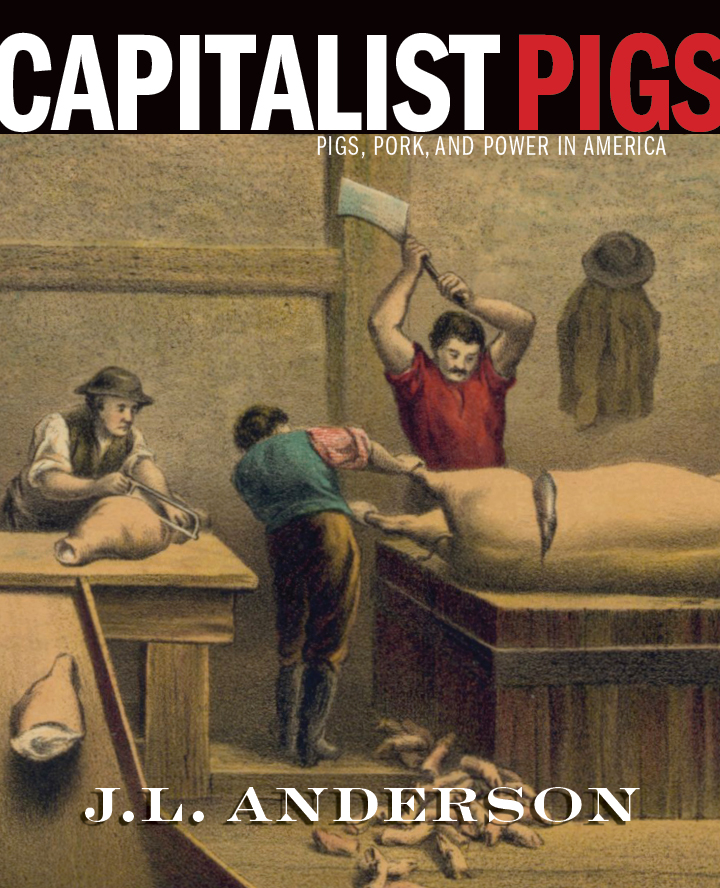
Capitalist Pigs: Pigs, Pork, and Power in America

J. L. Anderson

300pp 
PB 978-1-946684-73-8
$34.99
CL 978-1-946684-72-1
Out of print
eBook 978-1-946684-74-5
$34.99


Summary

Pigs are everywhere in United States history. They cleared frontiers and built cities (notably Cincinnati, once known as Porkopolis), served as an early form of welfare, and were at the center of two nineteenth-century “pig wars.” American pork fed the hemisphere; lard literally greased the wheels of capitalism.

J. L. Anderson has written an ambitious history of pigs and pig products from the Columbian exchange to the present, emphasizing critical stories of production, consumption, and waste in American history. He examines different cultural assumptions about pigs to provide a window into the nation’s regional, racial, and class fault lines, and maps where pigs are (and are not) to reveal a deep history of the American landscape. A contribution to American history, food studies, agricultural history, and animal studies, Capitalist Pigs is an accessible, deeply researched, and often surprising portrait of one of the planet’s most consequential interspecies relationships.

Contents

List of Illustrations      

Acknowledgments     

Introduction    

1. Making American Gehography     

2. Hogs at Home on the Range           

3. Working People’s Food      

4. Pigs and the Urban Slop Bucket     

5. To Market, to Market       

6. Swine Plagues     

7. Making Bacon and White Meat     

8. Science and the Swineherd 

Coda: The Future of Hogs in America            

Notes   

Index   

Author

J. L. Anderson teaches history at Mount Royal University in Calgary, Alberta. Prior to his academic appointment, he was a museum educator and administrator, cultivating a personal and professional interest in swine at the agricultural museums where he worked. Anderson is currently president of the Agricultural History Society.

Reviews

"In the vein of William Cronon’s Nature’s Metropolis, this is a meaty, accessible, and clear-eyed agricultural history."
Booklist

"Anderson delivers the most thorough account of American pigs ever written, a book packed with fascinating detail on where pigs lived (forests, farmyards, city streets), what they ate (nuts, corn, garbage, the corpses of Civil War soldiers), and how scientists transformed their bodies and their lives to meet the relentless demands of the market. This is the story of how pigs made America, and how America remade the pig."
Mark Essig, author of Lesser Beasts: A Snout-to-Tail History of the Humble Pig

“J.L. Anderson weaves a complex story about the hog industry’s impact on the growth of an economy and offers insight into the important role the agriculture and food industry played in the building of a nation. You will find yourself surprised by its influence."
Tom Vilsack, US Secretary of Agriculture, 2009–2017

"J. L. Anderson's Capitalist Pigs is a thorough and engaging examination of swine in US agriculture, culture, and history. It will be a standard to judge later histories of Americans' relationships with agricultural livestock and domestic animals."
Leo Landis, State Curator, State Historical Society of Iowa and "the Bacon Professor"

“A sweeping history of pigs in the United States from before the arrival of Europeans to today. In Anderson’s clear, brisk, and clever history, these animals appear as wild beasts roaming forests, domesticates in farm pens, commodities in railcars, corpses on slaughterhouse hooks, meat at the ends of butchers’ knives, consumer products in Walmart coolers, nourishment in human stomachs, and as transplanted hearts thumping away in human chests. It’s fun to read.”
James C. Giesen, author of Boll Weevil Blues: Cotton, Myth, and Power in the American South

"Anderson’s investigation is thorough, focusing on economic and social impacts, and, when appropriate, unflinching."
Publishers Weekly

"A clear and accessible read, beautifully illustrated with paintings, maps, and photographs that demonstrate the prominence of the pig in America."
Environmental History

"Valuable for scholars and ac­cessible to a broad audience."
The Annuals of Iowa

To the Bones

Valerie Nieman

June 2019
204pp
PB 978-1-946684-98-1
$19.99
eBook 978-1-946684-99-8
$19.99


Summary

2020 Killer Nashville Silver Falchion Award Finalist

Darrick MacBrehon, a government auditor, wakes among the dead. Bloodied and disoriented from a gaping head wound, the man who staggers out of the mine crack in Redbird, West Virginia, is much more powerful—and dangerous—than the one thrown in. An orphan with an unknown past, he must now figure out how to have a future.

Hard-as-nails Lourana Taylor works as a sweepstakes operator and spends her time searching for any clues that might lead to Dreama, her missing daughter. Could this stranger’s tale of a pit of bones be connected? With help from disgraced deputy Marco DeLucca and Zadie Person, a local journalist investigating an acid mine spill, Darrick and Lourana push against everyone who tries to block the truth. Along the way, the bonds of love and friendship are tested, and bodies pile up on both sides.

In a town where the river flows orange and the founding—and controlling—family is rumored to “strip a man to the bones,” the conspiracy that bleeds Redbird runs as deep as the coal veins that feed it.

Author

Valerie Nieman is a professor of English at North Carolina A&T State University. A former journalist and farmer in West Virginia, she is the author of three novels, as well as collections of poetry and short fiction. She is a graduate of West Virginia University, and she received an MFA from Queens University of Charlotte.

Reviews

“This is the West Virginia novel done right: slam-bang storytelling in tightly controlled language, by turns horrific and funny and beautiful.”
Pinckney Benedict, author of Miracle Boy and Other Stories

“In this unusual tale of death and monsters and environmental devastation, horror, science fiction, romance, and satire bleed together to form a vibrant literary delight that is as powerful and imposing as the fearsome orange-hued river that runs through it.”
Colorado Review

“Evocative, intelligent prose conjures an anxious mood and strong sense of place while spotlighting the societal and environmental devastation wrought by the coal mining industry.”
Kirkus Reviews

“A storytelling feat: a pulse-pounding thriller that also manages to construct a whole terrifying, gorgeous mythology. To the Bones surprises and captivates at every turn.”
Clare Beams, author of We Show What We Have Learned

“An immensely readable story of good versus evil, with enough twists and turns (and twists within turns) to keep you guessing to the last minute.”
Steve Weddle, author of Country Hardball

“A thrilling hike into coal country, Nieman’s page-turner pulls off an audacious trick: empathy for a misunderstood region.”
James Tate Hill, author of Academy Gothic

“A creative mix of several genres, including elements of horror, the supernatural, Old Western showdowns, contemporary Southern (complete with a mass outdoor prayer vigil to prepare people for the rapture), suspense and romance.”
News & Record

“An entertaining supernatural thriller about all-too-real threats.”
The Observer

“Nieman has a vivid imagination.”
Salisbury Post


“A heart-pounding, cinematic, and multi-layered story.”
Appalachian Review

Appalachia North: A Memoir

Matthew Ferrence

296pp
PB 978-1-946684-70-7
$26.99
eBook 978-1-946684-71-4
$26.99


Summary

2019 WCoNA Book of the Year

Appalachia North is the first book-length treatment of the cultural position of northern Appalachia—roughly the portion of the official Appalachian Regional Commission zone that lies above the Mason-Dixon line. For Matthew Ferrence this region fits into a tight space of not-quite: not quite “regular” America and yet not quite Appalachia.

Ferrence’s sense of geographic ambiguity is compounded when he learns that his birthplace in western Pennsylvania is technically not a mountain but, instead, a dissected plateau shaped by the slow, deep cuts of erosion. That discovery is followed by the diagnosis of a brain tumor, setting Ferrence on a journey that is part memoir, part exploration of geology and place. Appalachia North is an investigation of how the labels of Appalachia have been drawn and written, and also a reckoning with how a body always in recovery can, like a region viewed always as a site of extraction, find new territories of growth.

Contents

A Preface (of Sorts)    

Acknowledgments      

1. Floods         

2. This Is Not a Mountain       

3. Marginal Appalachia           

4. Appalachian Flesh, Appalachian Bone      

5. Learning to Say Appalachia           

6. The Molt     

7. Conduits      

8. Reading Like an Appalachian         

9. Journey to Canappalachia    

10. Coordinates          

Bibliography

Author

Matthew Ferrence teaches creative writing at Allegheny College, where he lives and writes at the confluence of the Rust Belt and Appalachia. He and his family divide their time between northwestern Pennsylvania and Prince Edward Island, Canada.

Reviews

"Appalachia North is a lyrical homage to a region often misunderstood and overlooked. Ferrence’s engulfing prose brings to life an Appalachia north of the Mason-Dixon line and he does it with the eye of an honest poet."
Associated Press

“Matthew Ferrence pushes boundaries—literal and figurative—asking difficult questions of himself and of us all. He offers us new metaphors, new maps, new ways to understand ourselves and this world. Hold it, dear reader, and read.”
Jim Minick, author of Fire Is Your Water

“Too often, Appalachian identity gets treated like it’s (a) Southern and (b) the same for everyone. Matthew Ferrence’s insightful, thoughtful essays show us a more refreshing complexity than either of these stereotypes allows. This is a must-read for anyone looking for deeper meaning about Appalachia and life within it.”
Amanda Hayes, author of The Politics of Appalachian Rhetoric

“Beautifully written.”
Pennsylvania History

Far Flung: Improvisations on National Parks, Driving to Russia, Not Marrying a Ranger, the Language of Heartbreak, and Other Natural Disasters

Cassandra Kircher

168pp 
PB 978-1-946684-94-3
$19.99
eBook 978-1-946684-95-0
$19.99

In Place Series


Summary

Cassandra Kircher was in her twenties when she was hired by the National Park Service, landing a life that allowed her to reinvent herself. For four years she collected entrance fees and worked in the dispatch office before being assigned as the first woman to patrol an isolated backcountry district of Colorado’s Rocky Mountain National Park. There, Kircher encountered wonder and beauty, accidents and death. Although she always suspected the mountains might captivate her, she didn’t realize that her adopted landscape would give her strength to confront where she was from—both the Midwest that Willa Cather fans will recognize, and a childhood filled with problems and secrets.

Divided and defined by geographic and psychological space, Far Flung begins in the Rockies but broadens its focus as Kircher negotiates places as distant as Alaska’s Kenai Peninsula, Russia’s Siberian valleys, and Wisconsin’s lake country, always with Colorado as a heartfelt pivot. These thirteen essays depict a woman coming to terms with her adoration for the wilds of the West and will resonate with all of us longing to better understand ourselves and our relationships to the places and people we love most.

Contents

I.   Near

A Portrait of My Father in Three Places                                                 

Someone Else Dies                                                                                  

There’s an Old Dump Below Lawn Lake                                                

Backcountry Trash (and Other Important Considerations)                     

Over Mummy Pass                                                                                  

When I Leave                                                                                           

Going to Die                                                                                            

II.  Far

     On Not Marrying a Ranger                                                                       

     No More to the Lake                                                                                 

     Driving to Russia                                                                                      

     My Father and I Take a Vacation                                                             

     Oxford Through the Looking Glass                                                         

     Visiting the Iditarod Champ   

Author

Cassandra Kircher is a professor of English at Elon University. She studied nonfiction at the University of Iowa, and her essays have received awards including a Pushcart nomination and Best American Essays citation. She was the first woman stationed in Rocky Mountain National Park’s remote North Fork subdistrict.

Reviews

“This bold, jaunty narrative travels to unexpected places and tangos with unanticipated obsessions. I can easily imagine Kircher’s book shelved alongside contemporary place-based work by Ana Maria Spagna, Blair Braverman, and Cheryl Strayed.”
Elena Passarello, author of Animals Strike Curious Poses

"Intimate and moving essays on nature, family, and adventures in the wild."
Foreword Reviews

"In a voice as clear and compelling as a tumbling mountain stream, Cassandra Kircher writes of family, landscape, and the deep and sometimes mystical ways in which we are bound to the land and bound to each other. This book is an intimate, meditative journey into the human heart, with no shortage of adventures along the way."
Kristen Iversen, author of Full Body Burden: Growing up in the Nuclear Shadow of Rocky Flats

Lowest White Boy

Greg Bottoms

May 2019
168pp
PB 978-1-946684-96-7
$19.99
eBook 978-1-946684-97-4
$19.99

In Place Series

Summary

An innovative, hybrid work of literary nonfiction, Lowest White Boy takes its title from Lyndon Johnson’s observation during the civil rights era: “If you can convince the lowest white man he’s better than the best colored man, he won’t notice you’re picking his pocket.”

Greg Bottoms writes about growing up white and working class in Tidewater, Virginia, during school desegregation in the 1970s. He offers brief stories that accumulate to reveal the everyday experience of living inside complex, systematic racism that is often invisible to economically and politically disenfranchised white southerners—people who have benefitted from racism in material ways while being damaged by it, he suggests, psychologically and spiritually. Placing personal memories against a backdrop of documentary photography, social history, and cultural critique, Lowest White Boy explores normalized racial animus and reactionary white identity politics, particularly as these are collected and processed in the mind of a child.

Contents

Coming soon.

Author

Greg Bottoms is a professor of English at the University of Vermont. He is the author of many books, including Angelhead: My Brother’s Descent into Madness, The Colorful Apocalypse: Journeys in Outsider Art, and Spiritual American Trash: Portraits from the Margins of Art and Faith.

Reviews

"Greg Bottoms is one of the most innovative and intriguing nonfiction writers at work, and this is his most powerful book to date, a crucial interrogation of whiteness, white supremacy, and the formation of one American lowest white boy."
Jeff Sharlet, author of The Family: The Secret Fundamentalism at the Heart of American Power

“Greg Bottoms takes readers on a journey through ignorance and enlightenment in this dazzling memoir about growing up white and working class in the slowly desegregating South. He treats his subjects with compassion as he explores the tangle of race relations in his childhood. Lowest White Boy should be read alongside Citizen: An American Lyric by Claudia Rankine, in that everyday experiences of racism are illuminated with rich and powerful meaning. A consummate storyteller, Bottoms brings to life a world that is rarely explored in contemporary conversations about racial strife. The result is a narrative that is as beautiful as it is instructive.”
Emily Bernard, author of Black Is the Body: Stories from My Grandmother’s Time, My Mother’s Time, and Mine

“I read Lowest White Boy with serious admiration. It's difficult to think of a timelier, nervier, more discomfiting, more pulse-quickening book than Greg Bottoms’s impressive exploration of an extremely difficult subject. There is candor and then there is candor. This is candor.”
David Shields, author of Black Planet: Facing Race during an NBA Season 

“From the first page on, I was totally absorbed in this ‘memoir as vehicle for interpretation,’ as Greg Bottoms describes Lowest White Boy. It’s a passionate hybrid text that moves seamlessly between the personal and the public, the timely and the timeless. Raised in Tidewater, Virginia, ‘at ground zero of American slavery,’ Bottoms imagined as a young boy feeling the ‘layers of time beneath [his] feet.’ A gifted storyteller, he evokes this feeling in each of the poignant, troubling vignettes he offers his lucky readers.”
Rebecca McClanahan, author of The Tribal Knot: A Memoir of Family, Community, and a Century of Change

"A valuable complement to (though not substitute for) the narratives of African Americans, Lowest White Boyshould make readers recall the times when they let the 'stories of their community' override their sense of truth and justice."
Seven Days 

LGBTQ Fiction and Poetry from Appalachia

Edited by Jeff Mann and Julia Watts

288pp
PB 978-1-946684-92-9
$29.99
eBook 978-1-946684-93-6
$29.99

Summary

This collection, the first of its kind, gathers original and previously published fiction and poetry from lesbian, gay, bisexual, transgender, and queer authors from Appalachia. Like much Appalachian literature, these works are pervaded with an attachment to family and the mountain landscape, yet balancing queer and Appalachian identities is an undertaking fraught with conflict. This collection confronts the problematic and complex intersections of place, family, sexuality, gender, and religion with which LGBTQ Appalachians often grapple.

With works by established writers such as Dorothy Allison, Silas House, Ann Pancake, Fenton Johnson, and Nickole Brown and emerging writers such as Savannah Sipple, Rahul Mehta, Mesha Maren, and Jonathan Corcoran, this collection celebrates a literary canon made up of writers who give voice to what it means to be Appalachian and LGBTQ.

Contents

Introduction   

Editor’s Notes

Dorothy Allison          

            Roberts Gas & Dairy   

            Careful

            Butter 

            Domestic Life 

Lisa Alther      

            Swan Song     

Maggie Anderson       

            Anything You Want, You Got It         

            Biography       

            Cleaning the Guns     

            In Real Life     

            My Father and Ezra Pound     

Nickole Brown

            My Book, in Birds      

            To My Grandmother’s Ghost,

            An Invitation for My Grandmother   

            Ten Questions You’re Afraid to Ask, Answered        

Jonathan Corcoran     

            The Rope Swing         

doris diosa davenport           

            verb my noun: a poem cycle 

            After the Villagers Go Home: An Allegory     

            Halloween 2011         

            Halloween 2017         

            for Cheryl D my first lover, 41 years later     

            Three days after the 2017 Solar Eclipse        

            Sept. 1  Invocation     

            a conversation with an old friend     

            Upon realizing

            "The Black Atlantic"   

Victor Depta   

            The Desmodontidae  

Silas House    

            How To Be Beautiful  

Fenton Johnson          

            Bad Habits     

Charles Lloyd  

            Wonders        

Jeff Mann       

            Not for Long   

            Training the Enemy    

            Yellow-eye Beans      

            The Gay Redneck Devours Draper Mercantile          

            Three Crosses

            Homecoming 

Mesha Maren

            Among

Kelly McQuain

            Scrape the Velvet from Your Antlers 

            Brave  

            Vampirella     

            Monkey Orchid          

            Alien Boy        

            Mercy 

            Ritual 

Rahul Mehta  

            A Better Life               

Ann Pancake  

            Ricochet         

Carter Sickels 

            Saving

Savannah Sipple        

            WWJD / about love    

            WWJD / about letting go       

            Jesus and I Went to the Wal-Mart    

            Catfisting       

            Pork Belly       

            A List of Times I Thought I Was Gay  

            Jesus Signs Me Up For a Dating App  

Anita Skeen    

            Double Valentine       

            How Bodies Fit           

            Need  

            Something You Should Know

            The Clover Tree         

            The Quilt: 25 April 1993         

            While You Sleep         

Aaron Smith   

            Blanket           

            There’s still one story

            Twice 

Julia Watts     

            Handling Dynamite    

Selected Bibliography of Same-Sex Desire in Appalachian Literature


Editors

Jeff Mann is an associate professor of English at Virginia Tech. He has published three poetry chapbooks, five full-length books of poetry, two collections of personal essays, a volume of memoir and poetry, three novellas, six novels, and three collections of short fiction. He is the winner of two Lambda Literary Awards.

Julia Watts is a professor of English at South College and a faculty mentor in Murray State University’s low-residency MFA in writing program. She is the author of over a dozen novels, including the Lambda Literary Award-winning Finding H.F., the Lambda Literary and Golden Crown Literary Society Award finalist The Kind of Girl I Am, and the Lambda Literary Award finalist and Golden Crown Literary Award-winning Secret City

Reviews

“A gratifying diversity of multigenerational voices, styles, and attitudes. The theme of loyalty to place paired with queer identity results in marvelous poetry and fiction.”
Felice Picano, author of Justify My Sins

"An immersive exploration of queer life within the confines of a conservative American subculture."
Foreword Reviews

"The lists of accolades, publications, and prestigious positions attributed to these authors are staggering; the people highlighted in these pages are all well-established and often highly awarded, which implies a much broader collection of queer writers from Appalachia than previously imagined. Many of the authors included here are professors in universities dotted along the outskirts of small Appalachian towns, who must inspire legions of nascent queer writers just beginning to experiment with both writing and their own sexuality."
Lambda Literary 

“This collection, through its poetry and prose, maps the queer ecology of Appalachia and the voices that construct themselves in relation to the landscape and the cultural imagination of the place. Each piece in the book unfolds as paradox of both belonging (being from and of a place) and nearly complete alienation.”
Stacey Waite, author of Teaching Queer

“It was a complete pleasure reading this rich collection that explores the gay experience in Appalachia. The urge to flee is strong, but so is the need to return to an at-times brutal terrain that often offers more fists than love.”
Marie Manilla, author of The Patron Saint of Ugly, Shrapnel, and Still Life with Plums