Minding Bodies: How Physical Space, Sensation, and Movement Affect Learning

Feminist Geography Unbound cover

Susan Hrach

May 2021
204pp
PB 978-1-949199-99-4
$24.99
CL 978-1-949199-98-7
$99.99
eBook 978-1-952271-00-7
$24.99

Teaching and Learning in Higher Education Series

Minding Bodies

How Physical Space, Sensation, and Movement Affect Learning

Summary

2022 Nautilus Book Award, Social Sciences and Education, Silver

Starting from new research on the body—aptly summarized as “sitting is the new smoking”—Minding Bodies aims to help instructors improve their students’ knowledge and skills through physical movement, attention to the spatial environment, and sensitivity to humans as more than “brains on sticks.” It shifts the focus of adult learning from an exclusively mental effort toward an embodied, sensory-rich experience, offering new strategies to maximize the effectiveness of time spent learning together on campus as well as remotely.

Minding Bodies draws from a wide range of body/mind research in cognitive psychology, kinesiology, and phenomenology to bring a holistic perspective to teaching and learning. The embodied learning approaches described by Susan Hrach are inclusive, low-tech, low-cost strategies that deepen the development of disciplinary knowledge and skills. Campus change-makers will also find recommendations for supporting a transformational mission through an attention to students’ embodied learning experiences.


Receive a 30% discount on orders of 10 or more copies of this title with code HIGHEREDBULK30 at checkout.

Contents

Preface: No More Brains on Sticks

Introduction: How Bodies Affect the Learning Process

Part One
Awaken the Senses
1. Optimize the Classroom
2. Take It Outside

Part Two
Leverage the Body for Learning
3. Interrogate Sensory Perceptions
4. Learn to Move, Move to Learn

Part Three
Break through Boundaries
5. Move around Together
6. Embrace Discomfort

Acknowledgments
References
Index

Author

Susan Hrach is director of the faculty center and professor of English at Columbus State University. Winner of the University System of Georgia Regents’ Scholarship of Teaching and Learning Award, she is widely recognized for her innovations in teaching world literature.

Reviews

“For too long, faculty have only focused on the education of the mind, ignoring the importance of the body in that process. Susan Hrach’s book conveys an authentic sense of wonder and excitement about the topic, and it is a timely and relevant text for higher education faculty.”
Kathryn Byrnes, Bowdoin College

“Beautifully written and packed full of ideas, Minding Bodies is a timely and necessary intervention that questions our long-held assumptions about sedentary teaching and learning. There is something that will enlighten any teacher on every page. This is a welcome book that is trying its best to get education back on its feet.” 
Vybarr Cregan-Reid, author of Primate Change: How the World We Made Is Remaking Us

EmailFacebookInstagramPinterestTwitter

Skim, Dive, Surface: Teaching Digital Reading

Skim, Dive, Surface cover

Jenae Cohn

June 2021
288pp
PB 978-1-952271-04-5
$24.99
eBook 978-1-952271-05-2
$24.99

Teaching and Learning in Higher Education Series

Skim, Dive, Surface

Teaching Digital Reading

Summary

Smartphones, laptops, tablets: college students are reading on-screen all the time, and digital devices shape students’ understanding of and experiences with reading. In higher education, however, teachers rarely consider how digital reading experiences may have an impact on learning abilities, unless they’re lamenting students’ attention spans or the distractions available to students when they’re learning online.

Skim, Dive, Surface offers a corrective to these conversations—an invitation to focus not on losses to student learning but on the spectrum of affordances available within digital learning environments. It is designed to help college instructors across the curriculum teach digital reading in their classes, whether they teach face-to-face, fully online, or somewhere in between. Placing research from cognitive psychology, neuroscience, learning science, and composition in dialogue with insight from the scholarship of teaching and learning, Jenae Cohn shows how teachers can better frame, scaffold, and implement effective digital reading assignments. She positions digital reading as part of a cluster of literacies that students should develop in order to communicate effectively in a digital environment.


Receive a 30% discount on orders of 10 or more copies of this title with code HIGHEREDBULK30 at checkout.

Contents

Acknowledgments

Introduction: Why Teach Digital Reading?

Part 1. Skim
Understanding Historical, Affective, and Neurological Perspectives on Reading Technologies

1. The Chained Book: A Historical Overview of Reading Technology in Higher Education
2. The Held Book: How Our Feelings for Books Impact How We Teach Reading
3. The Brain on Books: What the Neuroscience of Reading Can Tell Us about Reading on Screens

Part 2. Dive
Exploring the Digital Reading Framework to Promote Deep Reading Practices
An Introduction to the Digital Reading Framework: Curation, Connection, Creativity, Contextualization, Contemplation

4. Curation
5. Connection
6. Creativity
7. Contextualization
8. Contemplation

Part 3. Surface
Critically Approaching the Adoption and Use of Digital Reading Technologies

9. The Ethical Implications of Digital Reading: Grappling with Digital Archiving, Readerly Privacy, and Evidence of Our Reading
Conclusion: Principles, Practices, and Futures for Digital Reading

Appendix: Tools for Digital Reading
References
Index

Author

Jenae Cohn writes and speaks about teaching and learning in digital spaces. She works as the director of academic technology at California State University, Sacramento. Find more at www.jenaecohn.net.

Reviews

“An important, accessible contribution to conversations about digital reading.”
Ellen Carillo, author of MLA Guide to Digital Literacy

EmailFacebookInstagramPinterestTwitter

Red Harvests: Agrarian Capitalism and Genocide in Democratic Kampuchea
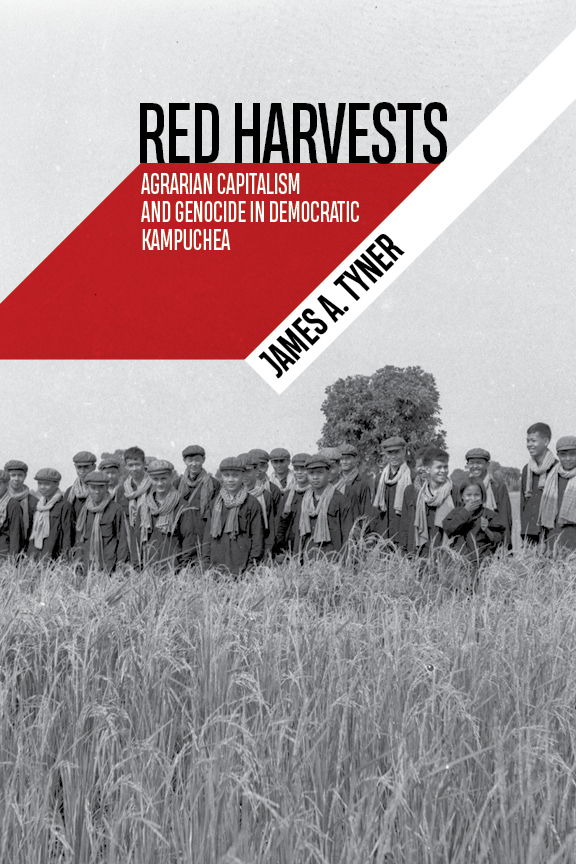

Red Harvests cover

James A. Tyner

February 2021
180pp
PB 978-1-949199-79-6 $29.99
CL 978-1-949199-78-9 $99.99
eBook 978-1-949199-80-2
$29.99

Radical Natures Series


Red Harvests

Agrarian Capitalism and Genocide in Democratic Kampuchea

Summary

James Tyner reinterprets the place of agriculture under the Khmer Rouge, positioning it in new ways relative to Marxism, capitalism, and genocide. The Cambodian revolutionaries’ agricultural management is widely viewed by critics as irrational and dangerous, and it is invoked as part of wider efforts to discredit leftist movements. Researching the specific functioning of Cambodia’s transition from farms to agriculture within the context of the global economy, Tyner comes to a different conclusion. He finds that analysis of “actually existing political economy”—as opposed to the Marxist identification the Khmer Rouge claimed—points to overlap between Cambodian practice and agrarian capitalism.

Tyner argues that dissolution of the traditional Khmer family farm under the aegis of state capitalism is central to any understanding of the mass violence unleashed by the Khmer Rouge. Seen less as a radical outlier than as part of a global shift in farming and food politics, the Cambodian tragedy imparts new lessons to our understanding of the political economy of genocide.

Contents

Preface
Acknowledgments

1. “Revolution Is the People’s War”
2. “Be Masters of Your Own Destiny!”
3. “We Are Building Socialism in the Cooperatives”
4. “Currency Is a Most Poisonous Tool”

Epilogue

Notes
Bibliography
Index

Author

James A. Tyner is a professor of geography at Kent State University and a fellow of the American Association of Geographers. He is the author of numerous books, including War, Violence, and Population: Making the Body Count, which received the AAG Meridian Book Award for Outstanding Scholarly Work in Geography, and The Politics of Lists: Bureaucracy and Genocide under the Khmer Rouge (WVU Press).

Reviews

“James Tyner has a gift for conveying complex subjects in a direct and accessible style, and his book will make a real contribution to the field of genocide studies generally, and to the study of the Cambodian genocide more specifically.”
Alex Alvarez, author of Unstable Ground: Climate Change, Conflict, and Genocide

“This original study will appeal to scholars interested in the agrarian policies of revolutionary governments and the alternative historical geographies of capitalism.”
Choice

“A relatively thin book, but it is an important one for scholars interested in Cambodian genocide and genocide studies more broadly. . . . Red Harvests adds important and novel explanations for this mass violence that the existing accounts, including Hinton’s, have overlooked.”
Agricultural History
EmailFacebookInstagramPinterestTwitter

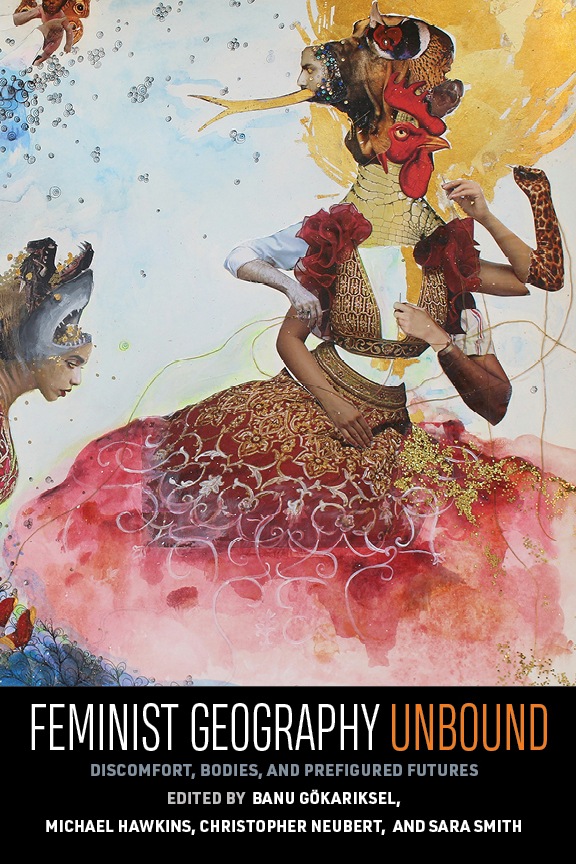
Feminist Geography Unbound: Discomfort, Bodies, and Prefigured Futures

Feminist Geography Unbound cover

Edited by
Banu Gökarıksel,
Michael Hawkins,
Christopher Neubert,
and Sara Smith

March 2021
324pp
PB 978-1-949199-88-8 $29.99
CL 978-1-949199-87-1 $99.99
eBook 978-1-949199-89-5
$29.99

Gender, Feminism, and Geography Series


Feminist Geography Unbound

Discomfort, Bodies, and Prefigured Futures

Summary

Feminist Geography Unbound is a call to action—to expand imaginations and to read and travel more widely and carefully through terrains that have been cast as niche, including Indigenous and decolonial feminisms, Black geographies, and trans geographies. The original essays in this collection center three themes to unbind and enable different feminist futures: discomfort as a site where differences generate both productive and immobilizing frictions, gendered and racialized bodies as sites of political struggle, and the embodied work of building the future.

Drawing on diverse theoretical backgrounds and a range of field sites, contributors consider how race, gender, citizenship, and class often determine who feels comfort and who is tasked with producing it. They work through bodies as terrains of struggle that make claims to space and enact political change, and they ask how these politics prefigure the futures that we fear or desire. The book also champions feminist geography as practice, through interviews with feminist scholars and interludes in which feminist collectives speak to their experience inhabiting and transforming academic spaces. Feminist Geography Unbound is grounded in a feminist geography that has long forced the discipline to grapple with the production of difference, the unequal politics of knowledge production, and gender’s constitutive role in shaping social life.

Contents

Acknowledgments

Introduction
Banu Gökarıksel, Michael Hawkins, Christopher Neubert, and Sara Smith

Part I.
Discomfort across Encounters

1. Brown Scholar, Black Studies: On Suffering, Witness, and Materialist Relationality
Pavithra Vasudevan

2. The Path to Radical Vulnerability: Feminist Praxis and Community Food Collaborations
Carrie Chennault

3. Toilets and the Public Imagination: Planning for Safe and Inclusive Spaces
Rachael Cofield and Petra L. Doan

4. Interview with Kumarini Silva

Part II.
Gendered Bodies as a Terrain of Political Struggle

5. “Real” and “Mythical” Bodies Weaving Social Skin: Two Waorani Women Disrupting Genres of Amazonian Humanity
Gabriela Valdivia, Kati Álvarez, Alicia Weya Cawiya, Manuela Ima Omene, Dayuma Albán, and Flora Lu

6. (Tiny) Houses and Black Feminist Geographic Praxis: Building More Humanly Workable Geographies
Tia-Simone Gardner

7. Decolonizing Development, Challenging Patriarchy: Colonialism, Capitalism, and Gender in Diné Bikeyah
Melanie K. Yazzie and Andrew Curley

8. Women-Only Spaces as a Method of Policing the Category of Woman
Abigail Barefoot

9. Interview with Petra Doan

Part III.
Temporality and Feminist Futures

10. Making Memory: Care and Dalit Feminist Archiving
Anusha Hariharan

11. From the Women’s Movement to the Academy: Feminist Urban Planning, 1970–1985
Bri Gauger

12. Challenging Anglocentric Feminist Geography from Latin American Feminist Debates on Territoriality
Sofia Zaragocin

13. Interview with LaToya Eaves

Interlude: Calling All Collectives 
Interviews with Feminist Geography Collectives

Jess Linz, Araby Smyth, Emily Billo, Winifred Curran, Roberta Hawkins, Beverley Mullings, Alison Mountz, Kate Parizeau, Margaret Walton-Roberts, Risa Whitson, Annie Elledge, Caroline Faria, Dominica Whitesell, Danya Al-Saleh, Elsa Noterman, and FLOCK Geography Collective

Afterword
Lorraine Dowler

Contributors
Index

Editors

Banu Gökarıksel is professor, Michael Hawkins and Christopher Neubert are PhD candidates, and Sara Smith is associate professor in the department of geography at the University of North Carolina at Chapel Hill.

Reviews

Feminist Geography Unbound is a must-read for students and scholars interested in the diversity of feminist geographic thought, action, and activism. This is an exceptionally edited collection of leading scholars’ research and reflections on gender, race, sexuality, identity, vulnerability, and power relations. I highly recommend this book for advanced undergraduate and graduate courses engaging with feminist geographic scholarship and methods.”
Jennifer L. Fluri, coauthor of The Carpetbaggers of Kabul and Other American-Afghan Entanglements: Intimate Development, Geopolitics, and the Currency of Gender and Grief

EmailFacebookInstagramPinterestTwitter

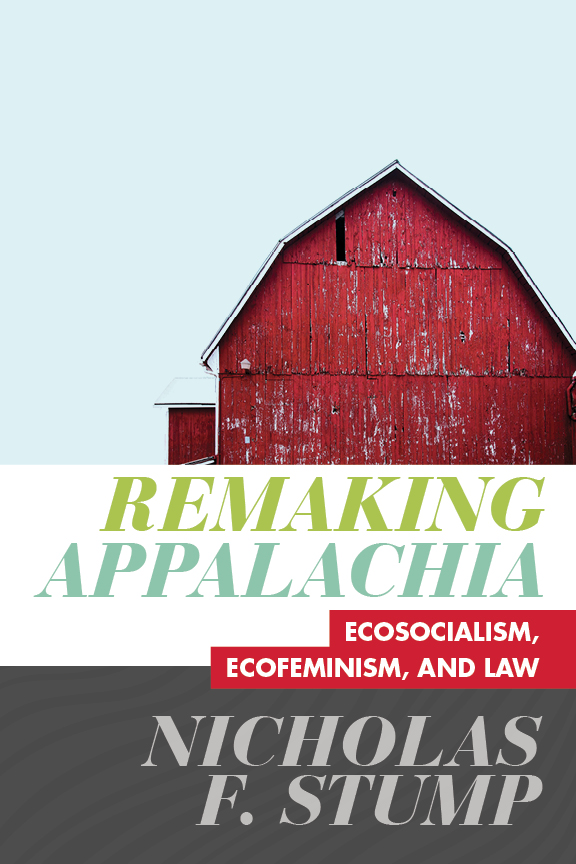
Remaking Appalachia: Ecosocialism, Ecofeminism, and Law

Remaking Appalachia cover

Nicholas F. Stump 

April 2021
288pp
PB 978-1-949199-91-8
$29.99
CL 978-1-949199-90-1
$99.99
eBook 978-1-949199-92-5
$29.99


Remaking Appalachia

Ecosocialism, Ecofeminism, and Law

Summary

Weatherford Award Finalist, Nonfiction

Environmental law has failed spectacularly to protect Appalachia from the ravages of liberal capitalism, and from extractive industries in particular. Remaking Appalachia chronicles such failures, but also puts forth hopeful paths for truly radical change.

Remaking Appalachia begins with an account of how, over a century ago, laws governing environmental and related issues proved fruitless against the rising power of coal and other industries. Key legal regimes were, in fact, explicitly developed to support favored industrial growth. Aided by law, industry succeeded in maximizing profits not just through profound exploitation of Appalachia’s environment but also through subordination along lines of class, gender, and race. After chronicling such failures and those of liberal development strategies in the region, Stump explores true system change beyond law “reform.” Ecofeminism and ecosocialism undergird this discussion, which involves bottom-up approaches to transcending capitalism that are coordinated from local to global scales.

Contents

Acknowledgments

Introduction
1. Historical Beginnings: Appalachian Coal and the Coming of Industrial Capitalism
2. Foundations of Environmental Law: Classical Liberalism
3. Twentieth-Century Appalachia: Failed Development Models and Coal’s Hegemony
4. Environmental Law: A Critically Flawed Paradigm
5. Modern Appalachia: Environmental Law’s Failure and the Broader Regional Landscape
6. Systemic Economic and Socio-Legal Change: Theory, Practice, and Praxis
7. Remaking Appalachia: Strongly Ecologically Sustainable Futures

Notes
Bibliography
Index

Author

Nicholas F. Stump is a lifelong West Virginian. His scholarship explores environmental law, critical legal theory, law and social movements, and Appalachian and rural studies. He currently works as a faculty member with the George R. Farmer Jr. Law Library at West Virginia University College of Law.

Reviews

Remaking Appalachia offers a thorough critical account of Appalachia through a law and political economy lens, and makes a persuasive case for what the region needs today: a hopeful vision for a new future rooted in transformative, bottom-up change.”
Ann M. Eisenberg, University of South Carolina

“A must-read for anyone concerned about our reliance on unsustainable energy sources and environmentally damaging practices, and what can be done about it.”
Law Library Journal

EmailFacebookInstagramPinterestTwitter

Studio Window: The Prints of Grace Martin Taylor

Studio Window: The Prints of Grace Martin Taylor catalogue cover

Robert Bridges and Kristina Olson
Foreword by Joyce Ann Ice

September 2016
91pp
PB 978-0-975278-74-1
$14.99
15 color images

Published by the Art Museum of West Virginia University

Studio Window

The Prints of Grace Martin Taylor

Summary

This catalogue was published on the occasion of the exhibition “Studio Window: The Prints of Grace Martin Taylor,” curated by Robert Bridges, at the Art Museum of West Virginia University, Morgantown, West Virginia, September 16 to December 15, 2016. The exhibition marked the first time that a complete set of Grace Martin Taylor’s white-line prints have been exhibited. Taylor was born near Morgantown and graduated from WVU before embarking on a career in art. She studied with her cousin, internationally known American modernist Blanche Lazzell, and went on to study at the Pennsylvania Academy of Fine Arts with Arthur Carles in the 1920s, and later with prestigious artists such as Hans Hofmann and Emil Bisttram. One of America’s innovative printmakers of the 20th century, Taylor dedicated her life to teaching art in West Virginia for 40 years at what is now the University of Charleston, where she promoted modern art and abstraction.

Contents

Coming soon

Author

Robert Bridges is curator of the Art Museum of West Virginia University. Between 2000 and 2015, Bridges organized more than 80 exhibitions in WVU’s Mesaros Galleries, among them “Ceramic Art from the Jingdezhen Ceramic Institute” and two national exhibitions featuring the work of American Modernist Blanche Lazzell. Since the opening of the Art Museum in 2015, his curatorial projects have included “Shepard Fairey: Work Against the Clampdown” and “Paintings and Sculptures by Sally and Peter Saul,” among others. Bridges is co-editor (along with Kristina Olson and Janet Snyder) of Blanche Lazzell: The Life and Work of An American Modernist (WVU Press, 2004). He received his MFA in printmaking at WVU and previously worked as a curator in the private sector in Chicago.

Kristina Olson is an associate professor of art history at West Virginia University, as well as the associate director of the School of Art & Design. Her research focuses on the intersection of contemporary art and architecture. She is co-editor of Social Practice Art in Turbulent Times: The Revolution Will Be Live (Routledge, 2019).

Reviews

Coming soon

EmailFacebookInstagramPinterestTwitter

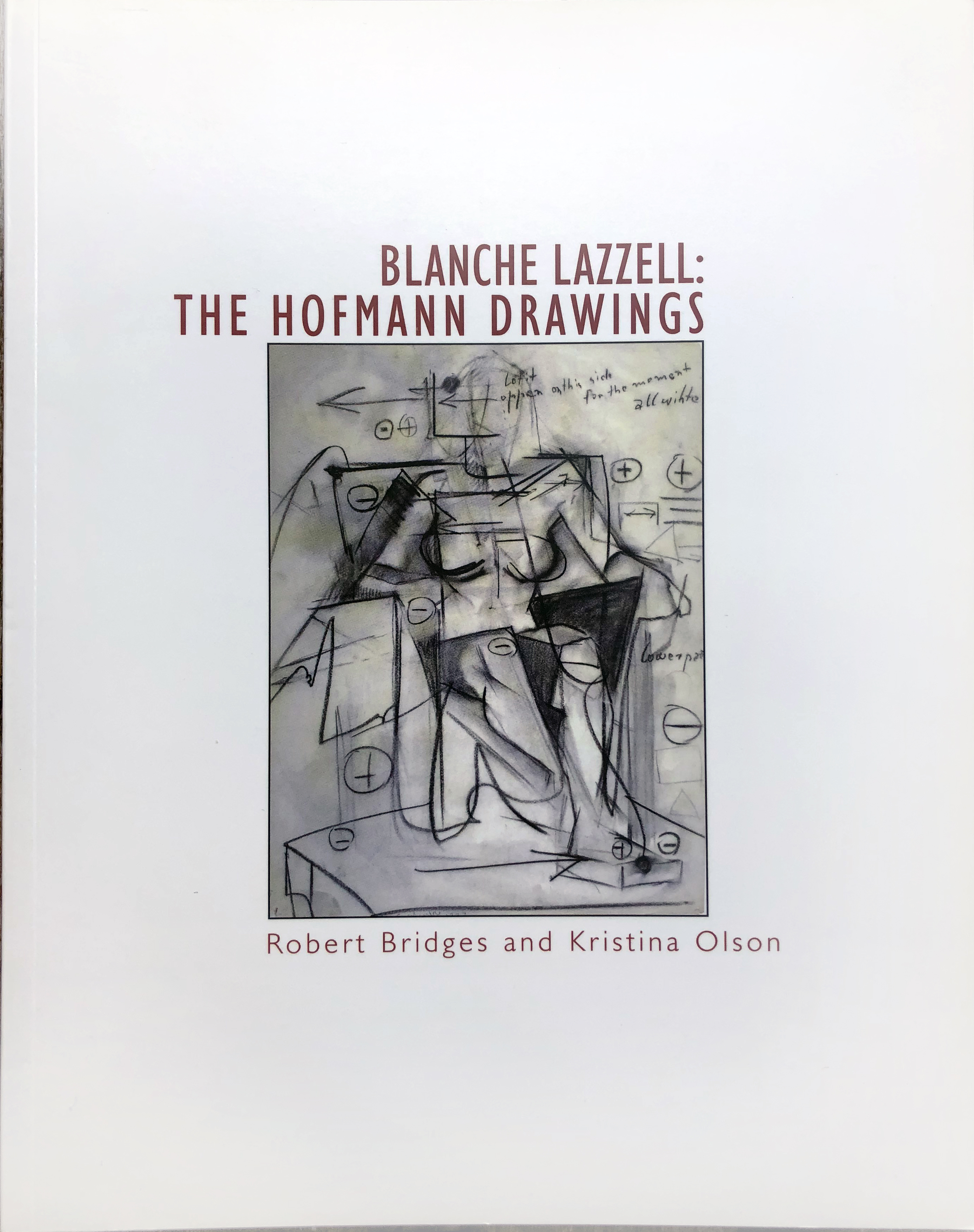
Blanche Lazzell: The Hofmann Drawings

Blanche Lazzell: The Hofmann Drawings catalogue cover

Robert Bridges and Kristina Olson

January 2004
44pp
PB 978-0-975278-70-3
$14.99
15 color images

Published by the Art Museum of West Virginia University

Blanche Lazzell

The Hofmann Drawings

Summary

Blanche Lazzell (1878–1956), a cubist painter known for her white line woodcuts, received a degree from West Virginia University in 1905. She later studied at the Art Students League, as well as in Paris and Provincetown, Massachusetts. As she continued her studies, her work became more and more informed by modernism; however, it was her involvement in Hans Hofmann’s drawing classes in 1937–38 that encouraged Lazzell’s return to abstraction. Published to accompany an exhibition held at West Virginia University, in Morgantown, West Virginia, the catalogue features drawings by Blanche Lazzell with a major essay by Kristina Olson, explaining Hans Hofmann's impact on the artist. The catalogue lists 30 works in the exhibition.

Contents

Coming soon

Author

Robert Bridges is curator of the Art Museum of West Virginia University. Between 2000 and 2015, Bridges organized more than 80 exhibitions in WVU’s Mesaros Galleries, among them “Ceramic Art from the Jingdezhen Ceramic Institute” and two national exhibitions featuring the work of American Modernist Blanche Lazzell. Since the opening of the Art Museum in 2015, his curatorial projects have included “Shepard Fairey: Work Against the Clampdown” and “Paintings and Sculptures by Sally and Peter Saul,” among others. Bridges is co-editor (along with Kristina Olson and Janet Snyder) of Blanche Lazzell: The Life and Work of An American Modernist (WVU Press, 2004). He received his MFA in printmaking at WVU and previously worked as a curator in the private sector in Chicago.

Kristina Olson is an associate professor of art history at West Virginia University, as well as the associate director of the School of Art & Design. Her research focuses on the intersection of contemporary art and architecture. She is co-editor of Social Practice Art in Turbulent Times: The Revolution Will Be Live (Routledge, 2019).

Reviews

Coming soon

EmailFacebookInstagramPinterestTwitter

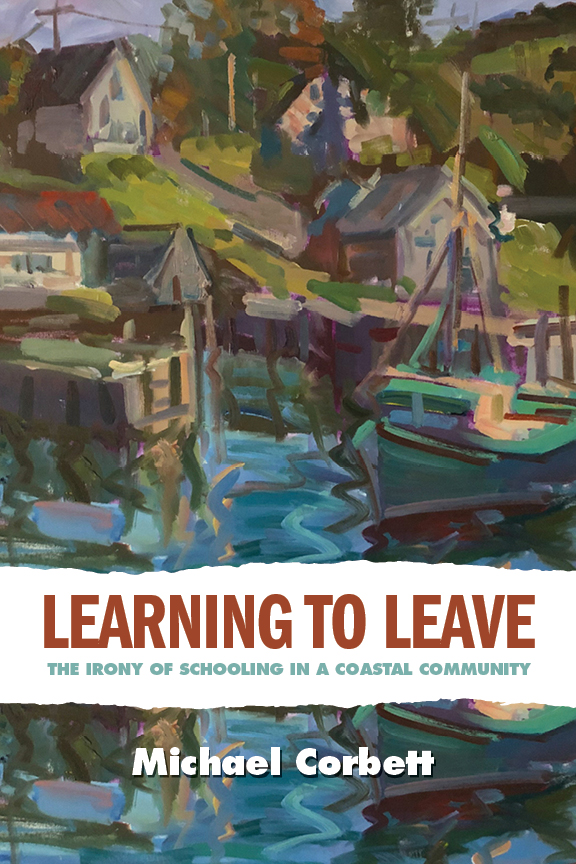
Learning to Leave: The Irony of Schooling in a Coastal Community

Michael Corbett

August 2020
312pp
PB 978-1-949199-53-6
$24.99

Rural Studies Series


Learning to Leave

The Irony of Schooling in a Coastal Community

Summary

Published with a new preface, this innovative case study from Nova Scotia analyzes the relationship between rural communities and contemporary education. Rather than supporting place-sensitive curricula and establishing networks within community populations, the rural school has too often stood apart from local life, with the generally unintended consequence that many educationally successful rural youth come to see their communities and lifestyles as places to be left behind. They face what Michael Corbett calls a mobility imperative, which, he shows, has been central to contemporary schooling. Learning to Leave argues that if education is to be democratic and serve the purpose of economic, social, and cultural development, then it must adapt and respond to the specificity of its locale, the knowledge practices of the people, and the needs of those who struggle to remain in challenged rural places.

Author

Michael Corbett teaches at Acadia University in Nova Scotia and has studied youth educational decision-making, mobilities and education, the politics of educational assessment, literacies in rural contexts, improvisation and the arts in education, conceptions of space and place, the viability of small rural schools, and wicked policy problems and controversies in education.

Contents

Preface to the 2020 Edition
Foreword
Acknowledgment

Chapter 1
Introduction
Migration and Regional Dependency: The Brain Drain
The Migration Imperative in Rural Education
Challenges to the Migration Imperative in Rural Schooling
Why Would Young People Stay?
Schooling and Migration in Atlantic Canada
Notes

Chapter 2
Reconceptualizing Resistance
Habitus, Discourse and Place
Resistance Theory in the Sociology of Education
Bourdieu’s Logic of Practice
Poststructural Resistance Theory
Resistance and Community
Rural Identity Politics
The Organized Rural Community as a Resistant Site
Conclusion: To Choose and to Move
Notes

Chapter 3
Who Stays, Who Goes and Where
Education and Migration on Digby Neck, 1963–1998
The Economy
Education Levels
Mobility
The Education/Mobility Connection
Summary
Notes

Chapter 4
Parallel Education Systems
The Classes of 1963–1974
Family and Work: An Education for Staying
The Hand on the Shoulder: Socialization for Leaving
Formal Education: Streaming for Leaving
in the 1960s and early 1970s
Learning to Do: The Construction of Intelligence
and Identity in a Coastal Community
They Wanted Me to Go to School: Schooling, Identity and Family
Leaving Home: Education and Occupational Pioneering
I Didn’t Want to End Up
Resisting Displacement
Conclusion
Notes

Chapter 5
The Boom Years
The Classes of 1975–1986
Gender, Work and Schooling
Defining Security: Education, Identity and Work
Family/Class
The Mobile Family
Becoming a Stranger
Conclusion
Notes

Chapter 6
Surviving the Crisis
The Classes of 1987–1998
What Is There For the Young Ones?
Quitting in the 1990s: Finding Something to
Do When There’s Nothing to Do
The New Reserve Army of Labour
Getting Out: Class, Gender and Education
Survival and Family
Back to the Future: Surviving in the New Economy
Resistance
Conclusion: The Mobile Discourse of Schooling
Notes

Chapter 7
Conclusion
Place Matters
Migration, Education and Ambivalence: Mobility Capital
Ambiguity, Mobility and Resistance
Resistances
Rural Schooling and Community
Notes

References
Index

Reviews

“A major research contribution—one that will join a relatively short list of first-rate books aimed at helping the education research community, as well as the general public, understand the convoluted phenomenon known as rural education.”
Journal of Research in Rural Education

“An engrossing, theoretically sophisticated, and important piece of community sociology.”
Rural Sociology


EmailFacebookInstagramPinterestTwitter

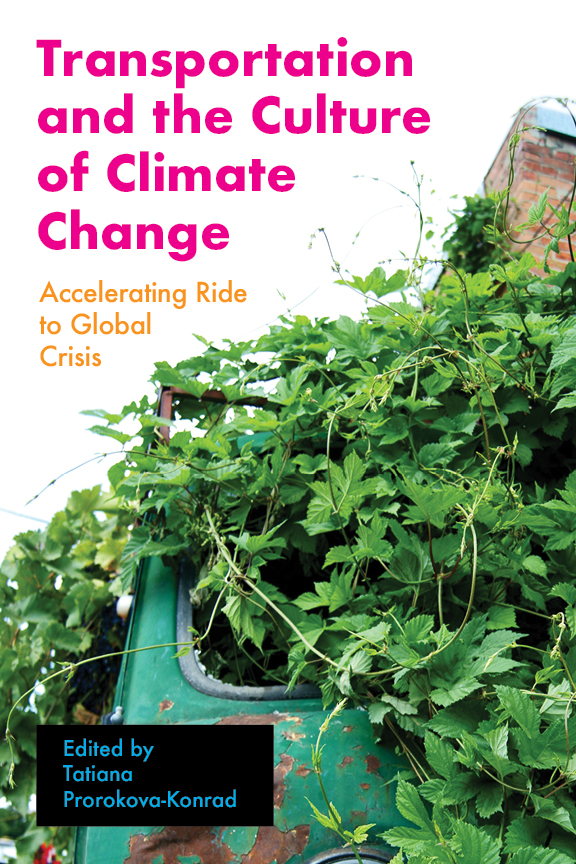
Transportation and the Culture of Climate Change: Accelerating Ride to Global Crisis

Transportation and the Culture of Climate Change cover


Edited by Tatiana Prorokova-Konrad

October 2020
288pp
PB 978-1-949199-64-2
$32.99
eBook: 978-1-949199-65-9
$32.99

Energy and Society Series

Transportation and the Culture of Climate Change

Accelerating Ride to Global Crisis

Summary

This interdisciplinary collection of eleven original essays focuses on the environmental impact of transportation, which is, as Tatiana Prorokova-Konrad and Brian C. Black note in their introduction, responsible for 26 percent of global energy use. Approaching mobility not solely as a material, logistical question but as a phenomenon mediated by culture, the book interrogates popular assumptions deeply entangled with energy choices. Rethinking transportation, the contributors argue, necessarily involves fundamental understandings of consumption, freedom, and self.

The essays in Transportation and the Culture of Climate Change cover an eclectic range of subject matter, from the association of bicycles with childhood to the songs of Bruce Springsteen, but are united in a central conviction: “Transport is a considerable part of our culture that is as hard to transform as it is for us to stop using fossil fuels—but we do not have an alternative.”

Contents

Introduction. Carbonization as a Choice: Environmental Ethics, Mobility, and Energy Options
Tatiana Prorokova-Konrad and Brian C. Black

Part I: Mobility and the Environment

1. Using Heritage and Ecological Systems Thinking to Inform Resilient Automobility Design
Barry L. Stiefel

2. Bikes for Children, Cars for Adults: Postwar American Transportation Culture and the Legacy of Moving Images
James Longhurst

3. E-Scooters and the Urban Micromobility Revolution
Matthew C. Swanson

Part II: Car Cultures

4. “Carbolization”: Cars, Carbon Emissions, and the Global Discipline of Automobility
Gordon M. Sayre

5. Hydrocarbon Enslavement and Fantasies of Freedom
Patrick D. Murphy

6. Suicide Machines: Bruce Springsteen, Ballard, and Broken Heroes on a Last Chance Power Drive
David LaRocca

7. Remainders of the Fossil Regime: Automobility Regression in Three Post-Apocalyptic Novels
Brent Ryan Bellamy

Part III: Film, Energy, and Climate Change

8. Intermodal Aesthetics and the Otherwise of Cargo
Megan Hayes and Jeff Diamanti

9. Nature Guarding “Her Treasures” in Oil Comedies: The Case of Local Hero and Fubar: Balls to the Wall
Robin L. Murray and Joseph K. Heumann

10. Boom/Bust: Tragic Logistics and Accelerationist Comedy in Petroleum Transport
C. Parker Krieg

11. Trafficking in Petronormativities: At the Intersections of Petrofeminism, Petrocolonialism, and Petrocapitalism
Sheena Wilson

Contributors
Index

Editor

Tatiana Prorokova-Konrad is a postdoctoral researcher in the department of English and American studies at the University of Vienna. She is the author of Docu-Fictions of War: U.S. Interventionism in Film and Literature and coeditor of Cultures of War in Graphic Novels: Violence, Trauma, and Memory.

Reviews

“A timely, accessible, and intriguingly interdisciplinary collection. Building upon the important work of energy humanities, which has focused on exposing the links between material systems of fueling and symbolic regimes of values and power, the collection compels the reader—in a performative act of slowing down—to contemplate the most dispersed yet most concrete site of the long twentieth century of accelerationism.”
Anindita Banerjee, Cornell University

EmailFacebookInstagramPinterestTwitter