
Past Titan Rock: Journeys into an Appalachian Valley


Ellesa Clay High
With a foreword by
Travis D. Stimeling
September 2021
224pp
PB 978-1-952271-17-5
$22.99
Sounding Appalachia Series

Ellesa Clay High
With a foreword by
Travis D. Stimeling
September 2021
224pp
PB 978-1-952271-17-5
$22.99
Sounding Appalachia Series
Journeys into an Appalachian Valley
Past Titan Rock, a winner of the Appalachian Award for Literature, is available in a new edition as part of the series Sounding Appalachia, with an introduction by series editor Travis D. Stimeling.
In 1977 Ellesa Clay High thought she would spend an afternoon interviewing Lily May Ledford, best known as the lead performer of an all-female string band that began playing on the radio in the 1930s. That meeting began an unexpected journey leading into the mountains of eastern Kentucky and a hundred years into the past. Set in Red River Gorge, an area of steep ridges and box canyons, Past Titan Rock is a multigenre, multivocal re-creation of life in that region. With Ledford’s guidance, High traveled and lived in the gorge, visiting with people who could remember life there before the Works Progress Administration built roads across the ridges and into the valleys during the New Deal. What emerges through a unique combination of personal essay, oral history, and short fiction is a portrait of a mountain culture rich in custom, oral tradition, and song. Past Titan Rock demonstrates the depth of community ties in the Red River Gorge and raises important questions about how to resist destructive forces today.
Foreword by Travis D. Stimeling
Photo gallery
Past Titan Rock: Journeys into an Appalachian Valley
Ellesa Clay High is an associate professor emerita of English at West Virginia University, where she taught Appalachian literature, Native American literature, and creative writing for over thirty years. Her poetry, fiction, creative nonfiction, and scholarship have appeared in numerous collections, journals, and magazines.
“Welcome and valuable.”
Oral History Review
“A remarkable book.”
Journal of American Folklore
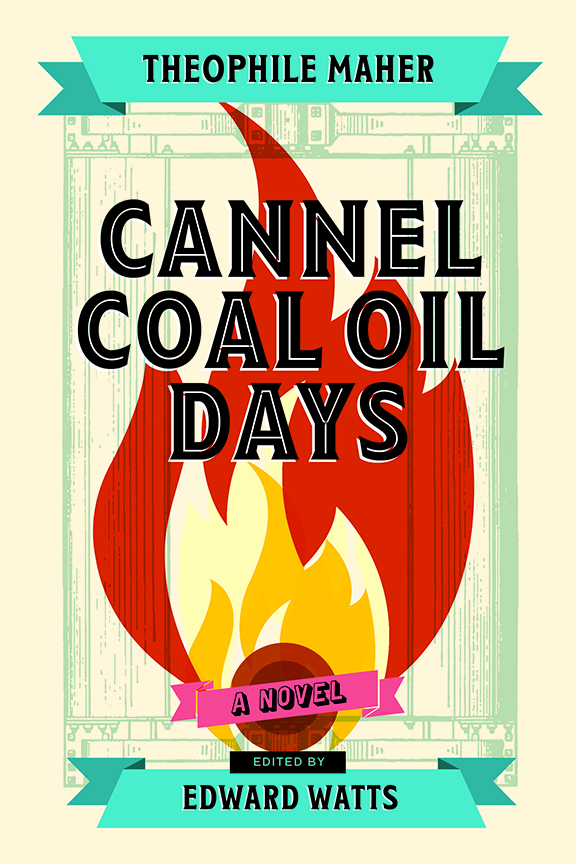
Theophile Maher
Edited by Edward Watts
August 2021
216pp
PB 978-1-952271-12-0
$29.99
CL 978-1-952271-11-3
Out of print
eBook 978-1-952271-13-7
$29.99
A Novel
Based mostly on his own experiences, Theophile Maher’s local color novel Cannel Coal Oil Days challenges many popular ideas about antebellum Appalachia, bringing it more fully into the broader story of the United States. Written in 1887, discovered in 2018, and published here for the first time, it offers a narrative of life between 1859 and 1861 in what was then western Virginia as it became West Virginia.
Cannel coal (a soft form of coal whose oil, when distilled, was competitive in the lighting oil business after overfishing reduced the whale oil supply) was at the center of one of Appalachia’s first extractive industries. Using the development of coal oil manufacturing in the Kanawha valley as its launching point, Maher’s semiautobiographical novel tells of a series of interrelated changes, each reflecting larger transformations in the United States as a whole. It shows how coal oil manufacturing was transformed from an amateurish endeavor to a more professional industry, with implications for Appalachian environment and labor. Then, Maher foreshadows the coming Progressive Era by insisting on moral and environmental reforms based in democratic and Christian principles. Finally, he tells the story of the coming of the Civil War to the region, as the novel’s protagonist, a mining engineer, works closely with a Black family to organize the local abolitionist mountain folk into a Union militia to aid in the secession of West Virginia from Virginia.
Acknowledgments
Introduction: Cannel Coal Oil and the Creole Cosmopolitan
Editorial Note
Chapter 1. At Newark, Ohio
Chapter 2. From Newark to Kanawha
Chapter 3. Up the Elk River to the Landing
Chapter 4. Day of Rest at the Landing
Chapter 5. Mismanagement at the Oil Works
Chapter 6. Radical Improvements
Chapter 7. Husband, Wife, and Children Together Again
Chapter 8. Loyalty Tested
Appendix A. “Made Union Flag: A Story of the Civil War”
Appendix B. “A Flag That Saved a County to the Union”
Appendix C. Obituary of Sarah Landis Maher
Bibliography
Edward Watts is professor emeritus of English at Michigan State University. He is the author or editor of many other books in American studies, most recently Colonizing the Past: Mythmaking and Pre-Columbian Whites in Nineteenth-Century American Writing.
“Cannel Coal Oil Days represents an artifact of great interest to scholars working in environmental and energy humanities spaces. Particularly notable is the author’s concern with the changing energy landscape in the mid-nineteenth-century US, and the impacts of coal mining and oil distillation processes on worker conditions, public health, and the environment. The book also offers a unique snapshot of the racialized dimensions of extractive industries in antebellum Appalachia. Americanists reading Maher’s novel will undoubtedly place it within a broader corpus of mining literature, energy history, and representations of environmental injustice in Appalachia.”
Matthew S. Henry, University of Wyoming
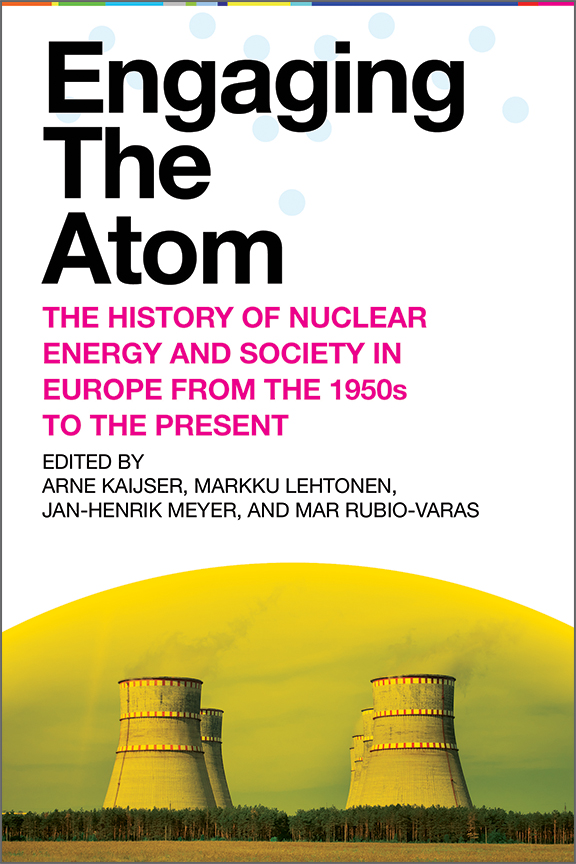
Edited by Arne Kaijser,
Markku Lehtonen,
Jan-Henrik Meyer, and
Mar Rubio-Varas
December 2021
236pp
PB 978-1-952271-32-8
$34.99
CL 978-1-952271-31-1
Out of print
eBook 978-1-952271-33-5
$34.99
Energy and Society Series
The History of Nuclear Energy and Society in Europe from the 1950s to the Present
With the aim of overcoming the disciplinary and national fragmentation that characterizes much research on nuclear energy, Engaging the Atom brings together specialists from a variety of fields to analyze comparative case studies across Europe and the United States. It explores evolving relationships between society and the nuclear sector from the origins of civilian nuclear power until the present, asking why nuclear energy has been more contentious in some countries than in others and why some countries have never gone nuclear, or have decided to phase out nuclear, while their neighbors have committed to the so-called nuclear renaissance. Contributors examine the challenges facing the nuclear sector in the context of aging reactor fleets, pressing climate urgency, and increasing competition from renewable energy sources.
Written by leading academics in their respective disciplines, the nine chapters of Engaging the Atom place the evolution of nuclear energy within a broader set of national and international configurations, including its role within policies and markets.
Preface
Introduction: Nuclear Energy and Society in Postwar Europe
Arne Kaijser, Markku Lehtonen, Jan-Henrik Meyer, and Mar Rubio-Varas
Part 1: Context
1. Nuclear-Society Relations from the Dawn of the Nuclear Age
Paul Josephson, Jan-Henrik Meyer, and Arne Kaijser
2. The Changing Economic Context Influencing Nuclear Decisions
Mar Rubio-Varas
Part 2: Actors
3. One Movement or Many? The Diversity of Antinuclear Movements in Europe
Albert Presas i Puig and Jan-Henrik Meyer
4. International Organizations and the Atom: How Comecon, Euratom,
and the OECD Nuclear Energy Agency Developed Societal Engagement
Paul Josephson and Markku Lehtonen
Part 3: Perspectives
5. Risky or Beneficial? Exploring Perceptions of Nuclear Energy
over Time in a Cross-Country Perspective
Josep Espluga, Wilfried Konrad, Ann Enander, Beatriz Medina, Ana Prades, and Pieter Cools
6. Trust and Mistrust in Radioactive Waste Management:
Historical Experience from High- and Low-Trust Contexts
Markku Lehtonen, Matthew Cotton, and Tatiana Kasperski
7. Nuclear Power and Environmental Justice: The Case for Political Equality
Matthew Cotton
8. Nuclear Energy in Europe: A Public Technology
Stathis Arapostathis, Robert Bud, and Helmuth Trischler
9. Nuclear Installations at European Borders: Transboundary Collaboration and Conflict
Arne Kaijser and Jan-Henrik Meyer
Conclusions: Future Challenges for Nuclear Energy and Society
in a Historical Perspective
Arne Kaijser, Markku Lehtonen, Jan-Henrik Meyer, and Mar Rubio-Varas
Contributors
Index
Arne Kaijser is professor emeritus of history of technology at KTH Royal Institute of Technology, Stockholm.
Markku Lehtonen is Marie Skłodowska-Curie Individual Fellow at the University Pompeu Fabra in Barcelona.
Jan-Henrik Meyer is an associate professor at the Saxo Institute, University of Copenhagen.
Mar Rubio-Varas is professor of economic history at the Universidad Publica de Navarra.
“This well-researched, clearly structured, and soundly argued book is a long-overdue historical reflection on the development of nuclear power and its interactions with civil society.”
Maria Rosaria Di Nucci, Freie Universität Berlin
INTRODUCTION
Nuclear Energy and Society in Postwar Europe
Arne Kaijser, Markku Lehtonen, Jan-Henrik Meyer, and Mar Rubio-Varas
Introduction
Public engagement with nuclear energy in Europe has changed dramatically over time. It has also varied considerably between—and even within—countries and societies, ranging from promotion to questioning or outright rejection and protest, from silent acceptance to public controversy. Such engagement has been characterized by varying perceptions and discourses, between hope and promise on the one hand, and fear and risk on the other. Public engagement has involved not only different types of activities and perceptions but also different kinds of societal actors: at first, these included primarily scientists and engineers, industrialists, managers of utilities, policymakers, and public relations experts, but increasingly they were also citizens of various backgrounds, from farmers and housewives to pastors and scientists acting as counter-experts. Eventually, antinuclear activists—many of them women—formed social movements to organize citizen-initiated public engagement.
Public engagement first emerged in the mid-1950s, when something of an atomic euphoria swept over the world following President Eisenhower’s “Atoms for Peace” talk at the United Nations (UN) in 1953. In this speech, Eisenhower announced his intention to promote international collaboration to develop peaceful uses of atomic power. Many European countries soon launched programs with the goal of building nuclear power plants of their own. In parallel and aided by the United States (US) government, European governments, industry, and research bodies launched campaigns to enlighten the general public about the benefits of the new technology’s peaceful uses. These efforts served to counterbalance the concerns and fears that the general public was presumed to hold toward a technology that was initially developed for military purposes and had demonstrated its destructive power in Hiroshima and Nagasaki.1
The Netherlands may serve as an example of such activities.2 In the summer of 1957, an exhibition called The Atom took place in a new hangar building at the Schiphol Airport outside Amsterdam. Its main attraction was a small, swimming pool–type nuclear reactor producing 10 kW. Most of the 750,000 visitors seemed fascinated when they saw the blue glimmer of the reactor. The exhibition was planned and sponsored by a range of institutions and government bodies, including national ministries, the municipality of Amsterdam, industrial companies like Philips, nuclear scientists, and representatives from nuclear organizations in other countries, in particular the US. Their goal was to make the Dutch public “atomic minded.” The exhibition also displayed other symbols of technological progress that promised to facilitate the challenges of modern life, including novel electric kitchen appliances and a large electronic calculator. The official visitors’ guide argued: “It is up to us, the generation of 1957, to determine the future of tomorrow’s world. Our future: atomic energy!” One week after the pompous opening of the exhibition, the Dutch government presented a memorandum on nuclear energy to the Dutch parliament, proposing a swift transition in the Netherlands toward nuclear energy.
The atom exhibition at Schiphol was by no means unique. In most European countries on both sides of the Iron Curtain, the same kind of actors organized similar exhibitions with the aim of persuading the general public of the benefits of nuclear energy for modern consumer societies.3 The biggest of these was the 1958 world exhibition in Brussels, visited by no less than forty-two million people. Its main attraction was the Atomium, a 102-meter-high structure of nine spheres representing an iron crystal. Its main purpose was to celebrate the coming of the Atomic Age. In their exhibition pavilions, countries such as the US, the Soviet Union and the United Kingdom (UK) all showed models of their nuclear reactors.4
In the Soviet Union, the establishment of the Obninsk nuclear power plant in 1954 was equally presented as a source of national pride. Located just 100 kilometers from Moscow, it was the first reactor in the world to be connected to the power grid. Aimed at demonstrating the USSR’s scientific and technical superiority, Obninsk was a Cold War propaganda coup and was widely covered in the mass media throughout the Soviet Union and by its allies in Eastern Europe.
On both sides of the Iron Curtain, the engagement with the atom in these early years was orchestrated from above by the nuclear sector at large, encompassing government, industry, and academia. The exhibitions and highly enthusiastic and optimistic media coverage probably helped to generate broad enthusiasm—among political elites across the political spectrum but also with the public at large—for nuclear energy as an innovative technology epitomizing progress and prosperity. This enthusiasm paved the way for highly ambitious nuclear research programs. By the early 1960s, demonstration power reactors were in operation in all the leading industrial countries, and from the second half of the decade commercial nuclear plants were being built in growing numbers in some thirty countries. During the peak year of 1975, construction started on forty-four plants worldwide.5 In fact, over 300 of the almost 500 reactors in operation throughout the world today began their construction between 1965 and 1979.6
In the mid-1970s, a new kind of public engagement with the atom emerged from below, when antinuclear movements were born in a number of West European countries, largely inspired by similar movements in the United States. These movements were rooted in a critique of nuclear technology and concerns about its potentially detrimental consequences. Their spokespersons argued that accidents in nuclear power plants would lead to the release of radioactive isotopes harmful to human health and genes, that there were no plans for the management of the spent fuel, and that there was a risk of proliferation—namely, that nuclear material from reactors could end up being used for constructing nuclear weapons. In many West European countries, movements opposing nuclear power grew quickly and organized large demonstrations and other actions to try and stop the construction of nuclear plants, as chapter 3, “One Movement or Many? The Diversity of Antinuclear Movements in Europe,” illustrates in greater detail.
In February 1975, local citizens, among them farmers and winegrowers, occupied the building site of a reactor at Wyhl in southern West Germany and were forcibly removed by police two days later. This spurred support from the nearby university town of Freiburg, and a few days later about 30,000 people reoccupied the site, following the example of similar protests in neighboring France. The confrontation at Wyhl kick-started a series of protests in Germany and across the border in Switzerland. A long series of legal proceedings instigated by the opposition led to the reactor never being built.7
In the summer of 1976, antinuclear activists from France, Germany, and Switzerland organized a similar occupation at the building site of the Superphénix fast-breeder nuclear reactor, 60 kilometers east of Lyon. The antinuclear movement considered this plant to be particularly dangerous. The reactor was intended to “breed” plutonium, and as such provoked concern for proliferation risks. Moreover, the breeder was cooled by liquid sodium, which burns when in contact with air and explodes when placed in water. The French police terminated the site occupation, using considerable force to expel the occupants. The antinuclear activists returned in even larger numbers the following summer. On July 31, around 50,000 demonstrators gathered on a field a few kilometers from the building site. Among them were militant German activists wearing motorcycle helmets. This kind of gear was unusual among French protesters and was one of the reasons for the French police’s use of exceptional force. In the ensuing confrontation, as the police blocked the demonstrators’ access to the building site, one activist died, and three were seriously injured by police gas grenades. This tragic event became a turning point for the antinuclear movement in France, which gave up on large-scale demonstrations as a strategy.8
In most countries, the antinuclear movement continued to gain momentum in the following years, not least due to the accidents at the Three Mile Island (US, March 1979) and Chernobyl (USSR, April 1986) nuclear power plants. For example, in Austria, Italy, Denmark, and Portugal, citizen opposition led to formal decisions—sometimes preceded by referendums—to abandon nuclear power as an electricity source. Other countries decided to phase out nuclear power within a few decades (Sweden) or to temporarily halt their nuclear programs (Spain). In a number of Eastern and Central European countries, antinuclear movements emerged in the wake of Chernobyl as part of the struggle against the Soviet system and for independence from the Soviet Union. The two accidents also accelerated the measures, already under way in many countries, to clearly separate nuclear regulation and promotion duties within their administrative structures. Additional safety measures were introduced, and the concept of “safety culture” was coined to increase the awareness and understanding of risk management within nuclear organizations.9 A number of countries began searching for possible sites for the final disposal of nuclear waste, but the site investigations often met strong local opposition.10 In parallel, more advanced engagement approaches and strategies emerged slowly, via a complex and volatile learning process. An obstacle to a more dialogical approach was the persistent assumption among many nuclear-sector actors that antinuclear views either resulted from the negative tone set in public debates on any topic related to nuclear or reflected the irrational, “psychological” fears and emotional reactions of a poorly informed public.11 In many countries, antinuclear movements’ growing mistrust of authorities and utilities also made dialogue difficult.
Sweden provides an example of a shift toward a more dialogical approach, and of the manifold consequences of such change.12 In the early 1980s, the Swedish nuclear industry made a number of attempts to find a suitable site for a nuclear spent-fuel repository. Yet each time a drilling team arrived at a new location, it met fierce opposition from local groups. SKB, the Swedish Nuclear Fuel and Waste Management Company, established jointly by the country’s nuclear operators to handle the spent fuel, finally concluded that it would be impossible to establish a repository at a site in which the local population was strongly against the project. The company therefore abandoned all the drillings and developed a new strategy. In 1992, SKB stressed that the subsequent process would be based on voluntariness and that no municipality would be forced to accept a repository. This in turn led SKB to focus on two municipalities that already had nuclear plants and whose inhabitants therefore appeared as less critical toward new nuclear facilities: Östhammar and Oskarshamn.13
To gain the trust of the local citizens, SKB arranged a number of meetings and consultations in both municipalities to provide information and to discuss the repository project—its design, safety, and consequences for the local communities. After long investigations, SKB proposed Östhammar as the most suitable host, mainly referring to Östhammar’s favorable geological conditions. In fall 2017, the Swedish Land and Environment Court organized a seven-week hearing concerning SKB’s proposal, with all relevant parties participating. During this long process, the character of the public engagement changed fundamentally. It had begun with angry local opposition to what were seen as hostile and unannounced attempts to start proof drillings for a hazardous plant but ended with an open and transparent court hearing at which a number of engaged and well-informed actors scrutinized SKB’s application.
Finland has experienced a similar development. There, too, opposition to drillings led the utilities’ joint waste-management company, Posiva, to shift its strategy away from searching for the geologically most suitable site toward a more pragmatic approach of looking for a site with “sufficiently good” geology. As a result, Posiva opted for a municipality that already hosted a nuclear power plant and, as a “nuclear community,” had its fate already closely tied with the nuclear industry. Also in France and the UK, the government and the nuclear sector have made efforts to earn trust from local municipalities for their nuclear waste plans, albeit with little success so far. In Germany, the process of identifying a host community for a repository was recently relaunched and new institutions established. However, the project is still subject to widespread public suspicion, in particular because the Gorleben salt dome—selected as a site in 1977, and a venue for protest ever since—was only excluded from the candidate list in 2020. While this was welcomed locally, other observers criticized this decision as an overtly political move, and against the principles of a supposedly science-based search.14
Nuclear technology is an exceptional technology when it comes to engaging the public, especially in the early years in generating enthusiasm and over time increasingly in spurring opposition. As such, nuclear power is a prime example of a “public technology” (see chapter 8, “Nuclear Energy in Europe: A Public Technology”). In many European countries, various forms of public engagement decisively shaped the development of nuclear programs—sometimes speeding it up but more often slowing down, halting, or preventing the development of these programs. Focusing our book on public engagement inevitably implies giving less attention to other significant aspects. These notably include the importance of military considerations in the development of civilian nuclear power, the support to nuclear programs by the US and the USSR as part of their Cold War strategies, and the geostrategic energy policy considerations relating to the trade-offs between the development of nuclear power as an expensive new electricity generation option and the massive recourse to the increasingly cheap oil and gas made possible by the opening of the Middle East. In chapter 1, “Nuclear-Society Relations from the Dawn of the Nuclear Age,” we briefly outline this wider military, strategic, and political context, but the subsequent chapters center on the key actors and various perspectives toward public engagement with nuclear technology.
A Brief Overview of Existing Literature on the History of Nuclear Energy and Society in Europe
This is certainly not the first book to address the interaction between nuclear energy and society in Europe. At least since the 1970s, with the rise of critique and protest, contemporary social science has studied—often in a comparative manner—not only the emerging movements but also the government policies and the attitudes of political parties toward this new source of energy, including how its proponents sought to “market” nuclear energy to the public.15 Such analyses were often substantially informed by the controversies and disciplinary debates of the day, including those concerning the “new social movements.”16 Nevertheless, some of these studies amass significant comparative evidence and demonstrate impressive analytical depth.17 Many issues of ongoing relevance—such as the assessment of risk, the various dimensions of fairness and justice, and the role of varying opportunity structures or the mobilization of resources for antinuclear movements—have been covered by contemporary social science.18 Different stages of the fuel cycle, ranging from the uranium mining to waste disposal and its governance, have also attracted growing interest amongst social scientists, especially since the 1990s.19 For the interdisciplinary research underlying this book, these studies provided an important empirical, conceptual, and theoretical resource.
In recent years, there has been a veritable boom in historical research on certain issues regarding nuclear energy and society in Europe. While the literature on the history of the promotion of nuclear power and the controversy in the media is more limited,20 a considerable number of social and environmental historians have explored the history of antinuclear protest—often focusing on local or regional cases and sites of protest, including waste repositories and reprocessing plants.21 Some studies have examined national movements22 and the role of these movements in widening the scope for public participation and shaping attitudes toward democracy. Others have explored the role of specific groups, such as Protestant pastors, within the protest movements.23 Most recently, research has highlighted the transnational, and occasionally also the transboundary, dimension of protest.24
Scholars in the field of the history of technology have explored the history of nuclear research centers.25 These studies also include—albeit often not very systematically—information about the role of nuclear researchers as experts and counter-experts in their countries’ respective debates, such as those concerning nuclear waste disposal at sea.26 The issue of geological disposal of nuclear waste has only recently attracted noteworthy attention among historians.27
At the intersection between political history, diplomatic history, and the history of technology, some studies also try to bridge the gap between military and civil uses and cover the international dimensions of nuclear affairs.28 A more systematic analysis of the role of nuclear-sector intergovernmental organizations and their role in dealing with the public still remains to be carried out.29
Finally, nuclear accidents have attracted ample attention from historians. Recently, some research has analyzed the reactions to, debates on, and other consequences of Three Mile Island,30 while Chernobyl has given rise to a considerable body of publications. These include factual histories concerning topics such as the events and local political consequences in the late Soviet Union, Chernobyl’s health consequences, and the “production of ignorance” by intergovernmental organizations like the International Atomic Energy Agency (IAEA).31 A number of studies explore how Chernobyl linked West and East, for instance, via the Chernobyl aid programs for children,32 how the disaster impacted politics and society at the time,33 and how it has become a point of reference in public memory across Europe.34
Much of the history of nuclear energy and society, however, remains to be written.35 Our book is a contribution toward this objective.
The Core Argument
Why is nuclear energy more contentious in some countries than in others? Why have some countries never gone nuclear, or decided to abandon it, while their neighbors have pursued new-build programs and repeatedly placed their faith in a “nuclear renaissance”? How has the character of public engagement varied across countries and changed over time? These are some of the key questions that this book seeks to answer.
Although scholars from a wide variety of fields have studied the past, present, and future of the nuclear sector, including—to a greater or lesser extent—its relations with society, the different strands of this literature hardly engage with each other. Much of the existing literature consists of specific, often national and subnational case studies that frequently make only superficial references to other (inter)national contexts and experiences. This volume tackles the twin challenge of (1) assembling new knowledge acquired through historical research, and (2) overcoming the disciplinary and national biases that have thus far characterized research on nuclear energy. It combines historical research approaches—social, political, economic, and environmental history, as well as the history of technology—with those from the multiple strands of social science research, including political science, sociology, psychology, science and technology studies (STS), human geography, and environmental studies. The book addresses topics such as nuclear policy and politics, economic and industrial policy, social movements and civil society, and public perceptions of nuclear power. However, the volume does not delve into the specifics of the political dynamics and battles in the twenty countries studied in the HoNESt project, such as party politics or the shifting positions held by particular political actors in these countries. None of the chapters presents a single national case study; each draws on insights from a number of countries. In our experience, this approach has proven very effective in helping to overcome the traditional methodological nationalism.
The concept of public engagement—broadly defined as relations between the nuclear sector and society at large—is the unifying element in the interdisciplinary approach shared by all contributors to this book. Even if not all chapters explicitly mention the term “engagement,” each explores the different ways in which actors in the nuclear sector engaged with society, whether via communicating, consulting, and interacting with citizens to win their hearts and minds; responding to people’s concerns and seeking to earn trust; exercising technocratic, economic, and/or political power; or combining these elements in multiple ways. The chapters show how the diverse modes of interaction with societies not only contributed to solving or aggravating nuclear conflict at a given point in time but also had long-lasting effects on how the relations concerning nuclear projects would evolve in the future.
Crucially, engagement also has its bottom-up dimension. Civil society actors engaged with nuclear power on their own terms and initiative, within and—in many cases—beyond political, economic, cultural, or religious institutions. A variety of individuals and groups within society not only expressed concern about the environmental and health effects of nuclear power but associated nuclear with diverse visions of a good society, modernity, prosperity, and democracy. Antinuclear activists variously criticized the nuclear power sector for reinforcing and relying on state-dominated systems and visions (whether capitalist or communist), for undermining democracy, for serving and collaborating with undemocratic regimes (e.g., in Portugal, Spain, and countries of the former Soviet bloc), or for aggravating the risk of proliferation of fissile material, notably via nuclear technology exports. Active engagement of society with the nuclear sector—whether through citizen initiatives or invited participation by incumbent players—has influenced the development of nuclear technology, which we argue can be understood as a “public technology”: nuclear technology has coevolved with society. Not only did nuclear technology provoke various forms of public engagement, but it shaped public perception, societal discourse, action, and controversy.36
The central hypothesis of the book springs from the observation that while the issue of engagement is key to understanding the nuclear-society nexus, it is necessary to examine engagement in its diverse and context-specific manifestations. Only by scrutinizing how societies have engaged with nuclear energy, how the nuclear energy sector has engaged with societies, and how this interaction has changed over time, can we make sense of the multiple and multifaceted nuclear-societal relations in Europe and elsewhere. It may also help us better understand the future challenges of nuclear-society interactions.
The Contribution of the Book
This book’s approach is distinctive in three key respects. First, our coverage is broad in space and time, as we present historical accounts of nuclear developments in twenty countries (nineteen Western and Eastern European countries, including the Soviet Union, plus the United States) since the 1950s. Second, our comparative approach, based on primary research, juxtaposes observations and singles out transnational connections within and beyond Europe, notably the United States as the technological and political leader of the Western world. Third, we examine the topic from an interdisciplinary perspective, based on a research and writing process involving intense exchange and cooperation across disciplinary boundaries. The new findings thus contribute to the history of technology, social, economic, and environmental history, as well as to social science research on public engagement, governance and perceptions of risk, and social movements.
The volume presents a unique examination of past experiences of nuclear-societal relations in Europe—East and West—thus overcoming the Cold War division that is frequently reproduced in historiography. This history of the nuclear sector’s engagement with society, and society’s engagement with nuclear energy, encompasses the Atoms for Peace campaigns of the 1950s; the violent and nonviolent protests, societal debates, public hearings, and referendums of the 1970s and 1980s; the diverse responses to the Three Mile Island, Chernobyl, and Fukushima accidents in the East and West; and, more recently, the increasingly professionalized public engagement processes designed to facilitate siting of facilities for interim storage and permanent disposal of nuclear waste. Moreover, the book aims to foster a more reflexive societal debate on future energy policies and on transitions toward more sustainable systems of energy supply and consumption.37 Many of the patterns and elements of conflict and societal engagement observed throughout the history of nuclear energy indeed seem to repeat themselves, as demonstrated by the recent conflicts over other energy technologies, such as those concerning wind power or unconventional hydrocarbon exploitation via fracking.38
Addressing in a single volume the entire history of interactions between the nuclear sector and society in all of its richness would obviously be impossible. A number of issues were excluded, and left instead for future research. Our primary interest is in civil applications of nuclear technology. The development of nuclear weapons indeed laid the foundations for these civil applications, given that much of the early research and development in the nuclear field focused on weapons.39 Later on, critique of the links between military and civilian applications, and the risk of proliferation of fissionable materials, greatly influenced the development of the antinuclear movement, as well as diplomacy and perceptions around nuclear power. However, this book only occasionally addresses the military applications (e.g., chapters 1 and 7).
The book does engage with the issue of culture, which has gained prominence in historical research in recent years.40 In particular, chapter 8, by Stathis Arapostathis, Robert Bud, and Helmuth Trischler, considers nuclear as a “public technology,” exploring how imaginaries and perceptions were negotiated in the public sphere. However, we do not deal at length with atomic culture—that is, how any given national or regional culture interprets, understands, and presents the topic of nuclear power; nor do we include systematic research on the public display of nuclear technologies and their “banalization.”41 Furthermore, we do not address the highly topical issue of nuclear memory, associated in particular with accidents and the legacies left by disused nuclear installations and uranium mines.42
Finally, a state-of-the-art history of nuclear energy and society should also address gender perspectives. Some of the country studies on which the chapters in this book are based indeed address the role of women, for example in nuclear research in Austria, in antinuclear movements in West Germany, or among leading politicians opposing nuclear, such as Birgitta Dahl in Sweden and Ritt Bjerregaard in Denmark.43 However, plenty of topics still await study: for example, gendered discourses on nuclear technology, rife with assumptions about male rationalism and irrational female fears; or gender roles and inequalities in nuclear research and industry.44 While a number of case studies exist on women in antinuclear movements,45 the various roles that women play as nuclear advocates—via pronuclear nongovernmental organizations (NGOs) and networks,46 as industry leaders, communication specialists, or experts at governments and international organizations—would be worth examining from a gender perspective.
How This Book Came About: Crossing Disciplinary Boundaries
This book emerges from the findings of a large collaborative research project, The History of Nuclear Energy and Society (HoNESt), funded by the European Atomic Energy Community (Euratom) under the European Union’s Horizon 2020 research framework program,47 which over a period of three and a half years brought together the expertise of academics from twenty-three high-profile research institutions.48 This unprecedented large-scale funding enabled us—together with a large number of partners whose expertise has informed this book but who have not contributed directly by authoring chapters—to conduct empirical research in twenty countries, and to share and discuss findings across a range of highly diverse national contexts. As a multidisciplinary consortium involving both historians and social scientists, we employed numerous methodologies, utilizing various task-specific methods, producing a rich and unique body of findings on international nuclear-societal interactions over the approximately seven decades of existence of civilian nuclear power.
The research process was guided by an interdisciplinary framework combining historical accounts of nuclear developments with social science analyses of public perceptions and stakeholder engagement.49 At the outset of the project, the social scientists formulated a guiding framework with a number of research questions for the historians to explore. Based on this framework, the historians conducted detailed research into the country-specific experiences with nuclear energy development and societal interactions, focusing on how the changes in public engagement over time were placed within the broader political and societal context of the country they were studying. This historical analysis, in turn, informed the social scientists of the historical dynamics underpinning key events and the rationales that lay behind the decisions taken.50 The historians participating in the project thus considered nuclear events from both national and transnational perspectives to account for their cross-border nature and the potential implications of the international circumstances.
The choice to conduct cross-disciplinary analysis involving history and the social sciences implied significant challenges. Generating an integrated approach required linking often-separate knowledge pools, translating concepts across disciplines but also between multiple national languages, integrating approaches, and jointly identifying key issues. This helped to ensure that the historical research was comprehensive while meeting the needs of social scientists, and that the social science analyses took the broader historical context into account. The concept of “public technology,” coined by three of the historians in the project, was a direct outcome of this stimulating interdisciplinary exchange (see chapter 8).
The result of the systematic process of collecting, analyzing, and interpreting historical evidence is summarized in twenty short country reports (SCRs). These constitute a rich body of over 1,500 pages of international historical narratives and data on nuclear-society interactions. The SCRs describe chronologically and in a concise manner the nuclear energy development and its relations with society in each country, and identify significant country-specific events reflecting the various kinds of societal engagement with nuclear energy and nuclear energy’s engagement with society. The reports also single out relevant actors in the nuclear field and society involved in these interactions. Thus, the SCRs constitute the core empirical basis for this volume but also provide a complementary source of material, allowing the interested reader to delve deeper into the developments of any specific country. All SCRs are freely available for download.51
The Book’s Contents
This book’s nine chapters are distributed into three sections, “Contexts,” “Actors,” and “Perspectives.” “Contexts” contains two chapters focusing, respectively, on the sociopolitical and the economic context of nuclear developments. In chapter 1, “Nuclear-Society Relations from the Dawn of the Nuclear Age,” Paul Josephson, Jan-Henrik Meyer, and Arne Kaijser provide a historical overview based on the comparative research of twenty countries conducted in the HoNESt project. It introduces a periodization that provides a framework for the subsequent chapters and discusses the role of nuclear energy as both a national and an international enterprise. The chapter describes how public attitudes evolved from the dawn of the nuclear age, from largely enthusiastic embrace of the so-called “peaceful uses” of nuclear technology toward greater concern and awareness of environmental risks. It further explores the role that transitions to democracy in Southern and Eastern Europe played in shaping the relations between the nuclear sector and society, as well as the impact of nuclear accidents on public debates and decision-making. It also highlights the growing concern over nuclear waste in recent decades and closes with a brief discussion on possible nuclear futures in Europe.
The economics of nuclear energy constitute the focus of chapter 2, “The Changing Economic Context Influencing Nuclear Decisions,” by Mar Rubio-Varas. Nuclear power plants are large, capital-intensive, and risky investments that take a long time to complete. The scale of these endeavors poses particular challenges—not least of economic nature. First, a country’s electricity grid and market have to be sufficiently large and developed to absorb and manage the electricity flows from large and centralized plants. Second, a minimum industrial base is required to develop domestic nuclear technology or to successfully implement technology imported from abroad. Not surprisingly, many of the countries that have refrained from using nuclear power are small. Because nuclear power plants take a long time to build, they are highly dependent on various kinds of government support as well as large loans for their financing. The real rate of interest is therefore of crucial importance for the final cost of nuclear electricity. After a period of low rates in the 1960s, real interest rates grew significantly in the 1970s and in the 1980s. Moreover, with the advent of neoliberalism from the 1980s onwards, utilities in many countries were privatized and government financial support for nuclear investments cut down. The chapter demonstrates that the changing economic context has been decisive in shaping the development of nuclear power.
The second section, “Actors,” focuses on two sets of key actors that shaped nuclear-societal relations; on the one hand, antinuclear movements challenging the nuclear sector in European countries from below, and on the other hand, intergovernmental organizations supporting them from above. In chapter 3, “One Movement or Many? The Diversity of Antinuclear Movements in Europe,” Albert Presas i Puig and Jan-Henrik Meyer critically revisit the nature of antinuclear movements. They argue that social science research has frequently brushed over the considerable diversity in terms of origins, social composition, and strategies of antinuclear groups across countries. When antinuclear activism emerged in Western Europe in the 1970s, it came in different forms. Not all were motivated by a desire to oppose nuclear technology as such; there were highly diverse reasons for opposing a specific nuclear installation or planning process. Thus, rather than essentializing the antinuclear movement as a single homogeneous phenomenon, we should speak of antinuclear movements in the plural. Chapter 3 focuses on these movements in Austria, Denmark, Spain, Sweden, and West Germany, highlighting their distinct origins and members; perceptions and ideological orientations; ways of framing the conflicts; strategies and protest behavior; and the varying geographical scope of their activities. The chapter equally highlights the transnational connections between the movements, which were vital for the exchange of scientific and technological knowledge and the elaboration of protest strategies. Because of the differences between the movements, however, transnational cooperation was often fragile, and involved only a small and select number of members of the various movements.
In chapter 4, “International Organizations and the Atom: How Comecon, Euratom, and the OECD Nuclear Energy Agency Developed Societal Engagement,” Paul Josephson and Markku Lehtonen describe how international organizations were established during the Cold War with the double aim of regulating and promoting nuclear energy. International organizations coordinated joint research and development efforts in the nuclear field on both sides of the Iron Curtain. They also took on an active promotional role, with public communication designed to convince the public of the virtues of nuclear power. In the 1970s and ’80s, the increasing public skepticism about the benefits of nuclear power, as well as the Three Mile Island and Chernobyl accidents, challenged the promotional role of these organizations. The collapse of the Soviet Union and the dissolution of Comecon led to the gradual integration of the former Eastern bloc countries into the Western nuclear community. In this process, Euratom and the OECD Nuclear Energy Agency (NEA) undertook efforts to westernize Eastern European nuclear facilities and regulating practices. Moreover, these organizations gradually changed their approach to public information, communication, and participation. The chapter exposes some of the key differences between the Western and Eastern traditions that shaped the nuclear-society relationship and also describes how some international cooperation efforts were constrained by member countries’ desires to retain their sovereignty in a strategically sensitive policy area.
The chapters in the third section approach the issue of nuclear energy and society from a variety of different perspectives. In chapter 5, “Risky or Beneficial? Exploring Perceptions of Nuclear Energy over Time in a Cross-Country Perspective,” Josep Espluga, Wilfried Konrad, Ann Enander, Beatriz Medina, Ana Prades, and Pieter Cools compare public perceptions of nuclear power in Bulgaria, Finland, the Netherlands, Spain, Sweden, the UK, the US, and West Germany. They show that the types of perceived risks and benefits were very similar across countries, and that the evolution of these perceptions over time followed relatively similar patterns. In brief, the perceived risks were relatively few in the first period (1950–1970), increased during the second period (1970–1990), and then decreased somewhat in the third period (1990–2015). The expectations of economic benefits were quite constant but decreased over time, while arguments about the environmental benefits of nuclear energy, especially in helping to combat climate change, gained greater attention as time went by. The chapter highlights two main findings: first, public perceptions were fundamentally shaped by many factors other than the health and environmental risks and economic benefits, and second, public reactions were highly dependent on the context in which the nuclear technology was deployed. The key to understanding consensus and conflict on nuclear energy lies in the sphere of trust in institutions, on the one hand, and sociocultural contextual factors, on the other. These contextual factors concern issues such as responsibility, moral judgments, principles of justice and equity, as well as accountability and legitimacy.
In chapter 6, “Trust and Mistrust in Radioactive Waste Management: Historical Experience from High- and Low-Trust Contexts,” Markku Lehtonen, Matthew Cotton, and Tatiana Kasperski compare radioactive waste-management policies in Finland, France, Sweden, and the UK, and contrast the findings from these Western countries with those from Russia. In the 1970s, various Western European countries introduced legislation obliging the utilities to ensure safe disposal of nuclear waste or established public agencies and committees to deal with the issue. During the same period, the international nuclear community endorsed deep geological disposal as the best solution for the problem of high-level nuclear waste. Since then, the four Western countries addressed faced the delicate task of identifying local communities with not only adequate geological conditions but also a population willing to host a repository. Often, local populations vehemently opposed such facilities and mistrusted the industry and government actors promoting and implementing repository projects. Gaining the trust of local populations has therefore been a major priority for the project proponents and implementers. The chapter analyzes how trust and mistrust have developed over the years, how different measures were undertaken to build trust, as well as how and why these measures have worked or not. The case of Russia provides a highly illuminating contrasting example that underlines some of the key features that shape public engagement in nuclear waste management.
In chapter 7, “Nuclear Power and Environmental Justice: The Case for Political Equality,” Matthew Cotton analyzes nuclear-sector policymaking by combining concepts from the fields of environmental justice and political philosophy. Environmental justice is concerned with fairness in the distribution of environmental risks and benefits, opportunities for citizen participation, and recognition of local cultures when siting environmentally risky activities and installations. Political philosophy, in turn, focuses on conditions for political decision-making. Cotton analyzes the evolution of nuclear policies in the postwar UK, starting from the normative assumption that the potentially affected local community must have the opportunity to participate in planning and decision-making concerning any given nuclear facility. Cotton distinguishes three different periods: a first long phase, until 1997, when military interests and national security motivated very centralized and secretive decision-making, with practically no public involvement. The second phase began as local opposition to planned nuclear waste facilities reached its culmination point, nuclear expansion was off the political agenda, and Tony Blair’s New Labour government entered into power. New Labour policy fostered greater citizen engagement and helped to trigger a deliberative turn in nuclear policymaking. The third phase marked a return to technocracy. The government radically changed its position again, now advocating nuclear as necessary for combating climate change. To facilitate new build, it introduced a planning reform that curtailed the possibilities for local citizen participation. The chapter ends with a brief comparison between the United Kingdom and other European countries regarding considerations to environmental justice in nuclear policymaking.
In chapter 8, “Nuclear Energy in Europe: A Public Technology,” Stathis Arapostathis, Robert Bud, and Helmuth Trischler introduce the concept of “public technology” for analyzing the specifics of the history of nuclear power in Europe. This approach draws on the literature on “public science,” which stresses the role of public engagement as essential to our understanding of science. In particular, they highlight the vital role of the various and heterogeneous publics in shaping the evolution of nuclear technology, both in East and West. Discourses about modernity, industrialization, and progress shaped the public representations of nuclear energy in its early period on both sides of the Iron Curtain. Gradually, views on nuclear technology became increasingly polarized between supporters and opponents among the general public in various societies. The authors argue that social movements were active in assessing nuclear technologies and their institutional settings, and at times were able to compel the nuclear regimes to change their strategies, framings, and even technical designs.
Transboundary relations constitute the key concept in chapter 9, “Nuclear Installations at European Borders: Transboundary Collaboration and Conflict,” by Arne Kaijser and Jan-Henrik Meyer. The authors take as a point of departure a salient characteristic of the nuclear industry in Europe—namely, the fact that a large number of nuclear facilities are located close to national borders. They discuss the implications of such a location and in particular the role of actors on the other side of the border that are potentially affected. Based primarily on four cases of nuclear installations near borders between Sweden and Denmark; Spain and Portugal; France, West Germany, Italy, and Switzerland; and at the intra-German border, they analyze transboundary relations between the main types of actors—power companies, nuclear authorities, antinuclear movements, and municipal, regional, and national governments. They show that close cooperation between peers across borders often emerged—power companies exchanged electricity, antinuclear movements coordinated demonstrations, and so on. Governments were usually careful not to openly criticize nuclear plants in a neighboring country. However, occasionally, citizen mobilization against foreign plants on the other side of the border persuaded regional and national governments to undertake legal and diplomatic steps and demand the closure of such plants.
In the conclusion, “Future Challenges for Nuclear Energy and Society in Historical Perspective,” we first summarize the main lessons from the analysis concerning the interaction between the nuclear sector and society. In particular, we highlight the diversity of the practices, functions, and outcomes of public engagement across time and space. These diverse manifestations of public engagement have had lasting impacts on not only the nuclear sector but also the development of European societies more generally. This experience furthermore confirms and illustrates the findings from earlier research on public engagement in various sectors of policymaking: although vital and indispensable, public engagement as such is no guarantee for smooth and problem-free policymaking. The second part of the conclusion builds on lessons from history to discuss the challenges facing the nuclear sector today and in the future, as the center of gravity in the development of nuclear continues to shift from the Western countries toward Asia. The main potential markets for the international nuclear industry seem to lie in countries such as China, Russia, India, and perhaps even some countries in Africa. However, although European countries seem unlikely to launch extensive new-build programs, they will also need to grapple with an enduring legacy of their past nuclear programs. Upgrading aging reactors to current safety standards, decommissioning old reactors, as well as safely managing nuclear waste will require considerable human, technical, and financial resources. However, attracting prospective students to an industry that may seem to be dying, rather than promising a glorious future as it did in the 1950s and 1960s, is likely to be a formidable challenge. Successfully addressing these challenges will likely require a significant contribution from the humanities and social sciences.
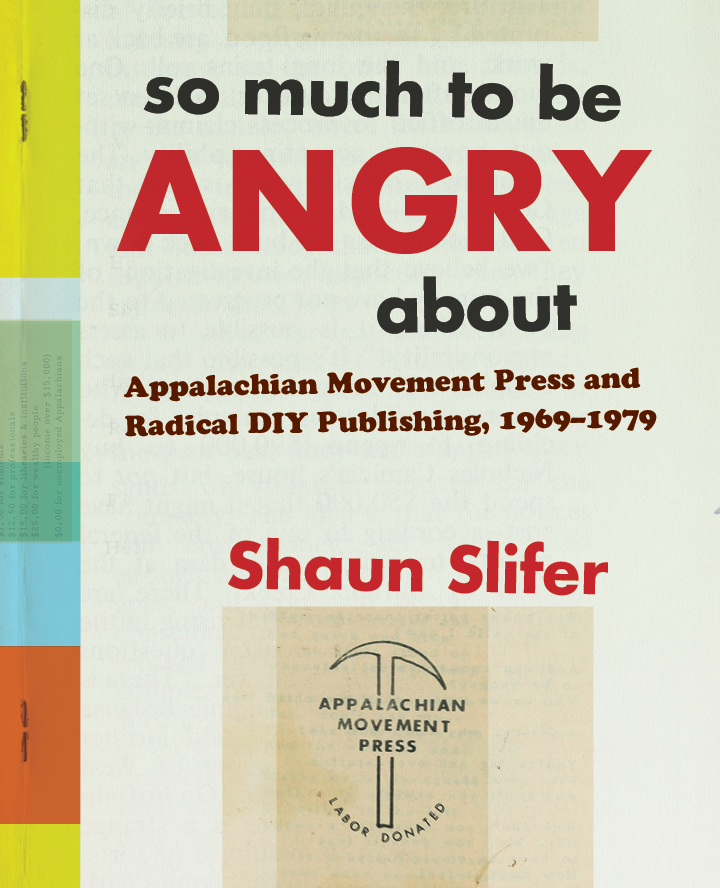
Shaun Slifer
March 2021
256pp
PB 978-1-949199-94-9
$32.99
CL 978-1-949199-93-2
Out of print
eBook 978-1-949199-95-6
$32.99
Appalachian Movement Press and Radical DIY Publishing, 1969–1979
In a remarkable act of recovery, So Much to Be Angry About conjures an influential but largely obscured strand in the nation’s radical tradition—the “movement” printing presses and publishers of the late 1960s and 1970s, and specifically Appalachian Movement Press in Huntington, West Virginia, the only movement press in Appalachia. More than a history, this craft- and activist-centered book positions the frontline politics of the Appalachian Left within larger movements in the 1970s. As Appalachian Movement Press founder Tom Woodruff wrote: “Appalachians weren’t sitting in the back row during this struggle, they were driving the bus.”
Emerging from the Students for a Democratic Society chapter at Marshall University, and working closely with organizer and poet Don West, Appalachian Movement Press made available an eclectic range of printed material, from books and pamphlets to children’s literature and calendars. Many of its publications promoted the Appalachian identity movement and “internal colony” theory, both of which were cornerstones of the nascent discipline of Appalachian studies. One of its many influential publications was MAW, the first feminist magazine written by and for Appalachian women.
So Much to Be Angry About combines complete reproductions of five of Appalachian Movement Press’s most engaging publications, an essay by Shaun Slifer about his detective work resurrecting the press’s history, and a contextual introduction to New Left movement publishing by Josh MacPhee. Amply illustrated in a richly produced package, the volume pays homage to the graphic sensibility of the region’s 1970s social movements, while also celebrating the current renaissance of Appalachia’s DIY culture—in many respects a legacy, Slifer suggests, of the movement publishing documented in his book.
Prologue: Digging for Appalachian Movement Press
Introduction: A Brief History of the Movement Printshop in the United States
Josh MacPhee
Part I: The Press
Part II: In Print
Hillbilly Ain’t Beautiful: Jim Branscome’s Annihilating the Hillbilly
In a World of Plenty We’re Hungry as Hell! Songs for Southern Workers: Don West and the Kentucky Workers Alliance
I Know All the Trout by Their First Names, Every Tree by Its Shape of Leaf: Margaret Gregg and Michael J. Clark’s Lazar & Boone Stop Strip Mining Bully
Surrounded on All Sides by the Slavocracy: Don West’s Freedom on the Mountains
Simply Wiped Off the Map: Davitt McAteer and Thomas N. Bethell’s The Pittston Mentality: Manslaughter at Buffalo Creek
Epilogue
Acknowledgments
Appendix: An Appalachian Movement Press Bibliography
Notes
Bibliography
Illustration Credits
Index
Shaun Slifer is an artist, writer, and museum professional based in Pittsburgh. He is the creative director at the West Virginia Mine Wars Museum and a founding member of the Justseeds Artists’ Cooperative.
“So Much to Be Angry About is an example of the best impulses of people’s history, careful and caring in its attention to people and places, disposing of nothing, casting a loving and critical eye and turning over stones, not just of movement history and its ideas, but also of the labor of the craftspeople, artists, and makers whose work spurs us on but sometimes goes without examination. I love how this book traces generational knowledge, complete with lessons, pitfalls, dynamism, and complication for those of us currently making and joining community, art, and resistance in Appalachia.”
Madeline ffitch, author of Stay and Fight
“The Appalachian Movement Press has been an inspiration for almost everything we do. An activist press focused on labor and art, and it was based in West Virginia? That’s something we all need to hear about! Especially anyone unpacking the region’s deep history of exploitation.”
Dwight and Liz Pavlovic, founders, Crash Symbols
“This is a history of Appalachian Movement Press and also a fascinating look into Appalachian history, regional radical politics, and print history. The fire of creation can be passed down through books like So Much to Be Angry About, and maybe this retelling of AMP’s story could spark something else like it down the line.”
Lucas Church, University of North Carolina Press
“Back before activists used viral memes to reach the masses, the rebels at Appalachian Movement Press used any means necessary to keep their presses running and get information into the hands of all people. I was captivated by the untold story of these scrappy Appalachians who were determined to spread regional pride and history, and who were also completely uninterested in money or fame.”
Betsy Sokolosky, owner, Base Camp Printing Co.
“A respectful and rigorous account of the Appalachian Movement Press and the regional context that created it.”
Anarchist Review of Books
“Wonderfully weighty with full-color pages of high-quality photos. . . . A great foundational book.”
Journal of Appalachian Studies

Jim Lewis
April 2021
300pp
PB 978-1-949199-96-3
$22.99
eBook 978-1-949199-97-0
$22.99
A NEW YORK TIMES NOTABLE BOOK OF THE YEAR
Ghosts of New York is a novel in which the laws of time and space have been subtly suspended. It interweaves four strands: a photographer newly returned to the neighborhood where she grew up, after years spent living overseas; a foundling raised on 14th Street; a graduate student, his romantic partner, and his best friend entangled in a set of relationships with far-reaching personal and political repercussions; and a shopkeeper suffering from first love late in life. Mixing prophecy, history, and a hint of speculative fiction, its stories are bound together even as they are propelled into stranger territory. And undergirding it all is a song, which appears, disappears, and then resurfaces.
Ghosts of New York explores complex lives through indelible renderings of settings—a bar, a night market, a recording studio—that alternate between familiar and unsettling. The work of a celebrated novelist and veteran of the art, film, and music scenes in New York and Austin (described as “a rare talent” by the New York Times and “a powerful literary voice” by Jeffrey Eugenides), this novel will immediately absorb readers intrigued by creative people and the places that sustain and challenge them.
Jim Lewis lives in Austin and is the author of three novels, which have been translated into many languages: Sister, Why the Tree Loves the Ax, and The King Is Dead. He has also written criticism, reportage, and essays for the New York Times, Slate, Rolling Stone, Granta, and others, and he collaborated with Larry Clark on the story for the movie Kids.
“A wondrous novel, with prose that sparkles like certain sidewalks after rain. . . . That’s it, I thought. That’s exactly what it’s like to live in New York.”
New York Times Book Review
“A collection of connected stories that is so imbued with the city in which it’s set that it could not possibly have taken place anywhere else.”
San Francisco Chronicle
“A masterful tapestry created through the interwoven lives of some of New York’s disparate, imperfect, and vulnerable souls, and set against the backdrop of a city that is a character unto itself: chameleonic, contradictory, hallucinatory yet visceral, fiercely wanting yet fiercely self-protective.”
Richard Price, author of Lush Life
“Jim Lewis is one of my favorite writers. He’s an exquisite stylist with an unsparing eye. In Ghosts of New York, he reveals the city to us through both a magnifying glass and a prism, bringing all facets of it into light. A marvelous novel.”
Rabih Alameddine, author of The Angel of History and An Unnecessary Woman
“Jim Lewis sees like a photographer and writes like an avenging angel.”
Sally Mann, author of Hold Still: A Memoir with Photographs
“Ghosts of New York is an intricate cat’s cradle of life trajectories and a beautifully vulnerable work of fiction.”
Jardine Libaire, author of White Fur
“Reads like a striking literary version of the movie My Dinner with Andre. . . . The writing is beautiful, crisp, and keen-eyed.”
Kirkus Reviews
“In Jim Lewis’s wondrous novel Ghosts of New York, encounters among strangers result in unexpected relationships and a montage that celebrates a city of manifold graces. . . . A subtle, dexterous novel.”
Foreword Reviews
“Lewis is a master at painting developed characters captured in various moments in time. . . . The lyrical narration is continuously engaging, especially as the episodic stories begin to interlace.”
—Booklist
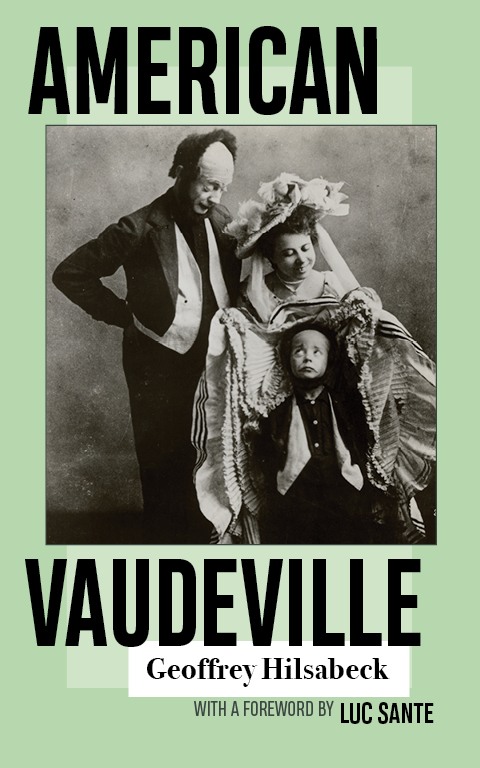
Geoffrey Hilsabeck
July 2021
160pp
PB 978-1-952271-06-9
$19.99
eBook 978-1-952271-07-6
$19.99
In Place Series
At the heart of American Vaudeville is one strange, unsettling fact: for nearly fifty years, from the late nineteenth century to the 1930s, vaudeville was everywhere—then, suddenly, it was nowhere. This book tells the story of what was once the most popular form of entertainment in the country using lists, creation myths, thumbnail biographies, dreams, and obituaries. A lyric history—part social history, part song—American Vaudeville sits at the nexus between poetry, experimental nonfiction, and, because it includes historic images, art books.
Geoffrey Hilsabeck’s book grows out of extensive archival research. Rather than arranging that research—the remains of vaudeville—into a realistic picture or tidy narrative, Hilsabeck dreams vaudeville back into existence, drawing on photographs, letters, joke books, reviews, newspaper stories, anecdotes, and other material gathered from numerous archives, as well as from memoirs by vaudeville performers like Buster Keaton, Eva Tanguay, and Eddie Cantor. Some of this research is presented as-is, a letter from a now forgotten vaudeville performer to her booking agent, for example; some is worked up into brief scenes and biographies; and some is put to even more imaginative uses, finding new life in dialogues and prose poems.
American Vaudeville pulls the past into the present and finds in the beauty and carnivalesque grotesqueness of vaudeville a fitting image of American life today.
Foreword
Creation Myths
Vanishing Act
Just What Was Vaudeville?
At the Wonderland
Dreamsweat
Jacks-in-the-Pew
Bright Particular Star
The Jonah Man
The Muting of the Strings
Obituaries and Obsolescencies
The Playhouse
History
Acknowledgments
Notes
Sources
Illustration Credits
Geoffrey Hilsabeck is the author of the poetry collection Riddles, Etc. His poems and essays have appeared in the New York Times Magazine, the Believer, Paris Review Daily, Tupelo Quarterly, and elsewhere. He lives in Pittsburgh.
“Hilsabeck is intuitive, canny, penetrating, and wise, and he has absorbed and can play all the tones in the vast calliope of the American language. American Vaudeville is a short book, but it is dense with evocation, each sentence expanding to fill the room. You will read it more than once.”
From the foreword by Luc Sante
“Hilsabeck’s essays excavate vaudeville’s archival remains, reveling in its greasepaint and slap shoes, boas and tightropes. He does not shy away from vaudeville’s ranker bits—its controlling monopolies and its racism and the ways it could, and did, devour its own. But neither does he short-sell its beauty. Rather, in these pages, transcendent artifice and wonderment ride in tandem with the tragic and tawdry, and all of it is shot through with the gloriously absurd. One comes away from Hilsabeck’s deeply researched work with a sense of history as spectacle, and spectacle as history. Like the stages that are his concern, Hilsabeck’s linked, lyric essays ‘would tell the story of America to America’—‘what we were, which is what we are.’ ”
Tina Post, University of Chicago
“Geoffrey Hilsabeck recounts the often bizarre details of vaudeville, the most popular live entertainment in the United States at the turn of the twentieth century, and, more importantly, he evokes the feeling of this eclectic, rapid-fire amusement. Hilsabeck gives vaudeville new life, from its physical immediacy to its ethereal reach.”
M. Alison Kibler, author of Censoring Racial Ridicule: Irish, Jewish, and African American Struggles over Race and Representation, 1890–1930
“Hilsabeck brings the seedy, magical world to life while unraveling its sudden death.”
Broadway Direct

Larry D. Thacker
February 2021
228pp
PB 978-1-949199-59-8
$19.99
eBook 978-1-949199-60-4
$19.99
Stories
“It seems like everybody but people from here are sure about what we’re about, and they make money being wrong about it.” The residents of Labor County, a fictional small community in the mountains of southeastern Kentucky, may be short on cash, but they are rich in creativity and tirelessly inventive as they concoct new schemes to make ends meet, settle old scores, and work off their debts to society and, in a way, to themselves.
A zealous history professor is caught stealing from the local museum in protest of petty theft; an arsonist strikes it lucky—twice; a skilled leatherworker saddles a turkey and finds a rider; an angel aspires to be a punk rock Roller Derby princess; a grieving artist carves a miracle into a roadside rock face; and affable Uncle Archie produces a seemingly unending supply of new and bizarre items to display in his Odditorium.
More than a collection of tales, Working It Off in Labor County assembles memorable characters who recur across these seventeen linked stories, sharing in one another’s struggles and stumbling upon humor and mystery, the grotesque and the divine, each in many forms.
Acknowledgments
Working It Off in Labor County
Hot Ticket
Day of the Dead Diner, Home of Juan D’s Best BBQ
Brotherhood of the Mystic Hand
Uncle Archie’s Acquisition
The Hard Thing
Riding Shotgun with Dory
Uncle Archie’s Underground Reunion
The Art of Grief
Benny and the Hill’s Angels
No Dumping
Hollow of the Dolls
Uncle Archie Goes One for Three
The Clown Brothers Eller
About Levi
The New Exhilarist
The Work
Larry D. Thacker is a Kentuckian writer and artist living in Johnson City, Tennessee. He is the author of the paranormal folk history Mountain Mysteries, two chapbooks, and four full poetry collections. He holds an MFA in poetry and fiction from West Virginia Wesleyan College. Visit his website at www.larrydthacker.com.
“There’s a country song on every page. . . . These characters want out, want in, yearn for some luck, lose whatever fortunes appear in their lives. This collection’s a keeper, worthy of shelf space between Larry Brown and Merle Haggard.”
George Singleton, author of You Want More: Selected Stories
“Energetic, humorous, and full of heart. Thacker’s voice feels fresh and alive.”
Jonathan Corcoran, author of The Rope Swing
“Thacker’s linked collection is a carnival ride of southern gothic tales and freak-show oddities. . . . Hilarious, yes, but it’s also a thoughtful exploration of the residents of Labor County, Kentucky, who are desperate to pull meaning out of loss.”
Marie Manilla, author of The Patron Saint of Ugly
“Larry Thacker’s stories have bark, but they also have bite. These Labor County people aren’t real, I keep telling myself that. They are just figments a writer made up in his head. But when you come away from this book, you’ll feel that you’ve encountered a cast of characters who are going to stay with you—like newfound kin or a bad feeling in the bottom of your brain. Thacker writes like a wild man with a mean streak, breaking your tired heart all along the way.”
Charles Dodd White, author of How Fire Runs and In the House of Wilderness
“A rollicking portrayal of small-town Kentucky life . . . unified by strong narrative drive and well-crafted prose. Fans of George Singleton will love this.”
Publishers Weekly

Renée K. Nicholson
May 2021
168pp
PB 978-1-952271-01-4
$19.99
eBook 978-1-952271-02-1
$19.99
Essays on Dance and Illness
Renée Nicholson’s professional training in ballet had both moments of magnificence and moments of torment, from fittings of elaborate platter tutus to strange language barriers and unrealistic expectations of the body. In Fierce and Delicate, she looks back on the often confused and driven self she had been shaped into—always away from home, with friends who were also rivals, influenced by teachers in ways sometimes productive and at other times bordering on sadistic—and finds beauty in the small roles she performed. When, inevitably, Nicholson moved on from dancing, severed from her first love by illness, she discovered that she retained the lyricism and narrative of ballet itself as she negotiated life with rheumatoid arthritis.
An intentionally fractured memoir-in-essays, Fierce and Delicate navigates the traditional geographies of South Florida, northern Michigan, New York City, Milwaukee, West Virginia, and also geographies of the body—long, supple limbs; knee replacements; remembered bodies and actual. It is a book about the world of professional dance and also about living with chronic disease, about being shattered yet realizing the power to assemble oneself again, in a new way.
Part I
A Girl Who Wanted to Fly
When I Was a Mouse
Five Positions
Never Famous
Raked Stages: A Twelve-Step Program
Coda: Partnering
Out of the Blue
Part II
A Woman Tethered to the Earth
Hair: A Short History
In Sickness
A Royal in Appalachia
Certified: Dancer Becomes a Teacher
Claque
Fierce and Delicate
Six Impossible Things Before Breakfast
Acknowledgments
Renée K. Nicholson is the author of two poetry collections, Roundabout Directions to Lincoln Center and Post Script, and coeditor of the anthology Bodies of Truth: Stories of Illness, Disability, and Medicine. The former director of the humanities center at West Virginia University, she is the series editor for the Connective Tissue Series.
“Lyrical and fascinating.”
Buzzfeed News
“An elegant collection of essays from a dancer’s soul that will uplift all readers, especially those who love dance.”
Library Journal
“Many dancers wrestle with one of the central questions of Renée Nicholson’s fabulous book: How does one live as an ex-dancer? The answers Nicholson explores will strongly resonate with those who long to lift the veil that shrouds creative pursuits in unnecessary mystique. I love Nicholson’s powerful prose: how the essays circle in and out of dance, the way movement comes alive on the page, and the articulate grace with which Nicholson writes about sudden disability. In Fierce and Delicate, Nicholson teaches us how to envelop our impossible dreams with gratitude for the life we have now.”
Renée E. D’Aoust, author of Body of a Dancer
“Renée Nicholson writes with the grace, determination, and, yes, fierceness needed to succeed in the world of professional dance, so it is no surprise that Fierce and Delicate is such a remarkable and en pointe memoir-in-essays, as breathtaking and beautiful as ballet itself. Nicholson’s voice blends absolute honesty with a lovely, lyrical descriptive style, and each essay is a pure pleasure to read. Bravo!”
Dinty W. Moore, author of Between Panic and Desire
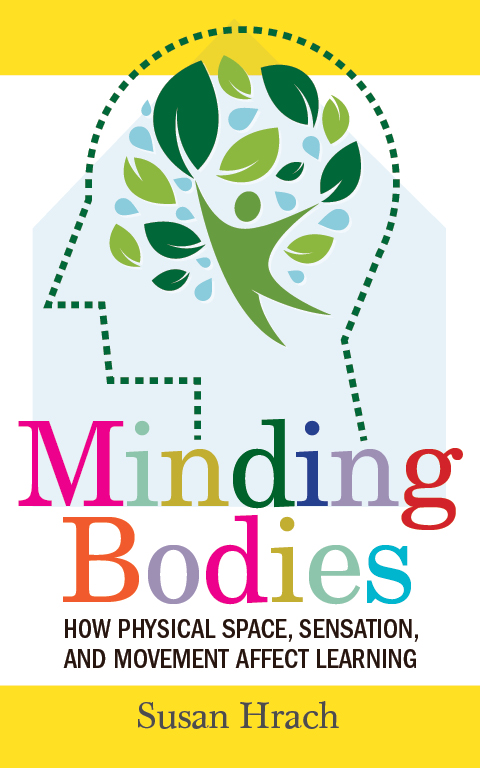
Susan Hrach
May 2021
204pp
PB 978-1-949199-99-4
$24.99
CL 978-1-949199-98-7
Out of print
eBook 978-1-952271-00-7
$24.99
Teaching and Learning in Higher Education Series
How Physical Space, Sensation, and Movement Affect Learning
2022 Nautilus Book Award, Social Sciences and Education, Silver
Starting from new research on the body—aptly summarized as “sitting is the new smoking”—Minding Bodies aims to help instructors improve their students’ knowledge and skills through physical movement, attention to the spatial environment, and sensitivity to humans as more than “brains on sticks.” It shifts the focus of adult learning from an exclusively mental effort toward an embodied, sensory-rich experience, offering new strategies to maximize the effectiveness of time spent learning together on campus as well as remotely.
Minding Bodies draws from a wide range of body/mind research in cognitive psychology, kinesiology, and phenomenology to bring a holistic perspective to teaching and learning. The embodied learning approaches described by Susan Hrach are inclusive, low-tech, low-cost strategies that deepen the development of disciplinary knowledge and skills. Campus change-makers will also find recommendations for supporting a transformational mission through an attention to students’ embodied learning experiences.
Receive a 30% discount on orders of 10 or more copies of this title with code HIGHEREDBULK30 at checkout.
Preface: No More Brains on Sticks
Introduction: How Bodies Affect the Learning Process
Part One
Awaken the Senses
1. Optimize the Classroom
2. Take It Outside
Part Two
Leverage the Body for Learning
3. Interrogate Sensory Perceptions
4. Learn to Move, Move to Learn
Part Three
Break through Boundaries
5. Move around Together
6. Embrace Discomfort
Acknowledgments
References
Index
Susan Hrach is director of the faculty center and professor of English at Columbus State University. Winner of the University System of Georgia Regents’ Scholarship of Teaching and Learning Award, she is widely recognized for her innovations in teaching world literature.
“For too long, faculty have only focused on the education of the mind, ignoring the importance of the body in that process. Susan Hrach’s book conveys an authentic sense of wonder and excitement about the topic, and it is a timely and relevant text for higher education faculty.”
Kathryn Byrnes, Bowdoin College
“Beautifully written and packed full of ideas, Minding Bodies is a timely and necessary intervention that questions our long-held assumptions about sedentary teaching and learning. There is something that will enlighten any teacher on every page. This is a welcome book that is trying its best to get education back on its feet.”
Vybarr Cregan-Reid, author of Primate Change: How the World We Made Is Remaking Us

Jenae Cohn
June 2021
288pp
PB 978-1-952271-04-5
$24.99
eBook 978-1-952271-05-2
$24.99
Teaching and Learning in Higher Education Series
Teaching Digital Reading
Smartphones, laptops, tablets: college students are reading on-screen all the time, and digital devices shape students’ understanding of and experiences with reading. In higher education, however, teachers rarely consider how digital reading experiences may have an impact on learning abilities, unless they’re lamenting students’ attention spans or the distractions available to students when they’re learning online.
Skim, Dive, Surface offers a corrective to these conversations—an invitation to focus not on losses to student learning but on the spectrum of affordances available within digital learning environments. It is designed to help college instructors across the curriculum teach digital reading in their classes, whether they teach face-to-face, fully online, or somewhere in between. Placing research from cognitive psychology, neuroscience, learning science, and composition in dialogue with insight from the scholarship of teaching and learning, Jenae Cohn shows how teachers can better frame, scaffold, and implement effective digital reading assignments. She positions digital reading as part of a cluster of literacies that students should develop in order to communicate effectively in a digital environment.
Receive a 30% discount on orders of 10 or more copies of this title with code HIGHEREDBULK30 at checkout.
Acknowledgments
Introduction: Why Teach Digital Reading?
Part 1. Skim
Understanding Historical, Affective, and Neurological Perspectives on Reading Technologies
1. The Chained Book: A Historical Overview of Reading Technology in Higher Education
2. The Held Book: How Our Feelings for Books Impact How We Teach Reading
3. The Brain on Books: What the Neuroscience of Reading Can Tell Us about Reading on Screens
Part 2. Dive
Exploring the Digital Reading Framework to Promote Deep Reading Practices
An Introduction to the Digital Reading Framework: Curation, Connection, Creativity, Contextualization, Contemplation
4. Curation
5. Connection
6. Creativity
7. Contextualization
8. Contemplation
Part 3. Surface
Critically Approaching the Adoption and Use of Digital Reading Technologies
9. The Ethical Implications of Digital Reading: Grappling with Digital Archiving, Readerly Privacy, and Evidence of Our Reading
Conclusion: Principles, Practices, and Futures for Digital Reading
Appendix: Tools for Digital Reading
References
Index
Jenae Cohn writes and speaks about teaching and learning in digital spaces. She works as the director of academic technology at California State University, Sacramento. Find more at www.jenaecohn.net.
“An important, accessible contribution to conversations about digital reading.”
Ellen Carillo, author of MLA Guide to Digital Literacy
You are being redirected to The Chicago Distribution Center.
West Virginia University Press is not responsible for content on external sites.