- Active Series
- Books
- Online
- Journals
- eBooks
The Antebellum Kanawha Salt Business and Western Markets
Summary
In the early nineteenth century, a ten-mile stretch along the Kanawha River in western Virginia became the largest salt-producing area in the antebellum United States. Production of this basic commodity stimulated settlement, the livestock industry, and the rise of agricultural processing, especially pork packing, in the American West. Salt extraction was then and is now a fundamental industry.
In his illuminating study, now available with a new preface by the author, John Stealey examines the legal basis of this industry, its labor practices, and its marketing and distribution patterns. Through technological innovation, salt producers harnessed coal and steam as well as men and animals, constructed a novel evaporative system, and invented drilling tools later employed in oil and natural gas exploration. Thus in many ways the salt industry was the precursor of the American extractive and chemical industries. Stealey's informative study is an important contribution to American economic, business, labor, and legal history.
Contents
Coming Soon
Author
John Stealey is Distinguished Professor Emeritus of History, Shepherd University and the author of Kanawhan Prelude to Nineteenth-Century United States Monopoly: The Virginia Combinations, Porte Crayon’s Mexico: David Hunter Strother’s Diaries in the Early Porfirian Era, 1879-1885, and West Virginia’s Civil War-Era Constitution: Loyal Revolution, Confederate Counter-Revolution, and the Convention of 1872.
Reviews
"A piece of meticulous scholarship and an outstanding reconstruction, mostly from primary sources, of one of the first major manufacturing industries to develop in what is now southern West Virginia. . . .This is a well-told story of entrepreneurship, revealing how innovators in a frontier industry both anticipated and adapted to change by introducing new technologies and forms of business organization."
West Virginia History


Cast in Deathless Bronze: Andrew Rowan, the Spanish-American War, and the Origins of American Empire
Donald Tunnicliff Rice
December 2016
384pp
PB 978-1-943665-43-3
$27.99
Cl 978-1-943665-42-6
$99.99
epub 978-1-943665-44-0
$27.99
PDF 978-1-943665-45-7
$27.99
Summary
In 1898, when war with Spain seemed inevitable, Andrew Summers Rowan, an American army lieutenant from West Virginia, was sent on a secret mission to Cuba. He was to meet with General Calixto García, a leader of the Cuban rebels, in order to gather information for a U.S. invasion. Months later, after the war was fought and won, a flamboyant entrepreneur named Elbert Hubbard wrote an account of Rowan’s mission titled “A Message to Garcia.” It sold millions of copies, and Rowan became the equivalent of a modern-day rock star. His fame resulted in hundreds of magazine and newspaper articles, radio shows, and two movies. Even today he is held up as an exemplar of bravery and loyalty. The problem is that nothing Hubbard wrote about Rowan was true.
Donald Tunnicliff Rice reveals the facts behind the story of “A Message to Garcia” while using Rowan’s biography as a window into the history of the Spanish-American War, the Philippine War, and the Moro Rebellion. The result is a compellingly written narrative containing many details never before published in any form, and also an accessible perspective on American diplomatic and military history in the late nineteenth and early twentieth centuries.
Contents
Preface
Introduction
1. “It is meritorious to be a boy at West Point”
2. Becoming an Intelligence Officer
3. “A Most Perilous Undertaking”
4. America Takes a Step towards Empire
5. The Creation of an American Myth
6. Exactly Where Are the Philippines?
7. A Glorious Undertaking
8. Captain Rowan in Command
9. An Idyllic Spot to Spend the War
10. Major Rowan in Love and War
11. The Complexities of Retirement
12. The Myth Lives On
Epilogue
Endnotes
Selected Bibliography
Index
Author
Donald Tunnicliff Rice is the author of The Agitator and How to Publish Your Own Magazine, and the winner of an Ohio Arts Council Individual Achievement Award. He has been employed as a history textbook writer, technical editor, and advertising copywriter. His writings have appeared in periodicals ranging from the New York Times to the Journal of Caribbean Literature.
Reviews
“Rice interweaves personal and national history to outline major shifts in expansionist activity under McKinley and Roosevelt. . . . Readers who thrill to the particulars of life in military camps will find much to enjoy here.”
Publishers Weekly
"Both authoritative and entertaining."
Caribbean Studies
“The story of Andrew Summers Rowan is very much worth telling, and it's difficult to imagine it being told better than in this book.”
Peter Hulme, author of Cuba’s Wild East: A Literary Geography of Oriente
“What makes this book so fascinating is the way in which the author weaves Andrew Rowan’s personal story into the greater history of American imperial expansion under McKinley and Roosevelt. Both general readers and scholars interested in West Virginia history and, especially, in the complex history of the U.S.’s war against Spain and subsequent ascension over the Philippines will find a great deal to admire.”
Brady Harrison, author of Agent of Empire: William Walker and the Imperial Self in American Literature
“Cast in Deathless Bronze is well worth reading. Rowan's story not only intersects with West Virginia history, but it reconstructs early military efforts at intelligence-gathering, reveals the many aspects—the tedious and lonely, the fulfilling and frustrating—of military life on the late nineteenth-century western frontier and in Cuba and the Philippines, and illustrates effectively the way history is often twisted into a myth that overwhelms both the actions of its original participants and truth itself.”
West Virginia History


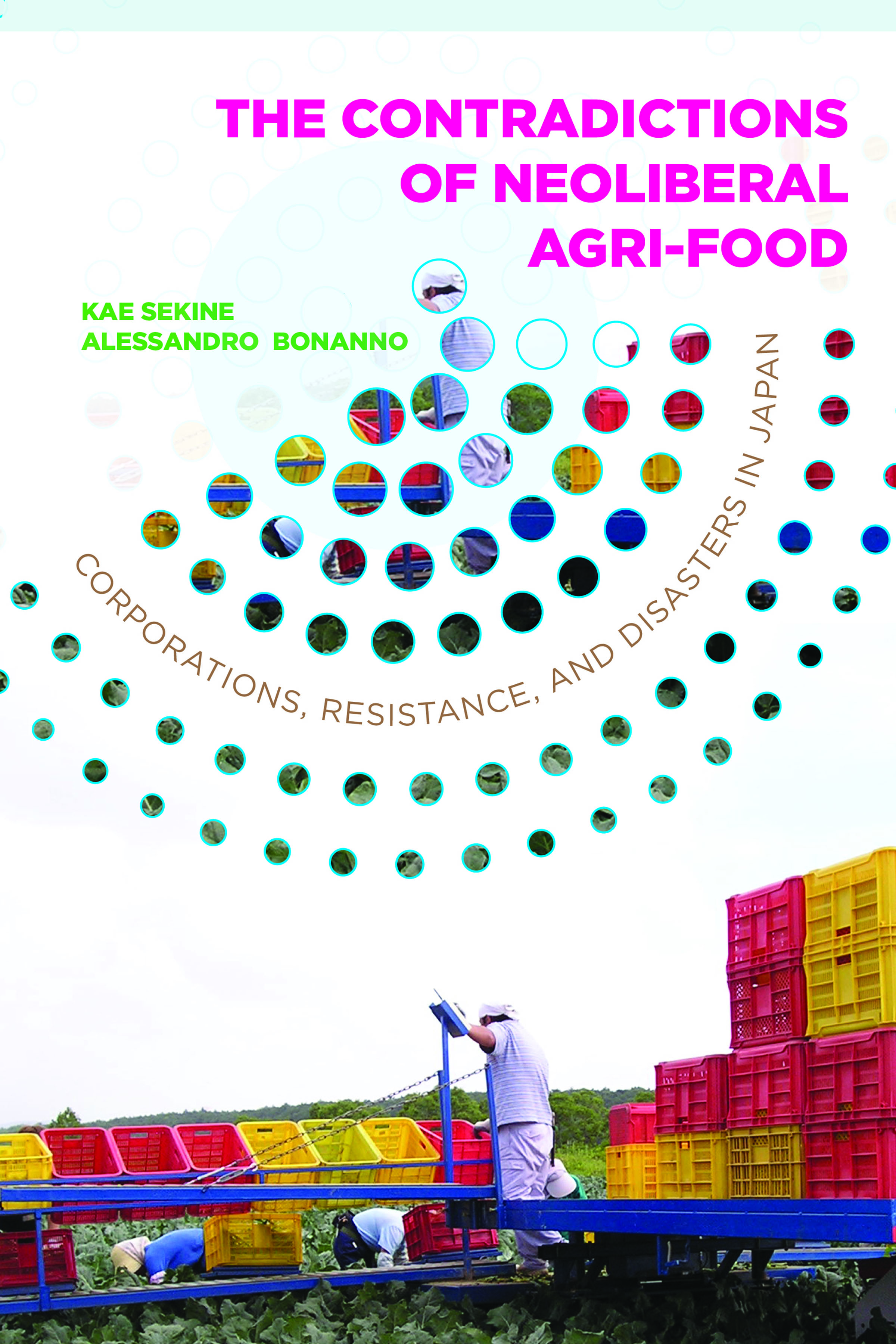
The Contradictions of Neoliberal Agri-Food: Corporations, Resistance, and Disasters in Japan
Kae Sekine and Alessandro Bonanno
August 2016
248pp
PB 978-1-943665-19-8
$32.99
epub 978-1-943665-20-4
$32.99
PDF 978-1-943665-21-1
$32.99
Summary
Employing original fieldwork, historical analysis, and sociological theory, Sekine and Bonanno probe how Japan’s food and agriculture sectors have been shaped by the global push toward privatization and corporate power, known in the social science literature as neoliberalism. They also examine related changes that have occurred after the triple disaster of March 2011 (the earthquake, tsunami, and meltdown of the Fukushima Daiichi nuclear reactor), noting that reconstruction policy has favored deregulation and the reduction of social welfare.
Sekine and Bonanno stress the incompatibility of the requirements of neoliberalism with the structural and cultural conditions of Japanese agri-food. Local farmers’ and fishermen’s emphasis on community collective management of natural resources, they argue, clashes with neoliberalism’s focus on individualism and competitiveness. The authors conclude by pointing out the resulting fundamental contradiction: The lack of recognition of this incompatibility allows the continuous implementation of market solutions to problems that originate in these very market mechanisms.
Table of Contents
Acknowledgments
Introduction
1. Agri-food in Japan: A Literature Review
2. Agriculture and Fisheries in Japan from the Post-World War II High Fordism to the Neoliberal Era (1945–2010)
3. Neoliberal Agri-food Policies in the Aftermath of the 2011 Earthquake, Tsunami, and Nuclear Meltdown
4. The Evolution of Corporate Agri-food Industrial Policies in Japan: The Cases of Dole Japan, Kagome, IBM, and Sendai Suisan
5. Dole Japan’s Agricultural Production
6. Corporate Agri-food Industrial Strategies in the Aftermath of the Disasters
7. Fisheries and SZR
8. Agri-food Corporations, the State, Resistance, and Disaster Reconstruction under Neoliberalism
9. Neoliberalism in Japanese Agri-food: A Systemic Crisis
Notes
Bibliography
Author
Kae Sekine is associate professor of economics at Aichi Gakuin University, Nagoya, Japan.
Alessandro Bonanno is Texas State University System Regents’ Professor and Distinguished Professor of Sociology at Sam Houston State University.
Reviews
"At a time when there is much over-generalization about neoliberalism and its global impacts, this provocative and revealing book provides a detailed case study of Japan, presenting a clear picture of how neoliberal settings—in supporting a corporate agri-food agenda—have worked against small farmers and fisher-folk. It is a fascinating, illuminating, and, ultimately, sobering analysis."
Geoffrey Lawrence, University of Queensland
"A novel and incisive analysis of the corporatization of Japanese agriculture and its acceleration after the triple disaster of March 2011. Groundbreaking."
Shuzo Teruoka, author of Agriculture in the Modernization of Japan, 1850–2000


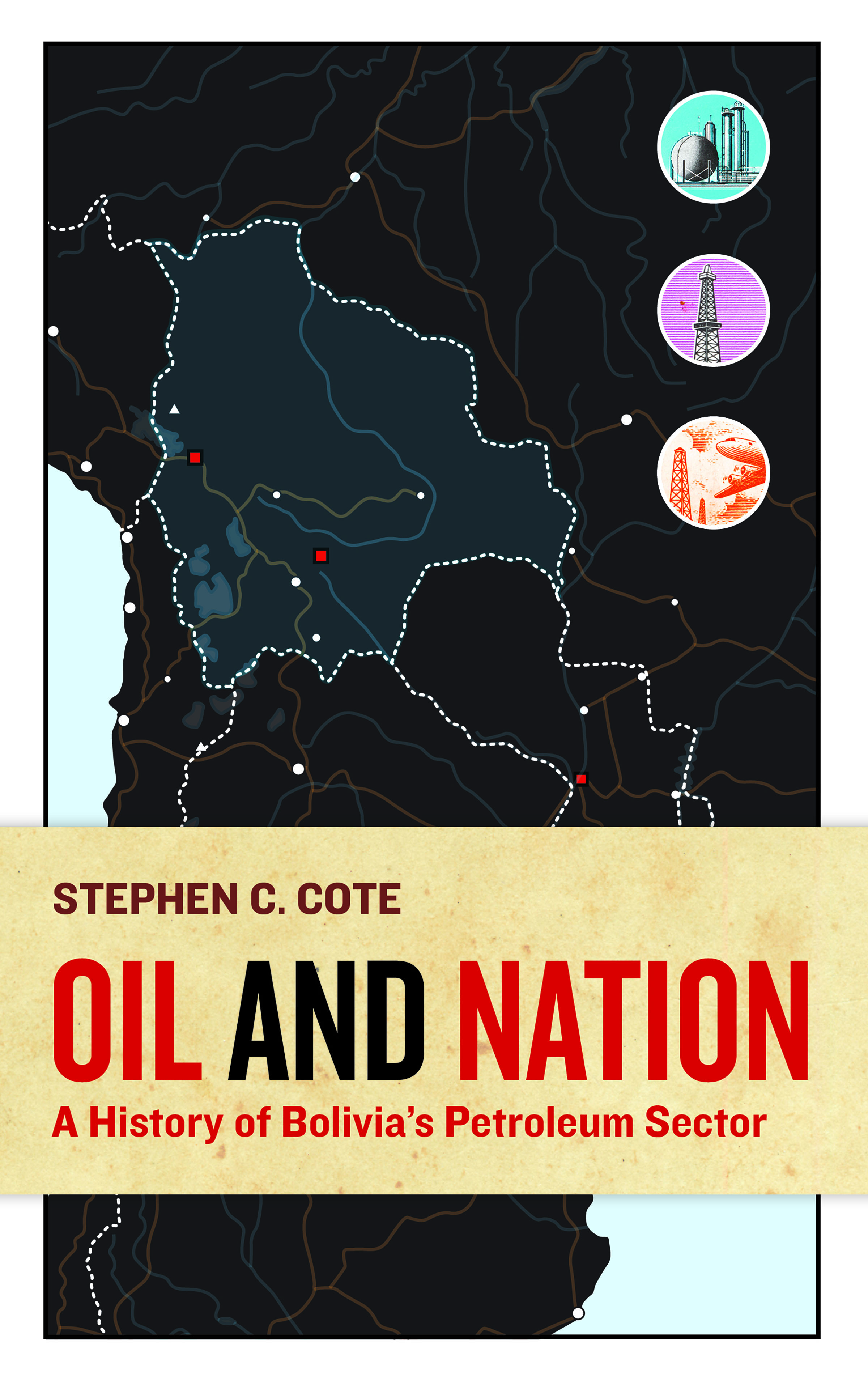
Oil and Nation: A History of Bolivia’s Petroleum Sector
Stephen C. Cote
December 2016
224pp
PB 978-1-943665-47-1
$26.99
epub 978-1-943665-48-8
$26.99
PDF 978-1-943665-49-5
$26.99
Summary
Oil and Nation places petroleum at the center of Bolivia’s contentious twentieth-century history. Bolivia’s oil, Cote argues, instigated the largest war in Latin America in the 1900s, provoked the first nationalization of a major foreign company by a Latin American state, and shaped both the course and the consequences of Bolivia’s transformative National Revolution of 1952. Oil and natural gas continue to steer the country under the government of Evo Morales, who renationalized hydrocarbons in 2006 and has used revenues from the sector to reduce poverty and increase infrastructure development in South America’s poorest country.
The book advances chronologically from Bolivia’s earliest petroleum pioneers in the nineteenth century until the present, inserting oil into historical debates about Bolivian ethnic, racial, and environmental issues, and within development strategies by different administrations. While Bolivia is best known for its tin mining, Oil and Nation makes the case that nationalist reformers viewed hydrocarbons and the state oil company as a way to modernize the country away from the tin monoculture and its powerful backers and toward an oil-powered future.
Contents
Introduction
1. Discovery
2. Standard Oil and Eastern Bolivia
3. Oil and the Chaco War
4. Oil and Nation
5. Oil and the Revolutionary State
6. Fall and Rise of the Oil State
Notes
Bibliography
Index
Author
Stephen Cote obtained his PhD in Latin American history from the University of California, Davis, in 2011. He has taught history at Ohio University and Western Washington University, and he is currently employed by the National Park Service. He lives in the San Francisco Bay Area.
Reviews
"There is nothing like this book at all in English, so it will be a wonderful addition to the literature. It is well researched and documented, and the style makes for a comfortable read for undergraduates and an interested non-academic public too."
Myrna Santiago, author of The Ecology of Oil: Environment, Labor, and the Mexican Revolution, 1900–1938


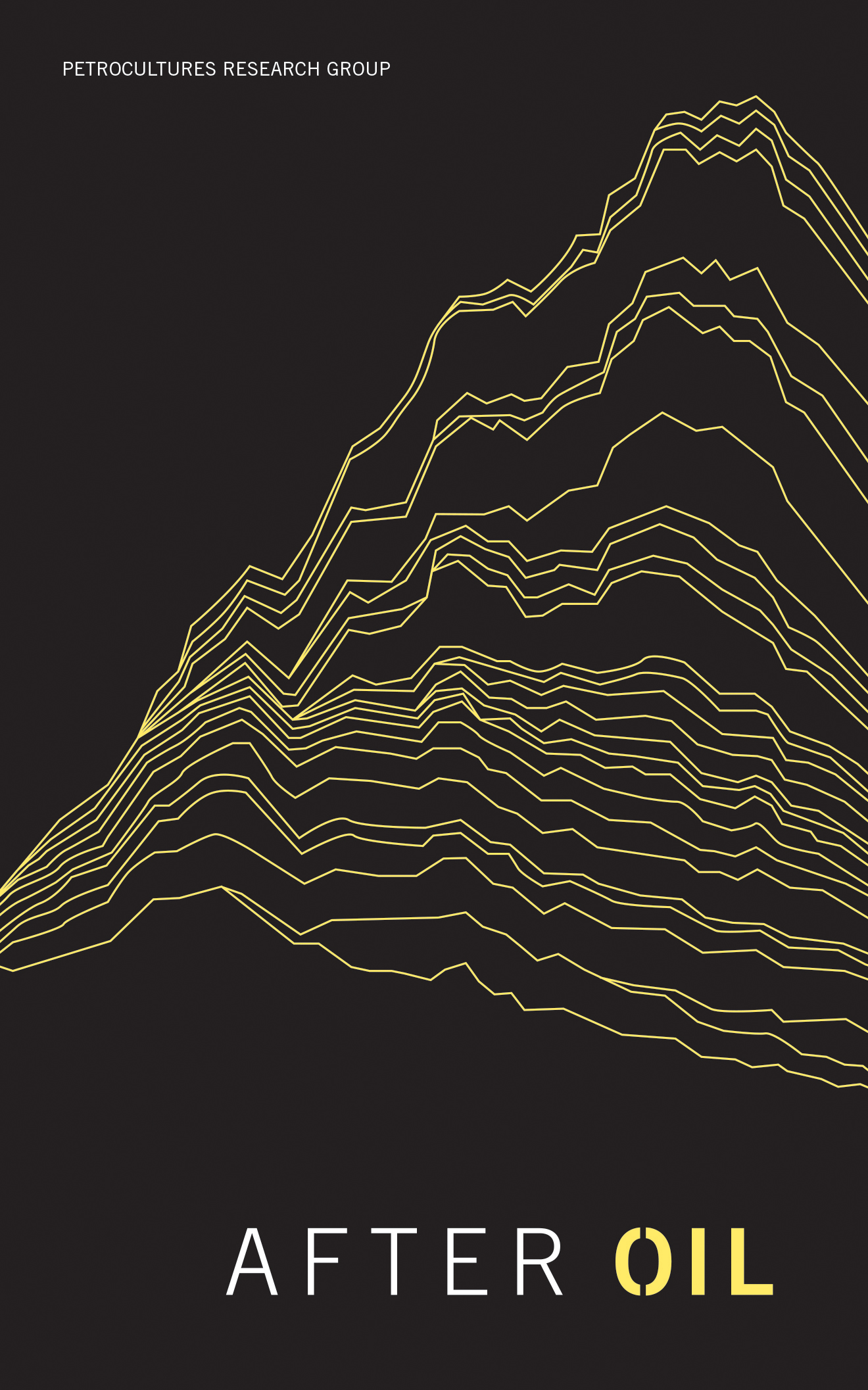
After Oil
Summary
After Oil explores the social, cultural, and political changes needed to make possible a full-scale transition from fossil fuels to new forms of energy. Written collectively by participants in the first After Oil School, After Oil explains why the adoption of renewable, ecologically sustainable energy sources is only the first step of energy transition.
Energy plays a critical role in determining the shape, form, and character of our daily existence, which is why a genuine shift in our energy usage demands a wholesale transformation of the petrocultures in which we live. After Oil provides readers with the resources to make this happen.
Contents
Coming Soon
Author
Imre Szeman is Canada Research Chair in Cultural Studies and Professor of English, Film Studies, and Sociology at the University of Alberta. His recent books include Fueling Culture: 101 Words for Energy and Environment and The Energy Humanities Reader. He is the codirector and cofounder of the Petrocultures Research Group.
Reviews
"An indispensable, accessible cluster of essays that ponder how leaving oil behind could—with careful and collective thought, imagination, and action— be an opportunity to create a world more just and equal than the one that oil has made. Pathbreaking both for what it says and how it was written, this little book demonstrates the value of interdisciplinary conversation about the social, ecological, aesthetic, libidinal, economic, and political aspects of the oil-soaked present and about the impasses that stand in the way of life after oil. Essential reading for everyone."
Jennifer Wenzel, Columbia University


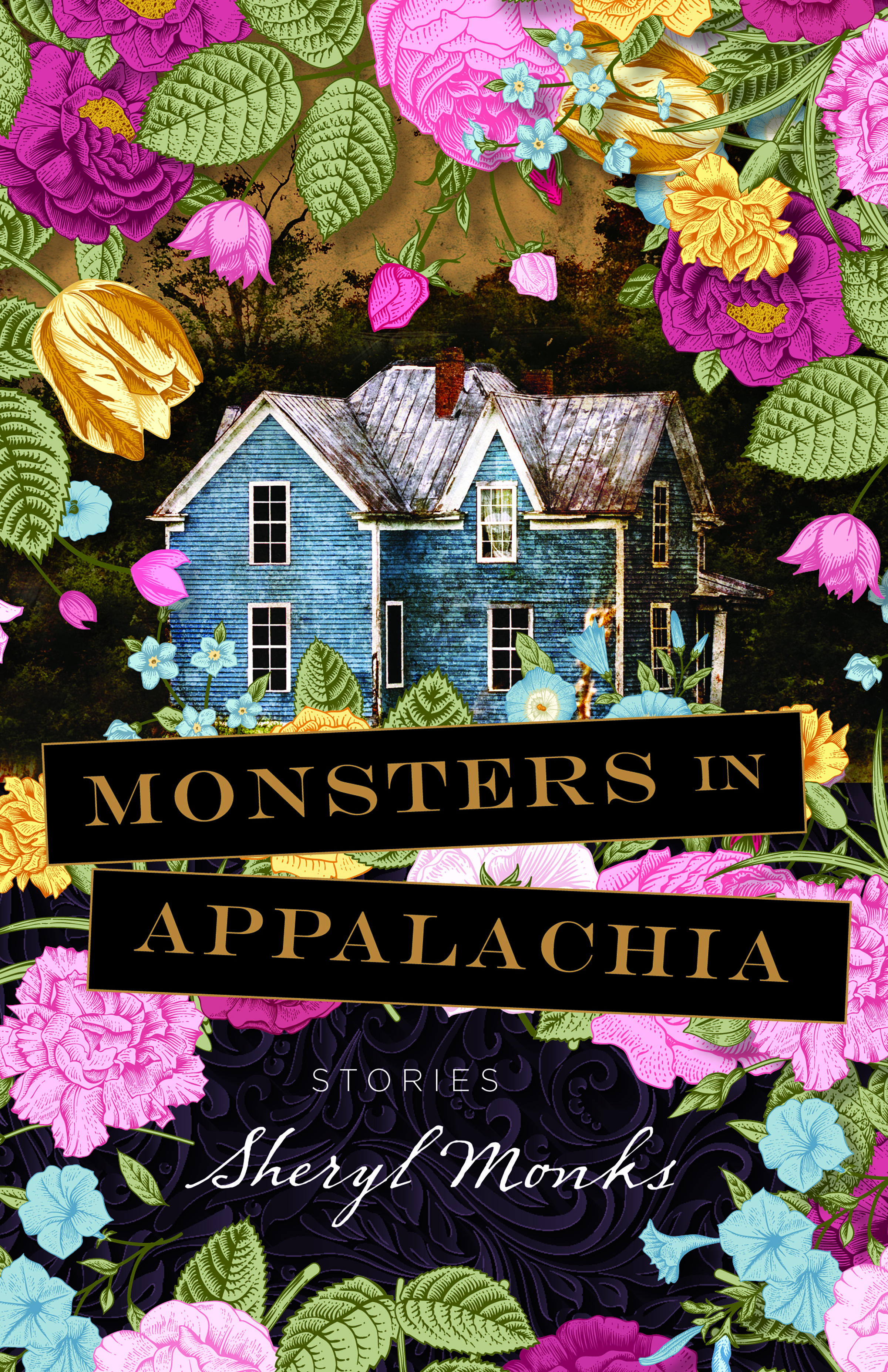
Monsters in Appalachia: Stories
Sheryl Monks
November 2016
180pp
PB 978-1-943665-39-6
$16.99
epub 978-1-943665-40-2
$16.99
PDF 978-1-943665-41-9
$16.99
Summary
2017 Southern Independent Bookstore Alliance Award Finalist
The characters within these fifteen stories are in one way or another staring into the abyss. While some are awaiting redemption, others are fully complicit in their own undoing.
We come upon them in the mountains of West Virginia, in the backyards of rural North Carolina, and at tourist traps along Route 66, where they smolder with hidden desires and struggle to resist the temptations that plague them.
A Melungeon woman has killed her abusive husband and drives by the home of her son’s new foster family, hoping to lure the boy back. An elderly couple witnesses the end-times and is forced to hunt monsters if they hope to survive. A young girl “tanning and manning” with her mother and aunt resists being indoctrinated by their ideas about men. A preacher’s daughter follows in the footsteps of her backsliding mother as she seduces a man who looks a lot like the devil.
A master of Appalachian dialect and colloquial speech, Monks writes prose that is dark, taut, and muscular, but also beguiling and playful. Monsters in Appalachia is a powerful work of fiction.
Contents
Burning Slag
Robbing Pillars
The Immortal Jesse James
Barry Gibb is the Cutest Bee Gee
Black Shuck
Rasputin’s Remarkable Sleight of Hand
Run, Little Girl
Clinch
Little Miss Bobcat
Merope
Crazy Checks
Nympho
This Low Land of Sorrow
Justice Boys
Monsters in Appalachia
Author
Sheryl Monks is the founding editor of Change Seven magazine. Previously, she was the co-owner and editor of Press 53, an independent literary publisher which she helped to establish in Winston-Salem, NC. She holds an MFA in creative writing from Queens University of Charlotte. Her collection of stories, All the Girls in France, was a finalist for the 2013 Hudson Prize sponsored by Black Lawrence Press. Her fiction has been nominated for New Stories from the South and been awarded a Northwest NC Regional Artist’s Project Grant and the Reynolds Price Short Fiction Award. Work has appeared in Revolution John, Black and Grey Magazine, The Greensboro Review, Writer’s Chronicle, Midwestern Gothic, Night Train, storySouth, Regarding Arts and Letters, The Toast, Backwards City Review, Southern Gothic online, Surreal South, Fried Chicken and Coffee, and elsewhere.
Reviews
"Monsters in Appalachia is wildly outrageous at times, but there is empathy in these stories as well. Humor and sadness achieve a delicate balance."
Ron Rash, author of The Cove and Above the Waterfall
“Monks knows her monsters, both literal and figurative. And she knows the territory of hills and hollers, where reality is sometimes heightened so sharply that it bleeds into myth. . . . These stories sparkle with dark, extreme humor.”
Publishers Weekly (starred review)
"A memorable debut: each of these stories is as original and multidimensional as the characters who inhabit them."
Kirkus (starred review)
"Haunting, raw, terrifying, and passionate."
Sara Pritchard, author of Help Wanted: Female and Crackpots
"A fresh, new voice in contemporary fiction, in stories of teenage angst, bonds of family, motherhood, and contradictions of middle age. Always surprising, these stories conjure both sorrow and mystery with intimate, loving detail."
Robert Morgan, author of Gap Creek, Chasing the North Star, and Boone: A Biography
"Monsters in Appalachia is a brilliant collection of short stories, reminiscent of Flannery O’Connor’s darkness and sense of place. Sheryl Monks’s writing is strong and precise, drawing readers down the winding roads of Appalachia."
NewPages.com
“These elemental stories take on the dark Appalachian territory of David Joy and Ron Rash with a kind of raw, absolute, female confidence. Coal miners, snake handlers, smart, scary women at their wits end-- all at the mercy of their terrific landscape. Monsters In Appalachia offers a glimpse of the edge of a world that seems freshly electric, and treacherous as hell.”
Ashley Warlick, author of The Arrangement
"Sheryl Monks writes with unflinching honesty and deep affection about the Appalachia I know: a place of imminent peril to both body and soul, home to lingering ghosts. Her gorgeous (but never merely decorative) language generously limns the hard mountain landscape as well as the luminously-realized and all-too-human folks who struggle there. This collection brought me home again."
Pinckney Benedict, author of Miracle Boy and Other Stories
"Sheryl Monks's stories are gorgeously written dispatches from Appalachia, telling the difficult truth of what it is to survive in a place that can exact a heavy price. But these tales are generous too, and a particular grace sets on them all."
Charles Dodd White, author of A Shelter of Others and Sinners of Sanction County
"There’s music in these stories—visceral, rhythmical, soulful, deep. They are siren songs, taking us places we otherwise might not go."
Kim Church, author of Byrd
“Sheryl Monks gives us such a range and depth of character in one collection. Her stories continue to delight and haunt long after reading.”
Renée K. Nicholson, author of Roundabout Directions to Lincoln Center


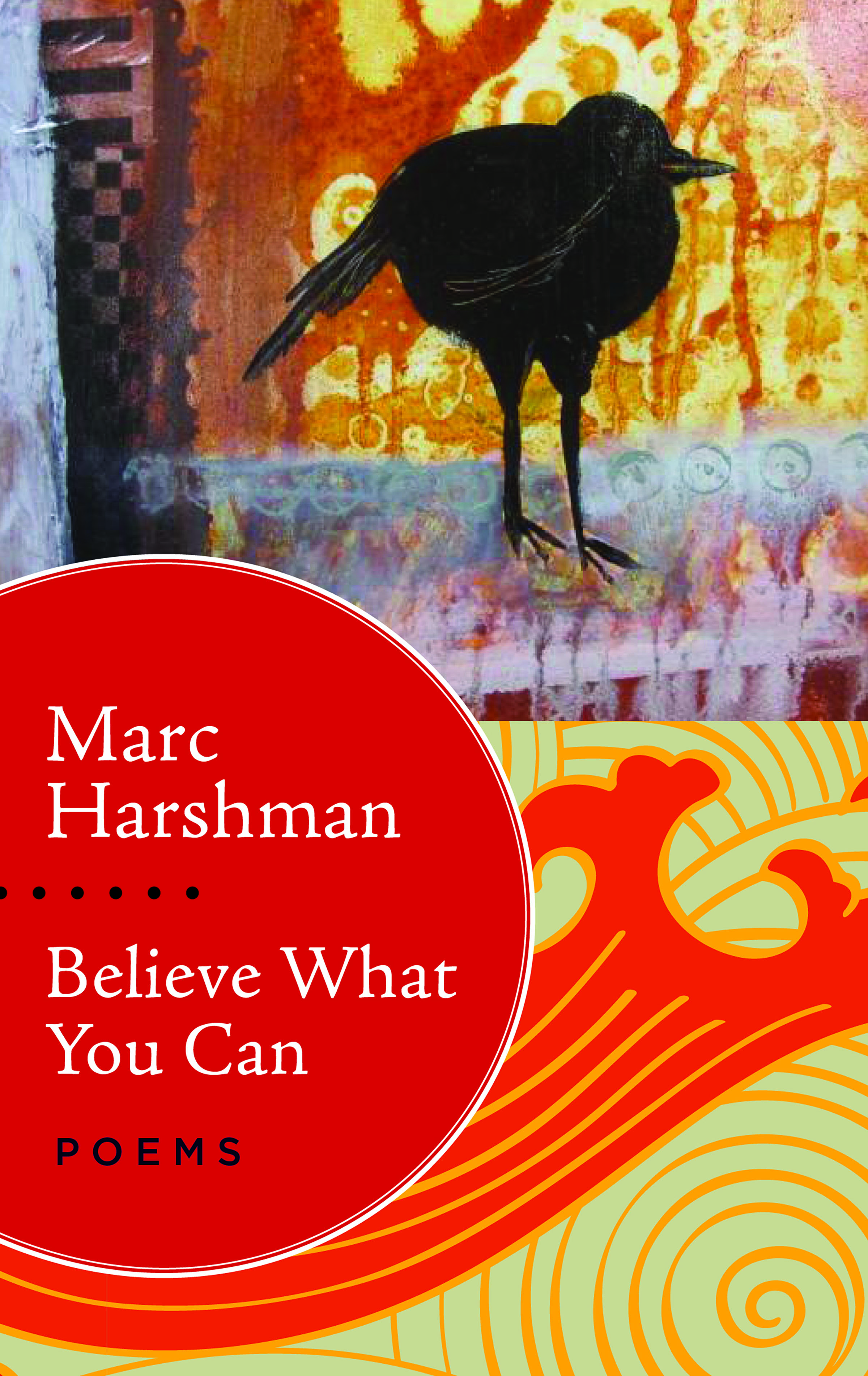
Believe What You Can: Poems
Marc Harshman
September 2016
104pp
PB 978-1-943665-22-8
$16.99
epub 978-1-943665-23-5
$16.99
PDF 978-1-943665-24-2
$16.99
Summary
Mountain Heritage Literary Festival Appalachian Book of the Year, poetry
Weatherford Award winner, poetry
This collection of poetry by West Virginia Poet Laureate Marc Harshman explores the difficulty of living with an awareness of the eventual death of all living things. Each of its four sections suggests a coping mechanism for this inevitable predicament, from storytelling, to accepting darkness and death as a creative force, to enjoying disruption and chaos, and finally to embracing the mystery of life as the most triumphant story of all.
These difficulties come “not quite haphazardly” and not without a “last light”—something “beyond” and as “sweet as apples.” With these moments of grace, Harshman taps into the satisfying richness that comes from unexpected revelations, helping us rise above the fragile recesses of life and death, all while portraying the lost rural worlds of the Midwest and Appalachia in ways untouched by sentiment or nostalgia.
Contents
Coming Soon
Author
Marc Harshman is the poet laureate of West Virginia. He is the author of Green-Silver and Silent and Rose of Sharon. His thirteen highly acclaimed children’s books include The Storm, a Smithsonian Notable Book. He is the host of The Poetry Break, a monthly show for West Virginia Public Broadcasting.
Reviews
“To enter this work is to remain open to the haphazard, the lopsided, the fragile, and the bracing details that tell our times as we both know and fear them. Believe What You Can is an astonishing and generous book that gives a credible 'map of true witness.'”
Maggie Anderson, author of Windfall: New and Selected Poems and Dear All
“Believe What You Can overflows with rich lines and vivid images as the poet laureate of West Virginia speaks to classic concerns of loving the land, struggling to thrive, and holding on to what can be believed.”
Ron Houchin, author of The Man Who Saws Us In Half: Poems
“Harshman manages to get to the heart of the matter in this collection—less like an arrow though and more like a mountain stream—winding its way through the Appalachian Mountains to the source of the music.”
NewPages.com
“Harshman’s poetic sophistication is clear and shows the insight and wisdom of an experienced poet who treats the forces of death, disruption, and dissonance with the seriousness and humor they deserve.”
Eddy Pendarvis, author of Like the Mountains of China and Ghost Dance Poems


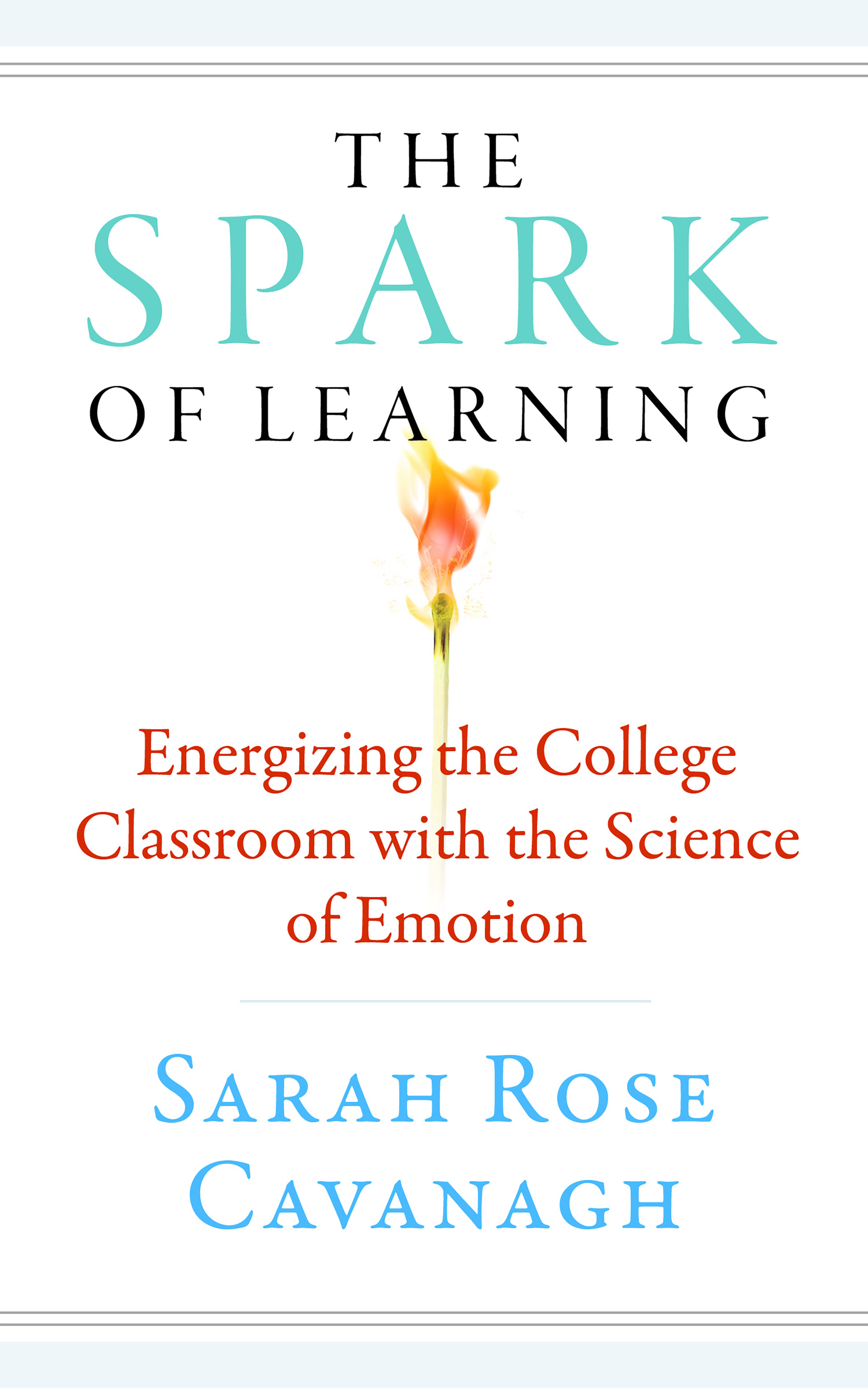
The Spark of Learning: Energizing the College Classroom with the Science of Emotion
Sarah Rose Cavanagh
October 2016
256pp
PB 978-1-943665-33-4
$22.99
CL 978-1-943665-32-7
$79.99
epub 978-1-943665-34-1
$22.99
PDF 978-1-943665-35-8
$22.99
Teaching and Learning
in Higher Education Series
Summary
Historically we have constructed our classrooms with the assumption that learning is a dry, staid affair best conducted in quiet tones and ruled by an unemotional consideration of the facts. The field of education, however, is beginning to awaken to the potential power of emotions to fuel learning, informed by contributions from psychology and neuroscience. In friendly, readable prose, Sarah Rose Cavanagh argues that if you as an educator want to capture your students' attention, harness their working memory, bolster their long-term retention, and enhance their motivation, you should consider the emotional impact of your teaching style and course design. To make this argument, she brings to bear a wide range of evidence from the study of education, psychology, and neuroscience, and she provides practical examples of successful classroom activities from a variety of disciplines in secondary and higher education.
Receive a 30% discount on orders of 10 or more copies of this title with code HIGHEREDBULK30 at checkout.
Contents
Acknowledgments
Preface
Introduction: Once More, With Feeling
Part I. Foundations of Affective Science
1. The Science (and Neuroscience) of Your Emotions
2. The Well-Spring: Emotions Enhance Learning
Part II. Affective Science in Action
3. Be the Spark: Crafting Your First (and Lasting) Impression
4. Burning to Master: Mobilizing Student Efforts
5. Fueling the Fire: Prolonging Student Persistence
6. Best-Laid Plans: When Emotions Challenge or Backfire
Conclusion
Notes
References
Index
Author
Sarah Rose Cavanagh is an associate professor of psychology at Assumption College, where she also serves as associate director of grants and research in the Center for Teaching Excellence. She contemplates the connections between emotions and quality of life in her writing, teaching, and research, blogs on affective neuroscience for Psychology Today, and has appeared on The Martha Stewart Show.
Reviews
"A phenomenal contribution to the scholarship on teaching and learning. Cavanagh immediately engages her audience through narrative and humor and manages to cover almost every major insight from the literature. This book can be profitably read by anyone who cares about teaching."
Elizabeth Barre, Rice University
"Cavanagh urges us to take seriously the role of emotions in student learning, offering research-driven advice on how to grab students' attention, motivate them, keep them engaged, and maximize chances of learning. This book will be of significant interest to faculty concerned about effective pedagogy."
Jay R. Howard, Butler University


We've got a winner!
Thanks to all who voted for the cover design of West Virginia Poet Laureate Marc Harshman's forthcoming collection of poetry Believe What You Can.
This winning design will be the cover of this book, which will be published this October.

Believe What You Can explores the difficulty of living with an awareness of the eventual death of all living things. Each of its four sections suggests a different coping mechanism for this predicament, from storytelling, to accepting darkness and death as a creative force, enjoying disruption and chaos, and embracing the mystery of life as the most triumphant story of all. Despite this seemingly gloomy theme, the collection is not overly morose and contains an Appalachian sensibility.