Bede and Aethelthryth: An Introduction to Christian Latin Poetics

Stephen Harris
April 2016
335pp
PB 978-1-940425-93-1
$44.99
Medieval European Studies Series: Volume 18


Stephen Harris
April 2016
335pp
PB 978-1-940425-93-1
$44.99
Medieval European Studies Series: Volume 18
Bede and Aethelthryth asks why Christians in Britain around the year 700 enjoyed Latin poetry. What did they see in it? What did they get from it? This book attempts to reconstruct the horizon of expectation of a highly learned, Latin-speaking nun as she encounters a fifty-line poem by the Venerable Bede, the Hymn to Aethelthryth.
The reconstruction is hypothetical and derived from grammatical manuals, learned commentaries from the early medieval period (especially Servius’s commentary on Virgil), and a wide variety of aesthetic observations by classical and medieval readers. The first four chapters describe basic expectations of a reader of Christian Latin poetry. The fifth chapter places the Hymn in its context within Bede’s Ecclesiastical History. A few pages after Bede records his hymn, Caedmon will recite his own hymn under the watchful eye of Whitby’s Abbess Hild, who was a friend of Aethelthryth.
Both hymns are attempts to reform the lyric traditions of pagan Rome and pagan Anglo-Saxon England in the light of Christian teaching. The last three chapters contain a line-by-line commentary on Bede’s alphabetic, epanaleptic elegy.
Coming Soon.
Stephen Harris teaches in the Department of English and in the Department of German and Scandinavian Studies at the University of Massachusetts in Amherst, MA. His books include Race and Ethnicity in Anglo-Saxon Literature; Misconceptions about the Middle Ages, edited with Bryon Grigsby; and Vox Germanica: Essays on Germanic Literature and Culture in Honor of James E. Cathey, edited with Michael Moynihan and Sherrill Harbison.
Coming Soon.


Nicholas Fry, Gregory Smith, Elizabeth Davis-Young
July 2016
224pp
178 b/w images
Litho 978-1-943665-03-7
$49.99
For nearly seventy years, John J. Young Jr. photographed railroads. With unparalleled scope and span, he documented the impact and beauty of railways in American life from 1936 to 2004.
As a child during the Great Depression, J. J. Young Jr. began to photograph railroads in Wheeling, West Virginia. This book collects over one hundred fifty of those images—some unpublished until now—documenting the railroads of Wheeling and the surrounding area from the 1930s until the 1960s.
The photographs within this book highlight the major railroads of Wheeling: the Baltimore & Ohio, the Pennsylvania, the Wheeling & Lake Erie, the Pittsburgh & West Virginia, the New York Central, and the industrial and interurban rail lines that crisscrossed the region. These images capture the routine activities of trains that carried passengers and freight to and from the city and its industries, as well as more unusual traffic, such as a circus-advertising car, the General Motors Train of Tomorrow, and the 1947 American Freedom Train.
Nicholas Fry is the curator of the Barriger Library and is the archivist of the B&O Railroad Historical Society.
Greg Smith is a retired educator and is currently president of the B&O Railroad Historical Society.
Elizabeth Davis-Young is the widow of J. J. Young Jr. This book realizes her desire to fulfill her husband’s unfinished plans for a book of his Wheeling area railroad photographs.
John J. Young Jr.’s (1929–2004) hobby of railroad photography began in Wheeling, WV, and continued after he moved to upstate New York in 1959. He was a member of the faculty of Broome Community College in Binghamton and taught photography until his retirement in 1995. His photographs of railroads across the country were published in books and periodicals throughout his life. He was working on this book before his death in 2004.
“The photographs at this book’s heart are uniformly professional, both technically and artistically. They tell graphic stories about how railroads were operated in the industry’s ‘traditional’ era.”
Herbert H. Harwood Jr., author of The Railroad That Never Was: Vanderbilt, Morgan, and the South Pennsylvania Railroad
“These powerful and often unconventional action photos show an amazing variety of trains. Young's depictions of B&O's mighty EM-1-2-8-8-4s alone is worth the price of this book.”
Classic Trains


Edited by John Harrington Cox
Introduction by
Alan Jabbour
January 2016
660pp
PB 978-1-943665-14-3
$24.99
Folk-Songs of the South: Collected Under the Auspices of the West Virginia Folk-Lore Society is a collection of ballads and folk-songs from West Virginia. First published in 1925, this resource includes narrative and lyric songs that were transmitted orally, as well as popular songs from print sources.
Through 186 ballads and songs and 26 folk tunes, this collection archives a range of styles and genres, from English and Scottish ballads to songs about the Revolutionary and Civil Wars, the opening of the American West, and boat and railroad transportation. It includes children’s play-party and dance music, songs from African American singers, and post–Civil War popular music. The original introduction by Cox contains vibrant portraits of the singers he researched, with descriptions of performance style and details about personalities and attitudes.
With an introduction by Alan Jabbour, this edition renews the importance of this text as a piece of scholarship, revealing Cox’s understanding of the workings of tradition across time and place and his influence upon folk-song research.
Coming Soon.
John Harrington Cox (1863-1945) was a pioneer in the field of American folk song scholarship. An academic educated at Brown and Harvard, he joined the Department of English at West Virginia University in 1903 as an expert in Old and Middle English and Medieval literature. In 1913, his interests in philology led him to begin collecting folk songs and within two years he presided over the founding of the West Virginia Folklore Society, serving as its first president, archivist, and editor. By 1925 he had published Folk-Songs of the South, the first major collection of American folk songs by an American editor, and he continued to collect folk songs for archiving, publishing Traditional Ballads Mainly From West Virginia and Folk-Songs Mainly From West Virginia in 1939. He died in Morgantown, West Virginia.
Alan Jabbour is a folklorist and folk music specialist who has undertaken extensive field and library research into the folk cultural traditions of West Virginia and the Appalachians. While at Duke University (M.A. 1966, Ph.D. 1968), he launched a project to document the older traditional fiddling of the Upland South. His work with Monroe County fiddler Henry Reed and other West Virginia fiddlers has helped make the older repertory of West Virginia fiddle tunes loom large in the contemporary instrumental folk music revival, and the Library of Congress has published a website featuring his entire Henry Reed Collection. His work with the Hammons Family in Pocahontas County has resulted in several important publications about this family’s extraordinary contributions to the reservoir of West Virginia folksong, folk music, and folklore.
Coming Soon.


Gerald Davis
Foreword by Tom Fenton
March 2016
208pp
PB 978-1-933202-62-4
$19.99
epub 978-1-940425-76-4
$19.99
PDF 978-1-940425-75-7
$19.99
35 b/w images
Map
Appendix
Chronology
Glossary
Index
Frank Kearns was the go-to guy at CBS News for dangerous stories in Africa and the Middle East in the 1950s, ’60s, and early ’70s. By his own account, he was nearly killed 114 times. He took stories that nobody else wanted to cover and was challenged to get them on the air when nobody cared about this part of the world. But his stories were warning shots for conflicts that play out in the headlines today.
In 1957, Senator John Kennedy described America’s view of the Algerian war for independence as the Eisenhower Administration’s “head in the sand policy.” So CBS News decided to find out what was really happening there and to determine where Algeria’s war for independence fit into the game plan for the Cold War. They sent Frank Kearns to find out.
Kearns took with him cameraman Yousef (“Joe”) Masraff and 400 pounds of gear, some of which they shed, and hiked with FLN escorts from Tunisia, across a wide “no-man’s land,” and into the Aures Mountains of eastern Algeria, where the war was bloodiest. They carried no passports or visas. They dressed as Algerians. They refused to bear weapons. And they knew that if captured, they would be executed and left in unmarked graves. But their job as journalists was to seek the truth whatever it might turn out to be.
This is Frank Kearns’s diary.
Gerald Davis is the producer, writer, and director of Frank Kearns: American Correspondent, a one-hour documentary film developed by Greenbriar Group Films in association with West Virginia Public Broadcasting. A native of Elkins, West Virginia, Davis earned undergraduate and graduate degrees from the Reed College of Media at West Virginia University, where he was a student of Frank Kearns.
Tom Fenton reported nearly every major European and Middle Eastern story of the day, from the Islamic Revolution in Iran to the collapse of the Soviet Union and the wars in Afghanistan and Iraq, during his career as senior European correspondent for CBS News. He is the author of Bad News: The Decline of Reporting, the Business of News, and the Danger to Us All and Junk News: The Failure of the Media in the 21st Century.
“This book offers a rare glimpse at a legendary journalist at work during the earliest days of TV. As if to make up for the lack of appreciation during Kearns’ life, Davis offers a loving tribute to a fearless reporter.”
Kirkus Reviews
“Frank Kearns was a fearless foreign correspondent—but was he also a spy? Gerald Davis has researched his subject exhaustively and provides here a richly detailed portrait of a brilliant, complex man. But he also lets Kearns speak for himself in his Algerian diary, a searing, compelling example of war reportage at its best.”
Hugh Wilford, author of The Mighty Wurlitzer and America's Great Game
“In an era of journalism now where the model is more attuned to balderdash based on weak or invalid claims, Kearns's work stands as an honorable model of what good reporting is.”
Terry Wimmer, Pulitzer Prize–winning reporter and editor, and professor of journalism at the University of Arizona
“A fine book about a fascinating individual doing cutting edge work in the early years of television war reporting.”
Tom Herman, lawyer and filmmaker, former field producer for CNN and correspondent for NPR; his films include the feature Live from Baghdad and the documentary Dateline-Saigon
“Even though Kearns was technically a journalist, my father Miles Copeland Jr. and the rest of his CIA cronies were in awe of him, not just because of his derring-do, but because he looked the part.”
Stewart Copeland, son of Miles Copeland Jr., CIA skulduggerist in the Levant; he remembers his father and Kearns chuckling mischievously together back in the day
“Here is an exciting, important book on Cold War journalism, focusing on reporter Frank Kearns and CBS News—the drama and danger are all there, but so too is the crucial ethical question, raised and described so well by Jerry Davis: should a reporter have cooperated with the US government in the global struggle against communism? The answer these days is a big no, but then, during the Cold War, professional judgments were often clouded and compromised. Read and learn, and then compare then with now.”
Marvin Kalb, senior adviser of the Pulitzer Center, former CBS reporter, and author of Imperial Gamble: Putin, Ukraine and the new Cold War

John Michael Cummings
February 2016
252pp
PB 978-1-940425-96-2
$16.99
epub 978-1-940425-97-9
$16.99
PDF 978-1-940425-98-6
$19.99
Winner of The Paterson Prize for Books for Young People
Recommended by USA Today for Black History Month as "a blend of history and suspense."
In this novel for young adults, Josh knows there is something about the tall Victorian House on the Harpers Ferry Hill, the one his father grew up in, that he can’t quite put his finger on. And his impossible father won’t give him any clues. He’s hiding something.
And then there’s the famous John Brown. The one who all the tourists come to hear about. The one whose statue looms over Josh’s house. Why does he seem to haunt Josh and his whole family? When the fancy Richmonds come to town and move right next door, their presence forces Josh to find the answers and stand up to the secrets of the House, to his father—and to John Brown, too.
The historic village of Harpers Ferry comes alive in this young boy’s brave search for answers and a place of his own in this brilliant first novel by John Michael Cummings.
John Michael Cummings is a short story writer and novelist from Harpers Ferry, West Virginia. He is the author of The Night I Freed John Brown, which won the 2009 Paterson Prize for Books for Young People (Grade 7-12) and was recommended by USA Today for Black History Month. His short story "The Scratchboard Project" received an honorable mention in The Best American Short Stories 2007. His novel, Don’t Forget Me, Bro, was excerpted in the Chicago Tribune. Mr. Cummings taught English at Seminole State College and was a reporter for The Fairfax Times.
"Characterizations are sharp, the setting eerily evoked and the story satisfying. A highly original meditation on how the past can haunt the present."
Kirkus Reviews
“There are marvelous plot twists and surprises right to the very end…and his prose can be pure poetry."
The Boston Globe
"It tells us to make our own happy endings, and that life goes on, whether we like it or not."
BookPage
"Cummings has a special talent for description, painting vividly clear pictures with his animated words."
Teenreads.com
"It is a fast-paced story that addresses themes like: familial relationships, identity development and brotherhood.”
The ALAN Review
“A compelling narrative of a troubled family and a dark secret of past grudges and grievances."
The Buffalo News
"Thoughtful and compelling...This moody, almost Gothic, novel will offer you a pleasant few hours to be sure."
The Orange County Register
"...Lively characters whose voices ring true. Josh is every young boy who ever resented his own culture and family.”
The Baton Rouge Advocate
“A masterful work crafted in the time-honored genre that Mark Twain milked so gracefully in ‘Tom Sawyer’.”
The Bluefield Daily Telegraph
"It's one of the best novels I've read in a long time...Calling all librarians out there: Buy this book!"
David M. Kinchen, Huntingtonnews.net
"It isn't every day a debut novel is praised by a Poet Laureate, Newbery Honor recipient, and Pushcart Prize winner."
The Brooklyn Daily Eagle
"Cummings keeps a sense of suspense thrumming through the book…the story is mature, sad, affecting, and challenging.”
Mid-American Review
“The use of history as a narrative tool adds a scope rarely attempted in the realm of young adult literature.”
Black Warrior Review
“Plenty of action and authentic dialogue. You care about our young hero, because he cares about so many things.”
The Texas Review
“Fresh and unique...the feeling of uncanniness never leaves the novel.”
Gulf Stream Magazine


West Virginia University Press is pleased to announce Sounding Appalachia, a new book series edited by Travis D. Stimeling
Sounding Appalachia is a book series that documents the many rich traditions of music-making in Appalachia, including gospel, blues, country, old-time, jazz, and classical music, among many others. Presenting high-quality scholarship that is written for the general reader, Sounding Appalachia will capture the vibrancy and cultural diversity of Appalachian musical practices with an ear for those stories that challenge our prevailing understandings of the region, its people, and their musics.
The Sounding Appalachia series will be of interest to the community of Appalachian music enthusiasts; the community of Appalachian music scholars, and to a broader extent, American music scholars; and Appalachians who have a strong interest in regional history and culture. These books will represent the diversity of writers who are currently working to document and tell others about music-making in Appalachia. As such, the series editor will work diligently to recruit authors from a variety of disciplinary and methodological backgrounds and will embrace the work of seasoned scholars as well as strong writers who do not possess academic credentials.
Series Editors: Travis D. Stimeling
Travis Stimeling is an assistant professor of music history at West Virginia University. He is the author of Cosmic Cowboys and New Hicks: The Countercultural Sounds of Austin’s Progressive Country Music Scene (Oxford University Press, 2011) and the editor of the Country Music Reader (Oxford University Press, 2014) and The Oxford Handbook of Country Music (Oxford University Press, forthcoming).
For more information:
Authors interested in submitting proposals for consideration should contact series editor Travis D. Stimeling at Travis.Stimeling@mail.wvu.edu.
Bruce Jennings
June 2016
256pp
PB 978-1-943665-18-1
$18.99
epub 978-1-943665-17-4
$18.99
PDF 978-1-943665-16-7
$19.99
As our economic and natural systems continue on their collision course, Bruce Jennings asks whether we have the political capacity to avoid large-scale environmental disaster. Can liberal democracy, he wonders, respond in time to ecological challenges that require dramatic changes in the way we approach the natural world? Must a more effective governance be less democratic and more autocratic? Or can a new form of grassroots ecological democracy save us from ourselves and the false promises of material consumption run amok?
Ecological Governance is an ethicist’s reckoning with how our political culture, broadly construed, must change in response to climate change. Jennings argues that during the Anthropocene era a social contract of consumption has been forged. Under it people have given political and economic control to elites in exchange for the promise of economic growth. In a new political economy of the future, the terms of the consumptive contract cannot be met without severe ecological damage. We will need a new guiding vision and collective aim, a new social contract of ecological trusteeship and responsibility.
Introduction
Part I: Rethinking Life, Liberty, and the Pursuit of Happiness on a Planet in Crisis
1. The Social Contract
2. Political Economy
Part II: Natural Being, Cultural Becoming: Nature in Humans
3. The Roots and Logic of Social Contract Theory
4. The Uses of Nature and Culture: Artifice and Accommodation
5: Re-enchanting the Social Contract
Part III: Terms of an Ecological Contract: Humans in Nature
6. Agency, Rules, and Relationships in an Ecological Social Contract
7. Wealth: From Affluence to Plenitude
8. Property: From Commodity to Commons
9. Freedom: Relational Interdependence
10. Citizenship: From Electoral Consumer to Ecological Trustee
Part IV: The Political Economy of Climate Change—Democracy, If We Can Keep It
11. The Ecological Contract and Climate Change
12. An Inquiry into the Democratic Prospect
Conclusion
Acknowledgments
About the Author
Notes
Bruce Jennings is director of bioethics at the Center for Humans and Nature, adjunct associate professor of health policy at Vanderbilt University, and senior advisor and fellow at The Hastings Center. He has written widely on health, environment, and public policy issues. He is editor-in-chief of Bioethics 4th Edition (formerly the Encyclopedia of Bioethics).
"Bruce Jennings is a world-class expert on bioethics and public policy whose work is widely read by academics in a variety of disciplines. His ambitious and remarkable new book makes a convincing case that we must adopt new moral values and ethical standards for behavior informed by an ecological worldview and predicated on our best scientific understanding of human survival on planet Earth."
Robert Nadeau, author of The Environmental Endgame: Mainstream Economics, Ecological Disaster, and Human Survival
"The grace of Jennings's prose and the relative brevity of the text make this an especially approachable and appealing contribution to environmental political theory."
Ben A. Minteer, author of Refounding Environmental Ethics: Pragmatism, Principle, and Practice
Read the introduction to Ecological Governance.


Jessie van Eerden
April 2016
160pp
PB 978-1-943665-08-2
$16.99
epub 978-1-943665-09-9
$16.99
PDF 978-1-943665-10-5
$16.99
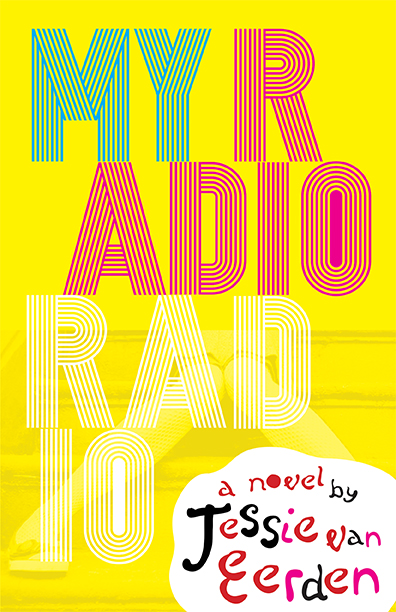
The members of Dunlap Fellowship of All Things in Common share everything from their meager incomes to the only functioning toilet in the community house—everything, that is, except secrets. When Omi Ruth Wincott, the youngest member of the disintegrating common-purse community in this small Indiana town, loses her only brother, Woodrun, she withdraws from everyone and fixates on a secret desire: she wishes only for an extravagant headstone to mark Woodrun’s grave, an expense that the strict, parsimonious community can’t—or won’t—pay for. In her loneliness, Omi Ruth’s only ties to the world remain her National Geographic magazines and a new resident in the house, Northrop, an old man caught between living and dying, maintained in a vegetative state by hospice care.
Observing everything with the keen eye of a girl with a photographic memory, Omi Ruth finds herself learning to grieve in the company of unlikely strangers. With the help of a homeless and pregnant Tracie Casteel, a rebellious Amish boy named Spencer Frye, and the smooth-talking Vaughn Buey who works third shift at Dunlap’s RV plant, Omi Ruth discovers that there are two things of which there is no shortage in the world’s common purse—love and loss.
Finding North
Quiet Terrors of the Body
My Radio Radio
Diving for Abalone
Home Economics
Tiny Zinnias
Today I Am Asma
Entertaining Angels
Old Souls
Dark Before It’s Dark
Requests
Signal
Jessie van Eerden holds an MFA in nonfiction from the University of Iowa. Her debut novel Glorybound won Foreword Reviews' fiction prize. Her work has appeared in The Oxford American, Bellingham Review, Best American Spiritual Writing, and other publications. She directs the low-residency MFA program at West Virginia Wesleyan College. Learn more at jessievaneerden.com.
"There are few contemporary novels that I truly admire. Van Eerden’s novel rises to the top of my list."
Margot Singer, author of The Pale of Settlement
"A book of surprises—surprises that emanate not so much from dramatic action but as a rich consequence of the crafting of character through language. Page after page, the reader is treated to beautifully cadenced, strikingly voiced observations and reflections that shape the poetic sensibility of the coming-of-age narrator, Omi Ruth. The reader reads and keeps reading for the wonder of Omi Ruth’s utterances, for her quirky and tender insights."
Karen Brennan, author of little dark and Monsters
"It’s rare to fall for a voice, to want nothing more than just to listen. So I finished Jessie van Eerden’s My Radio Radio feeling something like grief, lovelorn, my heart captive to the voice of Omi Ruth, a girl who sees the world so fresh she makes it new."
Kevin Oderman, author of White Vespa and Cannot Stay: Essays on Travel
"Reading My Radio Radio is like swimming under the luminous skin of life, above us ghostly insights come and go, below us the deep unknown threatens, and then we poke through pores of enlightenment and recognize things hidden since the foundation of the world. Jessie van Eerden is a writer that makes it seem the rest of us are merely scratching the surface."
Richard Schmitt, author of The Aerialist
"My Radio Radio will tune you in from the beginning and leave you wanting more by the end. Jessie van Eerden is at her tender and lyrical best in this story of longing and belonging. Her young narrator, Naomi Ruth, is a kissing cousin to Ellen Foster but finally in a league and family of her own. Welcome her with open arms."
Paul J. Willis, author of The Alpine Tales


Jonathan Corcoran
April 2016
144pp
PB 978-1-943665-11-2
$16.99
epub 978-1-943665-12-9
$16.99
PDF 978-1-943665-13-6
$16.99
2017 Lambda Literary Award Finalist
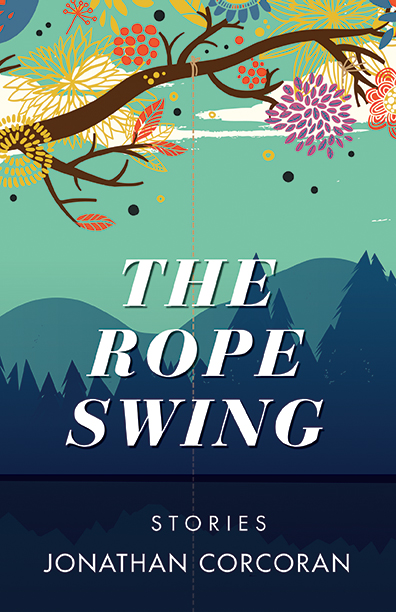
A once-booming West Virginia rail town no longer has a working train. The residents left behind in this tiny hamlet look to the mountains that surround them on all sides: The outside world encroaches, and the buildings of the gilded past seem to crumble more every day.
These are the stories of outsiders—the down and out. What happens to the young boy whose burgeoning sexuality pushes him to the edge of the forest to explore what might be love with another boy? What happens when one lost soul finally makes it to New York City, yet the reminders of his past life are omnipresent? What happens when an old woman struggles to find a purpose and reinvent herself after decades of living in the shadow of her platonic life partner? What happens to those who dare to live their lives outside of the strict confines of the town’s traditional and regimented ways?
The characters in The Rope Swing—gay and straight alike—yearn for that which seems so close but impossibly far, the world over the jagged peaks of the mountains.
Appalachian Swan Song
The Rope Swing
Pauly’s Girl
Through the Still Hours
Felicitations
Corporeal
Hank the King
Excavation
Brooklyn, 4 a.m.
A Touch
Jonathan Corcoran received a BA in Literary Arts from Brown University and an MFA in Fiction Writing from Rutgers University-Newark. He was born and raised in a small town in West Virginia and currently resides in Brooklyn, NY. Learn more at jonathancorcoranwrites.com.
"Jonathan Corcoran's Appalachian voice, so fierce, so tender, portrays tradition as both weapon and soothing balm. The Rope Swing takes us inside quiet revolutions of the soul in mountain towns far from Stonewall: we can never go home again, but we recognize ourselves in these linked stories of love, loss, the economic tyranny of neglect and exploitation, and the lifelong alliance between those who stay and those who leave. The Rope Swing establishes a new American writer whose unerring instincts are cause for celebration."
Jayne Anne Phillips, author of Quiet Dell, Lark and Termite, and Black Tickets
"In this debut book of interconnected stories, Corcoran writes fiercely about the lifelong effects of growing up in a small town on those who leave and those who stay. Corcoran is a remarkably empathetic writer whose subtle portraits capture undeniably tender moments in the lives of his characters. These stories are particularly poignant for anyone who grew up gay in America’s desolate places, but Corcoran speaks eloquently to all facets of the human condition."
Kirkus Reviews
"The Rope Swing is an astute, stereotype-busting triumph that shines a light on gay Appalachia. Corcoran unflinchingly exposes hard truths about a complicated region and its people who grapple with identity in more ways than one."
Marie Manilla, author of Still Life with Plums and The Patron Saint of Ugly
"This rainbow of West Virginia lives – gay and straight, old and young, rich and poor – is a marvel from every angle. A stirring and absorbing meditation on rural origins and desires."
Katherine Hill, author of The Violet Hour
"These are the queer stories I have been searching for my entire life—aching and honest narratives of what it means to be both tied to a geography and excluded from it. The characters in this collection exist now in my memory as fully and significantly as people I’ve loved for years."
Megan Kruse, author of Call Me Home