
Virginia B. Evans: An All-Around Artist

John Cuthbert

May 2013
196pp
HC/J 978-0-975292-52-5 
$39.99
 

Summary

Virginia B. Evans (1894–1983) was an important figure in the field of art in the Upper Ohio Valley during the mid-twentieth century. A native of Moundsville, West Virginia, Evans was a talented impressionist and abstract expressionist painter, a skillful designer of art deco glass, and a teacher. 

Virginia B. Evans tells the story of this often overlooked, yet remarkable artist. Educated, willful, strongly opinionated, and independent, she enjoyed considerable acclaim in the Ohio Valley region of West Virginia, Ohio, and Pennsylvania, and beyond. Because of her focus on professional achievement and her disregard for the cultural and societal expectations of her era, she was often the subject of scorn and suspicion. Yet undaunted, she devoted her life to the field she loved, facilitated by a distinctive talent and unbridled energy.

Through an analysis of primary resources including correspondence, memoirs, newspaper articles, photographs, and other documents, Virginia B. Evans elucidates the compelling life and work of a versatile artist.

Contents

Coming Soon.

Author

John A. Cuthbert is the Director of West Virginia and Regional History Center at West Virginia University Libraries. He is the author of David Hunter Strother: One of the Best Draughtsmen the Country Possesses, Early Art and Artists in West Virginia, and Richard Kidwell Miller.

Reviews

"Before John Cuthbert published his Early Art and Artists of West Virginia in 2000, the artistic contributions of the state were essentially unexplored territory. Now Cuthbert has followed up his ground-breaking achievement with an in depth study of one of the state's finest and most well-rounded artists, Virginia B. Evans.  Cuthbert details her life story and the admirable variety of her themes--landscapes, domestic scenes, figure and portrait imagery, and pastoral and industrial subjects, while also demonstrating her increasingly free brushwork and exciting color symphonies.  Cuthbert  follows Evans's travels, both domestic and worldwide, while always returning her to the beautiful images she created in her native state. He has also introduced her unique involvement with the designs she contributed to Imperial Glass."
William H. Gerdts, Professor Emeritus of Art History,Graduate School of the City University of New York

EmailFacebookInstagramPinterestTwitter

The Old English Poem "Seasons for Fasting": A Critical Edition

Seasons for Fasting

Mary P. Richards

May 2014
220pp
PB  978-1-938228-43-8
$44.99
ePub 978-1-938228-45-2
$44.99


Summary

Seasons for Fasting, a late Old English poem probably composed in the early eleventh century, focuses on proper fasting observances in England. This poem, composed in eight-line stanzas, survives only in a sixteenth-century transcript made by the antiquary Laurence Nowell. With its topics, vocabulary, sources, and style derived from those of contemporary ecclesiastical prose, it belongs to a school of late tenth/early eleventh century poetry that only now is coming to be recognized and defined.

The Old English Poem Seasons for Fasting: A Critical Edition provides a new text and translation of the poem, accompanied by an extensive introduction, commentary, and glossary. The introduction includes analyses of the poem’s manuscript origins, sources, language, meter, style, and structure. The text is collated with all previous editions. The commentary elucidates points of grammar and style, and justifies all editorial decisions. The glossary covers every instance of each word in the poem.

Since its discovery among the papers of Laurence Nowell in 1934, the poem has had only four editions, two of the text with basic notes, and two in doctoral theses with more commentary and analysis. This new edition brings the latest resources on manuscript study, lexicon (through the Concordance and Dictionary of Old English A-G), poetics, and cultural milieu to bear on this fascinating poem. The apparatus, including the glossary, will allow fellow scholars to extend these findings through links to their own work.

Medieval European Studies: Volume 15

Contents

Coming Soon.

Author

Mary P. Richards is Professor of English Emerita at the University of Delaware. The author of four books and numerous essays and reviews, she has focused on Anglo-Saxon and early Norman manuscripts and texts, especially those associated with Rochester Cathedral Priory and Old English laws. Her book Texts and Their Traditions in the Medieval Library of Rochester Cathedral Priory, drew together all of these interests and laid the foundation for her recent work on Seasons for Fasting. Since 1986 she has published eight essays on the laws, three on Rochester materials, and two on Seasons: “Prosaic Poetry: Late Old English Poetic Composition” in Old English and New: Essays in Language and Linguistics in Honor of Frederic G. Cassidy, and “Old Wine in a New Bottle: Recycled Instructional Materials in Seasons for Fasting,” in The Old English Homily: Precedent, Practice, and Appropriation.

Reviews

Coming Soon.

EmailFacebookInstagramPinterestTwitter

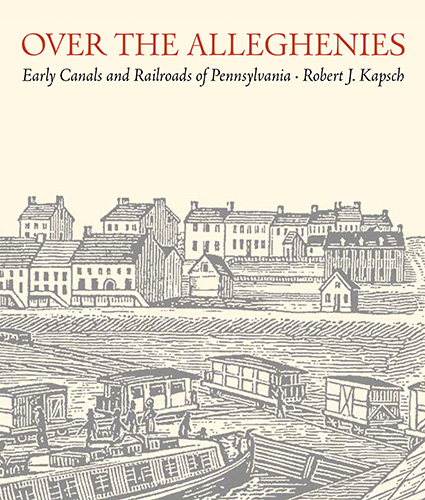
Essays on the History of Transportation and Technology

Emory L. Kemp
Foreword by
Lance E. Metz
Introduction by
Robert J. Kapsch

June 2014
352pp
HC/J  978-1-938228-81-0
$49.99
ePub 978-1-904425-04-7
$49.99

Summary

Emory Kemp is the founder and director of the Institute for the History of Technology and Industrial Archaeology at West Virginia University, where he also served as a chair and professor of civil engineering and a professor of history. This collection of essays encompasses over fifty years of his research in the field of the history of technology.

Within these twelve essays, Kemp describes and analyzes nineteenth century improvements in building materials such as iron, steel, and cement; roads and bridges, especially the evolution of the suspension bridge; canals and navigable rivers, including the Ohio River and its tributaries; and water supply systems. As one of the few practicing American engineers who also researches and writes as an academic, Kemp adds an important historical context to his work by focusing not only on the construction of a structure but also on the analytical science that heralds a structure’s design and development.

Contents

Foreword, Lance E. Metz 
Preface
Introduction, Robert Kapsch 

1. The 1959 Wheeling Custom House: A Harbinger of Iron and Steel Skeletal Framing
2. Charles Ellet Jr. (1810-1862): Portrait of an Engineer
3. A Thoroughfare Through the Howling Wilderness: The Weston & Gauley Bridge Turnpike, Emory L. Kemp and Janet K. Kemp
4. The Pulaksi Skyway—Railway Economic Theory Applied to Superhighway Design, Dara Callender and Emory Kemp
5. James Finley and the Origins of the Modern Suspension Bridge
6. French Movable Dams in America
7. Building the Tennessee-Tombigbee Waterway
8. Bejamin Franklin Thomas and the Introduction of the French Needle Dam into the United States
9. John Jervis and the Hydraulic Design of the Old Croton Aqueduct, Emory Kemp and Edward Winant
10. The Muskingum Navigation
11. French Movable Dams on the Great Kanawha River
12. The Little Kanawha Navigation, Larry Sypolt and Emory Kemp

Acknowledgments
About the Authors

Author

Emory Kemp has been a practicing engineer for more than half a century, as both a chartered civil engineer and structural engineer in Great Britain, and elected a distinguished engineer in the American Society of Civil Engineers. He is the founder and director of the Institute for the History of Technology and Industrial Archaeology at West Virginia University, where he was also chair and professor of civil engineering in the College of Engineering, and a professor of history in the Eberly College of Arts and Sciences. He has served as president of the Public Works Historical Society, is a codirector of the Smithsonian Institution/West Virginia University Joint Project for the History of Technology, and has presented numerous papers and published many articles on industrial archeology, engineering, the history of technology, structural mechanics, and public works in journals such as the Journal of the Society for Industrial Archaeology, Public Historian, Essays in Public Works History, Public Works Magazine, and Canal History and Technology Proceedings. He lives in Morgantown, WV.

Reviews

Coming Soon.

EmailFacebookInstagramPinterestTwitter

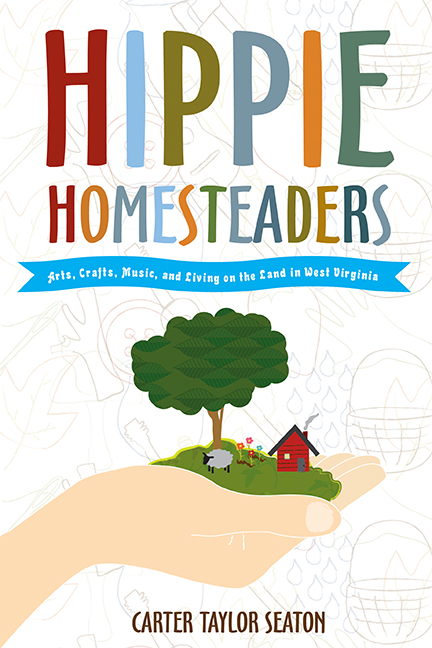
Hippie Homesteaders: Arts, Crafts, Music, and Living on the Land in West Virginia

Hippie Homesteaders

Carter Taylor Seaton

April 2014
240pp
PB  978-1-938228-90-2
$22.99
ePub 978-1-938228-91-9
$22.99

Summary

It’s the 1960s. The Vietnam War is raging and protests are erupting across the United States. In many quarters, young people are dropping out of society, leaving their urban homes behind in an attempt to find a safe place to live on their own terms, to grow their own food, and to avoid a war they passionately decry. During this time, West Virginia becomes a haven for thousands of these homesteaders—or back-to-the-landers, as they are termed by some. Others call them hippies.

When the going got rough, many left. But a significant number remain to this day. Some were artisans when they arrived, while others adopted a craft that provided them with the cash necessary to survive. Hippie Homesteaders tells the story of this movement from the viewpoint of forty artisans and musicians who came to the state, lived on the land, and created successful careers with their craft. There’s the couple that made baskets coveted by the Smithsonian Institution’s Renwick Gallery. There’s the draft-dodger that fled to Canada and then became a premier furniture maker. There’s the Boston-born VISTA worker who started a quilting cooperative. And, there’s the immigrant Chinese potter who lived on a commune.

Along with these stories, Hippie Homesteaders examines the serendipitous timing of this influx and the community and economic support these crafters received from residents and state agencies in West Virginia. Without these young transplants, it’s possible there would be no Tamarack: The Best of West Virginia, the first statewide collection of fine arts and handcrafts in the nation, and no Mountain Stage, the weekly live musical program broadcast worldwide on National Public Radio since 1983.

Forget what you know about West Virginia. Hippie Homesteaders isn’t about coal or hillbillies or moonshine or poverty. It is the story of why West Virginia was—and still is—a kind of heaven to so many.

Contents

  • Preface
  • 1. Traditional Handcrafts in Appalachia
  • 2. The Serendipitous Timing of West Virginia’s Arts Outreach Program
  • 3. Pacifists, Protesters, and Draft Dodgers
    -The Times, They Were a’Changin’
    -Joe Chasnoff – Furniture Maker
    -Tom Rodd – Attorney
    -John Wesley Williams - Furniture Maker
  • 4. Hell No! We Won’t Go Either!
    -Ric MacDowell – Photographer and Community Activist
    -James Thibeault and Colleen Anderson – Cabin Creek Quilts
    -Dick and Vivian Pranulis – Wolf Creek Printery
    -Adrienne Belafonte Biesemeyer – Weaver, Social Activist, Dancer
    -Norm Sartorius – Spoon Maker/Sculptor
  • 5. A Safe Place to Live
    -The Putnam County Pickers
    -This Land is Cheap Land 
    -Goin’ Up The Country 
    -Oh, The Hills…Beautiful Hills
    -Leaning on Friends
  • 6. Living the Good Life
    -Looking for the Good Life
    -Jim Probst– Furniture Maker
    -Bill Hopen– Sculptor
    -Gail and Steve Balcourt – Candlemakers
  • 7. Finding Utopia in Floe and Chloe
    -Keith Lahti – Potter
    -Tom and Connie McColley – Basketmakers
  • 8. Communes and Intentional Communities
    - Living in Harmony
    -Joe Lung – Potter, Painter, Jeweler
    -Jude Binder – Dancer, Mask Maker, Teacher
    -Ron Swanberg – Leathersmith
  • 9. Passing it Down
  • Notes
  • Bibliography
  • Index

Author

Carter Taylor Seaton is the author of two novels, Father’s Troubles and amo, amas, amat . . . an unconventional love story, numerous magazine articles, and several essays and short stories. She has directed a rural craft cooperative, was nominated for the Ladies Home Journal “Women of the Year 1975” award, and ran three marathons—Atlanta, New York City, and Marine Corps—after she was fifty. A ceramic sculptor living in Huntington, West Virginia, she is a 2013 Tamarack Foundation Fellowship winner, an award given to artisans in recognition of their lifelong achievement in the arts.

Reviews

“Outstanding. This story has come nowhere near being told with such depth and breadth until now.”
Paul Salstrom, author of Appalachia’s Path to Dependency: Rethinking a Region's Economic History, 1730-1940

“A distinctive story. Engaging. Fascinating.”
Dona Brown, professor of history, University of Vermont 

“You don't have to be born here to be a West Virginian.

“West Virginia takes people in and makes them her own, as truly her children as any in the history of the state.

“And that is what this book is about—about people who came to West Virginia in the late sixties and early seventies, people who came as pilgrims come—to a warm hearth, seeking the companionship of welcoming souls, the safety of the enfolding mountains, and the comfort of friends who encourage growth and creativity.

“Seeking intellectual and political freedom—the same holy grails that created West Virginia in the first place.

“These people did not start out to be West Virginians. In a time when young people were fleeing West Virginia to the clutter, press, and numbing dullness of big city factories, others were arriving. Others, who started out to be something else and the world interfered. They found themselves in a universe not of their creation and not of their liking. Perhaps West Virginia truly was not a part of that universe.

“And so they came.

“Hippies. And they were. On the surface. Young people with their bandanas, T-shirts, ragged shorts, and sandals. Hippies, yes, but, in this book, not hippie caricatures. Carter Taylor Seaton’s writing does not allow that. Ms. Seaton knew that to see them only on the surface was a mistake and a disservice to their contributions to the state they chose as home. These were, and are, real people with real depth and real lives, not people easily described and categorized. They are complex, varied, and as multi-talented as any group could possibly be. Using only the talents they brought with them, they sought, and created, riches that are beyond the reach of most of us. These are people who created to live. And, eventually, lived to create.

“These people are West Virginians, who fit within the spirit of West Virginia, and West Virginia should be extremely proud of them.

“And West Virginia should be extremely proud of Carter Taylor Seaton.

“This book was waiting to be written, and perhaps only Ms. Seaton could have written it. Her clear, direct prose is, perhaps, the only prose that is appropriate for this story. Her own creative background and her historian’s grasp and presentation of the details, moods, and unrest of the times take the book far beyond a mere description of arts and crafts, providing a marvelous addition to the understanding of what makes West Virginians the people they really are.

“Ms. Seaton's writing, like these people, is a treasure.”

Lee Maynard, author of the Crum Trilogy: Crum, Screaming with the Cannibals, and The Scummers and The Pale Light of Sunset

EmailFacebookInstagramPinterestTwitter

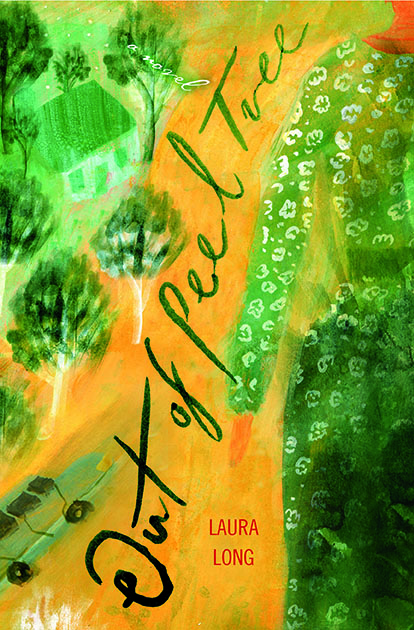
Out of Peel Tree

Out of Peel Tree

Laura Long

April 2014
160pp
PB  978-1-940425-00-9
$16.99
ePub 978-1-940425-01-6
$16.99
 

Summary

Moving through time and space, Out of Peel Tree unfolds the patterns of an Appalachian sensibility that reverberate everywhere: a fatalism balanced by humor and flinty, hard-won hope, an appreciation for the surprises of the everyday, and a search for love and home amid strange and familiar places and people.

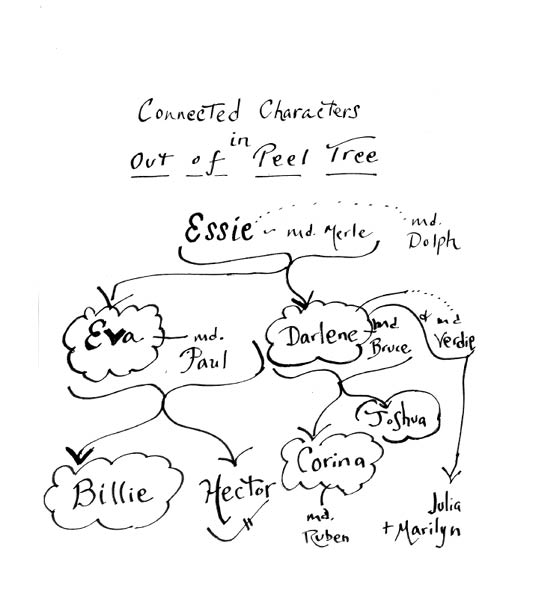
This innovative debut novel reveals the lives of a far-flung contemporary Appalachian family through a web of delicate turning points. A child discovers a grandmother she never knew has died. A runaway teen schemes to start a new life in Texas. A man on parole falls hopelessly in love with a shoplifter. A woman receives a letter about her husband’s other wife. An old woman confronts a burglar with the help of her ghost-husband. United by a connection to their matriarch, these characters search at home and beyond to make a fresh sense of their changing lives.

As a novel in stories, Out of Peel Tree brings a new lyricism to the page and a new voice to American and Appalachian literature—a voice deeply inflected by the beauty of the natural world and by working-class grit.

Cast of Characters

Author

Laura Long has received a James Michener Fellowship, James River Writers Award, Donald Barthelme Fellowship, PEN-Texas Award, Virginia Center for Creative Arts fellowships, and has published in magazines including The Southern Review and Shenandoah. She is the author of two books of poems, Imagine a Door and The Eye of Caroline Herschel: A Life in Poems. She teaches at Lynchburg College in Virginia and has taught in numerous community and university settings in Austin, Houston, and far west Texas.

Reviews

"This is prose as joyful and complex as the joy it describes. Expect to levitate along with the characters."
Leigh Newman, "Books Every Joy-Seeking Woman Should Read," Oprah's Book Club 2.0

"Out of Peel Tree is an amazing book, alive with the enchantments of language and perception. Through one family’s experience of love, luck, and the meaning of home, Laura Long’s vibrant prose turns barebones, slim-hope existence into something capacious, endowing her characters and their adventures with richness and depth."
Daphne Kalotay, award-winning author of Sight Reading and Russian Winter

"Aside from the gorgeous writing and deeply compelling characters, what I especially value about Laura Long’s Out of Peel Tree is its honoring both the region and the literature out of which it springs, at the same time it brilliantly offers a new vision and shines a light on the path ahead.  This is a book to be enjoyed immediately and cherished for years to come."
David Huddle, author of Only the Little Bone and The Story of a Million Years

"Like one of her many remarkable characters, Laura Long has the imaginative capacity to "be, in fleeting moments, anything she sees" and she enables the reader to realize, right along with her, the textures of magical realities in a slow, lovely dream:  glass-bottomed boats, milagro candles, the feel of the color green--and most of all, the sorrows and joys of an extended Appalachian family in its stunning American diaspora. Out of Peel Tree offers an indelible cultural portrait and a unique literary experience.  Laura Long is an astonishing writer."
Tracy Daugherty is the author of four novels, five short story collections, and biographies of Donald Barthelme and Joseph Heller. He has received fellowships from the National Endowment for the Arts and the Guggenheim Foundation.    

"Out of Peel Tree is a book of glorious surprises. The unexpected in image and in character, in turns of phrase and turns of plot, awakens its readers not just to fresh perspectives, but even to fresh forms of consciousness.  Vivid, sonorous, and wise."
Ann Pancake is the author of Given Ground, a collection of short stories and a novel, Strange As This Weather Has Been.    

"Out of Peel Tree is the perfect title for this wonderfully unpredictable collection of restless souls who’ve been shaken loose from their roots. Laura Long moves fluently through many moods, from poignant and yielding to harsh and bitter and back again. She honors the fragile connections between the members of this farflung family and the people they love (and often leave), and beautifully calibrates the dramas of childhood, old age and the fraught years in between."
Rosellen Brown, author of Before and After and Half a Heart, has published novels, stories, poetry. Her book Cora Fry’s Pillow Book is a sequence of poems about a woman’s life in small-town New Hampshire.

“Laura Long has eyes like no other. The world she sees has more dimensions than the mundane 3-D world the rest of us inhabit. In her world even dry leaves and red tomatoes and postcards are sentient.“ 
Marie Manilla, author of The Patron Saint of Ugly and Still Life with Plums

"In an elaborate mosaic that is both moving and uplifting, Out of Peel Tree tells the story of three generations of West Virginia women and their survival against the odds. This vivid, compact work is akin to an unforgiving family portrait that reveals everything—warts and all."
Clifford Garstang, author of What the Zhang Boys Know and 2013 recipient of the Library of Virginia Literary Award for Fiction.

“Oh you must read this book!  Laura Long, with a poet’s eye for sensory details and a storyteller’s keen sense of narrative tension, has written a novel ripe with longing. Her characters are fierce and tender, lost and hopeful, and always rooted—even if by the tiniest thread—to their Appalachian heritage. A wondrous read in great gulps, savored sentence by sentence.”
Laurie Lynn Drummond, author of Anything You Say Can And Will Be Used Against You, a PEN/Hemingway finalist and Texas Institute of Letters Best Book Award.

"Laura Long writes with such tenderness for her characters, for place, for the natural world. The images shimmer and the links delight. Out of Peel Tree is tatted into the finest lace—delicate, seamless, and strong. Is it any wonder this is a poet’s novel?"
Sara Pritchard, author of Help Wanted: Female and Crackpots

“Long is sensitive to the details of life and people. Her themes, characterizations, and story are built on a foundation of symbolism and imagery. She transforms the everyday—butter clogging bread, the shaking of cornflakes, an African Violet plant, wrinkles—into meaning. . . .This kind of layered writing creates the feeling that every word is important. Meaning reveals itself bit by bit, and the book invites a slower reading.”
Alicia Sondhi, ForeWord Reviews

 
EmailFacebookInstagramPinterestTwitter

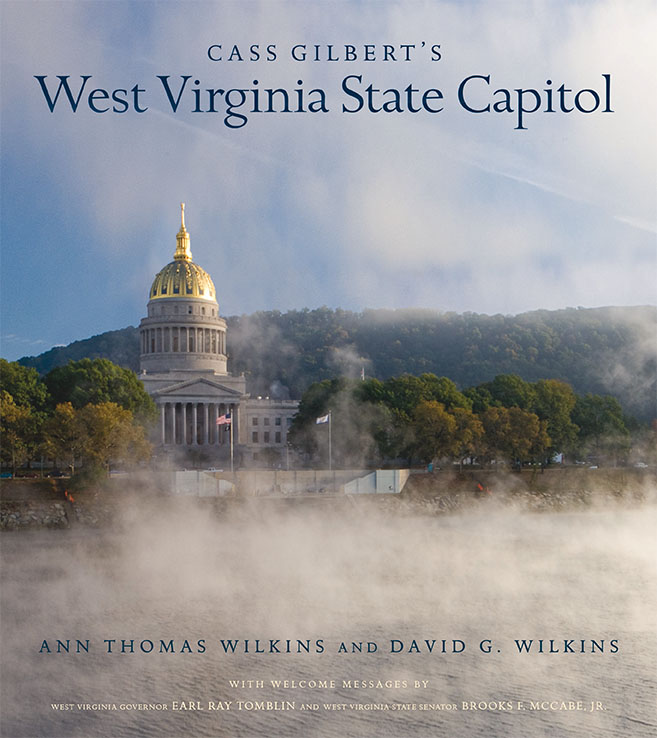
Cass Gilbert's West Virginia State Capitol

Cass Gilbert's West Virginia State Capitol

Ann Thomas Wilkins and David G. Wilkins

March 2014
368pp 
HCJ 978-1-938228-46-9
$44.99
 

Summary

With welcoming remarks by West Virginia Governor Earl Ray Tomblin and West Virginia State Senator Brookes F. McCabe, Jr.

At the turn of the twentieth century, West Virginia was in the throes of its formative years as a state. After more than two decades of alternating its government seat between Wheeling and Charleston and the destruction of the Gothic Revival Capitol in Charleston by fire in 1921, a building commission was formed to create a permanent Capitol that would display the young state’s pride, wealth, and sophistication to the entire nation. To achieve these goals, the legislature approved a budget of more than $6.5 million for the design and construction of this statehouse and the Commission appointed by the Governor hired internationally renowned Cass Gilbert as its architect. After much debate, an impressive site along the shore of the Kanawha River in Charleston was selected as its location.

As one of the most influential architects of the early twentieth century, Cass Gilbert is known for structures such as the Woolworth Building, the United States Supreme Court building, and the Minnesota State Capitol. He believed architecture should reflect historic tradition and established social order, and this conservative philosophy is evinced within the classic form and proportions of the West Virginia State Capitol. As one of his final commissions, the West Virginia Capitol, with its golden “dome of majestic proportion,” marble interiors, ornamental reliefs, and rich woodwork, remains a distinguished example of noble simplicity in American architecture.

Cass Gilbert’s West Virginia State Capitol narrates the intricate story behind this architectural feat. Its close examination of the design, construction, and execution of this commission not only reveals the social, political, and financial climate of West Virginia during this period but also provides insight into the cultural importance of this public building. As Cass Gilbert’s design process is traced through unpublished documentation, drawings, and letters from several archives, the more than one hundred accompanying photographs—many historical and others newly commissioned for this book—divulge the subtle beauty of the Capitol complex. At the same time, an extensive analysis of historical and contemporary illustrations and primary sources further elucidates the architectural value of this structure.

With welcoming remarks by West Virginia Governor Earl Ray Tomblin and State Senator Brooks F. McCabe, Jr., a prologue by art historians Bernard Schultz and Mary L. Soldo Schultz, and an epilogue by Chad Proudfoot, this revealing and comprehensive study examines the importance of this often overlooked architectural accomplishment, solidifying its significance as a socio-political symbol as well as its place within the history of American public architecture.

Contents

Preface

Introduction

Prologue

Cass Gilbert and the Classical Tradition of Architecture, by Bernard Schultz and Mary L. Soldo Schultz

Chapter 1

West Virginia Needs a Capitol: Selecting the Architect

Chapter 2

“The Most Remarkable Architect of His Generation in America”

Chapter 3

“Duffy Street Site Is Selected for State House”

Chapter 4

The Initial Design Phase: “A Simple Dignified Structure of Fine Proportions”

Chapter 5

The West and East Wings: Politics, Money, Progress

Chapter 6

The Second Design Phase

Chapter 7

Completing the “Mountaineers’ Monument”

Chapter 8

Symbols of Democracy: “The Best Evidences of the . . . Culture and Civilization of a State”

Chapter 9

Cass Gilbert’s West Virginia Capitol in Context

Coda

Appreciating the West Virginia State Capitol

Epilogue

The Capitol Complex after 1932, by Chad N. Proudfoot

Acknowledgments

Notes

Glossary of Relevant Architectural Terms

Bibliography

About the Authors

Illustration Credits

Index

Author

Ann Thomas Wilkins retired as Associate Professor of Classics at Duquesne University. She is author of Villain or Hero: Sallust's Portrayal of Catiline and of articles on Bernini and Ovid, the Tullianum prison in Rome, and the relationship between the architecture and urban developments of the ancient Roman emperor Augustus and the 20th-century dictator Mussolini.

David G. Wilkins is Professor Emeritus of the History of Art and Architecture at the University of Pittsburgh. He served as both Director of the University’s Art Gallery and as Chair of the department. In 2005 he was honored by the College Art Association with their national Award for the Distinguished Teaching of Art History. His books include Donatello, Art Past/Art Present, History of Italian Renaissance Art, and A Reflection of Faith: St. Paul Cathedral, Pittsburgh, 1906-2006.

By 1921, when he was selected to design the West Virginia Capitol, Cass Gilbert had become one of the most famous architects in the world. While his international reputation was largely based on the Woolworth Building, for many years the world’s tallest building, his reputation in America was rooted in his Minnesota State Capitol. Gilbert was also recognized for the integrity of his practice and his ability to manage simultaneously the construction of large-scale projects. Although he was a contemporary of European and American architects who championed modernism, such as Frank Lloyd Wright, Gilbert was a traditionalist whose writings and buildings—including the West Virginia State Capitol—demonstrate his profound dedication to the forms, motifs, symbolism, and proportions of the Classical style.

Reviews

 Coming Soon.

Gallery


EmailFacebookInstagramPinterestTwitter

Just Three Minutes, Please: Thinking Out Loud on Public Radio

Michael Blumenthal

March 2014
120pp
PB  978-1-938228-77-3
$16.99
ePub 978-1-938228-78-0
$16.99


Summary

What’s wrong with the contemporary American medical system? What does it mean when a state’s democratic presidential primary casts 40% of its votes for a felon incarcerated in another state? What’s so bad about teaching by PowerPoint? What is truly the dirtiest word in America?

These are just a few of the engaging and controversial issues that Michael Blumenthal, poet, novelist, essayist, and law professor, tackles in this collection of poignant essays commissioned by West Virginia Public Radio. 

In these brief essays, Blumenthal provides unconventional insights into our contemporary political, educational, and social systems, challenging us to look beyond the headlines to the psychological and sociological realities that underlie our conventional thinking. 

As a widely published poet and novelist, Blumenthal brings along a lawyer’s analytical ability with his literary sensibility, effortlessly facilitating a distinction between the clichés of today’s pallid political discourse and the deeper realities that lie beneath. This collection will captivate and provoke those with an interest in literature, politics, law, and the unwritten rules of our social and political engagements.

Contents

Introduction

I. ACHES AND PAINS

The Unkindest Cut of All

The Quality of Our Mercy

Sum of Its Parts

Vote With Your Feet! 

The Lame of the Earth

II. ALMOST HEAVEN

The Wild, Not-So-Wonderful Whites of West Virginia 

Tale of Two Countries

Voting, In Black and White

Foul Play!

III. COUNTRY OF THE SECOND CHANCE

Unwired

Country of the Second Chance

Immigration Nation

Some Truly Affirmative Action: A Farmer on the Supreme Court  

The Business of America

BP And Our Human Shadow

Change We Don’t Believe In

Taking Back the Saddle

Right to Bear Harms

The Dirtiest Word in America

Gay Marriage and the Pursuit of Happiness

The Sweetest Dream That Labor Knows

Heroes with a Thousand Faces

A Modest Proposal

Encore!

Lynched

IV. OF MINDS AND MINDFULNESS

A Mind of Winter

College Days, Danger Days

On-Line & On Point, But Way Off Course

None of Your Business

In Praise of Doing Nothing

Author

Michael Blumenthal is a Visiting Professor of Law and Co-Director of the Immigration Clinic at West Virginia University College of Law. A former Director of Creative Writing at Harvard University, he is the author of eight books of poetry, as well as All My Mothers and Fathers, a memoir; Weinstock Among The Dying, a novel; When History Enters the House, a collection of essays; and “Because They Needed Me”: The Incredible Struggle of Rita Miljo To Save The Baboons of South Africa, a book-length account of his work with orphaned infant chacma baboons in South Africa. His first collection of short stories, The Greatest Jewish-American Lover in Hungarian History, is forthcoming.

Reviews

 “The intellect of a scholar, the sensitivity of a poet, the objectivity of a professor of law: it hardly seems possible that so many virtues can be embodied in one book of short talks.”
C.K. Williams, American poet, critic and translator, and recipient of the Pulitzer Prize for poetry.

“Engaging, astute, and eloquent.”
Meenakshi Gigi Durham, author of The Lolita Effect and Professor and Collegiate Scholar at University of Iowa

 "David Sedaris and Ira Glass have a brother from another mother, and his name is Michael Blumenthal. His soulful NPR essays are profound thought-clouds from one of America's finest poets."
Dalton Delan is an Executive Producer of In Performance at the White House for PBS

“Michael  Blumenthal has had many professions—lawyer, psychotherapist, poet, professor, travel writer, novelist—and somehow these different  professional  perspectives blend together perfectly in his latest incarnation as a commentator for NPR. He writes with prickly piquancy and gleeful eclecticism  over a broad range of topics—but is always, in the tradition of our  best essayists, speaking from the  baseline of his own humanity.“
Ross McElwee, Professor of Visual and Environmental Studies at Harvard University

“An enjoyable and liberating read.”
Craig Manning, Independent Publisher

EmailFacebookInstagramPinterestTwitter

21st Century Atlas of the Moon

Charles Wood, 21st Century Atlas of the Moon

Charles A. Wood and Maurice J.S. Collins

June  2013
109pp
Spiral 978-1-938228-80-3
$33.99


Summary

On most nights and days, the Moon is visible somewhere in the sky. For many, simply noticing it is a pleasure, yet it is also a fascinating world of craters, mountains, and volcanoes worthy of a closer look.

The 21st Century Atlas of the Moon is uniquely designed for the backyard, amateur astronomer. As an indispensable guide to telescopic moon observation, it can be used at the telescope or as a desk reference. It is both accessible to the novice and valuable to the expert.

With over two hundred Lunar Reconnaissance Orbiter images, the highest quality images of the moon ever taken, this atlas illustrates the Moon in high resolution. With special maps of the limb and far side, LRO altimetry-based images of major basins and their mare ridge, and maps of the Apollo and Soviet landing sites, this guide offers a level of detail never before seen in an atlas of the Moon. The Atlas clearly provides unprecedented detail on more than one thousand named Moon features while recommending additional features and images to observe.

Contents

Coming Soon.

Author

Charles A. Wood is a planetary scientist who has worked at the Smithsonian Institution, Johnson Space Center, and the Planeary Science Institute in Tucson, AZ. He has taught and led education and research groups at the University of North Dakota, Biosphere 2 in Arizona, Haile Sellassie I University in Ethiopia, and at Wheeling Jesuit University. He is currently the chair of the Lunar Task Group of the International Astronomical Union Working Group for Planetary System Nomenclature.

Maurice J. S. Collins is a skilled amateur astronomer who enjoys exploring the moon through datasets now publicly available from spacecraft, as well as observing and imaging the moon from his backyard. He won the 2011 Murray Geddes Prize, New Zealand’s highest astronomy award.

Reviews

Coming Soon.

EmailFacebookInstagramPinterestTwitter

New Books Catalogs

Download a PDF of our Spring 2026 New Books Catalog:
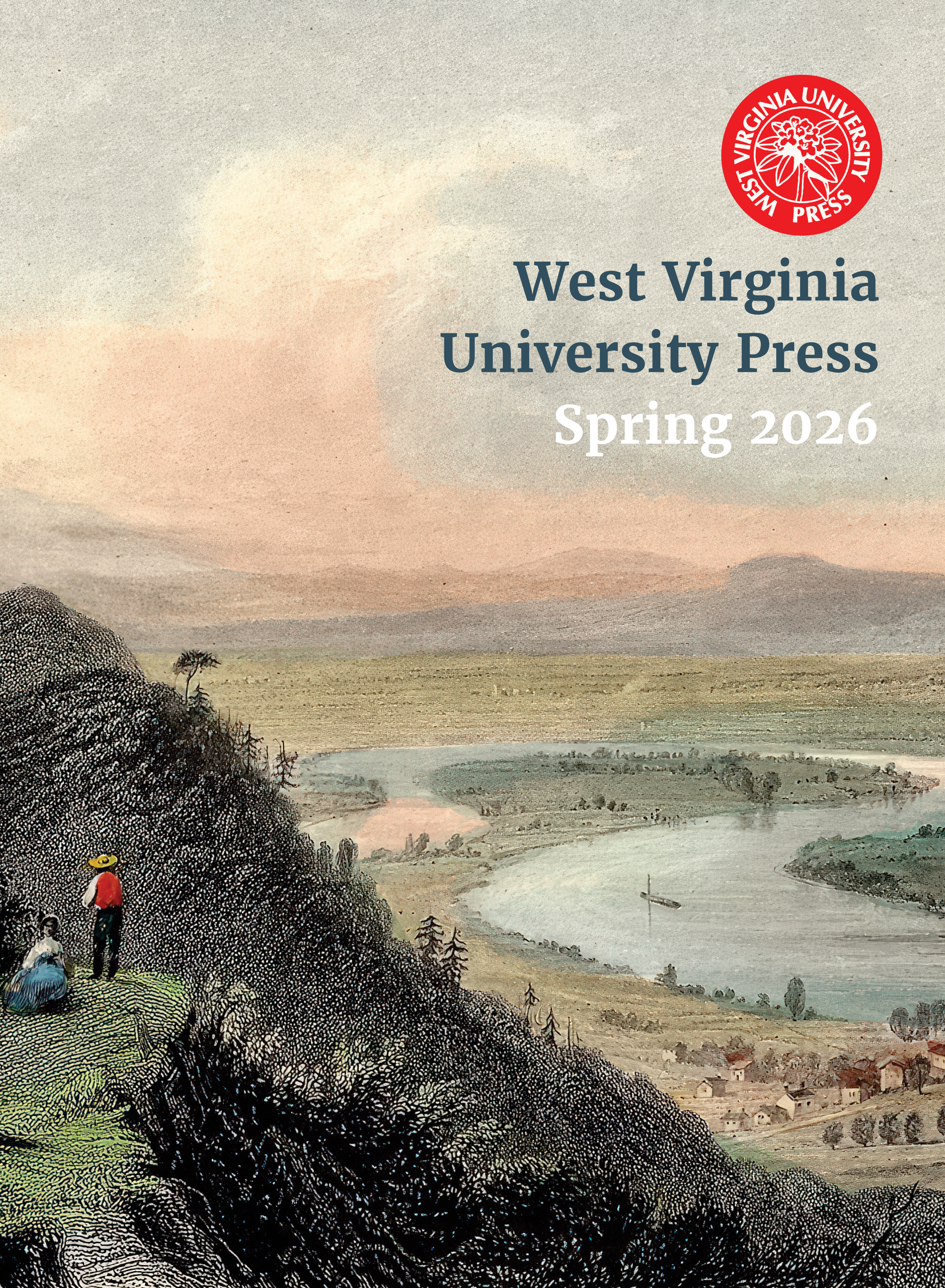
Cover of catalog showing an illustration by William Henry Bartlett of the “Oxbow” on the Connecticut River, reading New Books Spring 2026, West Virginia University Press

Download a PDF of our Fall 2025 New Books Catalog:

Colorful diagram of shapes reading New Books Fall 2025, West Virginia University Press, with a gold WVU Press logo

Download a PDF of our Spring 2025 New Books Catalog:

Catalog cover reading New Books Spring 2025, West Virginia University Press, with a WVU Press logo

Download a PDF of our Fall 2024 New Books Catalog:

Geometric diagram of shapes reading New Books Fall 2024, West Virginia University Press, with a light green WVU Press logo

Download a PDF of our Spring 2024 New Books Catalog:

fish-scale tile pattern with color gradient from orange to deep read to blue, text in yellow and white reading New Books Spring 2024, West Virginia University Press, with a red WVU Press logo

Download a PDF of our Fall 2023 New Books Catalog:

dark purple arc with a lighter purple cloud inside with rainbow colors beneath, text in yellow and white with a red WVU Press logo

Download a PDF of our Spring 2023 New Books Catalog:

white and yellow text on a blue background

Download a PDF of our Fall 2022 New Books Catalog:
large footprint composed of textured dark gray rocks with smaller rocks surrounding on a green background

Download a PDF of our Spring 2022 New Books Catalog:

WVU Press Spring 22 New Books Catalog pictures of 4 hand drawn bears and punching gloves

Download a PDF of our Fall 2021 New Books Catalog:

WVU Press Fall 2021 New Books Catalog

Download a PDF of our Spring 2021 New Books Catalog:
WVU Press Spring 2021 New Books Catalog

Download a PDF of our Fall 2020 New Books Catalog:
WVU Press Fall 2020 New Books Catalog

Download a PDF of our Spring 2020 New Books Catalog:

Download a PDF of our Fall 2019 New Books Catalog:

Download a PDF of our Spring 2019 New Books Catalog:

Download a PDF of our Fall 2018 New Books Catalog:

Download a PDF of our Spring 2018 New Books Catalog:

Download a PDF of our Fall 2017 New Books Catalog:
Download a PDF of our Spring 2017 New Books Catalog:



Blog
Attachment

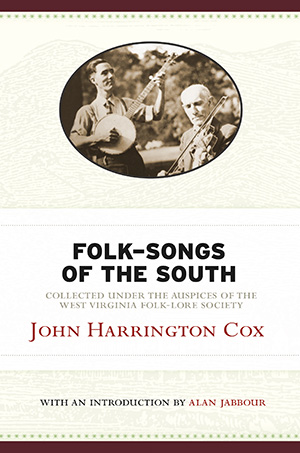
Folk-Songs of the South: Collected Under the Auspices of the West Virginia Folk-Lore Society

Folk Songs of the South

Edited by John Harrington Cox
Introduction by
Alan Jabbour
October  2013
600pp
HC/J 978-1-938228-68-1
$29.99

West Virginia Classics: Volume 4

Summary

Folk-Songs of the South: Collected Under the Auspices of the West Virginia Folk-Lore Society is a collection of ballads and folk songs from West Virginia. First published in 1925, this resource includes narrative and lyric songs that were transmitted orally, as well as popular songs from print sources. 

Through 186 ballads and songs and 26 folk tunes, this collection archives a range of styles and genres, from English and Scottish ballads to songs about the Revolutionary and Civil Wars, the opening of the American West, and boat and railroad transportation. It includes children’s play-party and dance music, songs from African American singers, and post-Civil War popular music. The original introduction by Cox contains vibrant portraits of the singers he researched, with descriptions of performance style and details about personalities and attitudes. 

With a new introduction by Alan Jabbour, this reprint renews the importance of this text as a piece of scholarship, revealing Cox’s understanding of the workings of tradition across time and place and his influence upon folk-song research.

Contents

Coming Soon.

Author

John Harrington Cox (1863-1945) was a pioneer in the field of American folk song scholarship. An academic educated at Brown and Harvard, he joined the Department of English at West Virginia University in 1903 as an expert in Old and Middle English and Medieval literature. In 1913, his interests in philology led him to begin collecting folk songs and within two years he presided over the founding of the West Virginia Folklore Society, serving as its first president, archivist, and editor. By 1925 he had published Folk-Songs of the South, the first major collection of American folk songs by an American editor, and he continued to collect folk songs for archiving, publishing Traditional Ballads Mainly From West Virginia and Folk-Songs Mainly From West Virginia in 1939. He died in Morgantown, West Virginia.

Alan Jabbour is a folklorist and folk music specialist who has undertaken extensive field and library research into the folk cultural traditions of West Virginia and the Appalachians. While at Duke University (M.A. 1966, Ph.D. 1968), he launched a project to document the older traditional fiddling of the Upland South. His work with Monroe County fiddler Henry Reed and other West Virginia fiddlers has helped make the older repertory of West Virginia fiddle tunes loom large in the contemporary instrumental folk music revival, and the Library of Congress has published a website featuring his entire Henry Reed Collection. His work with the Hammons Family in Pocahontas County has resulted in several important publications about this family’s extraordinary contributions to the reservoir of West Virginia folksong, folk music, and folklore.

Reviews

Coming Soon.

EmailFacebookInstagramPinterestTwitter