
A Natural History of the Central Appalachians


Steven L. Stephenson
March 2013
304pp
Flexibind 978-1-933202-68-6
$29.99
ePub 978-1-935978-72-5
$29.99
PDF 978-1-935978-71-8
$29.99

Steven L. Stephenson
March 2013
304pp
Flexibind 978-1-933202-68-6
$29.99
ePub 978-1-935978-72-5
$29.99
PDF 978-1-935978-71-8
$29.99
Central Appalachia is the system of linear ridges, intervening valleys, and deeply dissected plateaus that make up the rugged terrain found in western and southwestern Virginia, eastern and central West Virginia, western Maryland, and a portion of south central and southwestern Pennsylvania. Through its concise and accessible approach, A Natural History of the Central Appalachians thoroughly examines the biology and ecology of the plants, animals, and other organisms of this region of eastern North America.
With over 120 images, this text provides an overview of the landscape of this region, including the major changes that have taken place over the past 300 million years; describes the different types of forests and other plant communities currently present in Central Appalachia; and examines living systems ranging from microorganisms and fungi to birds and mammals. Through a consideration of the history of humans in the region, beginning with the arrival of the first Native Americans, A Natural History of the Central Appalachians also discusses the past, present, and future influences of human activity upon this geographic area.
Preface
Chapter 1 Introduction to the Central Appalachians
Chapter 2 History of the Flora and Fauna
Chapter 3 Plant Life of Central Appalachia
Chapter 4 Forests of Central Appalachia
Chapter 5 Non-Forested Areas of Central Appalachia
Chapter 6 Plants of Special Interest
Chapter 7 Lower Plants
Chapter 8 Mushrooms and Other Fungi
Chapter 9 Non-Insect Arthropods and Other Invertebrates
Chapter 10 Insects of the Central Appalachians
Chapter 11 Reptiles, Amphibians, and Fishes
Chapter 12 Birds and Mammals
Chapter 13 Humans in the Central Appalachians
Chapter 14 Past, Present, and Future
Index of Common and Scientific Names
Bibliography
Figure Credits
Index
Steve Stephenson has lived, worked, and carried out research throughout the Central Appalachian region for much of his career. He is a Research Professor in the Department of Biological Sciences at the University of Arkansas and the author of Myxomycetes: A Handbook of Slime Molds and The Kingdom Fungi: The Biology of Mushrooms, Molds, and Lichens and a coauthor of Macrofungi Associated with Oaks of Eastern North America.
Coming Soon

Henry A. Myers
May 2013
416pp
PB 978-1-935978-70-1
$44.99
ePub 978-1-935978-87-9
$44.99
PDF 978-1-935978-86-2
$44.99
The Kaiserchronik (c.1152–1165) is the first verse chronicle to have been written in a language other than Latin. This story recounts the exploits of the Roman, Byzantine, Carolingian, and Holy Roman kings and rulers, from the establishment of Rome to the start of the Second Crusade. As an early example of popular history, it was written for a non-monastic audience who would have preferred to read, or may only have been able to read, in German. As a rhymed chronicle, its combined use of the styles of language found within a vernacular epic and a factual treaty was a German innovation.
The Book of Emperors is the first complete translation of the Kaiserchronik from Middle High German to English. It is a rich resource not only for medieval German scholars and students, but also for those working in early cultural studies. It brings together an understanding of the conception of kingship in the German Middle Ages, from the relationship between emperor and king, to the moral, theological, and legal foundations of claims and legitimacy and the medieval epistemological approaches to historiography.
This translation includes a substantial introduction that discusses the historical and philological context of the work, as well as the themes of power and kingship. Each chapter begins with a brief introduction that distinguishes historical truths from the epic fiction found within the original text.
Coming Soon
Henry A. Myers is Professor Emeritus of History at James Madison University.
“A significant contribution in History, Cultural Studies, and German Studies.”
Siegfried Christoph, Professor of German, University of Wisconsin, Parkside
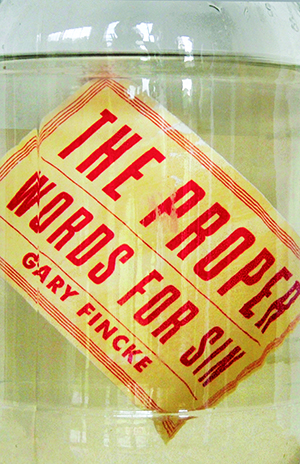
Gary Fincke
April 2013
224pp
PB 978-1-935978-88-6
$16.99
ePub 978-1-935978-89-3
$16.99
PDF 978-1-935978-90-9
$16.99
Coal burns underground and destroys a small town. A woman confronts police officers with her pet copperheads. A young girl drinks Drano. A man is banned from his favorite bar.
Within these eleven short stories, Flannery O'Connor Award winner and poet Gary Fincke brings into focus the small struggles of ordinary people. The characters within this collection, from boys and girls to fathers, mothers, and the aging, live in cities, in towns, and in rural areas. Yet, no matter the surroundings, all seem alone within a collective anxiety.
Set against extraordinary events, such as the Three Mile Island accident, the Challenger Disaster, and the Kennedy assassination, these stories personalize history through a juxtaposition between large and small tragedies and the unflinching desire to find insight within and redemption from weakness and shortcomings.
2014 Paterson Fiction Prize finalist
There’s Worse
The Out-of-Sorts
The Fierceness of Need
Weepers
All the Big Things
Private Things
The Proper Words for Sin
You Can Look This Up
The Blazer Sestina
The Promises of Labels
Somebody Somewhere Else
Gary Fincke is the Writers Institute Director and Charles Degenstein Professor of English and Creative Writing at Susquehanna University. Winner of the 2003 Flannery O’Connor Award for Short Fiction, the 2003 Ohio State University/The Journal Poetry Prize, and the 2010 Stephen F. Austin Poetry Prize for recent collections, he has published twenty-four books of poetry, short fiction, and nonfiction, most recently The History of Permanence, The Canals of Mars, The Fire Landscape, Sorry I Worried You, and Amp’d: A Father’s Backstage Pass, a nonfiction account of his son’s life as a rock guitarist in the band Breaking Benjamin. His work has appeared in such periodicals as Harper’s, Newsday, The Paris Review, The Kenyon Review, The Georgia Review, Ploughshares, American Scholar, and Doubletake, and has been read by Garrison Keillor on NPR. He has twice been awarded Pushcart Prizes for his work, including “The Canals of Mars,” which was reprinted in The Pushcart Essays, an anthology of the best nonfiction published during the first twenty-five years of the Pushcart Prize volumes. He has been recognized by Best American Stories and the O. Henry Prize series, and cited eleven times in the past thirteen years for a “Notable Essay” in Best American Essays. Gary Fincke grew up near Pittsburgh and currently lives in central Pennsylvania.
"Fincke’s people counter their everyday terrors . . . with sheer gritty determination. . . .Fine, close work from a master."
Stewart O'Nan, author of Snow Angels, The Odds, and Emily, Alone
“Subtle yet powerful, passionate but clear-eyed . . . It's all I want from fiction."
Steve Yarbrough, author of Safe from the Neighbors and The Oxygen Man
"Richly detailed and generous. A moving collection.”
William J. Cobb, author of The Bird Saviors
“Powerful, insightful, and cut to the bone.”
Joan Connor, author of How To Stop Loving Someone
“Wonderfully quirky, unpredictable stories. This is a remarkable collection.”
Dan Chaon, author of Among the Missing and You Remind Me of Me
"Flannery O'Connor Award winner Gary Fincke crams the full spectrum of the human condition into the 11 short stories gathered in The Proper Words for Sin. The author, who teaches at Susquehanna University just north of Harrisburg and grew up near Pittsburgh, uses the ordinary lives and circumstances of his characters to cast shadows over larger events such as the JFK assassination, the Challenger disaster and the nuclear accident at Three Mile Island. While ratcheting up the anxiety, Mr. Fincke's poetic sensibility never allows him to craft a hyperventilating word. This is thoughtful, morally engaged fiction at its best."
Tony Norman, Pittsburgh Post-Gazette
"Fincke’s writing is at once contemplative and vivid. In his hands, the examined life is not just worth living—it’s definitely worth reading about."
Shawn Syms, ForeWord Reviews

Bob Barnett
May 2013
352pp
PB 978-1-935978-67-1
$22.99
ePub 978-1-935978-69-5
$22.99
PDF 978-1-935078-68-8
$22.99
West Virginia’s championship teams at WVU and Marshall and athletic superstars like Jerry West and Mary Lou Retton are familiar to all, but few know the full untold story of sports in the Mountain State. Hillside Fields: A History of Sports in West Virginia chronicles the famous athletic triumphs and heart-breaking losses of local heroes and legendary teams, recording the titanic struggles of a small state competing alongside larger rivals.
Hillside Fields provides a broad view of the development of sports in West Virginia, from one of the first golf clubs in America at Oakhurst Links to the Greenbrier Classic; from the first girls basketball championship in 1919 to post Title IX; from racially segregated sports to integrated teams; and from the days when West Virginia Wesleyan and Davis & Elkins beat the big boys in football to the championship teams at WVU, Marshall, West Virginia State and West Liberty. Hillside Fields explains how major national trends and events, as well as West Virginia’s economic, political, and demographic conditions, influenced the development of sports in the state. The story of the growth of sports in West Virginia is also a story of the tribulations, hopes, values and triumphs of a proud people.
Acknowledgements
Introduction
Epilogue: Sports in West Virginia, 2011
Bibliography
Index
Bob Barnett taught sport history at Marshall University in West Virginia for 35 years. He has published over 300 articles in publications such as Saturday Evening Post, American National Biography, the Washington Post, Sports Heritage, and the Dallas Cowboy News, has been a section editor for the Journal of Sport History and the Encyclopedia of Appalachia, and has written two documentaries for West Virginia Public Television. Barnett is the author of Growing Up in the Last Small Town: A West Virginia Memoir.
Coming Soon
Centerville is the fourth novel by Karen Osborn, visiting assistant professor in English at MHC.
With one devastating explosion, a town is changed forever. Set against the backdrop of the Civil Rights Movement and the escalating Vietnam War, "Centerville" forms an engrossing meditation on the complex questions that arise in the wake of senseless violence.
Osborn has previously authored the novels "Patchwork" (1991), "Between Earth and Sky" (1996) and "The River Road" (2003).
Learn more about this title here.
Books for review should be sent to:
Tolkien Studies
c/o David Bratman
1663 Albatross Dr.
Sunnyvale CA 94087

A. B. Caldwell
With an introduction by Joe Trotter
October 2012
352pp
Cloth 978-1-935978-79-4
$24.99
ePub 978-1-935978-80-0
$24.99
PDF 978-1-935978-81-7
$24.99
History of the American Negro: West Virginia Edition is a collection of biographies of African American men and women at the beginning of the twentieth century. Edited and published by A. B. Caldwell, the History of the American Negro collection includes seven volumes that richly describe the lives of citizens in Georgia; South Carolina; North Carolina; Virginia; Washington, DC; and West Virginia. In a statement printed in the first volume of this series, Caldwell wrote that his intent in publishing this collection was neither “comprehensive nor exhaustive,” yet he was determined to shed light on the “successful element unrecorded” of black Americans in the United States. As the seventh volume in Caldwell’s collection, History of the American Negro: West Virginia Edition chronicles the struggles and triumphs of everyday African Americans in West Virginia during the post−World War I era. A resource for genealogists, historians, and citizens alike, this history provides a detailed account of the often overlooked lives of ordinary men and women.
Coming Soon.
A. B. Caldwell (ca. 1873–1944) was the founder and publisher of A. B. Caldwell Publishing Company.
Joe Trotter is the Giant Eagle Professor of History and Social Justice, Department of History, Carnegie Mellon University.
Coming Soon.


John Antonik
September 2012
352pp
60 color & b/w images
PB 978-1-935978-82-4
$19.99
ePub 978-1-935978-83-1
$19.99
PDF 978-1-935978-84-8
$19.99
Purchase the Kindle Edition at Amazon
The West Virginia University Mountaineers and the University of Pittsburgh Panthers, separated by less than eighty miles of highway, have battled it out on the football field for more than one hundred years. Now, with Pitt announcing its departure from the Big East Conference to join the Atlantic Coast Conference and West Virginia becoming a member of the Big 12 Conference, this intense rivalry has come to an abrupt end. Thousands of players and dozens of coaches - some among the very best to ever play the game - have been a part of this famous series known as the “Backyard Brawl.” With fantastic tales about this feud’s star-studded rosters, including White, Slaton, Harris, Luck, Huff, Nehlen, and Rodriguez for West Virginia and Fitzgerald, Marino, Dorsett, Green, Majors, and Sherrill for Pitt, The Backyard Brawl celebrates the tradition, heritage, and pride of two outstanding universities. With unparalleled access, John Antonik, a 20-year West Virginia University athletic administrator and WVU alumnus, unearths the fascinating and humorous stories that make up this revered, colorful, and cherished football game-and more importantly, the great passion and pride these schools exhibit every time they take the field.
Prologue
1943-1955: The Rivalry Resumes
1943 - The Long Shadow of Sutherland
1947 - Finally!
1952 - Pappy Makes 'em Happy
1954 - The Power of Positive Thinking
1955 - Pass the Sugar
1957-1965: Wild Times
1957 - West Virginia Survives
1959 - A “Pitt-iful” Performance
1961 - The Garbage Game
1963 - The Battle of the Brothers
1965 - Points Galore
1967-1979: The Birth of the Backyard Brawl
1967 - “Jusk” for Kicks
1970 - Bobby Blows It
1975 - McKenzie Kicks the Hell out of Pitt
1976 - Tony D Gets Tossed
1979 - Farewell, Old Mountaineer Field
1982-1991: A Changing of the Guard
1982 - A Classic Comeback
1983 - "Let's Do It!"
1985 and 1987 - A Tie and a Sigh
1989 - Kissing Your Sister; Clubbing Your Neighbor
1991-2011: The Big East Years
1991 - A Big East Blowout
1994 - E-I-E-I-O, Tractors and Corncob Pipes
1997 - For the Love of Pete
2002 - Collins Steals the Show
2007 - 13-9: Miracle in the Mountains
2009 and 2011 - Down to the Wire
Epilogue
Acknowledgments
Bibliography
Index
About the Author
John Antonik is Director of New Media for Intercollegiate Athletics, West Virginia University and author of West Virginia University Football Vault: The History of the Mountaineers and Roll Out the Carpet: 101 Seasons of West Virginia University Basketball.
"If you enjoyed West Virginia University's football rivalry with the University of Pittsburgh, you want to get a copy of The Backyard Brawl."
Mickey Furfari, The Inter-mountain

Edited by Betty Rivard
With a foreword by
Carl Fleischhauer
and an introduction by
Jerry Bruce Thomas
October 2012
240pp
158 b/w photographs
Lithocase 978-1-933202-88-4
$29.99
Upon entering the White House in 1933, President Franklin D. Roosevelt faced an ailing economy in the throes of the Great Depression and rushed to transform the country through recovery programs and legislative reform. By 1934, he began to send professional photographers to the state of West Virginia to document living conditions and the effects of his New Deal programs. The photographs from the Farm Security Administration Project not only introduced “America to Americans,” exposing a continued need for government intervention, but also captured powerful images of life in rural and small town America.
New Deal Photographs of West Virginia, 1934–1943 presents images of the state’s northern and southern coalfields; the subsistence homestead projects of Arthurdale, Eleanor, and Tygart Valley; and various communities from Charleston to Clarksburg and Parkersburg to Elkins. With over 150 images by ten FSA photographers, including Walker Evans, Marion Post Wolcott, Arthur Rothstein, and Ben Shahn, this collection is a remarkable record of hardship, hope, endurance, and, above all, community. These photographs provide a glimpse into the everyday lives of West Virginians during the Great Depression and beyond.
Betty Rivard is an award-winning fine art landscape photographer (http://www.bettyrivard.com). She has researched and coordinated three exhibits of FSA photographs of West Virginia and contributed articles about the FSA Project to Wonderful West Virginia, Goldenseal, and West Virginia South magazines. She is a social worker emerita with graduate degrees in education and social work from West Virginia University and a BA in political science from the University of California at Berkeley. She traveled to every county in West Virginia during her twenty-five-year career as a social worker and planner with the state.
Jerry Bruce Thomas, Professor Emeritus, Shepherd University, is the author of An Appalachian Reawakening: West Virginia and the Perils of the New Machine Age, 1945–1972 and An Appalachian New Deal: West Virginia In the Great Depression.
Carl Fleischhauer is a digital preservation specialist at the Library of Congress. He is the coauthor of Documenting America, 1935–1943, a book about the Farm Security Administration/Office of War Information photographs. In the 1970s, he worked for the public television station based at West Virginia University and contributed to a Library of Congress documentary project about the Hammons family of Marlinton, West Virginia.
“What Rivard offers in this beautifully presented book, is a collection of images by photographers whose work I know well of West Virginia at a time I never knew. I’m fascinated with how others see my home state. None of the photographers are from West Virginia, yet they managed to capture its essence, its livelihood.
“Perhaps one of the things I appreciate most about these pictures is that they were made at a time when photographs weren’t nearly as prevalent as they are today (Instagram, Facebook and the like). Unlike the War on Poverty images of Appalachia, these pictures were made with a different intent. I sense a true collective effort to document the people and stories of West Virginia when I look at these photographs and think about the photographers who made them.
“New Deal Photographs of West Virginia is a brilliant book, extremely well edited and designed. The photographic reproductions are sharp and well printed and with every image, the Library of Congress negative file number is included, which makes finding them online incredibly easy. I can only hope for a second volume.”
Roger May, www.walkyourcamera.com
“During the Great Depression, FSA photographers reminded urban Americans of something they didn’t see every day—a rural way of life, troubled by circumstance. Now, Rivard hopes the photographs will remind West Virginians themselves of what negative stereotypes can obscure—the beauty and spirit of those who survived hard times. Some other states had New Deal photography books out years ago. It has taken West Virginia a bit longer, but the thoughtful essays by Rivard and others that accompany the photos are worth the time it has taken to get it right.”
C.V. Moore, Beckley Register-Herald

Karen Osborn
October 2012
192pp
PB 978-1-935978-64-0
$16.99
ePub 978-1-935978-65-7
$16.99
PDF 978-1-935978-66-4
$16.99
Purchase the Kindle Edition at Amazon
It is 1967 at the end of a long, hot summer. On a Saturday afternoon in Centerville, a sleepy Midwestern town, a disaffected husband enters a busy drugstore where his estranged wife works and sets a bag with a homemade bomb on the floor. Outside the drugstore, a fourteen-year-old girl places her hand on the door, then inexplicably turns away and keeps walking. Moments later, standing safely inside a bowling alley with her best friend, she hears a sound like thunder.
With one devastating explosion, the town is changed forever. In the next few days, four lives become entwined, as the townspeople face sudden loss and new, unpredictable realities.
Set against the backdrop of the Civil Rights Movement and the escalating Vietnam War, Centerville forms an engrossing meditation on the complex questions that arise in the wake of senseless violence.
Learn more about Karen Osborn at www.karenosborn.net.
Karen Osborn is the author of three previous novels, Patchwork (a New York Times Notable Book of the Year), Between Earth and Sky, and The River Road. She lives in Amherst, Massachusetts with her husband and teaches fiction writing at Mt. Holyoke College and Fairfield University. While growing up in the Midwest, she witnessed a bombing and the resulting conflagration in her small town.
Learn more about Karen Osborn at www.karenosborn.net.
"A unique novel of smalltown America that begins with an explosion so wonderfully described you won't be able to put the book down. Karen Osborn combines considerable literary gifts with a storyteller's skills to produce the unforgettable Centerville."
Anita Shreve, Resistance, The Weight of Water, and Rescue
“Karen Osborn’s deeply affecting novel Centerville keeps the incomprehensibility of evil always in focus, as her characters—young, old, brave, cowardly, driven by doubt, and committed to faith—struggle to find a way back to the innocence they once took for granted. In this subtle, beautifully written novel, the reader can almost hear the gates of paradise slamming closed on the American dream.”
Valerie Martin, Trespass, Mary Reilly, Italian Fever, Property, and Salvation.
“Most writers would stumble over the top describing a blast that literally explodes the personality of a small town. In the hands of a master of craft, like Karen Osborn, devastation is rendered with devastating restraint. You may try to forget Centerville, but you never will.”
Jacquelyn Mitchard, The Deep End of the Ocean
"A novel that seems as if its subject isn't past at all but rather pulled right from America's latest cycle of mass murder and senseless carnage, a novel of brilliant prose and deep insight into the dark alleys of our twisted nature. . . . As with In Cold Blood or The Sweet Heareafter, Karen Osborn's beautifully written Centerville uses a single, horrific, smalltown act of violence to dissect the values and morals of an entire culture—a culture that is at once violent and brutal, materialistic and superficial, yet capable of moments of heroism, compassion, and redemption."
Michael White, author of Beautiful Assassin and Soul Catcher
"Osborn’s powerful novel, set during the dog days of summer in a small Midwestern town in 1967, begins with a bang when a man bombs the drugstore employing his estranged wife. The tragedy devastates a community just beginning to feel the repercussions of the escalating Vietnam War and the growing civil rights movement, and Osborn focuses on four individuals to map the intersections of local drama and a world in upheaval. Already troubled by decisions confronting members of his flock, a minister falls from grace when the presumed dead bomber surreptitiously seeks his counsel. The minister’s own daughter narrowly escaped the bombing, a coincidence that leaves her confused and ignites her adolescent anger and angst, framing her as a compelling window into the ’60s youth movement. The druggist’s widow quells her grief with an act of redemptive creation, and a policeman desperately hunts the bomber, all the while struggling to train the force’s first black officer amid an atmosphere of casual racism. Osborn, employing a restrained ruthlessness, maintains the tension throughout, and appropriately refuses easy outs for a satisfying conclusion."
Publishers Weekly
Osborn opens her novel in a small, quaint, Jan Karon-style town in 1967, then has a vengeful ex-husband set off a bomb in the drugstore where his former wife works. Centerville is quickly transformed into a devastated community of residents trying to understand how this could have happened and figure out how to put their lives back together. The story is told from the points of view of four survivors: the reverend who married the murderer and his wife years ago; his teenage daughter, who almost entered the drugstore at the time of the disaster; a victim's widow, who now has three children to raise on her own; and a police officer who was at the scene of the tragedy. VERDICT Lovers of realistic fiction will be pulled into this tiny town to experience its loss and confusion along with its residents. Osborn portrays the emotions surrounding this destructive event in a heartfelt and vivid style, while leaving room for the hope of regrowth and recovery."
Katie Wernz, Kent State University, for Library Journal
"Luckily, Centerville, a new novel by American author Karen Osborn, has been published at just the right time to remind us that sometimes the out-of-the-ordinary is what fiction needs. Centerville takes an idyllic Midwestern town in 1967 and drops a bomb into it—a downtown drugstore explodes in the middle of the day, killing many and changing everyone. Osborn introduces us to the citizens of Centerville after the tragedy, once their lives have been atomized, and she wisely leaves us to imagine the peace that existed before. The characters—a young widow, a police officer, a reverend, a young girl who considered going into the drugstore moments before the explosion but walked away instead—are all introduced to us at the same time that they're forced by terrible circumstances to become different people. As a metaphor for the '60s in America, it's appropriate, and it doesn't feel heavy-handed. As a meditation on everyday violence, it's affecting. ('Sometimes one of them would have a weapon, but this guy didn't,' a police officer recalls of his not-too-far-away time fighting the Vietcong. 'He had these thin arms that felt like they could break under my hands.') As a novel, it's brief, startling, and successful. Osborn, it seems, is more McEwan than McEwan these days."
Paul Constant, The Stranger
You are being redirected to The Chicago Distribution Center.
West Virginia University Press is not responsible for content on external sites.