Call for Fiction Manuscripts

West Virginia University Press publishes literary short fiction, fiction, and creative nonfiction by both new and established writers. Historically, WVU Press has published literary fiction with a focus on Appalachian culture, and although this continues to be an important part of its mission, its scope now expands beyond this region as it seeks to publish original voices from across the globe. With this in mind, WVU Press is dedicated to publishing literature that deals with diverse aspects of all cultures and bears a strong sense of place.

Agents and solicited submissions may email queries to submissions@wvupress.com

We accept unsolicited proposals from authors of all backgrounds (previously published or not) via email only. In return, we ask that you familiarize yourself with our publishing list in order to determine if your manuscript is a good fit for WVU Press. You may email queries and submissions to submissions@wvupress.com

West Virginia University Press no longer publishes creative work under the Vandalia Press imprint. All creative work will be published under West Virginia University Press.

At this time we are not accepting proposals for historical fiction, novellas, unsolicited poetry, young adult fiction, or children's books. We do accept proposals for other genres, especially short story collections and novels. Creative nonfiction may be considered.

To submit:
Please provide, at minimum, a synopsis of the project, a short personal bio, and two chapters for a novel or creative nonfiction, or two stories for a story collection. You may also provide more information through a proposal.

Email submissions only. We do not accept submissions through the mail, only by email. Please do not call to discuss proposals or submissions, and please do not mail hard copies of your proposal or manuscript. We will not return mailed submissions. 

We do our best to respond to submissions in a timely manner, but due to our staff size and the steady flow of proposal submissions, our review of your proposal may take several weeks or months. If the fiction editor would like to read your full manuscript, you will be contacted. We cannot respond to letters, phone calls, or emails requesting proposal status. 

This Book Is Free and Yours to Keep

image of the cover of this book is free and yours to keep

Edited by Connie Banta, Kristin DeVault-Juelfs, Destinee Harper, Katy Ryan, Ellen Skirvin

December 2024
242pp
PB  978-1-959000-35-8
$26.99
eBook 978-1-959000-36-5
$26.99


This Book Is Free and Yours to Keep

Notes from the Appalachian Prison Book Project 

Summary

2024 Weatherford Award Winner, Nonfiction

This Book Is Free and Yours to Keep presents an engaging collection of letters and artwork by people in prison that highlights the crucial work done by the Appalachian Prison Book Project (APBP), a nonprofit that provides books to incarcerated people in West Virginia, Virginia, Tennessee, Kentucky, Ohio, and Maryland. Through the words of people directly impacted by the criminal punishment system, the collection provides uncommon insight into reading practices and everyday life in prisons and jails while being an inspiration for prison book projects, prison reform, and abolition.

Simultaneously communicating the vital importance of access to books and education, and conveying the power of community, the letters sent to APBP by incarcerated people spark conversations about racism, poverty, and incarceration and shed light on the movement for accountability for state violence. This Book Is Free and Yours to Keep elucidates the violence and neglect perpetuated by carceral systems and offers a way forward based on solidarity and collaboration.   

Contents

Preface
Introduction
Editorial Statement

1.  Book Requests

2. Access and Restrictions

3. Letters as Windows

4. Circles, Classes, Conversations

5. Weaving Webs

Where Is the Honey?

Afterword
Works Cited
Resource List
Acknowledgments

Author

Connie Banta is a social activist serving on the APBP Board of Directors, book artist, poet, and retired therapist living in Morgantown, WV. Kristin DeVault-Juelfs is a social worker, therapist, and former APBP work-study student and APBP volunteer from West Virginia. Destinee Harper is a researcher and activist for education access in prison. Katy Ryan is a literature professor and founder of APBP. Ellen Skirvin is a teacher, fiction writer, and dedicated APBP volunteer. 

Reviews

“A beautiful book that really stands alone in literature exploring mass incarceration, the experience of incarceration, and the work of reform. As the editors note, this isn’t really a book about any of those things in a traditional sense, even as it clearly is a book about all of them. Rather, the book is most clearly about the literary and intellectual lives of people incarcerated and the modest but urgent work of grassroots book projects.”
—Judah Schept, author of Coal, Cages, Crisis: The Rise of the Prison Economy in Central Kentucky

"Switching between the author's description of the APBP program and the prisoners' own words, readers will gain insight into how access to reading materials creates opportunities for learning, and, more importantly, helps inmates develop a sense of self and to expand their understanding of their lives, their situations, and the larger world outside of prison." 
—Lisa Hussey, professor of library and information science, Simmons College


EmailFacebookInstagramPinterestTwitter

Indigenous Ecocinema
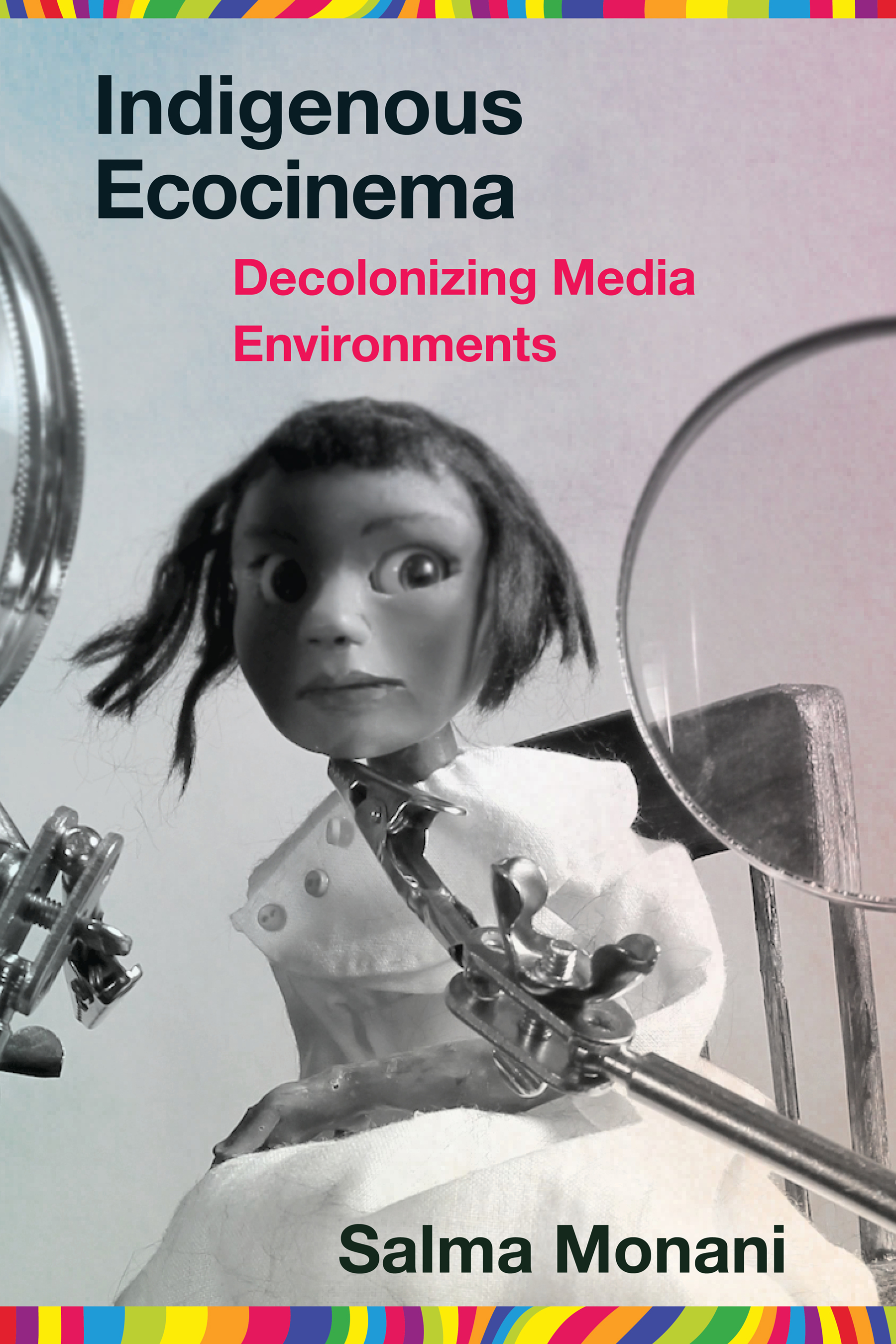

indigenous ecocinema cover

Salma Monani

December 2024
190pp
PB  978-1-959000-33-4
$26.99
eBook 978-1-959000-34-1
$26.99

Salvaging the Anthropocene Series


Indigenous Ecocinema

Decolonizing Media Environments

Summary

Introducing the concepts of d-ecocinema and d-ecocinema criticism, Monani expands the purview of ecocinema studies and not only brings attention to a thriving Indigenous cinema archive but also argues for a methodological approach that ushers Indigenous intellectual voices front and center in how we theorize this archive. Its case-study focus on Canada, particularly the work emanating from the imagineNATIVE Film + Media Arts Festival in Toronto--a nationally and internationally recognized hub in Indigenous cinema networks--provides insights into pan-Indigenous and Nation-specific contexts of Indigenous ecocinema.

This absorbing text is the first book-length exploration foregrounding the environmental dimensions of cinema made by Indigenous peoples, including a particlarly fascinating discussion on how Indigenous cinema’s ecological entanglements are a crucial and complementary aspect of its agenda of decolonialism.

Contents

List of Illustrations
Land Acknowledgments
A Glossary Clarifying the Use of Terms

INTRODUCING D-ECOCINEMA

Introduction

1. D-ecocinema Criticism: Reclaiming Indigenous Eco-Agency

PLACE

2. (Re)rooting Indigenous Place: The ImagineNATIVE Film and Media Festival

3. (Re)growing The World: imagineNATIVE as In-Person and Remote Festival

TIME

4. Timely Interventions: Indigenous Cinema Time(s)

5. Snipping and Glitching Colonial Time: The Films of Terril Calder and Caroline Monnet

FEELINGS

6. Indigenous Affects: Cinematic Humor’s Earthly Embodiments

7. Laughter to Breathe: The Films of Zoe Hopkins and Shelley Niro

Epilogue: Growing D-ecocinema Criticism and Engagement

Acknowledgments

Notes
Bibliography

Index

Author

Salma Monani is a professor at Gettysburg College’s Environmental Studies department. She has extensively published in ecocinema studies, Indigenous ecomedia, and environmental justice. She is co-editor of four ecocritical media anthologies. As part of her College’s Land Acknowledgment Committee, she also engages in public eco-humanities along with community research with Indigenous partners.

Reviews

Indigenous Ecocinema is a deeply considered, meticulously researched, and cogently reasoned text. Monani’s approach to Indigenous cinema is situated within multiple critical conversations while maintaining a clear and consistent original intervention. She engages cinema from a variety of angles, not limiting herself to the ‘text’ of the film itself, but also considering the filmmakers’ contexts as well as the influence of the venue and audience participating in the screening. I found this study to be compelling and exciting.”
— Amy Hamilton, author of Peregrinations: Walking in American Literature

“A much-needed addition to the fast-growing fields of Indigenous media and ecocinema studies.  Well-written, with both substantive theoretical heft and, at the same time, a warm and inviting tone and a very readable style, the arguments Monani makes around issues of place, time, and affect comprise a compelling case for the centrality of Indigenous cinematic mediations of ecological consciousness.” 
—Joanna Hearne, author of Native Recognition: Indigenous Cinema and the Western and Smoke Signals: Native Cinema Rising 
 

EmailFacebookInstagramPinterestTwitter

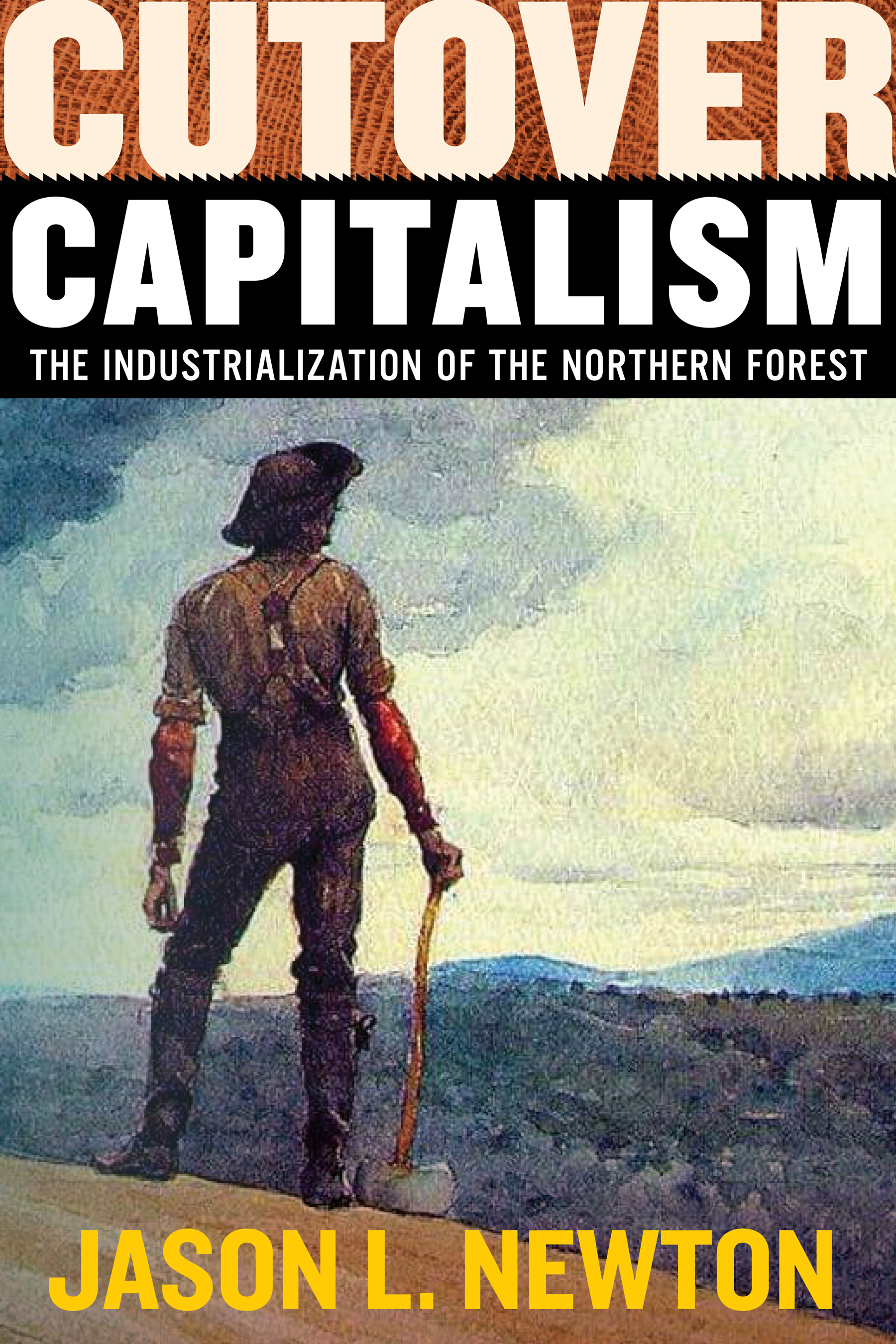
Cutover Capitalism

cutover capitalism cover

Jason L. Newton

October 2024
290pp
PB  978-1-959000-29-7
$29.99
eBook 978-1-959000-30-3
$29.99

Histories of Capitalism and the Environment Series


Cutover Capitalism

The Industrialization of the Northern Forest

Summary

2024 ASEH George Perkins Marsh Prize Runner-up

What happened to the loggers of America’s past when lumbermen moved west and south in the late nineteenth and early twentieth centuries? How did these communities continue to create value and meaning in these marginal lands? Cutover Capitalism: The Industrialization of the Northern Forest provides a new perspective on the process of industrialization in America through the study of rural workers in a cutover landscape. 

Back when resources started running scarce, the environment of the forest and bodies of workers became the natural resources from which mills and landowners extracted. Bodies and cutover landscapes were mobilized in new ways to increase the scale and efficiency of production—a brutal process for workers, human and animal alike. In the Northern Forest, an industrial working class formed in relation to the unique ways that workers' bodies were used to produce value and in relation to the seasonal cycles of the forest environment.

Cutover Capitalism is an innovative historical study that combines methodological approaches from labor history, environmental history, and the new history of capitalism. The book tells a character-driven yet theoretically sophisticated story about what it was like to live through this process of industrialization.

Contents

List of photographs, maps, tables, charts, or other illustrative materials
Acknowledgments

Introduction

1. The Work of Trees

2.  Common Labor, Common Lands

3. A Chance

Interlude: Organic Networks

4. The Winter Workscape: Industrializing with Ice

5. The Body as Cheap Nature

6. The Lumberjack Problem

7. Half-Wild Folk

Epilogue: Land, Labor, and Local History
Bibliography
Endnotes

Index

Author

Jason L. Newton, PhD, is an historian of modern America specializing in the history of capitalism, labor, and the environment. He is currently an assistant teaching professor at the University of North Carolina at Charlotte.

Reviews

“Blurring the boundary between exploiting trees and exploiting workers, Cutover Capitalism is an interesting re-interpretation of the field of forest history, a discipline that has focused all too heavily on woods technology and not enough on labor process.”
— Richard Judd, author of Second Nature: An Environmental History of New England

"A conceptually brilliant history that instantly becomes critically important for both labor and environmental historians." 
— Erik Loomis, author of A History of American in Ten Strikes

"With this compelling study, Jason Newton achieves an impressive disciplinary synthesis that casts new light on land and life in northern New England. Cutover Capitalism is a must-read for forest and environmental historians—and many more besides. Insights drawn from memory studies, the history of capitalism, labor history, ecology, and experience reveal much about the exploitation of people and non-human nature in the past, and raise important questions about the injustices and sustainability of our current circumstances." 
— Graeme Wynn, author of Environment, Power, and Justice: Southern African Histories


EmailFacebookInstagramPinterestTwitter

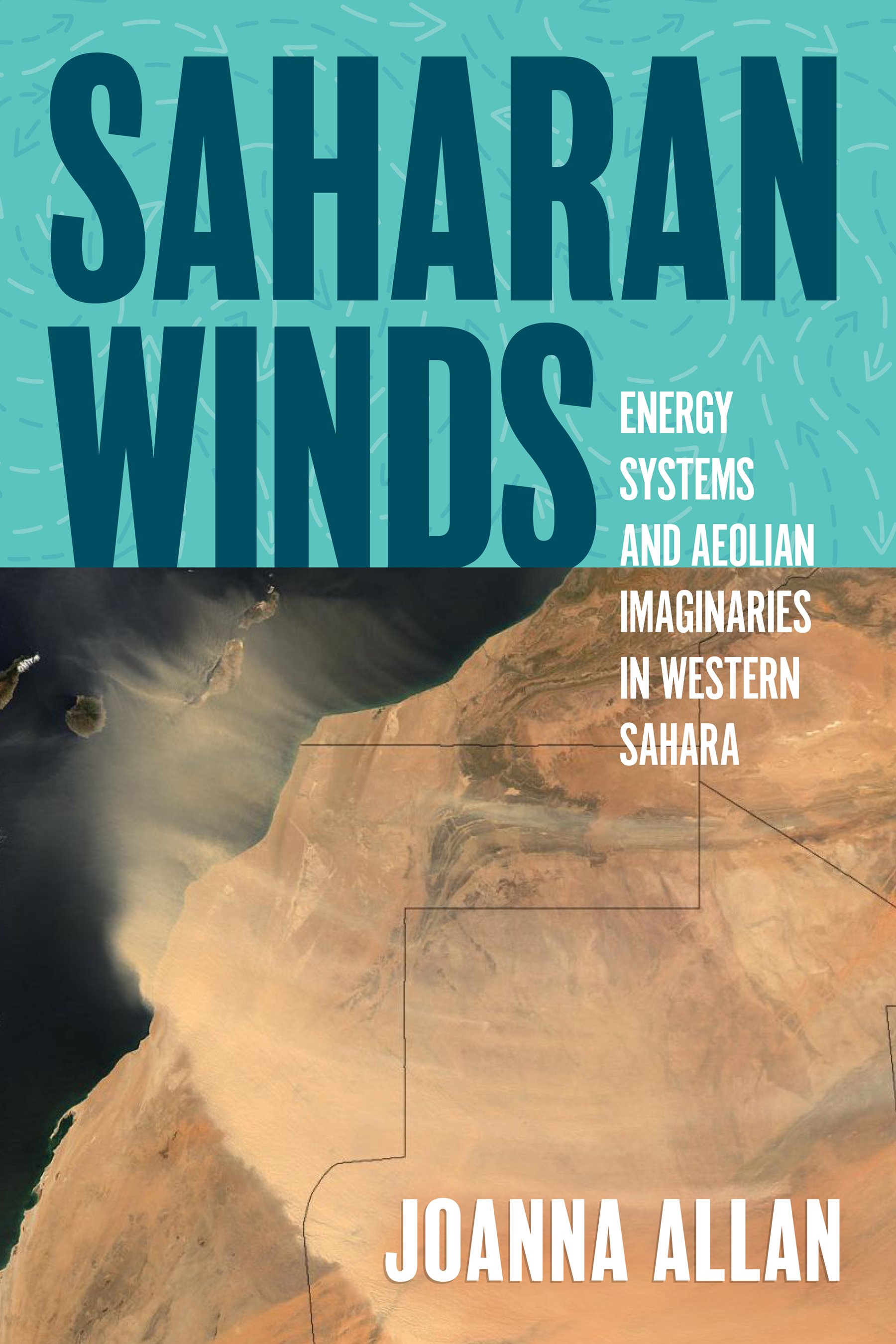
Saharan Winds

saharan winds cover

Joanna Allan

October 2024
274pp
PB  978-1-959000-23-5
$29.99
eBook 978-1-959000-24-2
$29.99

Energy and Society Series


Saharan Winds

Energy Systems and Aeolian Imaginaries in Western Sahara

Summary

Winner, ASLE-UKI Critical Book Prize, 2025
Finalist, Ecocritical Book Award, 2025
Association for the Study of Literature and Environment (ASLE)
Longlisted, Bread and Roses Award for Radical Publishing, 2025

As climate crisis ensues, a transition away from fossil fuels becomes urgent. However, some renewable energy developments are propagating injustices such as landgrabs, colonial dispossession, and environmentally destructive practices. Changing the way we imagine and understand wind will help us ensure a globally just wind energy future. 

Saharan Winds contributes to a fairer energy horizon by illuminating the role of imaginaries—how we understand energy sources such as wind and the meanings we attach to wind—in determining the wider politics, whether oppressive or just, associated with energy systems. This book turns to various cultures and communities across different time periods in Western Sahara to explore how wind imaginaries affect the development, management, and promotion of wind farms; the distribution of energy that wind farms produce; and, vitally, the type of politics mediated by all these elements combined. Highlighting the wind-fueled oppression of colonial energy systems, the book shows the potential offered by nomadic, Indigenous wind imaginaries for contributing to a fairer energy future.

Contents

Acknowledgments

Introduction

1. The Sea without Water: Navigators, Traders, and Wind Pathologies in Western Sahara

2. The Red Wind: Aeolian Anxieties and Energy Infrastructure in Spanish Sahara

3. The Tamed Winds: Siemens and Settler Colonialism in Moroccan-Occupied Western Sahara

4. The Tallīya: Saharawi Perceptions of an Oppressive Energoregime

5. The Gallāba: Windblown Desertscapes and the Friendship Generation

6. The Īrīfī: Wind as Harbinger in Arabic-Language Cultural Production

7. The Gblīya: Electricity in the Camps and a Nomadic Energy Future

8.  The Sirocco: Saharan Winds and Solidarity in Spanish Writing and Art

Conclusion: The Ǧalūāǧ

Glossary
Notes
Bibliography
Index

Author

Joanna Allan is an associate professor in global development at Northumbria University, UK. 

Reviews

"The mixture of archival, literary and fieldwork-derived ethnographic material is innovative and inspiring within the field of energy humanities."
—Dominic Boyer, author of Energopolitics: Wind and Power in the Anthropocene

"A novel approach into the intersection between colonialism and wind energy extraction."
—Alexander Dunlap, coeditor of Enforcing Ecocide: Power, Policing & Planetary Militarization


EmailFacebookInstagramPinterestTwitter

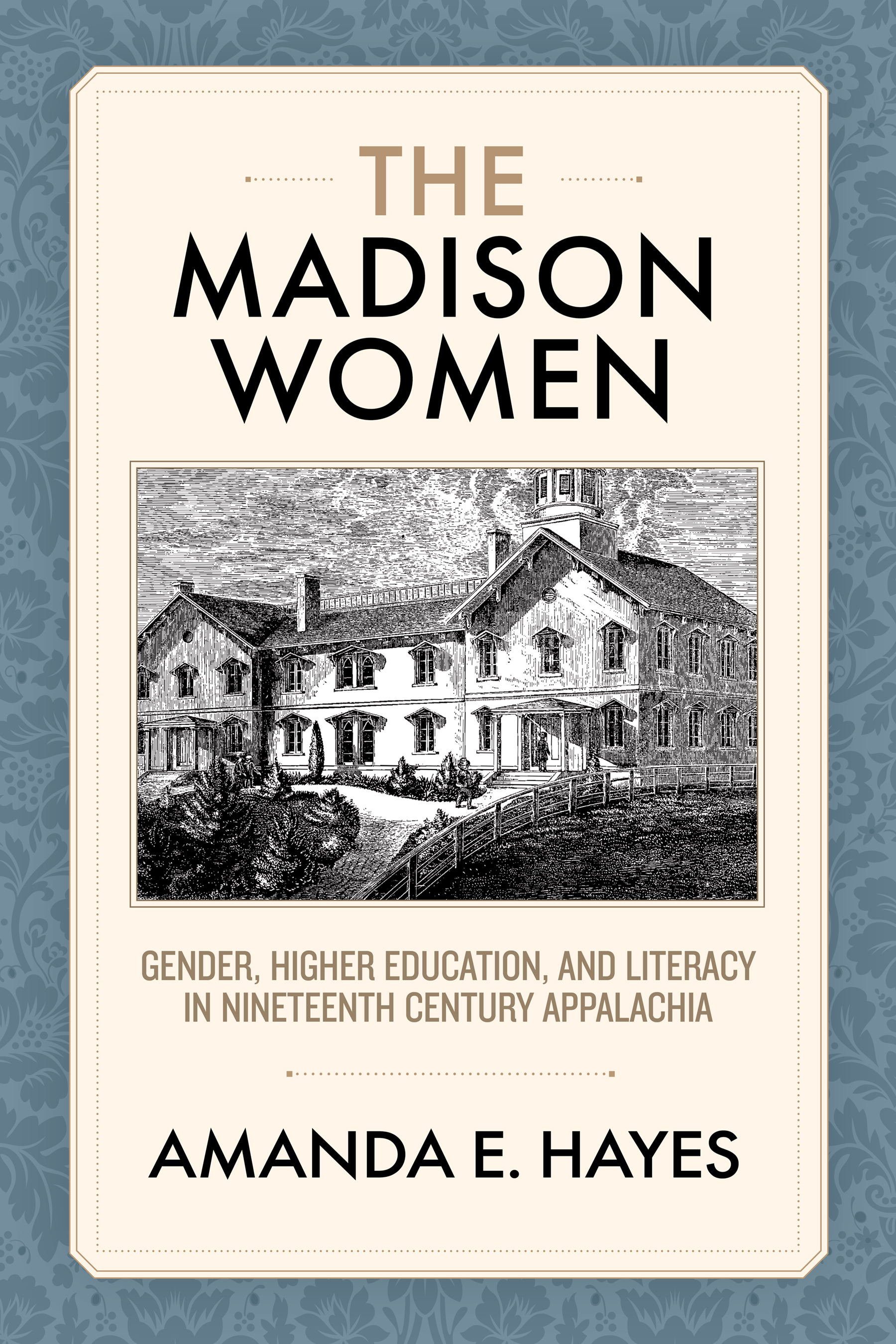
The Madison Women

the madison women cover

Amanda E. Hayes

September 2024
204pp
PB  978-1-959000-25-9
$27.99
eBook 978-1-959000-26-6
$27.99


The Madison Women

Gender, Higher Education, and Literacy in Nineteenth-Century Appalachia

Summary

By uncovering how higher education and gender roles evolved in Appalachia over time, The Madison Women delivers a history that contradicts the stereotype of the region as hostile to education, highlighting colleges that proliferated the area in the nineteenth century. Indeed, many of these colleges were either coeducational or even specifically for women, ultimately contradicting another stereotype--that Appalachia is a region particularly hostile toward women. 

Incorporating captivating mini-biographies of women who attended Madison College and who went on to change their communities in ways large and small, this book reveals how the lives of its students impart lessons about history and regional culture, and how we can shape the Appalachia's future. 

Contents

Acknowledgments

Introduction

1. Place, Culture, and Imagination: A Discussion of Methods
Small Stories, Part 1: Sarah McKittrick, Eliza Carpenter, Martha Lindsay

2. The Advantages of Education: A History of Madison College
Small Stories, Part 2: Elma Brashear, Austa Porter, M. Kate Wiser, Mary Smith, Mary Stockdale

3. Divided Arguments: Rhetorical Instruction at Madison College
Small Stories, Part 3: Sarah and Lizzie Jamison, Violet Scott, Amelia Matthews, Sue Craig

4. Madison College and Women’s Education: Acceptance and Resistance
Small Stories, Part 4: Cordelia Downard, Bell Coulter, Mollie and Elma Gaston

5. Higher Ideals: The Madison Women and Social Action
Small Stories, Part 5: Maggie Hyatt, Kate Green, Lizzie Smith, Nancy Wallace, Mary Lawrence

6. The Future is the Past: Formal Education and Appalachian History
Small Stories, Part 6: Sarah Morrison, Emma Campbell

7. What Was Lost, What Remains: Madison College’s Sister Schools
Small Stories, Part 7: Jennie Moore and Eliza Ralston, Sarah Owens Longsworth, Lizzie Moss

Conclusion: Why Does it Matter?

Endnotes
Bibliography

Index

Author

Amanda E. Hayes teaches English and composition at Kent State University-Tuscarawas. Raised on her family’s farm in Appalachian Ohio, she now researches and writes about regional traditions of writing, storytelling, and education. Her first book, The Politics of Appalachian Rhetoric, won the Nancy Dasher Award in 2019.

Reviews

“This book stands beside Samantha NeCamp’s in the work it does to rehabilitate the false stereotype of early Appalachia as anti-education and is a true recovery project, letting us hear lives and voices otherwise silenced.” 
–Kim Donehower, coeditor of Rereading Appalachia: Literacy, Place, and Cultural Resistance

“A mastery of weaving personal and archival research to resurrect a critical time in education in Appalachia. The research . . . lends itself to creating more avenues for study in women’s literacy, learning, and lives in Appalachia.” 
–Travis A. Rountree, author of Hillsville Remembered: Public Memory, Historical Silence, and Appalachia’s Most Notorious Shoot-Out


EmailFacebookInstagramPinterestTwitter

Enclosure Architect

enclosure architecture cover

Douglas W. Milliken

September 2024
246pp
PB  978-1-959000-21-1
$21.99
eBook 978-1-959000-22-8
$21.99


Enclosure Architect

A Novel

Summary

It seems like a sign of liberation—of adulthood’s indefinite postponement—when partisans bomb the university and every student’s personal records, from transcripts to debts, are consumed in erasing fire. If nothing else, it lends Margaux the freedom to continue her preferred art form of list-making unfettered by the authority of academia—until she encounters the breakdowns and disappearances and deaths of the people she admires and cherishes most. A monochromatic painter. A BDSM documentary photographer. A transgendered Aphrodite. A mathematician with an invisible cat. Yet as the concrete details of her world dissolve into the abstraction of loss, they also become more rarefied, more essential. Something small enough to be contained. Small enough to be protected.

Set in a semi-fictional, post-industrial American warzone, this novel explores multiple facets related to the recent nonfictional decades of constant civil unrest, with a particular focus on the complicated nature of holding a personal creative life amid a time of constant violence and change. Despite its heavy themes, the narrative is threaded throughout with veins of absurdist humor that invite and welcome us into the familial warmth of the narrator’s memories of friendship. 

Contents

Center
Periphery
Plane
Insideness
Outsideness
Containment

Acknowledgments

Author

Douglas W. Milliken is the author of two previous novels—To Sleep as Animals and Our Shadows’ Voice—the collection Blue of the World, and the family history Any Less You. A founding member of the post-jazz chamber septet The Plaster Cramp, Milliken lives in Saco, Maine.

Reviews

"Fascinating, strange, and buoyed by a narrative voice that is both somehow floating above the action yet thoroughly grounded in detail . . . there are moments of absolute poetry." 
—Meghan Gilliss, author of Lungfish

"Milliken asks the reader to exist in an enclosure of his own creation and adroitly shifts our innards through steady, spiraling accretion, until, with quiet elegance, he bares the truth of our own situation that he’s primed us for." 
—Mark Powell, author of Lioness

"Part of the pleasure of this deeply-felt book is its unfolding, and the way it deals with the complicated nature of memory. At its core, Enclosure Architect could be understood as an argument against forgetting; that memory provides a basis for art and thus for humanity . . . our own, and a shared humanity, if we’re lucky."
SCUD Editions


EmailFacebookInstagramPinterestTwitter

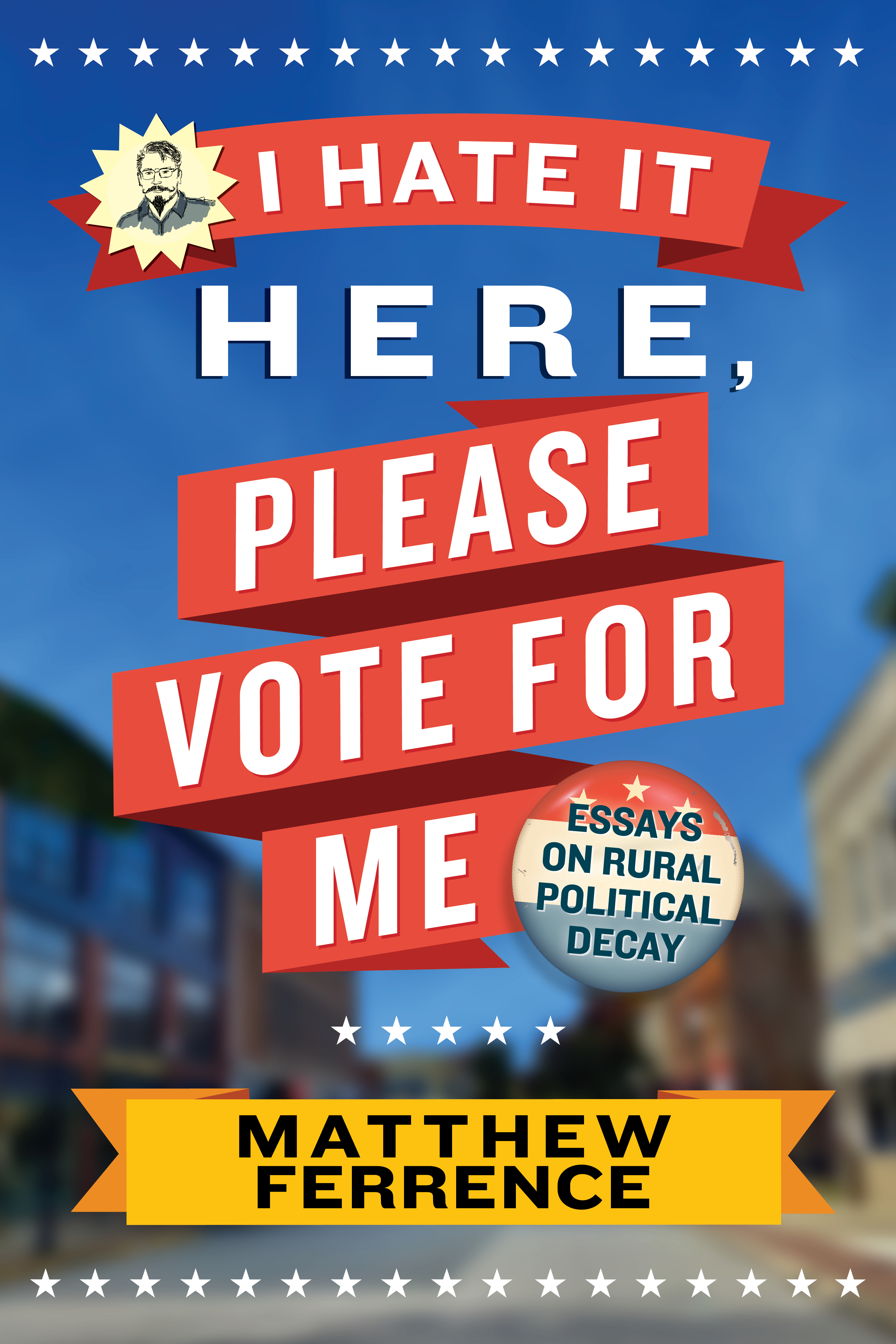
I Hate It Here, Please Vote For Me

Text arrangement in the style of a political advertisement reading 'I Hate It Here, Please Vote For Me: Essays on Rural Political Decay

Matthew Ferrence

August 2024
228pp
PB  978-1-959000-27-3
$21.99
eBook 978-1-959000-28-0
$21.99


I Hate It Here, Please Vote For Me

Essays on Rural Political Decay

Summary

2025 WCoNA Book of the Year Finalist
The Best Narrative & Biography Books of 2024, Selected by Porchlight

When a progressive college professor runs for the Pennsylvania House of Representatives in a deeply conservative rural district, he loses. That’s no surprise. But the story of how Ferrence loses and, more importantly, how American political narratives refuse to recognize the existence and value of nonconservative rural Americans offers insight into the political morass of our nation. 
                                                                                                                                                      In essays focused on showing goats at the county fair, planting native grasses in the front lawn, the political power of poetry, and getting wiped out in an election, Ferrence offers a counter-narrative to stereotypes of monolithic rural American voters and emphasizes the way stories told about rural America are a source for the bitter divide between Red America and Blue America.

Contents

Acknowledgements

1. Welcome to the Party                        
2. I Hate It Here, Please Vote for Me            
3. The Poetics of Politics                    
4. Migrations                            
5. The Political Grammar of the County Fair        
6. Spiritual Dangers                        
7. Violence                                
8. Crown Vetch                            
9. This Is Why We Lose                    
10. Succession                                
11. Imagination

Author

Matthew Ferrence lives and writes at the confluence of Appalachia and the Rust Belt. With I Hate It Here, Please Vote For Me, he has completed a trilogy (of sorts) focused on rural Appalachian identity and political narrative. He teaches creative writing at Allegheny College.

Reviews

"Ferrence sets out to reconcile who he has become, a progressive college professor, with where he is from, rural western Pennsylvania, conservative Appalachia bound up in our current political moment. His honest and moving essays take us through his running for the Pennsylvania House of Representatives and reveal his unshakable love of home and his challenge to a pessimistic narrative of Appalachia."
—John Copenhaver, author of Hall of Mirrors

“Existing in the same context of What You’re Getting Wrong About Appalachia and Appalachian Reckoning as an attempt to both understand the shifted political sands of place, and to assert a theory as to why, this book is an opportunity for people to deepen their understanding of rural people and politics.” 
—Neema Avashia, author of Another Appalachia: Coming Up Queer and Indian in a Mountain Place

"A direct look at the media narratives of politics. Ferrence wrestles with how he understands himself as an individual, a demographic, and then as Aristotle’s political animal. It is a fascinating look at the making of political and cultural tropes from the inside."
—Edward Karshner, author of Writing the Self: A Phenomenological Approach to Composition Theory


EmailFacebookInstagramPinterestTwitter

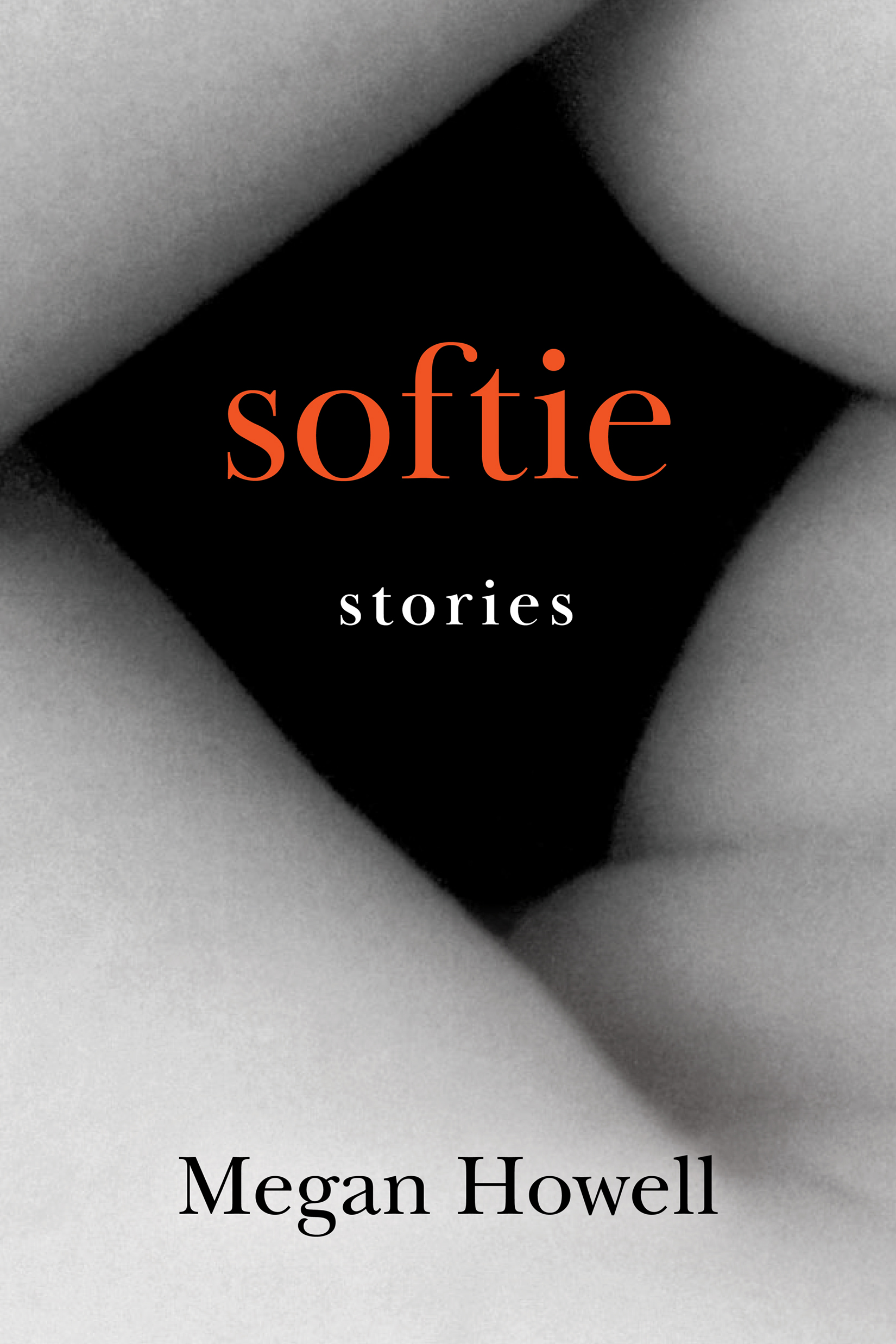
Softie

softie cover

Megan Howell

December 2024
270pp
PB  978-1-959000-31-0
$19.99
eBook 978-1-959000-32-7
$19.99


Softie

Stories

Summary

2025 PEN America Finalist, Robert W. Bingham Prize for Debut Short Story Collection
2025 National Book Award Honoree, "5 Under 35" 

2025 Gold Medal, Independent Publishing Book Awards (IPPY): Short Fiction

In beautifully melancholy stories of magical realism, the women and girls in Softie transform their bodies and test their sanity, trying to find meaning in the loneliest of places. 

A former child star haunted by a past she can't remember. An Afro-French girl with an obsession for ear lobes. A loner whose only friend is hiding a terrible, otherworldly secret. Each of these stories shares situations that are sometimes fantastical, sometimes commonplace, but always strange. From a Corsican vacation town in its off-season to hospital rooms and a seedy hotel suite in Chicago, experience the every day come fully untethered from reality.

Contents

Lobes
The Upstairs People
Vacuum Cleaner
Cherry Banana
Turtle Soup
Kitty & Tabby
Bluebeard’s First Wife
Devil’s Juice
Apples and Dresses
Melissa, Melissa, Melissa
Anita Garcia-Barnes
Softie
Age-Defying Bubble Bath with Tri-Shield Technology

Acknowledgments
 

Author

Megan Howell is a DC-based writer. She earned her MFA in fiction from the University of Maryland in College Park, winning both the Jack Salamanca Thesis Award and the Kwiatek Fellowship. Her work has appeared in McSweeney’s, The Nashville Review, and The Establishment among other publications.

Reviews

"Over and over, Howell offers us surreal narratives that defy the simplicity of a one-dimensional world lens. There are no good or bad people in Softie, only humans. Weird, complicated, and flawed, clawing their way toward some distant horizon."
Washington City Paper

"Wonderfully speculative and weird, Megan Howell’s debut collection of short stories explores meaning, embodiment, secrets and relationships. Howell’s is an exciting new voice for the sad girl in all of us."
Ms. Magazine

"...a beautiful and striking collection about friendship, secrets, and unspeakable desires."         —Publishers Weekly, Starred Review

"Howell's provocative stories, no matter the genre, will prove inspirational for anyone who can relate to and feel moved by the various strong and complex protagonists in Softie."   
Cream City Review

"The stories in Softie offer a bold and mesmerizing exploration of visceral grief and desire, of violence and survival, and of the body’s capacity for both decay and shimmering afterglow. Expertly blending the strangeness and terror of magic with the strangeness and terror of being alive, this collection introduces Megan Howell as an unforgettable new voice."
—Danielle Evans, author of Before You Suffocate Your Own Fool Self

“Howell’s collection . . . carves a needed space for female characters of color that move beyond the stereotypical white, beautiful, rich characters who dominate the subgenre.” 
—Kristen Gentry, author of Mama Said: Stories

"Megan Howell's Softie is a tender, sometimes absurd, incredibly impressive collection of stories about girlhood and womanhood and otherhood. What she does with these stories, with the wondrous, wandering, and whimsical women they center, is absolutely sublime." 
—LaToya Watkins, author of Holler, Child: Stories

"Smart. Lonely. Rare. Weird. Otherworldly. In Softie, Megan Howell has done something few can: she's made something new. This collection had me heartbroken in the best ways. Softie is the freak anthem I've been waiting for."
—Halle Hill, author of Good Women: Stories


EmailFacebookInstagramPinterestTwitter

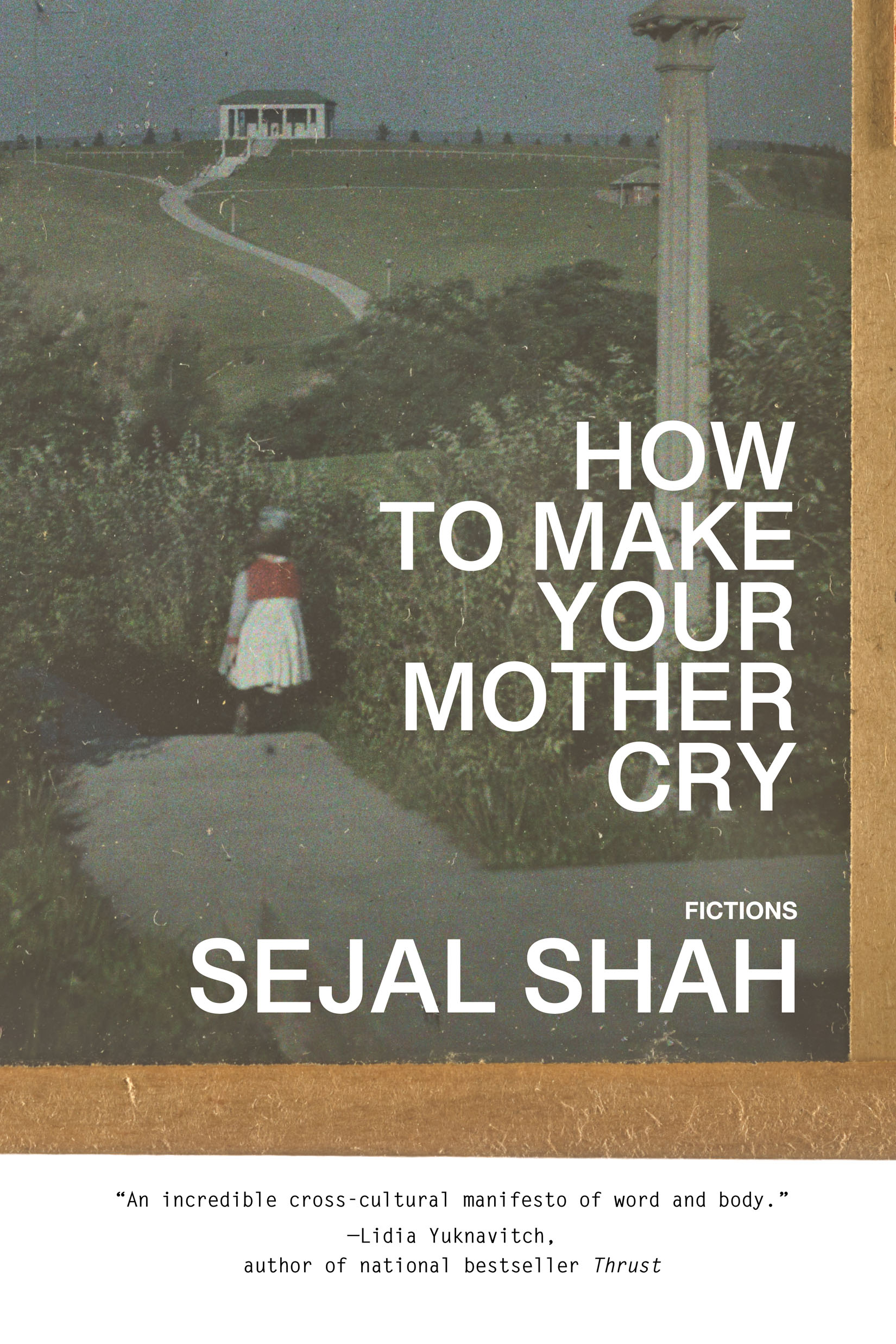
How to Make Your Mother Cry: Fictions

photograph of Cobb's Hill, or Pinnacle Hill, by Charles C. Zoller: a child dressed in red and white appears in foreground, along with an architectural column, surrounded by shrubs; in the distance a white house sits on a hill with a path leading up to it; text reads How to Make Your Mother Cry: Fictions, Sejal Shah

Sejal Shah

May 2024
192pp
PB 978-1-959000-13-6
$24.99
eBook 978-1-959000-14-3
$24.99

How to Make Your Mother Cry

Fictions

Summary

2024 Foreword Indies Finalist, Multicultural Adult Fiction
2024/25 Story Prize Longlist

In the eleven linked short stories of How to Make Your Mother Cry, Sejal Shah builds a shrine gleaming with memory and myth. Keys, rocks, photographs, fairy tales, fables, and relics all add texture and meaning to an exploration of growing up and living as a diasporic Gujarati woman in a culture that excuses the behavior of men. Throughout, girls and women contend with the expectations, limitations, and challenges of becoming the heroine of one’s own life.

How to Make Your Mother Cry—Shah’s follow-up to her award-winning essay collection This Is One Way to Dance—continues the rich tradition of innovative feminist work by Claudia Rankine, Leslie Marmon Silko, and Maxine Hong Kingston. By braiding stories and images with fictional letters to a beloved English teacher, the collection defies traditional autofiction, epistolary, and short story conventions. These astonishing stories about friendship and love, resilience and survival establish Shah as an exciting new voice in contemporary fiction.

Contents

[soundtrack]

I. A girl walks into the forest
The Girl with Two Brothers
Mary, Staring at Me
Dicot, Monocot
Mandala
(Divination)

II. A girl is lost in the woods
(Independence, Iowa)
How to Make Your Mother Cry
Watch Over Me; Turn a Blind Eye
Climate, Man, Vegetation
Ithaca Is Never Far
Xylem
(Everybody’s Greatest Hits)

III. A girl claws her way out
(The Granite State)
The Half King
Skeleton, Rock, Shell

Companion Texts
Ephemera Archive
Liner Notes
Gratitudes & Ghost Tracks

Author

Sejal Shah is an artist, dancer, poet, writer, and teacher whose work crosses genres and disciplines. The daughter of immigrants from Kenya and India, she is the author of the award-winning essay collection This Is One Way to Dance and the groundbreaking essay on invisible disability and neurodiversity “Even If You Can’t See It.” She lives in Rochester, New York.

Reviews

How to Make Your Mother Cry is an incredible cross-cultural manifesto of word and body: What is home. What is mother. What is family. What is self. What is woman, and how do we story her.”
—Lidia Yuknavitch, author of Thrust and Verge

“Urgent, intense, and intimate, the stories in Sejal Shah’s How to Make Your Mother Cry conjure memories and stir the soul. A clever and beautifully crafted collection!”
—Deesha Philyaw, author of The Secret Lives of Church Ladies

“Sejal Shah has written a stunning hybrid work, and I’m in awe of its candor, risk, and craft—this is a book I will recommend to other writers, professors of creative writing, and readers of literary texts. I see Shah’s book as broadening and supporting the larger conversation of work by writers of color.”
—Jon Pineda, author of Let’s No One Get Hurt

“Each sentence is its own jewel box of pleasures and delights. Like works by Sara Ahmed, Audre Lorde, and Claudia Rankine, this groundbreaking collection will be a touchpoint for years and decades to come.”
—Rahul Mehta, author of No Other World and Feeding the Ghosts

“If a queer text is an unsettled one, crossing cultures, crossing genres, then this book rescripts what we think we know. Shah is a master storyteller who keeps us knowing differently. How to Make Your Mother Cry is bold and brave. A collection for a new century.”
—Dawn Lundy Martin, author of Good Stock Strange Blood

EmailFacebookInstagramPinterestTwitter