AWP26
This is the page for information about AWP26
AWP26
Test
Text Page
Hello, this is a test.
Spring26 Banner
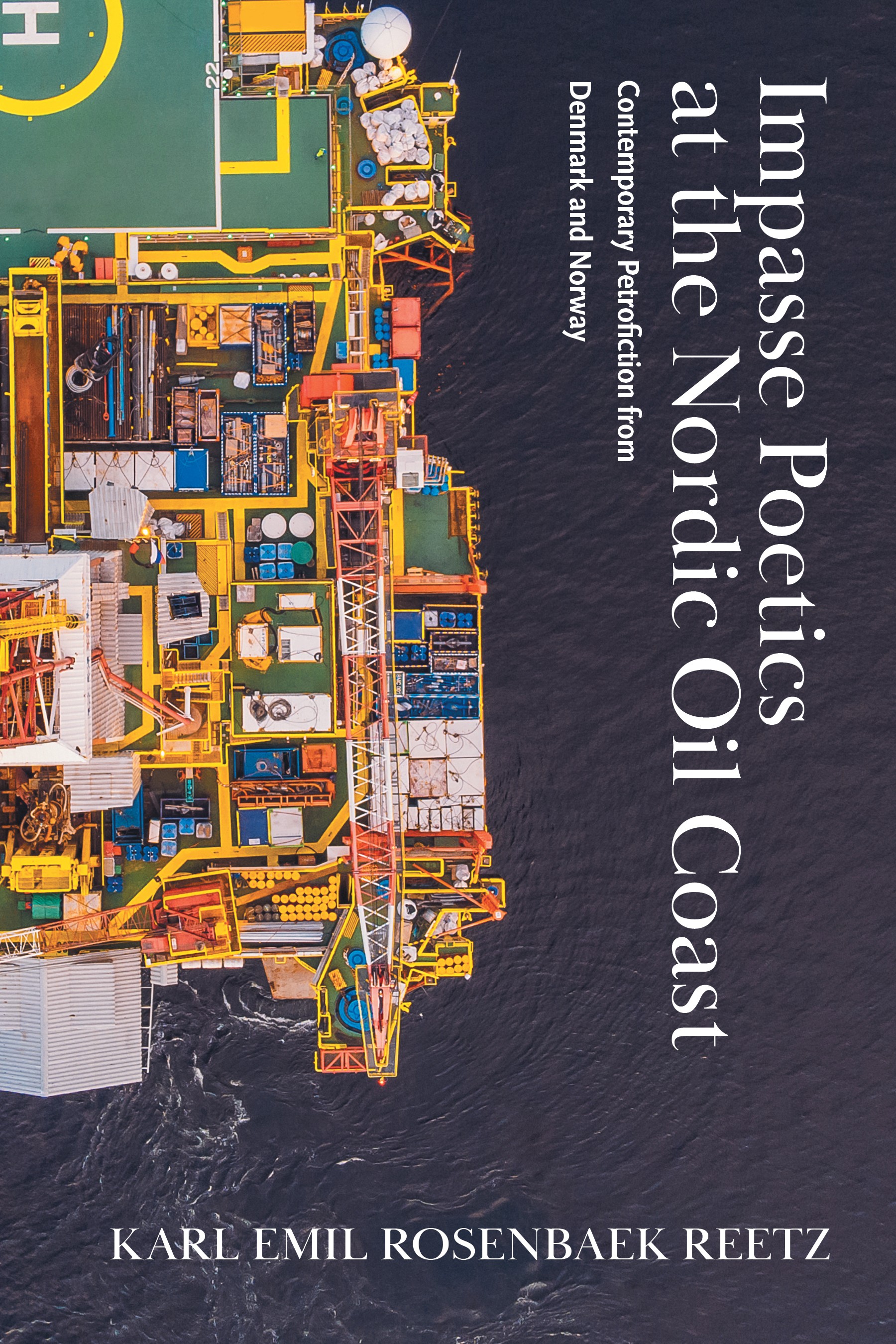
Impasse Poetics at the Nordic Oil Coast

Karl Emil Rosenbaek Reetz
May 26 2026
260pp
11 b/w images
PB 978-1-959000-76-1
$27.99
ePub 978-1-959000-77-8
$27.99
PDF 978-1-959000-78-5
$27.99
Energy and Society series
Impasse Poetics at the Nordic Oil Coast
Contemporary Petrofiction from Denmark and Norway
Summary
In Impasse Poetics at the Nordic Oil Coast, Karl Emil Rosenbaek Reetz examines the viscosity of our current bitumen foundation through the representation of oil as more than mere energy in Danish and Norwegian literature and culture from 1992 to today. The 1990s mark the beginning of institutionalized, supranational recognition of climate change with the initiation of the Conference of the Parties (COP, 1995), the UN Earth Summit of 1992, and the Kyoto Agreement of 1997. The last thirty years have seen a huge public and political increase in awareness of climate change, perfectly aligned with a huge increase in the production and consumption of fossil fuels.
In the quest for a greener future, the Nordic countries proclaim to be green frontier nations, yet Denmark and especially Norway also continue to extract natural gas and oil from the seabed of the North Sea and further North. This has led to a peculiar sense of oil impasse present in contemporary fiction from this region. The Nordic green frontier myth, it seems, does not instil the intelligentsia with a sense of accomplishment as much as a sense of despair.
Contents
Chapter 1 Introduction: From Peak Oil Frenzy to Tough Oil Impasse
Part I: Oil and Water
Chapter 2 “Below, Everything Is Speculation”: Oceanic Irrealism
Chapter 3 Smilla and the Arctic Petroleumscape: Offshore Nordic Noir
Chapter 4 Roustabout Narratives: North Sea Oil Work and the Peripheralization of Worker Rights
Intermezzo Oil Adventure Inc.: A Story of Concrete and Discursive Ingenuity
Part II: Stuck in a Moment
Chapter 5 Pedal off the Metal: Breaking the Habit of Careless Car Culture
Chapter 6 Future Energyscapes: Nordic After-Oil Imaginings
Conclusion: From Impasse to Dissonance
Appendix: Original Danish and Norwegian Poetry and Prose Selections from the Book
Notes
Author
Karl Emil Rosenbaek Reetz is the Carlsberg Internationalization Postdoc Fellow, Faculty of the Humanities, Department of Nordic Studies and Linguistics at University of Copenhagen. He holds a PhD in comparative literature from the University of Southern Denmark. He is a literary scholar specializing in the interrelations and cultural implications of energy sources, particularly oil. His primary area of interest concerns contemporary literary fiction from the Nordic countries and their intermixture with energy, particularly the heavily fossilized North Sea. Rosenbaek Reetz has published in The Journal of Energy History; Women, Gender & Research; and Ecozon@. He has contributed to The Cambridge Companion to World Gothic Literature, The Sea in Nordic Literature, and the Handbook of Research on Sustainable Lifestyles.
Reviews
“An important—even necessary—contribution to a growing body of work on petroculture, from a region with a significant, yet understudied, greenhouse gas footprint. This culture of oil extraction in Norway is fascinatingly contradictory, even monstrous.”
—Karen Pinkus, Cornell University professor emerita and author of Subsurface and Fuel: A Speculative Dictionary
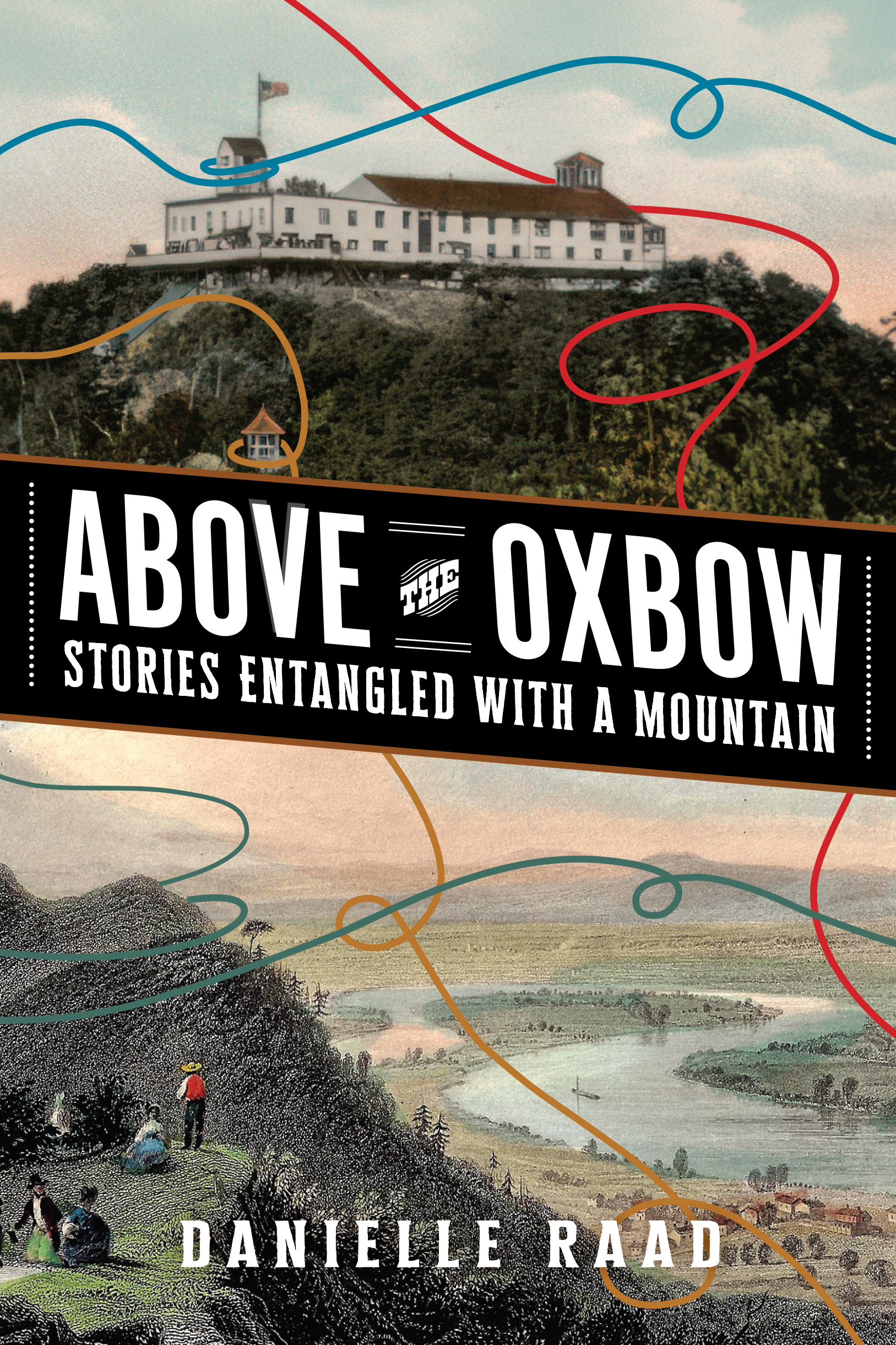
Above the Oxbow

Danielle Raad
April 7 2026
298pp
14 b/w images 1 map
PB 978-1-959000-68-6
$26.99
ePub 978-1-959000-69-3
$26.99
PDF 978-1-959000-86-0
$26.99
Above the Oxbow
Stories Entangled with a Mountain
Summary
Above the Oxbow is a journey through the tangle of rich narratives surrounding Mount Holyoke, a locally cherished mountain in Western Massachusetts. It explores how visitors have forged connections with the mountain through various activities over the past two centuries. In an accessible blend of storytelling and scholarly analysis, Danielle Raad shows the significance of the landscape, historic sites, and material culture, revealing how cultural perspectives, community activism, collective memory, and personal experiences shape our understanding of a place. Situated at the intersection of public history and environmental history, this ethnography of place also discloses the curious stories of the Summit House, an erstwhile tramway, an airplane crash, and the local fight to conserve Mount Holyoke as a natural space and celebrates its myriad uses today.
Contents
List of Figures
Acknowledgments
One The Ascent: An Introduction
Two Narrating the Mountain’s Past
Three “Is Not the Scene Magnificent?”: The View from Mount Holyoke
Four Participation and Parcel: Conserving and Experiencing Nature
Five Ruin to Museum: Historical Engagement at the Summit House
Six Materializing Memory on the Mountain
Coda The Descent
Endnotes
Bibliography
Index
Author
Danielle Raad is assistant professor of history and museum studies at the University of Georgia. She is a public historian, anthropologist, archeologist, and curator with a focus on how people in the present make meaning from the material culture—art, artifacts, and historic sites—of the past.
Raad held positions as the curator and assistant director of the Stanford University Archaeology Collections and as a postdoctoral fellow at Yale University Art Gallery. She has been published in Historical Archaeology, Journal of Cultural Geography, Journal of Archaeological Science, and University Museums and Collections Journal.
Reviews
“Raad brings new ideas to play in this inquiry, such as a different sense of place created by a mostly natural rather than constructed setting . . . a good addition to a bookshelf containing histories of places and their cultural significances and meanings.”
—Dan Allosso, author of Peppermint Kings: A Rural American History
Beyond Ourselves

Catherine Gander and Stefania Heim, editors
April 7 2026
276pp
21 b/w images
6x9in
PB 978-1-959000-66-2
$27.99
ePub 978-1-959000-67-9
$27.99
PDF 978-1-959000-79-2
$27.99
Beyond Ourselves
Contemporary Poets on Muriel Rukeyser
Summary
Muriel Rukeyser has many faces: poet, biographer, theorist, playwright, novelist, story-writer, filmmaker, translator, ethnographer, and innovator of social, documentary poetics; feminist, queer, Jewish, single mother, and social justice activist. Yet above all, she was a poet. Threaded through her work, politics, and life was the conviction that poetry is an animating force that connects people and disciplines. Recent years have seen a surge of renewed interest in Rukeyser’s work, bringing her back into public consciousness as a crucial voice on the relations between poetry and social life in America and beyond.
Beyond Ourselves is the first volume of its kind to comprehensively consider the continued urgency and lasting legacy of Rukeyser’s work as a key source and inspiration for poets working today. Volume editors Catherine Gander and Stefania Heim—both scholars and poets—have gathered critical and creative contributions from some of the most innovative, exciting, and socially engaged poets writing today. In lyric and braided essays, scholarly critique, hybrid investigations, documentary collages, and collaborative poetry, these poets dive deeply into Muriel Rukeyser’s work and life to interrogate, explore, and challenge the models she provides for thinking and writing in our own social, political, and poetic moment. These essays address a range of themes, from the transhistorical politics of motherhood and contemporary relational and feminist poetics of war to communal history via documentary film and the possibilities of coalition-building beyond borders. As in Rukeyser’s own work, the forms of these texts animate their inquiries.
Beyond Ourselves is a volume at the intersections of creative and critical thought, reflecting on how Rukeyser’s expansive body of work offers a vision for, as she writes, “a kind of imagination with which to meet the world.”
Contents
List of Figures
Acknowledgments
Chapter 1
Introduction
Catherine Gander and Stefania Heim
Chapter 2
Dynamic Equilibrium of Word and World: What Muriel Rukeyser Knows About Poetry
Stefania Heim
Chapter 3
The Breathers
Daniel Borzutzky and Stacy Hardy
Chapter 4
On Milkweed, Fences, and Webs
Susan Briante
Chapter 5
The Open Self: On Muriel Rukeyser’s Poetics
Khadijah Queen
Chapter 6
The Song Starts in My Body: On Muriel Rukeyser and the Forms of Poetry
Philip Metres
Chapter 7
The Synthetic Dreams of Muriel Rukeyser’s A Place to Live
Jena Osman
Chapter 8
Resurrection Music
Erika Meitner
Chapter 9
“The Faces Going Home into War”: The Legacy of Muriel Rukeyser’s Anti-Epic Poetics
Deborah Paredez
Chapter 10
A Boy Among the Ways: A Poem-Essay on Mazes, Motherhood, and Witness
Nomi Stone
Chapter 11
“Something Already in Ourselves, But Not Discovered”: Learning from Muriel Rukeyser in Ireland
Catherine Gander
Afterword: How Else to End It
Solmaz Sharif
Authors
Catherine Gander is associate professor of American literature at Maynooth University, Ireland. Her authored books include Muriel Rukeyser and Documentary: The Poetics of Connection and Extending the Document: Contemporary Transmedial Poetics; she is coeditor of the volumes Mixed Messages: American Correspondences in Visual and Verbal Practices and The Edinburgh Companion to Don DeLillo and the Arts. Gander holds a PhD in English from King’s College London.
Stefania Heim is associate professor of English at Western Washington University. She is the author of award-winning poetry collections A Table That Goes On for Miles and Hour Book. Heim has been a recipient of the National Endowment for the Arts translation fellowship and has translated Geometry of Shadows: Giorgio de Chirico’s Italian Poems and de Chirico’s posthumous novel, Mr. Dudron. She is the cofounder of the journal Circumference: Poetry in Translation. She holds an MFA in poetry from Columbia University and a PhD in English from the CUNY Graduate Center.
Contributors: Daniel Borzutzky, Susan Briante, Catherine Gander, Stacy Hardy, Stefania Heim, Erika Meitner, Philip Metres, Jena Osman, Deborah Paredez, Khadijah Queen, Solmaz Sharif, and Nomi Stone.
Reviews
“A wonderfully tessellated congregation of contemporary takes on one of the most significant polymaths of American modernism. This rousing, open-hearted collection demonstrates how Rukeyser’s impressive oeuvre continues to inspire new instances of critical inquiry and creative expression.”
—Michael Leong, Robert P. Hubbard Assistant Professor of Poetry, Kenyon College
Permafrost Is an Archive

Corinna Cook
February 24 2026
298pp
PB 978-1-959000-70-9
$22.99
ePub 978-1-959000-71-6
$22.99
PDF 978-1-959000-85-3
$22.99
In Place series
Permafrost Is an Archive
and Other Inheritances from the Alaska-Yukon Borderlands
Summary
A lyrical essay collection exploring reconciliation, colonial legacies, and climate
change in the Raven Biome of the Alaska-Yukon borderlands through research,
personal reflection, and ekphrastic meditations on maps and artifacts; Corinna Cook
wrestles with difficult pasts while facing an uncertain ecological future.
Contents
The Photographer (a prelude)
Part One
The Slower Questions
The Black Spruce
Distance Over Light
Sister Essays: The Young and the Old
The Young
The Old
Swan Signs
Part Two
The Story of the Day
Atlin
Permafrost Is an Archive
YFN 101: What We Give to One Another
Chooutla: Truth and Reconciliation
Government Documents: A Lineage of Blades
Part Three
The Trails are Always There
Under the Bridge at Johnson’s Crossing
The Kohklux Map
The Ash and the Literature: A Diptych
A Triangle of Sun
Salsa
The End
Acknowledgments
Notes
Author
Corinna Cook is the author of the essay collection Leavetakings. Her writing has been published in Alaska Quarterly Review, Assay: A Journal of Nonfiction Studies, Terrain.org, and Pedagogy and American Literary Studies. Cook, a former Fulbright Fellow and an Alaska Literary Award recipient, is a graduate of Pomona College and the University of Alaska Fairbanks and holds a PhD in English and creative writing from the University of Missouri. She serves as core nonfiction faculty at Alaska Pacific University’s low-residency MFA program in creative writing and lives in Juneau, Alaska.
Reviews
“This volume is a spiritual cartography, a deep map of aching, of longing. Cook’s essays chart our small human awareness as one part of geologic time, taking in spiritual, scientific, and metaphysical ways of knowing. She draws from archives and from culture-bearers. Her finely crafted essays become forms of reconciliation storytelling. Cook asserts that a shared future requires everyone to enter into right relationships with divisive histories, and then to pitch in to help carry the difficult past (and present).”
—Peggy Shumaker, author of Cairn and former poet laureate of Alaska
“This book follows a lineage of Alaska writers reckoning with belonging to a vast and wild place but Cook forges new ground in her unique combination of rigorous scholarship and thinking, her wry original voice, and her poetic leaps and stunning imagery.”
—Anne Haven McDonnell, author of Living with Wolves and Breath on a Coal