Epic and Lovely

epic and lovely cover

Mo Daviau

September 2025
272pp
PB 978-1-959000-62-4
$19.99
eBook 978-1-959000-63-1
$19.99


Epic and Lovely

A Novel

Summary

Epic and Lovely is the swan song of Nina Simone Blaine, the daughter of a long-dead 1950s Vegas crooner and a Texas beauty queen forty years his junior. In the wake of her unexpected divorce, Nina returns to her hometown of Los Angeles to spend her final days with The Friends of the Good Thumb, a support group for patients with A12 Fibrillin Deficiency Syndrome, a genetic disorder that affects children of much-older fathers, causes several physical deformities, and results in death around the age of forty.

Written as a deathbed letter to the UCLA physician who has tracked Nina and the other Good Thumbs throughout their lives, Nina recounts her final days with the group and with Cole, the charismatic, sadistic fellow A12er with whom she has fallen madly in love, who charms and harms her in equal measures. An unlikely alliance with a tech billionaire, the return of her estranged mother, and the birth of the baby she never thought she’d have force Nina to reckon with the triumphs and mistakes of her life and to fight to leave her child in good hands.


Author

Mo Daviau is the author of the novel Every Anxious Wave, which was a finalist for the Oregon Book Award. A graduate of Smith College and the Helen Zell Writers’ Program at the University of Michigan, Daviau lives in Portland, Oregon, where she works as a bookseller.

Reviews

"This book is a love bomb, a love bloom, a love letter from a soul on the edge of death who talks back, cracks wise, and throws down wisdom. Daviau reminds us that death always kisses birth, living always births dying, crying keeps us whole, and laughter is good medicine. I swooned."
—Lidia Yuknavitch, author of Reading the Waves: A Memoir and The Chronology of Water

"Mo Daviau's Epic and Lovely is a novel that manages the startling feat of being at once deeply intimate and thrillingly grand. Taking on motherhood, mortality, disability, and seemingly everything else under the California sun—tech billionaires and Vegas lounge singers, age gaps and abusers—Daviau's heartbreaking novel fully earns its title's fitting descriptors. Epic and Lovely is wonderful from end to end."
—Matthew Specktor, author of The Golden Hour: A Story of Family and Power in Hollywood and Always Crashing in the Same Car: On Art, Crisis, and Los Angeles, California

"Full of tenderness, dark humor, and aching vulnerability, Mo Daviau has written a stunning novel that asks how we choose to be remembered when our stories reach their inevitable conclusion. Illuminating the complicated intersection of bodily autonomy and parental love,Epic and Lovelyis a meditation on inheritance—both genetic and emotional—that deftly explores what it means to leave behind a legacy when time is running out."
—Kimberly King Parsons, author of We Were the Universe

“Daviau is such a talented prose writer. Uproariously funny, singeing, authoritative. This is a skillful, sophisticated author writing with a scalpel on every line, willing to go to wild places. Somehow we’re in the territory of farce, of Eleanor Oliphant Is Completely Fine, and of Eyes Wide Shut, all at the same time.”
—Courtney Sender, author of In Other Lifetimes All I’ve Lost Comes Back to Me: Stories

“In Epic and Lovely, Mo Daviau pushes against our expectations of the chronically ill. It’s a fully rendered look at chronic illness and difficult choices. Darkly funny and driven by the voice of Nina, whose voice is in turns sardonic, quirky, smart, and vulnerable, Epic and Lovely challenges our ideas about what it means to be sick in the modern world.”
—Renée K. Nicholson, coeditor of Bodies of Truth: Personal Narratives on Illness, Disability, and Medicine


EmailFacebookInstagramPinterestTwitter

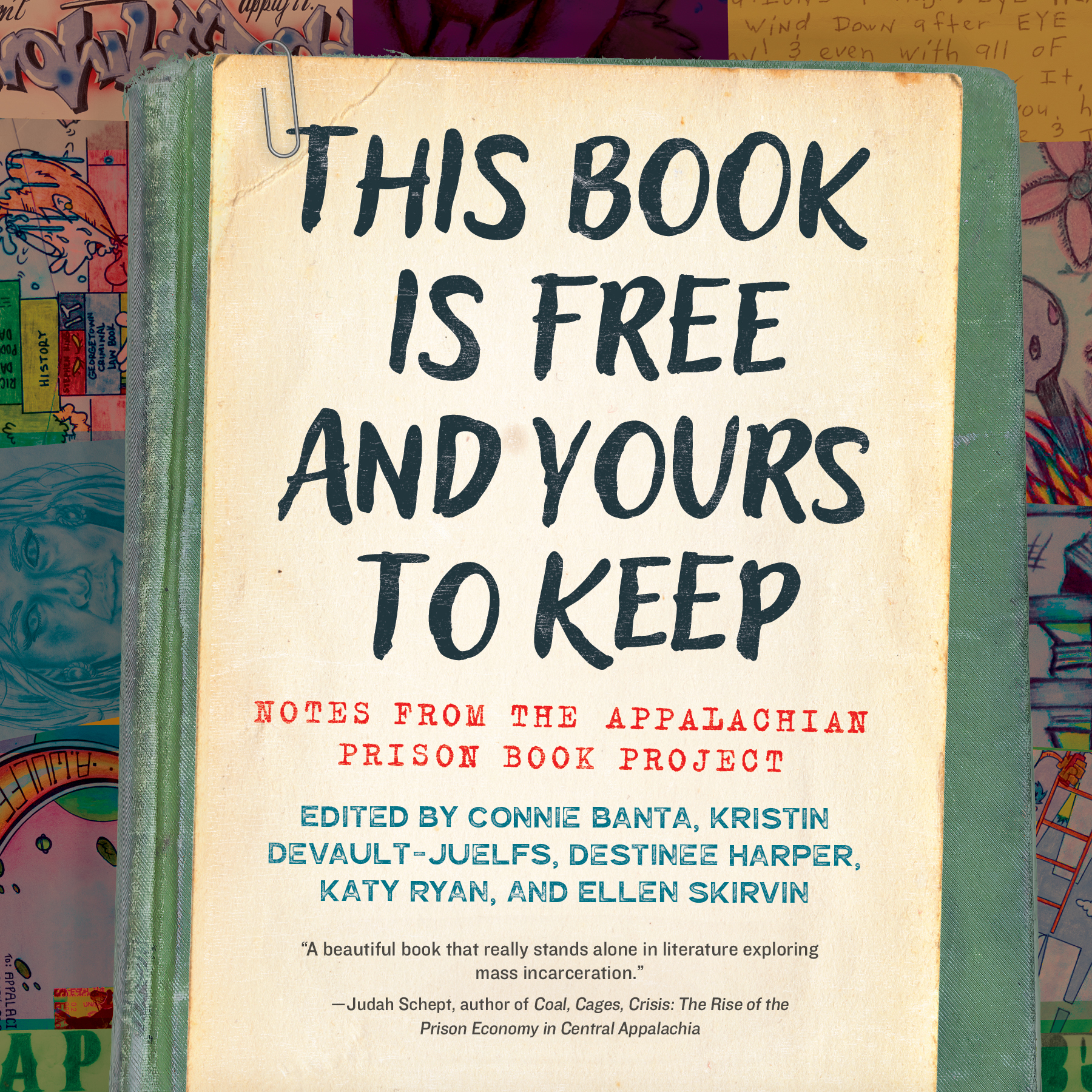
Almost Heaven

almost heaven cover

John Antonik

September 2025
290pp
32 b/w images
HC w jacket  978-1-959000-64-8
$34.99
eBook 978-1-959000-65-5
$34.99


Almost Heaven

How Bobby Bowden's Ten Years at West Virginia University Helped Him Become One of the Winningest Coaches in College Football History

Summary

Bobby Bowden is considered one of the greatest football coaches in NCAA history with 377 wins, the second among Division I coaches. In his 44 seasons as a head coach, Bowden engineered 40 winning seasons, with an astonishing 33 consecutive winning seasons as head coach of the Florida State Seminoles (1976–2009). However, before his time in Tallahassee, Bowden served as head coach of the West Virginia Mountaineers for six seasons (preceded by four years as offensive coordinator). Although he logged five winning seasons in Morgantown and had an overall record of 42–26, Bowden’s tenure was still controversial, and he was subject to very hostile treatment from some sports fans that was prompted by embarrassing losses to archrivals like Pitt. Bowden’s time coaching the Mountaineers was one of growth and development for him rather than the unchallenged dominance he would go on to display with Florida State.

Sports journalist John Antonik covers Bowden’s entire WVU tenure from 1966–75 and the circumstances, issues, difficulties, and obstacles that he had to overcome that were unique to this period in Mountaineer sports history. Additionally, Almost Heaven examines what transpired on WVU’s campus and in its athletic programs as well as nationally during the Vietnam War, campus protests, desegregation, and the complexities of the shifting NCAA landscape. Antonik paints a vivid picture of how Bowden’s time at WVU enriched him personally and professionally while putting athletics on a path toward the much greater successes that it enjoyed in the 1980s when Don Nehlen arrived. By the time he left Morgantown in the winter of 1976, following the Mountaineers’ 13–10 Peach Bowl victory over North Carolina State, which culminated in an outstanding 9–3 season, he was a far wiser and much better-prepared football coach. Those difficult lessons that Bowden learned at West Virginia led him down a path to greatness at Florida State.

Almost Heaven draws from an impressive array of primary sources, including newspaper articles; football team rosters; internal documents on recruiting; and interviews with former players, assistants, staffers, sports reporters, Bowden’s sons Tommy and Terry, and Bowden himself, prior to his passing in 2021. The year 2025 represents the 50th anniversary of his final season coaching the Mountaineers, and many of his players are now entering their golden years, making this the optimal time to tell this story.

Contents

Introduction

Prologue


1 Changing Times

2 Bowden Takes Over

3 The Riverboat Gambler

4 A Day of Infamy

5 Tragedy in Huntington

6 Kidnapping Prospects

7 Dangerous Dan

8 A Scorching in Atlanta

9 Breaking Barriers

10 ’74 Outlook Bright

11 Close Defeats

12 Hanging in Effigy

13 The Bombers

14 Back in the National Rankings

15 McKenzie’s Kick Is Good!

16 Bobby versus Lou, Part III

17 Tallahassee Bound


Epilogue

Acknowledgments

Appendix 1 West Virginia Staff 1970–75

Appendix 2 West Virginia Varsity Players 1966–75

Appendix 3 West Virginia Games 1970–75

Notes

Selected Bibliography

Index


Author

John Antonik is senior director of athletics content at West Virginia University. He is a past member of College Sports Information Directors of America (CoSIDA), the West Virginia Sports Writers, and the National Collegiate Baseball Writers associations. Antonik received a bachelor’s degree in journalism from WVU in 1990 and a master’s degree in sport management from WVU in 1992; in 2010, he was the recipient of the Paul B. “Buck” Martin Award, presented by the WVU Alumni Association to an individual who has helped to preserve and maintain West Virginia University’s traditions.

Antonik has authored four books on Mountaineer athletics: Saturday Snapshots: West Virginia University Football (WVU Press, 2015); The Backyard Brawl: Stories from One of the Weirdest, Wildest, Longest Running, and Most Intense Rivalries in College Football History (WVU Press, 2012), which was a 2012 Foreword Book of the Year finalist in the category of sports; Roll Out the Carpet: 101 Seasons of West Virginia University Basketball (WVU Press, 2010); and West Virginia University Football Vault: The History of the Mountaineers (Whitman Publishing, 2009).

Reviews

"In Almost Heaven, John Antonik masterfully documents the integral role West Virginia University played in Bobby Bowden’s journey to becoming one of the most revered and successful coaches in college football history. Bowden never shied away from a challenge—whether it was facing a gauntlet of top-ranked teams on the road or rebuilding woebegone programs into national contenders. The foundation for his fearless approach was laid in Morgantown, West Virginia."
—Mark Schlabach, ESPN reporter and collaborator of Bobby Bowden's memoir, Called to Coach: Reflections on Life, Faith, and Football

“Before he became one of just four active coaches in history to be inducted to the College Football Hall of Fame, Bobby Bowden cultivated his Division I career in Morgantown, WV. John Antonik’s Almost Heaven offers a candid look at the pivotal challenges of a young coach who ultimately became one of the game’s greatest legends. In today’s college football landscape, the story of Bowden’s WVU journey is a consequential reminder that success doesn’t always come easy and a Hall of Fame career is built through trial and error.”
—Hillary Jeffries, Director of Special Projects, National Football Foundation & College Hall of Fame, Inc.

“John Antonik’s fifth book on West Virginia University sports might just be his finest yet. As a native West Virginian, he brings a deep and invaluable understanding of WVU’s rich athletic history. Readers are given a rare, behind-the-scenes look at the challenges and triumphs that shaped Bowden’s legendary career. A must-read for any true Mountaineer fan.”
—Tony Caridi, sportscaster for West Virginia University’s Mountaineer Sports Network and West Virginia Radio Corporation’s MetroNews Radio Network

“Whether you lived through it or have heard the stories of Bobby Bowden’s time at West Virginia, this is a must-read for Mountaineer and college football fans alike. It’s a masterfully woven account of the time Bowden spent in Morgantown stuffed full of details, captivating insight and anecdotes from the key voices of the period. John Antonik effectively captures how both the triumphs and challenges of Bowden’s tenure helped to shape his future coaching success all while transporting readers to a bygone era of college athletics.”
—Keenan Cummings, Managing Editor, WVSports.com

“Authenticity is the hallmark of John Antonik’s masterfully crafted Almost Heaven. Antonik presents Coach Bowden in his own voice, enhanced by quotes from hundreds of others who contributed to his WVU story. Antonik also conveys an institutional narrative, revealing how decisions made during the 1966-75 era positioned the Mountaineers in the upper echelon of major college football. This is a fantastic read, authored by the premier interpreter of WVU sports history.”
—Frank Fear, author, Band of Brothers, Then and Now: The Inspiring Story of the 1966-1970 WVU Football Mountaineers, and co-host, Mountaineer Locker Room podcast

"John Antonik is considered the historian for the West Virginia University athletic department. He also might be an artist who paints a picture with words in Almost Heaven. With first-hand interviews and stories about the Bobby Bowden years at WVU, John pays attention to details making you feel you were also on the football field sidelines. A first-class effort."
—Doug Huff, West Virginia Sports Writers Association and retired sports editor, The Intelligencer

“Most books about Bobby Bowden focus on the Florida State days, but Antonik tackles the question of how it all began. He comprehensively addresses the point that were it not for Coach Bowden’s days at WVU, his experiences, and what he learned in Morgantown, he would not have been as successful at Florida State. Antonik explains how he had successes but also notable failures at WVU that shaped his coaching career. You cannot fully understand Coach Bowden by just focusing on Florida State; his coaching story really begins at WVU. Almost Heaven is a ‘must read’ for long-time WVU sports fans.”
—Hoppy Kercheval, the radio “dean” of West Virginia broadcasters and a founding father of MetroNews

“Bobby Bowden spent a decade as a coach for the West Virginia University Mountaineers. During these formative years, he faced many challenges: poor facilities, geographic isolation in recruiting, dreaded one-year contracts, biting fan criticism, and a ramped-up strength of schedule. Almost Heaven details these difficulties and shares the lessons Coach Bowden learned while in charge of the WVU football program. It offers insight into one man’s arduous path to becoming one of history’s greatest and winningest college football coaches.”
—Dr. H. Wayne Lambert, professor and vice chair of anatomy in the department of pathology, anatomy, and laboratory medicine at West Virginia University School of Medicine; chair of the West Virginia State Anatomical Board; and avid WVU sports fan


EmailFacebookInstagramPinterestTwitter

Weaving a Fabric of Unity
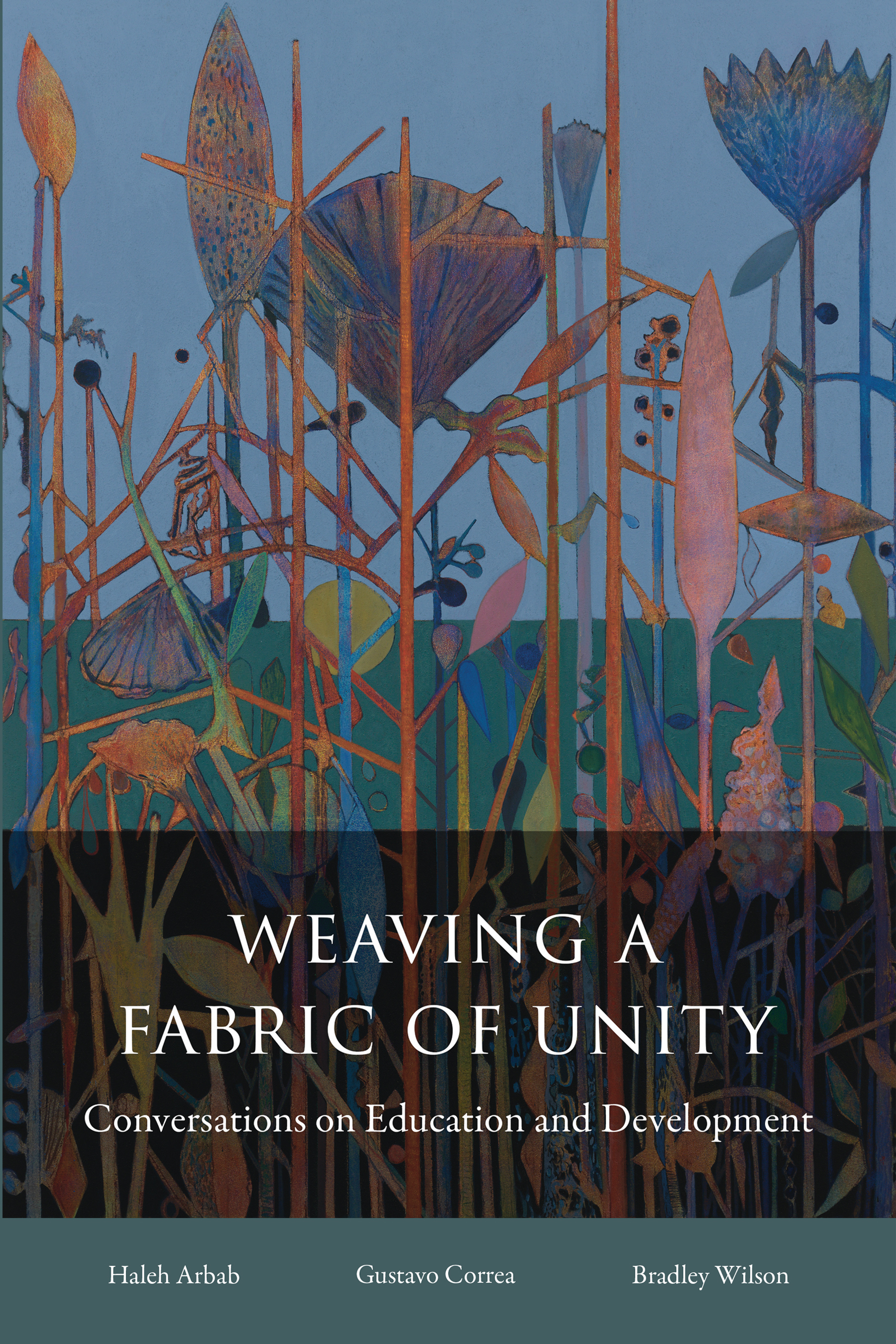

softie cover

Haleh Arbab, Gustavo Correa, and Bradley Wilson

March 2025
190pp
PB  979-8-9907777-0-5
$22.99
 

Distributed for Center for Research in Education for Development, Inc. (CRED)


Weaving a Fabric of Unity

Conversations on Education and Development 

Summary

Weaving a Fabric of Unity shares the story of the pioneering enterprise that came to be identified as FUNDAEC (the Foundation for the Application and Teaching of Science), highlighting five decades of stories, learning, and insight from key individuals central to shaping its evolution. The book outlines FUNDAEC’s unique conceptual and methodological approach, which is focused on the releasing of human potentialities and the integration of theory and practice, bringing the reader on the journey of how the organization created one of Latin America’s most innovative curriculum in rural development. It shares how FUNDAEC’s focus on raising up individuals and communities dedicated to the promotion of community well-being supported its efforts to organically scale over the last few decades, reaching hundreds of thousands of students across Colombia and being adopted in over a dozen countries to support diverse populations working towards the collective realization of a dignified future.

Contents

Preface

Introduction

Weaving Our Stories Together

Textiles of Trust

Interwoven Commitments

A Living Tapestry

Releasing Human Potentialities

Picking Up the Threads

Postscript

Bibliography

Authors

Haleh Arbab was with FUNDAEC for over twenty years, including ten years as director of its Centro Universitario de Bienstar Rural (The University Center for Rural Wellbeing). She was director of the Institute for Studies in Global Prosperity (ISGP). Arbab is currently the founding director of the Center for Research in Education for Development (CRED), where her work focuses on fostering community-based approaches to research and education internationally. She holds a doctor of education from the Center for International Education at the University of Massachusetts.

Gustavo Correa was one of the founders of FUNDAEC in 1974 and served as its director from 1988 to 2005. In addition to being an advisor to FUNDAEC, he is currently working with Project Hope, a network of 1,500 people he mobilized across 800 initiatives to quickly respond to the food insecurity problems triggered by COVID-19 in Colombia. He holds a master’s in public administration from the Kennedy School at Harvard University.

Bradley Wilson is associate professor of geography and executive director of the West Virginia University Center for Resilient Communities. With his students, he has established a robust action research program focused on cooperative economics, food justice, food system development, community health, and environmental justice in West Virginia and Appalachia. For the past five years, Wilson has collaborated with FUNDAEC on projects focused on its educational programs and building the capacity of its research teams working on food sovereignty in Norte del Cauca. He has a PhD in geography from Rutgers University.

Reviews

“The story of FUNDAEC in Colombia is one of the most inspiring educational processes of the 20th century and is vitally important today. Every student of development economics should read this book.”

—Nava Ashraf, Professor of Economics, London School of Economics


Weaving a Fabric of Unity is a timely and brilliant gift to those of us concerned with education and social transformation. With rising recognition that decades of educational programs and initiatives aimed at fostering global prosperity and change have fallen short of realizing their initial aspirations, many in the field of education are searching for viable and impactful alternatives. The story of FUNDAEC is an urgent call to reframe the purpose of education itself.”

—Shabnam Koirala-Azad, Dean of Education, University of San Francisco


EmailFacebookInstagramPinterestTwitter

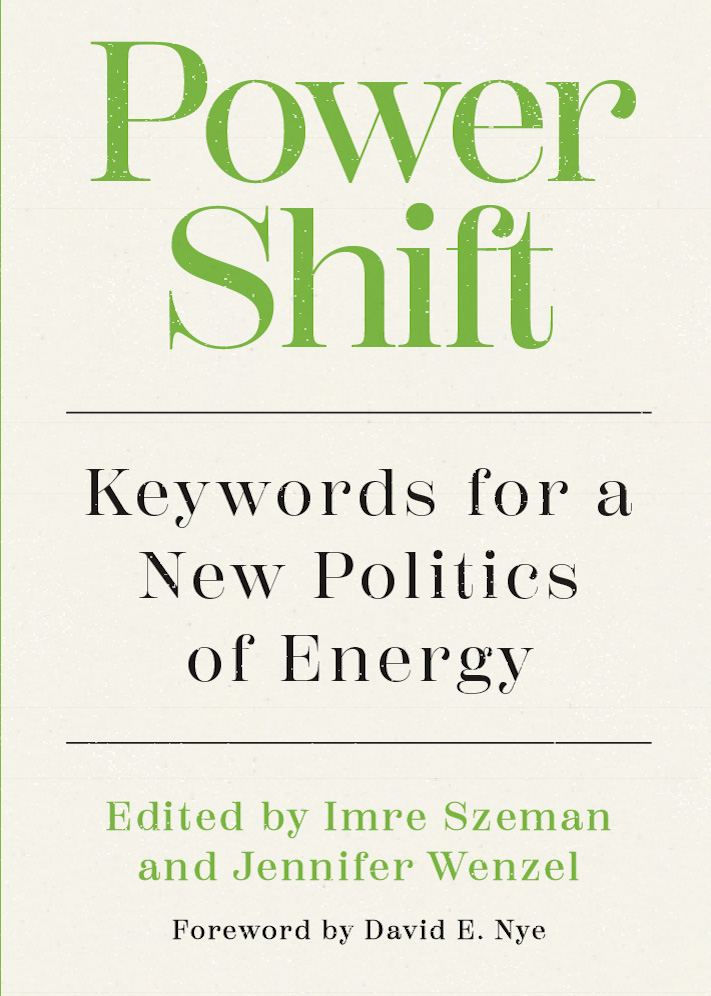
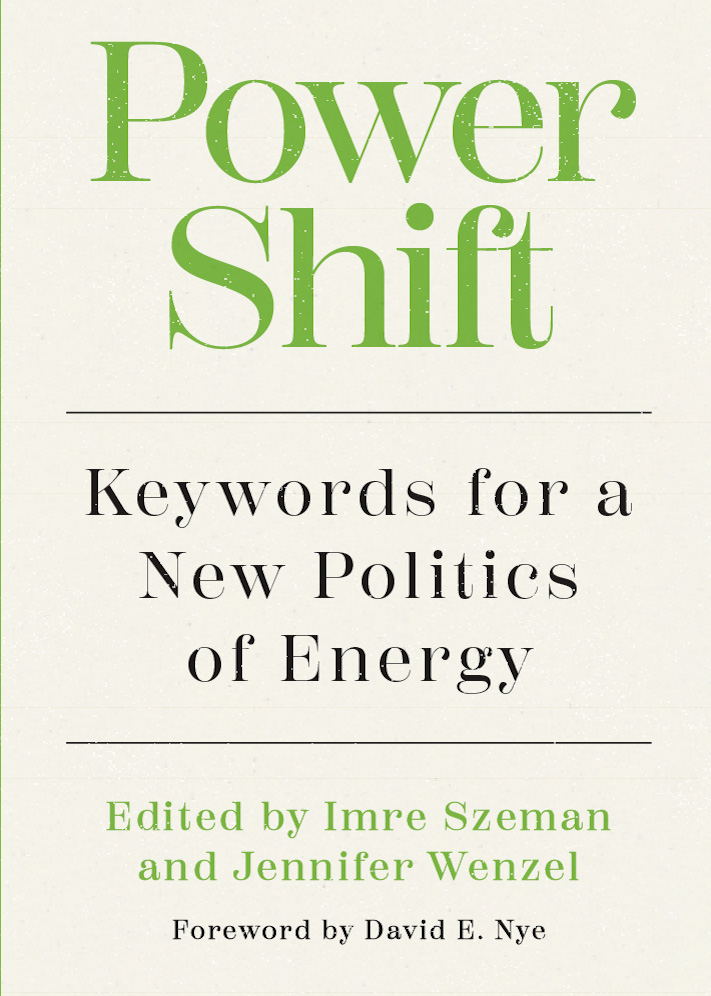
Power Shift

Power Shift cover

Edited by Imre Szeman and Jennifer Wenzel

April 2025
374pp
PB  978-1-959000-49-5
$26.99
eBook 978-1-959000-50-1
$26.99

Cloth 978-1-959000-51-8

$55.99

Energy and Society series


Power Shift

Keywords for a New Politics of Energy

Summary

Power Shift traces recent social and cultural shifts in how we understand and imagine energy, the environment, and the challenges of global warming. Across the globe, the need to transition to renewables has become the guiding reality of our energy present and future, despite continuing resistance to change. But what does this moment of energy transition look like for those struggling to make it happen in a way that benefits every individual and all communities? 

Featuring brief essays on 101 key terms by scholars, artists, and activists from around the world and across disciplines, Power Shift offers an expansive, kaleidoscopic guide to the history of petromodernity, recent technological and social developments, and pathways to new energy futures. The book offers new insights into the emergent politics of energy, contrasting today’s environmental and climate movements with the geopolitical contests of the Cold War era. It explores the still unfolding story of energy transition by focusing on the ongoing struggles of communities and individuals against decisions made by corporations, governments, and international organizations.

Contents

Foreword
David E. Nye

How to Use This Book

Introduction
Imre Szeman and Jennifer Wenzel

2040
What genre will the future be?
Philomena Polefrone

Abandoned
Who is tending to the present?
Liz Harmer

Action
What becomes possible when climate action fails?
Stephen Collis

Africa
Energy for whom and at what cost?
Erin Dean and Kristin D. Phillips

Air Conditioning
Has air conditioning become a technology of citizenship?
Anushree Gupta and Aalok Khandekar

Airplane
Why might we still need to fly?
Parke Wilde

Alberta
How many nuclear bombs does it take to develop an oil field?
Jeremy J. Schmidt

Animals
How do animals organize?
Jaimey Hamilton Faris

Art
How are art and energy related?
Carolyn Fornoff

Autonomy
Why do we want energy autonomy?
Darin Barney

Bankrupt
Is bankruptcy the crisis we need?
Caleb Wellum

Battery
Can batteries foster a radically just energy transition?
Isaac Thornley

Behavior
Why do appeals to values usually fail to change behavior?
Stéphane La Branche

Black
What are the Black politics of energy?
Walter Gordon

Blockade
Why are blockades an essential form of climate action?
Joshua Clover, Deedee Chao, and Emily Rich

Carbon Management
Is carbon management a moral imperative or a moral hazard?
Rebecca Tuhus-Dubrow

Civil Disobedience
What rules must be broken to build a better world?
Alicia Massie

Class
Why is climate change a class issue?
Valerie Uher

Clean
What does clean energy really mean?
Gökçe Günel

Commons
What forms of governance could solve the tragedy of the commons?
Alfonso Giuliani

Communication
What are effective strategies for climate communication?
Andrew Revkin

Community
Is it still possible to trust other people?
Darren Fleet

Coronavirus
What does the coronavirus reveal about the politics of climate crisis?
Helen Petrovsky

Corporation
Will an energy transition help fossil fuel companies?
Cameron Hu

Cuba
What can Cuba teach us about climate action? 
Andrew Pendakis

Cycling
Is cycling a solution?
Stacey Balkan

Decolonization 
What can OPEC teach us about the link between energy and decolonization?
Sanaz Sohrabi

Degrowth
Is degrowth inevitable?
Dominic Boyer

Democracy
To save the planet, do we need more democracy, or less? 
Robert Danisch

Design
What does design make possible?
Keller Easterling

Development
Can development be green?
Siddharth Sareen

Digital
How does the digital reshape the material realm?
Shane Denson

Documentary
Why is uncertainty useful?
Thomas Pringle

Economy
Is economic expertise important?
Kylie Benton-Connell

Education
How should energy educators respond to youth climate activism?
Carrie Karsgaard

Electricity
How does electricity organize society?
Daniela Russ

Evidence
How is climate evidence used?
James Wilt

Expert
What counts as effective climate expertise?
Shane Gunster

Extinction
Is there a relation between energy and extinction?
Ashley Dawson

Family
What is the environmental future of the family?
Eva-Lynn Jagoe

Farm
Whose muscles power our food system?
Emily Pawley

Finance
Can we create an economy based on care?
Max Haiven

Fire/Bushfire
What can we learn from fire?
Meg Samuelson

Gaslighting
How has gaslighting circumscribed our environmental imagination?
Grace Franklin

Gender
Why is gender important to energy transition?
Petra Tschakert

Geoengineering
Is geoengineering inevitable?
Drew Pendergrass

Globalization
How does energy matter to globalization?
Tanner Mirrlees

Green New Deal
Will the Green New Deal save us from extinction?
Todd Dufresne

Greta
Why is intersectional agility Greta Thunberg’s rhetorical superpower?
Sheena Wilson

Habit
What kinds of friction can disrupt the status quo?
Rhys Williams

India
Can there be a just transition in India?
Swaralipi Nandi

Indigenous
How are Indigenous and extraction related?
Deena Rymhs

Indigenous Activism
What is the power of radical care?
Amber Hickey

Industrial Revolution
What does a focus on jobs mean for energy transition?
Cara Daggett

IPCC
What can the IPCC tell us about the relationship between knowledge and action?
Marcela da Silveira Feital and Jessica O’Reilly

Japan
Why do fears of energy scarcity obstruct energy transition?
Hiroki Shin

Justice
What kind of justice is energy justice? 
Pauline Destrée and Sarah O’Brien 

Keep It in the Ground
How can we build momentum to keep fossil fuels in the ground?
Angela Carter

Law
How can we change the law to prevent the climate crisis?
Michael B. Gerrard

Lifestyle
Are lifestyle changes a waste of time?
Mark Simpson

Local
How do local climate politics work best?
Brian Cozen and Danielle Endres

Mining
Why are the ways that we imagine mining important?
Gianfranco Selgas

Music
How are listening and energy related?
Sherry Lee and Emily MacCallum

Nationalism
What is the impact of transition on nationalism?
Zeynep Oguz

Natural Gas
Can natural gas be made visible, or viable?
John Szabo

Neoextractivism
What comes after neoextractivism? 
Donald V. Kingsbury

Net Zero
Do we really want to live in a net-zero world?
Mijin Cha

Nonlinear
Can nonlinear imaginative practices help us survive nonlinear catastrophes?
Katy Didden

Normal
What will be normal after fossil fuels?
Stephanie LeMenager

North Dakota
How does oil extraction reshape space and time?
Kyle Conway

Online
When we are online, what lines are we on?
Anne Pasek

Organize 
Can the master’s tools dismantle the master’s house?
Zainab Ashraf, Rachel Krueger, Guy Brodsky, Lesley Johnston, and Joy Hutchinson 

Paris Agreement
Does the Paris Agreement still matter?
Amy Janzwood

Permafrost
What do you do when the ground starts to melt beneath your feet?
Brigt Dale

Pipeline
Why is opposition to pipelines important?
Kai Bosworth

Planet
What happens to politics on an increasingly unlivable planet?
Leah Aronowsky

Populism
What can energy politics learn from populism?
Rodrigo Nunes

Protest
Why is protection more important than protest in Indigenous struggles? 
Kimberly Skye Richards

Renewable
What do renewables renew?
Marianna Dudley

Resource
Can waste serve as a resource for energy transition?
Kesha Fevrier and Anna Zalik

Retrofit
What does it mean to breathe life into buildings?
Fallon Samuels Aidoo and Daniel A. Barber

Sabotage
Can sabotage ever be more than a romantic gesture?
Ted Hamilton

Scale
What if scale were about equity rather than magnitude?
Cymene Howe

Scales
What can the human voice tell us about the scale of climate change?
Lisa Moore

Scenario Planning
Is the future a waste of time?
Josefin Wangel

Science
Do scientists believe that science matters?
Adam Sobel

Settler Colonialism
How can modern energy systems be indigenized?
S. Awâsis

Shipping
What would actual free shipping look like?
Christiaan De Beukelaer

Solar Farm
Can solar farms foster energy justice, instead of obstructing it?
Dustin Mulvaney

Solidarity
How can solidarity catalyze energy democracy?
Ana Isabel Baptista

Sport
Can sport be untangled from oil?
Graeme Macdonald

Storytelling
What can storytelling really do?
Misty Matthews-Roper

Sustainability
Does sustainability’s popularity indicate the failure of environmentalism?
Stephanie Foote

Trans-
What is trans- about transition?
Emerson Cram

Transitions
If transition is inevitable, will it be just?
Matthew S. Henry

Treaty
How can treaties help states transition away from fossil fuels?
Carlos Larrea, Bhushan Tuladhar, and Mohamed Adow

Vegan
What does transition look like on your plate?
Allisa Ali and Jordan B. Kinder

Waste
What is at stake in using waste for energy?
Aarti Latkar and Aalok Khandekar

Water
How can microbe metabolism foster sustainable infrastructures?
Melody Jue

Wind
What color is the wind?
David McDermott Hughes

Youth
Why is youth culture indispensable to energy transition?
Derek Gladwin

Acknowledgments

Contributors
Alternative Index

Author

Imre Szeman is director of the Institute for Environment, Conservation, and Sustainability and professor of human geography at the University of Toronto Scarborough. He authored books such as On Petrocultures: Globalization, Culture, and Energy and Futures of the Sun

Jennifer Wenzel is professor in the Department of English and Comparative Literature and the Department of Middle Eastern, South Asian, and African Studies at Columbia University. Her books include The Disposition of Nature: Environmental Crisis and World Literature and Bulletproof: Afterlives of Anticolonial Prophecy in South Africa and Beyond.

Contributors 

Fallon Samuels Aidoo, Leah Aronowsky, Sākihitowin Awāsis, Stacey Balkan, Ana Isabel Baptista, Daniel A. Barber, Darin Barney, Kylie Benton-Connell, Kai Bosworth, Dominic Boyer, Guy Brodsky, Rebecca Byrnes, Angela Carter, J. Mijin Cha, Deedee Chao, Joshua Clover, Stephen Collis, Kyle Conway, Brian Cozen, E. Cram, Cara New Daggett, Brigt Dale, Robert Danisch, Ashley Dawson, Christiaan De Beukelaer, Erin Dean, Shane Denson, Katy Didden, Marianna Dudley, Todd Duresne, Keller Easterling, Danielle Endres, Jaimey Hamilton Faris, Marcela da Silveira Feital, Kesha Fevrier, Darren Fleet, Carolyn Fornoff, Grace Franklin, Michael B. Gerrard, Alfonso Giuliani, Derek Gladwin, Gökçe Günel, Shane GUnster, Anushree Gupta, Max Haiven, Ted Hamilton, Liz Harmer, Matthew S. Henry, Amber Hickey, Cymene Howe, Cameron Hsu, David Hughes, Joy Hutchinson, Eva-Lynn Jagoe, AMy Janzwood, Lesley Johnston, Melody, Carrie Karsgaard, Aalok Khandekar, Jordan B. Kinder, Donald Kingsbury, Rachel Krueger, Stéphane La Branche, Sherry Lee, Stephanie LeMenager, Emily MacCallum, Graeme Macdonald, Alicia Massie, Misty Matthews-Roper, Tanner Mirrlees, Lisa Moore, Dustin Mulvaney, Swaralipi Nandi, Rodrigo Nunes, Sarah O'Brien, Jessica O'Reilly, Zeynep Oguz, Anne Pasek, Emily Pawley, Andrew Pendakis, Helen Petrovsky, Kristin D. Phillips, Philomena Polefrone, Thomas Patrick Pringle, Andrew Revkin, Emily Rich, Meg Samuelson, Kimberly Skye Richards, Daniela Russ, Deena Rymhs, Siddarth Sareen, Jeremy Schmidt, Gianfranco Selgas, Hiroki Shin, Mark Simpson, Adam Sobel, Sanaz, Sohrabi, John Szabo, Isaac Thornley, Petra Tshakert, Rebecca Tuhus-Dubrow, Bhushab Tuladhar, Valerie Uher, Josefin Wangel, Caleb Wellum, Parke Wilde, Rhys Williams, Sheena Wilson, James Wilt, Anna Zalik

Reviews

“We urgently need Power Shift if we are to find our way forward toward a decarbonized future.”
—David E. Nye, author of Seven Sublimes and Consuming Power: A Social History of American Energies


Attachment
EmailFacebookInstagramPinterestTwitter

The New American Small Town

New American Small Town cover

Jennifer Mapes

June 2025
178pp
PB  978-1-959000-47-1
$26.99
eBook 978-1-959000-48-8
$26.99


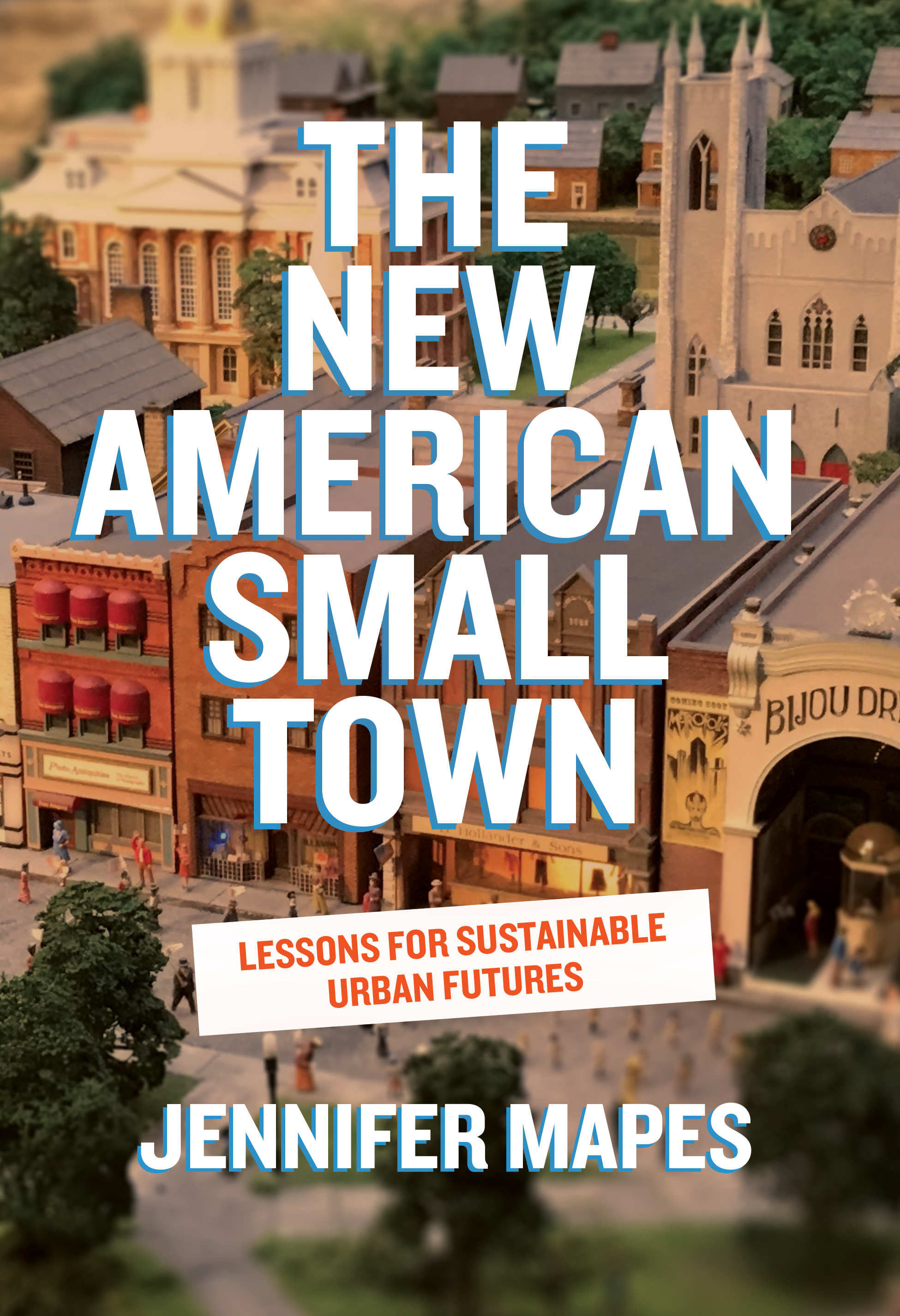
The New American Small Town

Lessons for Sustainable Urban Futures

Summary

What makes a sustainable city? When planners and politicians talk about making cities more sustainable, they often describe changes to large urban centers like New York City or Los Angeles. Yet when they suggest solutions for sustainable living, they talk about walkable neighborhoods, traditional architecture, and diverse land uses; they talk about small towns. Planners and developers are now working to introduce a “small-town feel” into our large cities and suburbs in hopes that it will provide a sense of community and reduce the use of automobiles.

So, what of small towns themselves? We don’t talk about these places as much. They are often assumed to be utopias of the past or crumbling ghost towns of the present day rather than places with potential for sustainable living. This book critically examines narratives of American small towns, contrasting them with lived experiences in these places, and considers both the myth and reality in the context of current urban challenges. Interweaving stories from and about U.S. small towns, it offers lessons in sustainable urbanism that can be applied both in the towns themselves and to the larger cities and suburbs where most Americans now live. 

Contents

List of Figures

Introduction: The Myth of the American Small Town
Chapter 1: Defining and Describing Small Towns in the US
Chapter 2: The Small Town in the American Imagination
Chapter 3: New Urbanism and the New Small Town
Chapter 4: Small Towns and the Rise of Donald Trump
Chapter 5: Dreaming Big in Small Towns
Chapter 6: Sustainable Futures for Ordinary Cities
Conclusion: Transforming the American Small Town
Acknowledgments
Notes
References

Author

Jennifer Mapes is assistant professor of geography at Kent State University. A community geographer, she researches with local stakeholders to help build more sustainable, just futures. Jen and her family live, work, and play in downtown Kent, Ohio.

Reviews

"The book offers hope-filled portraits of small towns as livable, sustainable, and diverse places and serves as an important corrective to the media narrative of alienated, left-behind rural voters." 
—Mark Bjelland, author of Good Places for All


EmailFacebookInstagramPinterestTwitter

north by north/west

north by north/west cover

Chris Campanioni

May 2025
238pp
PB  978-1-959000-43-3
$22.99
eBook 978-1-959000-44-0
$22.99


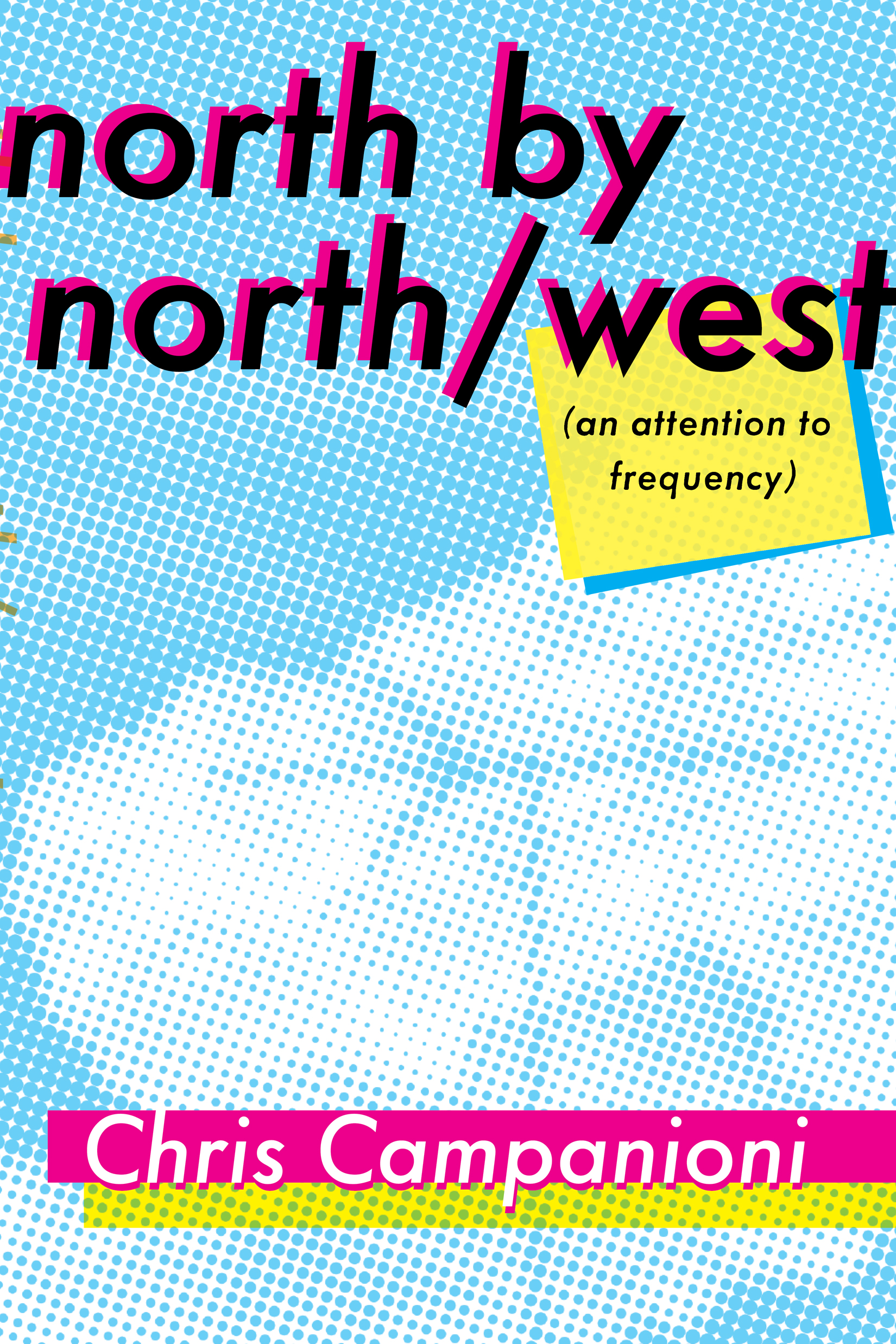
north by north/west 

(an attention to frequency)

Summary

north by north/west is a hybrid work of creative nonfiction assembled as several iterative sequences—a discontinuous itinerary—of exile. Harnessing both montage and collage to represent the incohesive experience of being between cultures, categories, and language, this book is a personal, critical, and autoethnographic exploration of diasporic identity formation and creative expression amidst the cultural and political impacts of Cold War colonialism and fragmentation. As the narrator begins work on a rough translation of the 1959 film North by Northwest, focal points surface through textual correspondences with distant coordinates, shifting between close readings of Whitney Houston’s early music videos, current events reportage, illness journals, eighties spy movies, the most recent solar eclipse, Alfred Hitchcock’s unproduced films, Cold War “stay-behind operations,” an ill-fated party at the Festival de Cannes, and family accounts of migration. These meticulously arranged narrative threads—harnessing elements of a novel alongside poetry, photographs, and field notes—attempt to discompose the epistemology of the West/Global North in order to conceptualize a genre of work by the children of exiles who have been called “the post-dictatorship generation.” 

Contents

VHS (translator’s note)

I was born unfinished

< sequence 1

interlude /

a second (sequence) >

we the people

matt damon’s resemblance (a sonata)

what is a title page?

a brief layover (cary grant with his pants down)

close, up

Author

Chris Campanioni was born in Manhattan and grew up in a very nineties New Jersey. The son of exiles from Cuba and Poland, Campanioni is a writer, multimedia artist, and instructor. He is a recipient of the International Latino Book Award for his debut novel, Going Down (Aignos, 2013); the Pushcart Prize for “Soft Opening” from his cross-genre collection Death of Art (C&R Press, 2016); and the 2013 Academy of American Poets College Prize. 

Reviews

"For Chris Campanioni, memory is a kind of rewinding of the tape of one’s life—a tape whose production we rarely have a say in—but the rewinding is power in itself as it keeps alive something irrevocably lost."
—Eric Dean Wilson, author of After Cooling: On Freon, Global Warming, and the Terrible Cost of Comfort

"Chris Campanioni’s north by north/west is a conceptually roving surveillance of the self through the language of technology and mechanical reproduction. Evading classification at every turn, this deeply associative text is migratory and nationless, if genre can be understood as a state from which to emigrate. Campanioni’s writing—in the form of personal and intellectual contraband—deepens and dazzles in this remarkable performance."
—Richard Scott Larson, author of The Long Hallway

"This work is a tour-de-force of creative critical praxis, a work that establishes a new genre for exiles and immigrants, a machine for generating ideas and encouraging speculation. north by north/west is constantly positing what it might be and do by questioning labels, genres, and sources in ways that open up current academic discourse. There is nothing else that I know of quite like this. "
—Christine Hume, author of Everything I Never Wanted to Know 


EmailFacebookInstagramPinterestTwitter

Dispatch from the Mountain State

dispatch from the mountain state cover

Marc Harshman

April 2025
108pp
PB  978-1-959000-41-9
$16.99
eBook 978-1-959000-42-6
$16.99


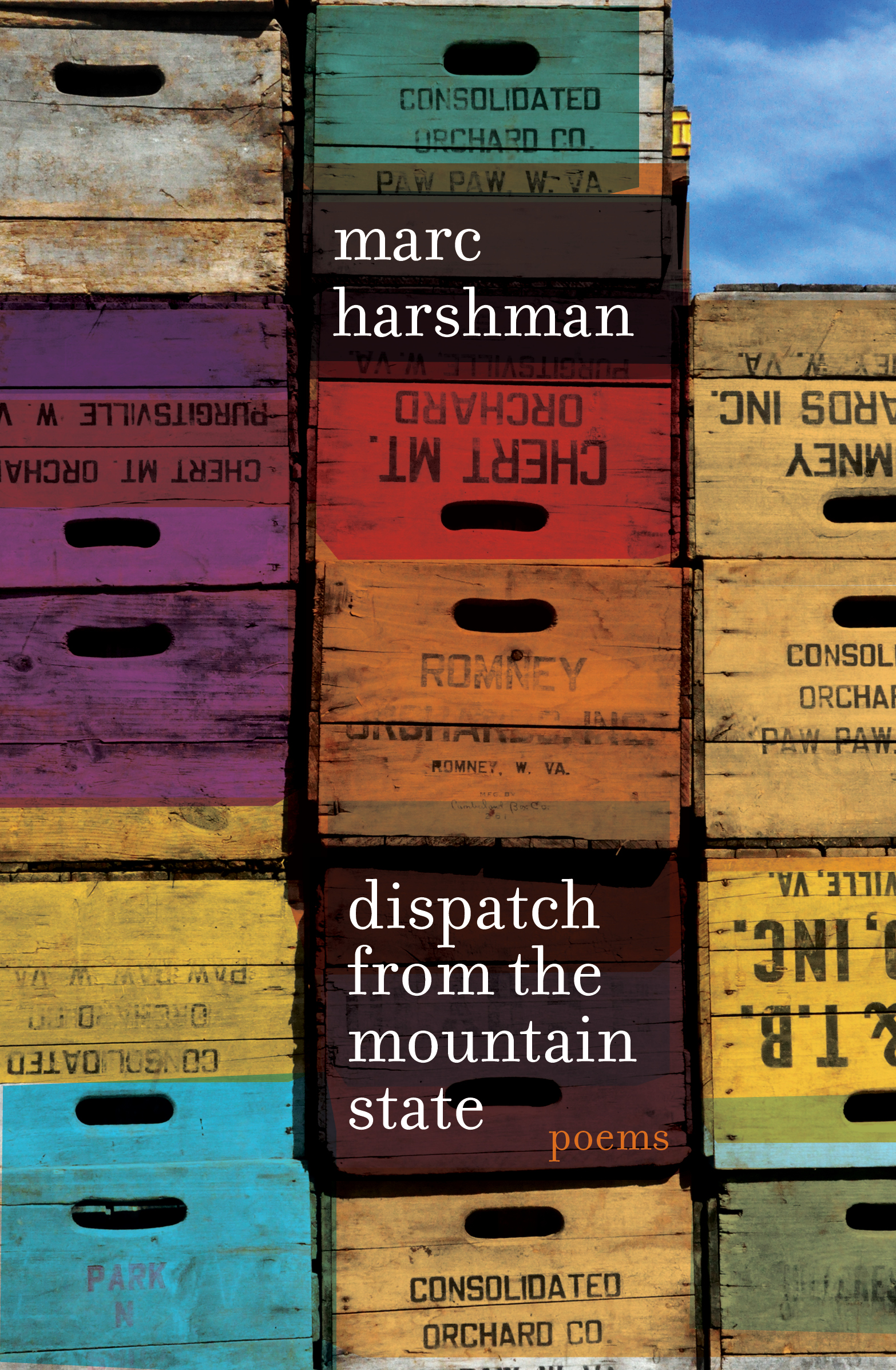
Dispatch from the Mountain State

Poems

Summary

Dispatch from the Mountain State encompasses the trademark themes of a mature poet—death, despair, dread, and the seeming randomness with which all of these come into life. The dispatches provide, if sometimes obliquely, a keen awareness of the troubled times within which we live, whether the flashpoint be race, the recent pandemic, or the reckless onslaught of the Appalachian mining industry, which is masterfully addressed in the long poem, “The Breach.” Harshman’s distinctive vision remains both surreal and familiar, whether expressed in a sonnet or the more common free-verse characteristic of most of his work. 

This collection of over forty poems sings with a fluid voice and dazzles with imagery that surprises and rings true, often underlain by and intertwined with the darker threads of our common living and dying as contemporary Appalachians. It is rare to find a poet like Harshman, who is deeply connected to the life of rural America and yet writes poetry untouched by any sentiment for the old ways found there. 

Contents

Acknowledgments

First

Dispatch from the Mountain State

The Apple Trees Were in Blossom

River

Beech Bottom, West Virginia

Hunger

This Light

Black and White

Reading 

Storm Lyrics

Some Day

Polly

Taking It All on Faith

Dancing Below the Curious Hills

Once More Home

Second

Ancestry

I Come to the Garden Alone

Where She Lives

Well Enough

Wake

Headlines

The Door Open

Back to the Garden

Jackson Pollock and the Starlings . . . 

Insomnia

Chapel    

Tinnitus

Astonished

Flight Behavior

Haying    

Politics

Blue in Green    

Grandmother Loved to Dance    

Late October    

Skeletal

Beauty and . . . 

Third

A Breach

Fourth

Heart Work

Just Outside the Grocery a Boy with a Gun

April 17, Romney Road

Not a Boy Scout

Surrender

Nowhere Beyond

The News and the History

Reminders
 

Author

Marc Harshman is poet laureate of West Virginia. He has published eight collections of poetry, including the award-winning titles Woman in Red Anorak and Believe What You Can. He is also the author/coauthor of fourteen children’s books. Harshman was recently named the Appalachian Heritage Writer for 2024 by Shepherd University’s Appalachian Studies program. He holds degrees from Bethany College, Yale Divinity School, and the University of Pittsburgh. He lives in Wheeling. 

Reviews

"In these necessary poems, Marc Harshman masterfully travels the vast chasm between a full life and everything dead but still remembered, providing fortunate readers with a blueprint, a map, a simple reason to keep climbing, no matter how many apple trees throw us down, proving yet again, there is no substitute for experience. And there is no experience too big or small for words."
—Frank X Walker, author of Load in Nine Times: Poems and Affrilachia: Poems

"Marc Harshman has long been one of our best poets but with Dispatch from the Mountain State he achieves new heights. This is epic storytelling told in intimate moments that articulate the complex heart of Appalachia through unforgettable imagery and keen observations. A stunning, heartbreaking, and ultimately healing collection." 
—Silas House, Kentucky Poet Laureate

"Unflinching, Dispatch from the Mountain State wrestles with contemporary chaos, but illuminates the sweet stillness alive under it; mourns our desecrated natural world, but reminds us it’s the sacred that’s eternal.  The sequence 'The Breach' is possibly the most original and unforgettable poetic treatment of water and extractive industries I have ever read."  
—Ann Pancake, author of Me and My Daddy Listen to Bob Marley: Novellas and Stories

Praise for Believe What You Can (2018, WVU Press):  “Believe What You Can overflows with rich lines and vivid images as the poet laureate of West Virginia speaks to classic concerns of loving the land, struggling to thrive, and holding on to what can be believed.”
—Ron Houchin, author of The Man Who Saws Us In Half: Poems


EmailFacebookInstagramPinterestTwitter

Enraptured Space

enraptured space cover

Kathryn J. Kirkpatrick

March 2025
202pp
PB  978-1-959000-45-7
$24.99
eBook 978-1-959000-46-4
$24.99


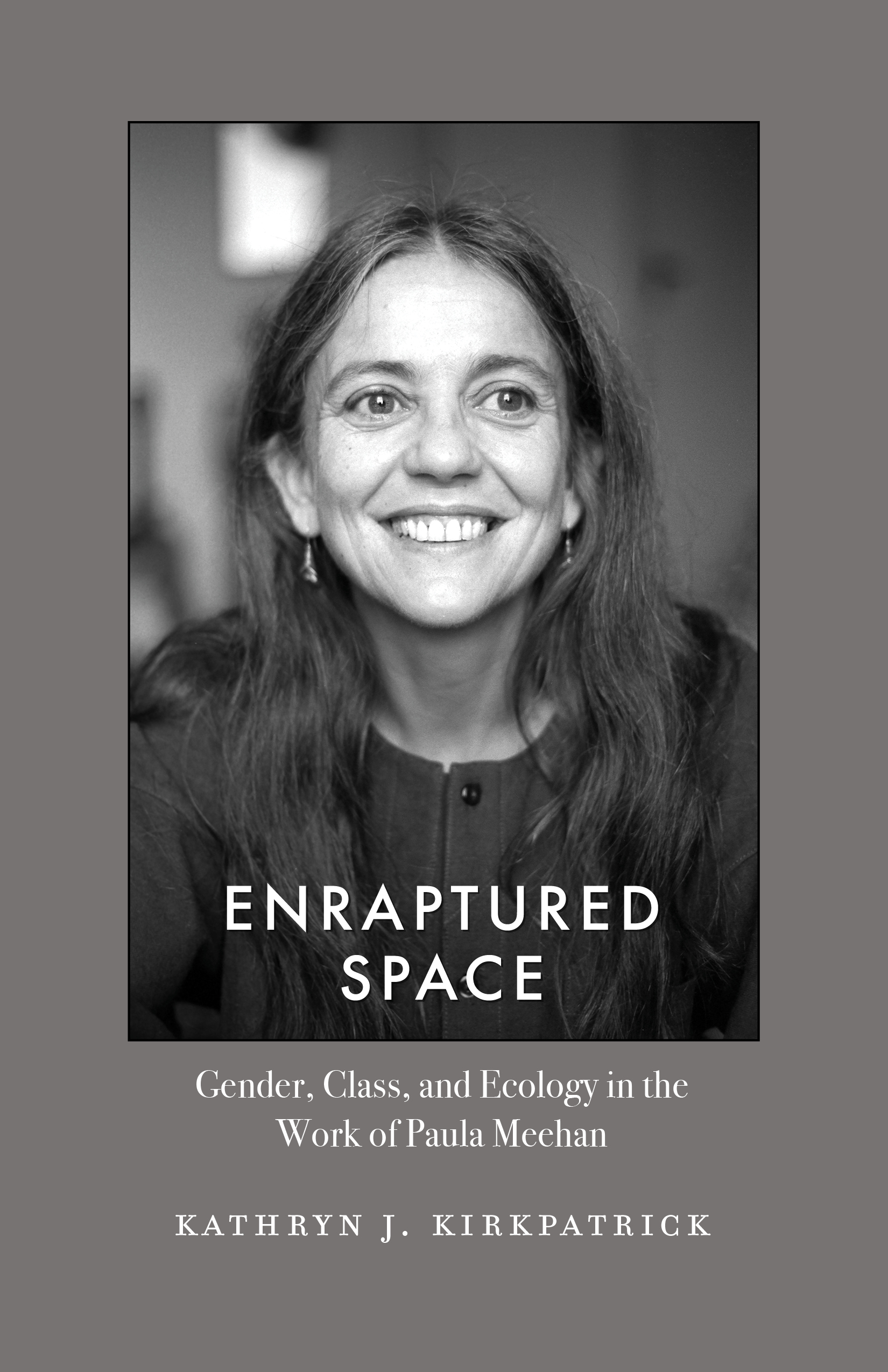
Enraptured Space

Gender, Class, and Ecology in the Work of Paula Meehan

Summary

In the first book-length study of Paula Meehan, one of Ireland’s leading contemporary poets emerges as an original voice whose perspectives on gender, class, and ecology are transforming the Irish literary landscape and beyond. Drawing on her own lived experience as a practicing poet, Kathryn J. Kirkpatrick explores how scholarship is grounded in an imaginative exchange between the words on the page and the material conditions of the scholar who works to inhabit them. With chapters of literary analysis swimming in a conversation between two poets, this book breaches the boundaries between criticism and memoir, suggesting ways that every scholar is transformed by the subjects they study. 
In Paula Meehan, Kirkpatrick has found a powerful poet to both study and love, and her reading of Meehan’s poetry and prose through the lenses of gender studies, the environmental humanities, and social class offers a passionate endorsement of Meehan’s radical interventions in the canon of Irish poetry. This work explores eight volumes of Meehan’s poetry, including Dharmakaya, Painting Rain, and Geomantic. 

Contents

Acknowledgments
Introduction: In Medias Res
Chapter 1: Witnessing Class Trauma
Chapter 2: Resisting Environmental Injustice
Chapter 3:
Toward an Animistic Vision
Chapter 4: Restoring the Garden
Chapter 5: Beyond Human Exceptionalism
Chapter 6:The Shamanic Poet
Afterword
Works Cited
Index
 

Author

Kathryn Kirkpatrick is professor of English at Appalachian State University. She is the author of seven collections of poetry, most recently The Fisher Queen: New & Selected Poems, as well as the editor of Border Crossings: Irish Women Writers and National Identities and co-editor of Animals in Irish Literature and Culture.

Reviews

"A polished, moving, deeply intelligent study of Paula Meehan’s poetry, which goes beyond a single poet’s life and work to illuminate an entire culture....I am unaware of another seriously academic study of a contemporary poet’s work written by another poet."

—Maureen O’Connor, University College Cork and author of Edna O’Brien and the Art of Fiction


EmailFacebookInstagramPinterestTwitter

Blue Futures, Break Open

blue futures, break open cover

Zoë Gadegbeku

March 2025
378pp
PB  978-1-959000-39-6
$19.99
eBook 978-1-959000-40-2
$19.99


Blue Futures, Break Open

A Novel

Summary

Blue Basin Island is the final resting spot of formerly enslaved Africans whose souls have flown from Earth—not to heaven or purgatory but toward freedom and a new life. Lucille, the island’s seamstress, takes two forms. She lives among the inhabitants in human form and, along with the evil-repelling blue of the houses, her divine form protects people from the violence of the their former lives. Yet, even there, outside of time, the souls are not totally insulated from the world in which they were enslaved. Each time a Black person anywhere is harmed, a piece of Blue Basin disintegrates: an earthquake leaves hundreds of thousands dead, and bricks crumble on the island; when police kill a Black child asleep in her bed, the blue paint on homes throughout the island drips and then runs from the walls. Lucille must hold the island together, but she struggles to juggle the responsibility of ensuring everyone’s safety while also seeking and losing her own private love. Grounding the story in African folklore and dipping into the rich literary tradition around African people with the power of flight, Zoë Gadegbeku visualizes the destination at the end of the flight and the new life that awaits them.
 

Author

Zoë Gadegbeku is a Ghanaian writer. She received an MFA in creative writing from Emerson College and was a fellow at the Callaloo Creative Writing Workshop. Her writing has appeared in Saraba magazine, AFREADA, Blackbird, The Washington Post, and the anthology Pan African Spaces: Essays on Black Transnationalism. This is her first book. 

Reviews

"Blue Futures, Break Open is a challenging, dazzling novel, combining elements of allegory, poetry, history, and folktales. It levitates as it decenters, gesturing toward and embodying unquantifiable resilience and loss."
 —Foreword Reviews (starred review)

“Beautifully written . . . Blue Futures, Break Open speaks to the power and possibility of women’s self-determination to shape fate.”
—Kirsten Imani Kasai, author of The House of Erzulie

“There is something rooted in history, far and recent, in this book – a truth that should be shared. Even in paradise, the pains and realities of these pasts in some ways remain inescapable.” 
—Morgan Christie, author of These Bodies


EmailFacebookInstagramPinterestTwitter

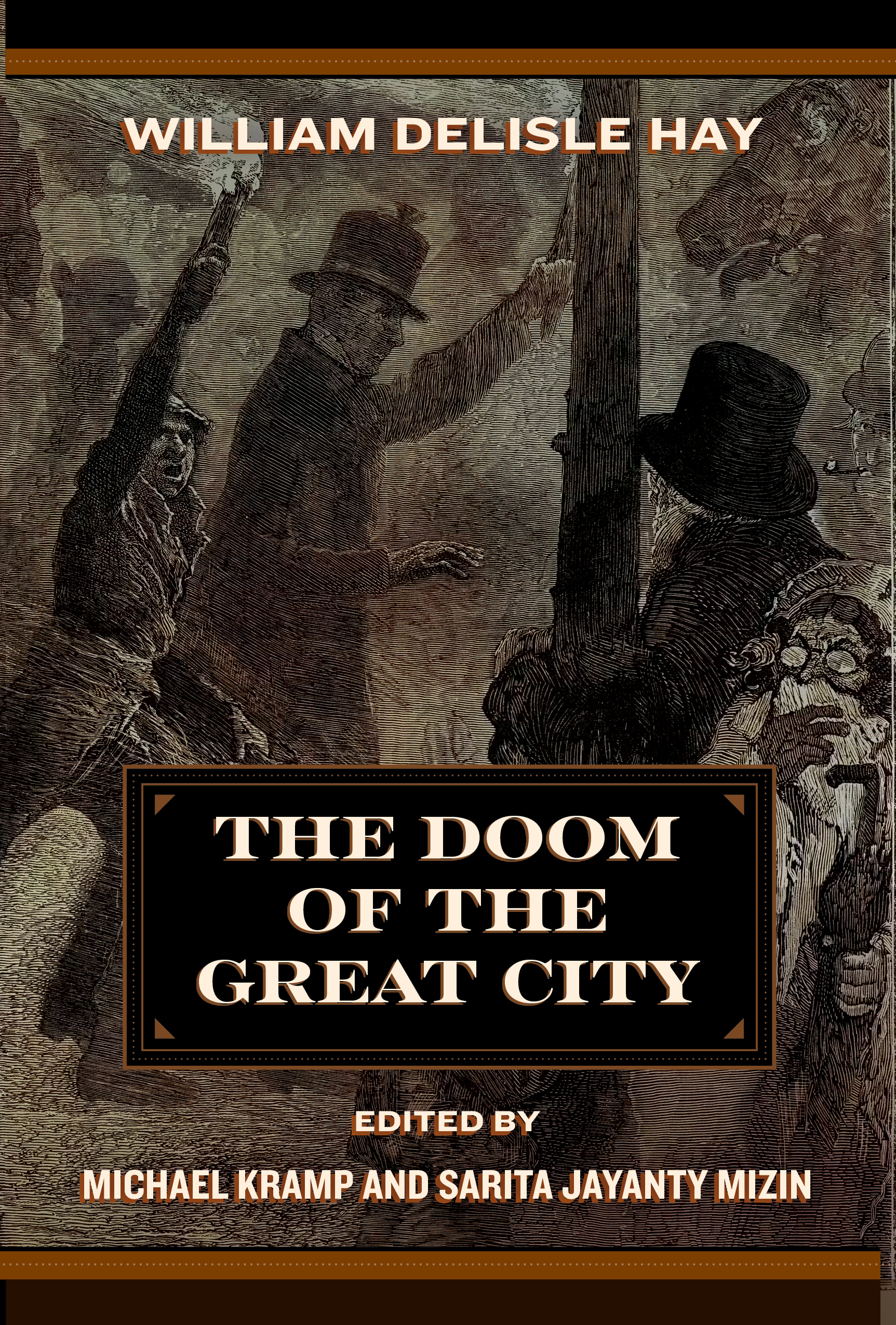
The Doom of the Great City; Being the Narrative of a Survivor, Written A.D. 1942

doom of the great city cover

William Delisle Hay

Edited by Michael Kramp and Sarita Jayanty Mizin

February 2025
216pp
PB  978-1-959000-37-2
$24.99
eBook 978-1-959000-38-9
$24.99

Salvaging the Anthropocene series


The Doom of the Great City; Being the Narrative of a Survivor, Written A.D. 1942 

Summary

William Delisle Hay’s The Doom of the Great City (1880) imagines the destruction of London as a result of human-induced environmental devastation, the threat of which is becoming increasingly visible today. This urban apocalypse narrative connects to pressing cultural discussions on global warming, modern life in cities, public health, and the interconnectivity of human life on earth. This first critical edition of Hay’s novella makes available his account of one man’s tale of survival amidst a toxic fog—a survival that includes his relocation to Maoriland in New Zealand. The editors foreground the relevance of the story to present and future pandemics, the persistence of environmental disasters, and the global population’s ongoing migration to cities. They place the narrative in dialogue with nineteenth-century concerns about climate change, pollution, natural resources, health care, empire, and (sub)urbanization that have remained significant challenges as we come to terms with the lasting impacts of the Anthropocene in the twenty-first century.  

Contents

Acknowledgments

Note on the Text

Introduction by Michael Kramp and Sarita Jayanty Mizin

Selected Bibliography and Additional Reading

The Doom of the Great City (1880)

Appendix A. Nineteenth-Century Writing on Climate Change

1. David Ansted and Robert Drummond, from “Weather” (1860)

2. Louis Agassiz, from “The Formation of Glaciers” (1863)

3. Richard Jefferies, from “The Great Snow” (c. 1876)

4. Svante Arrhenius, from “On the Influence of Carbonic Acid in the Air upon the Temperature of the Ground” (1896)

Appendix B. Global Perspectives on the City

1. Mirza Salih Shirazi, from The Collected Journeys of Mirza Salih Shirazi (1815)

2. Mary Seacole, from Wonderful Adventures of Mrs. Seacole in Many Lands (1857)

3. Rudyard Kipling, from “The City of Dreadful Night” (1885)

4. Rokeya Sakhawat Hossain, from Sultana’s Dream (1905)

5. Mohandas Karamchand Gandhi, from “Interview to ‘The News Chronicle’” (1931)

Appendix C. The London Fog

1. Francis Albert Rollo Russell, from London Fogs (1880)

2. Robert Barr, from “The Doom of London” (1892)

3. From “Metropolitan Atmospheric Pollution” (1880)

4. “A London Fog” (1849)

Appendix D. Victorian Public Health

1. Edwin Chadwick, from Report on the Sanitary Condition of the Labouring Population of Great Britain (1842)

2. Florence Nightingale, from Notes on Nursing for the Labouring Classes (1861)

3. Charles Kingsley, from “The Science of Health” (1874)

4. “The Peril in the Air,” Peps Company (1913)

Appendix E. Victorian Suburbanization

1. George and Weedon Grossmith, from The Diary of a Nobody (1892)

2. Thomas Runciman, from “London City Suburbs” (1893)

3. Ella Hepworth Dixon, from The Story of a Modern Woman (1894)

4. T.W.H. Crosland, from The Suburbans (1905)

5. Bacon’s Library Map of London and Suburbs, sheet 5 (1877)

Appendix F. Visions of the End

1. Mary Shelley, from The Last Man (1826)

2. George Griffith, from The Angel of the Revolution: A Tale of the Coming Terror (1893)

3. M. P. Shiel, from The Purple Cloud (1901)

Acknowledgments
 

Editors

Michael Kramp is professor of English at Lehigh University, where he is a scholar of nineteenth-century British literature, critical theory, and masculinity studies. He is the author of Patriarchy’s Creative Resilience and Disciplining Love: Austen and the Modern Man

Sarita Jayanty Mizin is assistant professor of English and faculty director of the Intersectional Women’s Center in the department of Race, Ethnicity, Gender, and Sexuality Studies at the University of Wisconsin, Eau Claire. 

Together, they are coediting a new edition of Richard Jeffries’ After London (1885).

Reviews

"This edition is an exemplary model of how to introduce students, scholars, and new readers alike to a little-known nineteenth-century text. The careful and attentive way in which the editors have negotiated the novella's imperial framing and settler-colonial context is impressive."  
—Porscha Fermanis, professor, University College Dublin and author of Romantic Pasts: History, Fiction, and Feeling in Britain, 1790-1850


EmailFacebookInstagramPinterestTwitter