The Potomac Canal: George Washington and the Waterway West

The Potomac Canal

Robert J. Kapsch
2007
374pp
PB  978-1-933202-18-1
$39.95


Summary

2008 Recognition of Excellence, AIGA 50 Books/50 Covers Competition
2007 ForeWord Magazine Finalist in History
2007 ForeWord Magazine Silver Winner in History
2007 Winner, AIGA 50 Books/50 Covers Competition
2008 Washington Book Publishers Book Design and Effectiveness Second Place Award, Illustrated Cover or Jacket and Illustrated Text

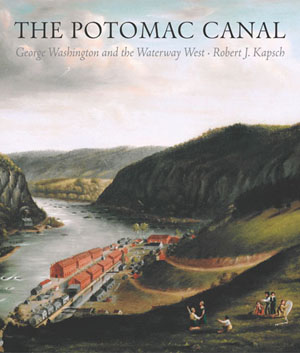
The Potomac Canal: George Washington and the Waterway West is a history of a new nation’s first effort to link the rich western agricultural lands with the coastal port cities of the east. The Potomac Canal Company was founded in 1785, and was active until it was overtaken by the Chesapeake and Ohio Canal Company in 1828. During its operation, the canal system was used to ship flour from mills in the foothills of Appalachia to the tidewater of the Chesapeake, where the flour was shipped to the Caribbean as trade for sugar and other goods. This trade soon became the basis of agricultural wealth in West Virginia’s eastern panhandle and throughout the Appalachian Piedmont. Coal was also shipped via the canal system from the upper reaches of the Potomac River to workshops at Harpers Ferry and beyond. This industrial trade route laid the foundation for what would eventually become the Chesapeake and Ohio Canal and the Baltimore and Ohio Railroad.


Contents

  • Chapter 1 - Early Proposals for a Potomac River Navigation · 1754-1775
  • Chapter 2 - George Washington and the Early Development of the Potomac River
                          Navigation · 1784-1790
  • Chapter 3 - Building the Little Falls and Great Falls Bypass Canals · 1791-1802
  • Chapter 4 - The Shenandoah River Navigation · 1790-1890
  • Chapter 5 - Other Canals of the Potomac River Basin · 1802-1828
  • Chapter 6 - Workers of the Potomac Company · 1785-1828
  • Chapter 7 - Operating the Potomac River Navigation · 1802-1828
  • Chapter 8 - Maintaining the Potomac River Navigation · 1810-1828
  • Chapter 9 - The Demise of the Potomac River Company · 1820-1828
  • Endnotes
  • Bibliography
  • Index

Author

Robert J. Kapsch, PhD, Hon. AIA, ASCE, holds doctorates in American studies, engineering, and architecture, as well as master’s degrees in historic preservation and management. For fifteen years, Dr. Kapsch was chief of the Historic American Buildings Survey/Historic American Engineering Record, the U.S. government’s premier documentation program. He is the author of several books on historic architecture and engineering, including Canals, an illustrated history of American canals.

Reviews

"This beautiful coffee-table book with a plethora of full-color illustrations tells this story with academic acumen, aesthetic acuity, and great vitality."
George Brosi, Appalachian Heritage

"This new volume is a beautiful book, but it is so much more. . . .I recommend his work as a most reliable place to start understanding the Potomac project or early canals in general."
John Lauritz Larson, The Journal of Southern History

"Here it is at long last: the definitive work on what the National Park Service and the 1803 company logo call the Patowmack Canal. . . .It fills a serious gap in the history of American canals and should be of interest to social, political, business, and labor historians; historians of technology; industrial archaeologists; and those interested in the Early Republic."
John Austen, The Journal of the Society for Industrial Archeology

"Beautifully illustrated with architectural drawings of the canal and numerous paintings of the surrounding countryside, Kapsch's book serves as a rich source of primary material on both the early history of canal building in America and the Potomac River valley."
August Nigro, West Virginia History: A Journal of Regional History

Sectionalism in Virginia from 1776 to 1861, 2nd Edition

Sectionalism in Virginia from 1776 to 1861

Charles H. Ambler
With a new Introduction by Barbara Rasmussen
2008
444pp
PB  978-1-933202-21-1
$34.95
PDF  978-1-935978-16-9
$33.99

Summary

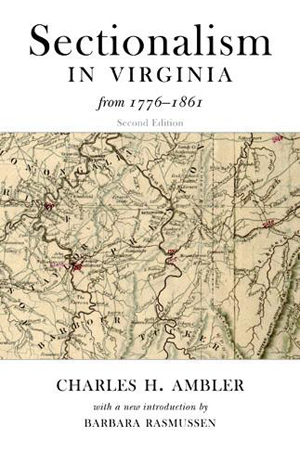
This 1910 study of sectionalism in Virginia illustrates how the east and west of Virginia were destined to separate into two states. Barbara Rasmussen, professor of Public History and Director of Cultural Resource Management at West Virginia University writes a new introduction to Sectionalism in Virginia, setting Ambler’s classic grand achievement into the context of its production by creating an historical process for studying West Virginia history.

Contents

  1. Introduction to the Second Edition
  2. List of Maps
  3. Preface
  4. Introduction
  5. Revolution, Confederation, and the Constitution, 1776–90
  6. The Era of Good Feeling and the Rise of the National Republican Party, 1817–28
  7. The Constitutional Convention of 1829–30
  8. Internal Improvement, Negro Slavery, and Nullification, 1829–33
  9. Parties in the Whig Period, 1834–50
  10. The Reform Convention of 1850–51
  11. Sectionalism in Education and the Church, 1830–61
  12. History of Political Parties, 1851–61
  13. Bibliography
  14. Index

Author

Charles H. Ambler was born in Ohio on August 12, 1876. Throughout his life he lived in Pleasants County, West Virginia, where he was sheriff from 1900 to 1901. He also lived in Ashland, Virginia, and Morgantown, West Virginia. While living in Morgantown, Ambler was a member of the West Virginia House of Delegates from 1951 to 1954. He was also a member of the Freemasons, Maccabees, Phi Beta Kappa, Sigma Nu, and Tau Kappa Alpha.

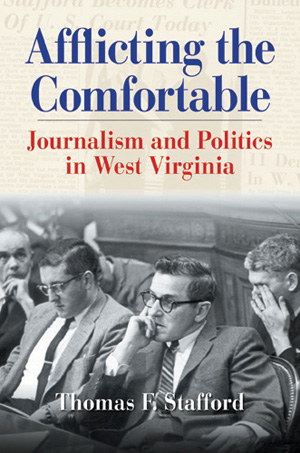
Afflicting the Comfortable

Afflicting the Comfortable

Thomas F. Stafford
2005
350pp
HC/J  978-1-933202-04-4
Out of print
PDF  978-1-935978-07-7
$28.99


Summary

"Government corruption was not invented in West Virginia. But there are people who contend that West Virginia officials have done more than their share over the years to develop state-of-the-art techniques in vote theft, contract kickbacks, influence peddling and good old-fashioned bribery, extortion, fraud, tax evasion and outright stealing."  New York Times

While investigating  the Invest Right scandal, Thomas Stafford, a former journalist for the Charleston Gazette, found himself in a very precarious position. As a reporter he felt obligated to tell the whole truth, and he believed in the need to serve the public and those West Virginians who were being abused by a political machine. In Afflicting the Comfortable, Stafford relates such tales of the responsibility of journalism and politics in coordination with scandals that have unsettled the Mountain State over the past few decades. His probing would take him from the halls of Charleston to the center of our nation's ruling elite. Guided by his senses of duty, right, and fairness, he plunged head first into the misdeeds of West Virginia's politicians. His investigations would preface the downfall of a governor and an adminstration that robbed the state and the citizens of West Virginia for many years.

Contents

  • Foreword by Ronald L. Lewis
  • Preface
  • Acknowledgments
  • Introduction
  •  
  • Part One
    1. Depression Politics
    2. A New Battlefront
    3. Editorial Influence
    4. A Byrd's Eye View
    5. A Man For Another Season
    6. Political Shake-Up
    7. "One Brief, Shining Moment"
  • Part Two
    1. He Never Used the Broom
    2. "Run It Up the Flagpole"
    3. The Ripple Effect
    4. Uncharted Territory
    5. A Sense of Passion
    6. "I've Got a Proposition"
    7. The Threat of Libel
    8. Striking Gold
    9. Going to Press
    10. A Promise Curtailed
    11. "It Wasn't Any Pleasure"
    12. Storm Warnings
    13. The Party Faithless
  • Part Three
    1. The Strength of Their Convictions
    2. Why?
    3. Judicial Remedy
    4. Moore Controversies
    5. A Lifetime Commitment
    6. Third Time Around
    7. Three Words Again
  • Part Four
    1. Caperton's Inheritance
    2. Once Too Often
  • Afterword
  • Index

Reviews

"Like a mason building a house brick by brick, Tom Stafford builds his case in great detail, showing a half-century of plundering and incompetence by others given high public trust, including at least one individual whose wrongs may yet end up costing the state as much as a billion dollars."
John Olesky, journalist and editor for forty-three years

"As a member of the elite of West Virginia society, with access to the powerful, Stafford offers readers a unique insider's look into the events of his day, at times struggling with the social ostracism he and his family faced because of his reporting."
Sharon Hatfield, author Never Seen the Moon: The Trials of Edith Maxwell

Lost Highway, 2nd Edition

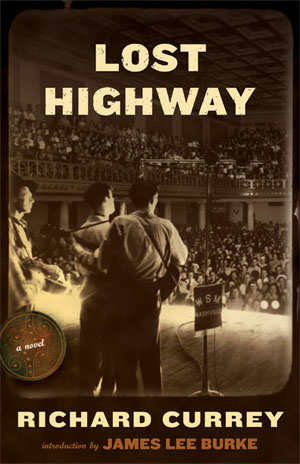
Lost Highway

Richard Currey
Introduction by James Lee Burke
2005
245pp
PB  978-0-937058-96-1
$16.95
CD  978-0-971780-15-6
$28.95

Summary

Richard Currey's Lost Highway has attracted a legion of admirers since its initial publication in 1997. The book depicts the epic struggle of an ordinary person living his dreams and following his passion. Lost Highway is the story of Sapper Reeves, a gifted country musician from the small town of Maxwell, West Virginia. Sapper’s story covers the events of more than half a century, from his birth in a poor coal mining town through his travels on the back roads of Appalachia in search of recognition and respect. Along the way, Sapper’s embattled love for his wife and struggle to come to terms with his combat-wounded son form the basis of his artistic and personal redemption.

Contents

  • Foreword
  • Interstate 40 East, Tennessee, June 15, 1997
  • Part I
  •   Winter 1947—Summer 1950
  •   Winter 1950—Autumn 1952
  •   Spring 1953—Autumn 1955
  • Part II
  •   Winter 1961
  •   Spring 1961—Summer 1965
  •   Summer 1966—Winter 1967
  •   Spring 1968
  • Part III
  • Summer 1968
  • Interstate 79 North, West Virginia, June 16, 1997

Author

Richard Currey was born in Parkersburg, West Virginia. He served from 1968 to 1972 in the U.S. Navy, and afterwards attended Howard University in Washington, D.C. In 1980 he published his first book, Crossing Over: A Vietnam Journal, which went on to earn a Pulitzer Prize nomination. Currey’s international breakthrough came with his first novel, Fatal Light, short-listed for the 1988 PEN/Hemingway Award for Best First Novel. A winner of the Vietnam Veterans of America's Excellence in the Arts Award, Fatal Light was published in twelve languages. Lost Highway has been hailed as a definitive work of Appalachian fiction.

Reviews

"Currey has an unerring eye for detail, for the everyday wonders of life."
Edvins Beitiks, The San Francisco Chronicle

"Lost Highway is a book to linger over, full of passages worth re-reading, moments flashing with life, and, like a good country song, filled with spaces where we see our lives reflected."
The Boston Globe

"This enthralling narrative spanning a half—century in the life of a country musician traces the years and miles that divide father and son, husband and wife: the same years that, ironically, will serve to reconcile them in the end. Lost Highway takes us someplace better than we could have planned for ourselves—our task is to grow enough to recognize it. The book's hero Sapper Reeves calls his songs 'small legends of the miles.' Lost Highway, too, is a legend of the miles—and no small one."
The Seattle Times

"Outstanding...Currey strums the language in Lost Highway, capturing with haunting poignance the nuances of hillbilly dialects, rough-edged roadhouses, and the deafening silences of estrangement. And Currey never falls into cliche: his powerfully wrought images serve as a barrier to sentimentality in a novel that travels down long emotional backroads and hills of desperation, where endurance rides shotgun for melancholy...this exceptional paean to American music echoes with the full, smoky vocals of Currey's lyricism."
Kansas City Star

"This novel by the much—praised Currey is as eloquently piercing and deeply American as a classic folk ballad...told in haunting prose that allows Lost Highway to emerge on the page like music itself."
Publisher's Weekly

"When Richard Currey writes fiction, he speaks the truth. The poetry of his language, his wisdom, his compassion, sets us free. His journeys into the human heart are tiny miracles ... and when we finish Lost Highway we do so with a mysterious sense of revelation. The final chapters of this novel stir the heart and mind in ways only the best fiction can achieve."
Dallas Morning News

"Richard Currey's Fatal Light, one of the best novels written about the Vietnam War, revealed the same unerring eye for detail and the everyday wonders of life that Currey brings to his second novel Lost Highway... Currey's writing has a dignity and a studied understatement that is missing in most contemporary novels."
San Francisco Chronicle

"Richard Currey is one of those gems whose writing, like Venus in the night sky, seems to shine brighter than others. The more you read Lost Highway, the more his writing takes on a mesmerizing glow..."
Albuquerque Journal

Going

Going

Kevin Oderman
2006
263pp
PB  978-1-933202-13-6
$16.95
PDF  978-1-935978-19-0
$15.99

Purchase the Kindle Edition at Amazon

Summary

In Granada, a boy in a dress begs in the white alleys of the old town. A vulnerable runaway, he turns to an American painter who is living in the city for protection, Madeleine James. The boy also meets Madeleine's new friend, poet Cy Jacobs. Although the two adults mean to help the boy, they unwittingly expose him to more peril. Soon, all the characters in the story have been scraped on the touchstone of hard realities and made to show their mettle, be it base or gold. This novel, at times somber and at times flaring with intensity, calls up indelibly the difficulties of making a good life—or a good death—in a world in which we are all, in one way or another, going.

2006 ForeWord Magazine Book of the Year Award Finalist

Author

Kevin Oderman, professor of English and Creative Writing at West Virginia University, is the author of the prize-winning collection of literary essays How Things Fit Together and a critical book on Ezra Pound, Ezra Pound and the Erotic Medium. He has twice taught abroad as a Senior Fulbright Lecturer, first in Thessaloniki, Greece, and subsequently in Lahore, Pakistan. Going is his first novel.

Reviews

"Going is a brilliant novel—a deft, contemplative thriller that probes five lives united by art, chance, and exile. The story’s great themes are erotic, artistic integrity, and death. Its genders are crossed or at war, its night streets and romances equally treacherous, its wit delightfully dark. Yet the engagements with art are profound. And the climax—a stunner—is suffused with justice and light."
David James Duncan, author The River Why and The Brothers K

Fidelities

Fidelities

Valerie Nieman
2004
150pp
PB  978-0-937058-94-7
$18.99
PDF  978-1-935978-26-8
$15.99

Purchase the Kindle Edition at Amazon


Summary

Fidelities is Valerie Nieman's first collection of short stories. The stories in Fidelities, which are mostly set in West Virginia, are both heartrending and beautiful.

Contents

  • Worth
  • Delivering the Message
  • Something Like Delilah
  • Himself
  • Knockdown
  • Where Happiness is Expected
  • Flesh and Blood
  • Be an Angel
  • Westgate
  • May Apple
  • Learning to Draw with Perspective
  • Edges
  • Act of Grace
  • Pas de Deux
  • Housecleaning
  • Trout
  • Control
  • Crunch

Author

Valerie Nieman attended Jamestown Community College in her hometown in western New York for only a year before enrolling at West Virginia University where she completed a BS in journalism. After graduation she stayed in her adopted state working as a full-time journalist while pursuing her own writing career. After leaving her imprint on West Virginia, Nieman became the Rockingham County editor of the North Carolina Greensboro News & Record.

Nieman published her first novel, Neena Gathering, a post-apocalyptic science fiction novel, in 1988. She has also published two poetry chapbooks, Slipping out of Old Eve and How We Live. Her second fictional work, Survivors, was published in 2000. She has also published two poetry chapbooks, Slipping out of Old Eve and How We Live, and a full-length poetry collection, Wake Wake Wake. Her second novel, Survivors, was published in 2000. Her third novel, Blood Clay, will be published in March by Press 53. Her poetry has appeared recently in the Southern Poetry Review, Connotations Press: An Online Artifact, Still, North Carolina Literary Review, ABZ, and Crab Creek Review. Her short story "Worth" appeared in the 2010 anthology Degrees of Elevation: Short Stories of Contemporary Appalachia.

Reviews

"Nieman's creation of each character and her evocation of time and place are unique... [her characters] are so real that I feel I know them all."
Elizabeth Seydel Morgan, author On Long Mountain

"No matter where you open Fidelities. . . it's full of intriguing people [and] interesting puzzles that leave the reader wondering about their complexities long after reading it."
Jennifer Lynch, Graffiti

Backcountry: Contemporary Writing in West Virginia

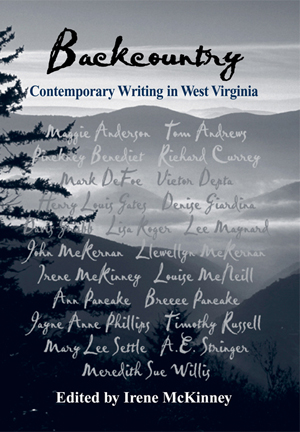
Backcountry

Edited by
Irene McKinney
2002
273pp
PB: 978-0-937058-72-5
$24.95


Summary

"The connection is not so much in mutual influence, though there is some of that, but in each writer’s total immersion in place. Even those writers who no longer live in the state remember the feel, the physical texture, the overwhelming and enfolding vegetal surround of the place." 
Irene McKinney, West Virginia Poet Laureate

This is as closely-knit an anthology as you are ever likely to see. It is as though a large, extended family were drawing on the same store of family stories, jokes, symbols, landscapes, animals, trees, language, and vernacular. How many snakes are in this book? How many foxes, possums? Fossils? And how very many coal mines? But it is not merely local references that unites these writers. There is a larger vision that ties these works together.

ForeWord Magazine Finalist

Contents

  • Acknowledgements
  • Introduction
  • Maggie Anderson
    • Marginal
    • Independence Day, TerraAlta, West Virginia 1935
    • Among Elms and Maples, Morgantown, West Virginia, August 1935
    • Mining Camp Residents, West Virginia, July, 1935
    • Spitting in the Leaves
    • Long Story
    • Ontological
  • Mary Lee Settle
    • From Addie: A Memior
  • Mark DeFoe
    • Late Winter Snow: South of Morgantown, WV
    • Leaving the Hills
    • Driving the Gauley River, Listening to the Radio
    • The Former Miner Returns from His First Day as a Service Worker
    • Air
  • Pinckney Benedict
    • The Sutton Pie Safe
    • Odom
  • Tom Andrews
    • Hymning the Kanawha
    • Evening Song
  • Lisa Roger
    • Extended Learning
  • Louise McNeill
    • Memoria
    • The Roads
    • Granny Saunders
    • The Long Traveller
    • The Road
    • The River
  • Meredith Sue Willis
    • Family Knots
  • Timothy Russell
    • In Dubio
    • In Aegri Somnia
    • In Consideratione Praemissorum
    • In Actu
  • Lee Maynard
    • From Crum
  • Llewellyn McKernan
    • Aunt Anna
    • The Peaceful Kingdom
    • The Only Old Timer in the Neighborhood
    • In Spring
  • Denise Giardina
    • Rondal Lloyd
  • Davis Grubb
    • The Burlap Bag
  • AE Stringer
    • Ruins in Reverse
    • Listen
    • My Friend Told Me
  • Richard Currey
    • The Wars of Heaven
  • John McKernan
    • On the Edge of Highway 10 North
  • Breece D'j Pancake
    • Trilobites
    • Fox Hunters
  • Victor Depta
    • The Mad Whore of Peachtree
    • It Didn't Come from Hallmark
    • When Your Ego Bloats
    • Charlenes Ex
  • Ann Pancake
    • Jolo
  • Henry Louis Gates, Jr
    • Sin Boldly
  • Irene McKinney
    • Twilight in West Virginia: Six 0'Clock Mine Report
    • Deep Mining
    • Visiting my Gravesite: Talbott Churchyard, West Virginia
    • Fodder
    • For Women Who Have Been PatientAll Their Lives
    • Viridian Days
  • Jayne Anne Phillips
    • Cheers
    • Bess
  • Louise McNeill
    • A Patch of Earth
    • Night At The Commodore
  • About the Contributors

Author

This anthology of contemporary fiction and poetry from West Virginia writers titled Backcountry: Contemporary Writing in West Virginia is edited by our state’s poet laureate, Irene McKinney. It features a wealth of fiction and poetry by some of the best writers in West Virginia over the last half century. More of West Virginia’s writers will be featured in future collections of contemporary writing published by the WVU Press.

The authors included in Backcountry are Maggie Anderson, Tom Andrews, Pinckney Benedict, Richard Currey, Mark DeFoe, Victor Depta, Henry Louis Gates, Jr., Denise Giardina, Davis Grubb, Lisa Koger, Lee Maynard, Llewellyn McKernan, John McKernan, Irene McKinney, Louis McNeill, Ann Pancake, Breece D’J Pancake, Jayne Anne Phillips, Timothy Russell, Mary Lee Settle, A. E. Stringer, and Meredith Sue Willis.

Reviews

"With collected works, there's always a temptation to look for the common vein. If such a thread exists, it lies in the impression, the imprint, that West Virginia has shaped. From start to finish (still the best way to read a book), this compilation holds its images; and a careful arrangement of the selections leaves the reader rocking between poetic and concrete high notes. Editor Irene McKinney, whose writing competes with all the rest, has assembled a marvelous vision of West Virginia."
Cyns Nelson, The Bloomsbury Review

"...a wonderful collection."
Paul Nyden, The Charleston Gazette

"An exemplary anthology of regional writing."
Appalachian Heritage

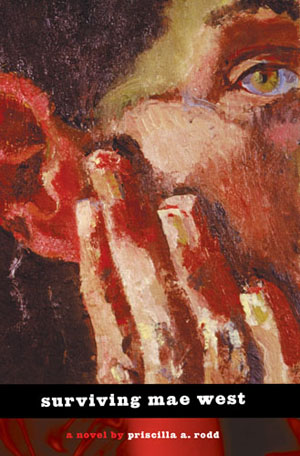
Surviving Mae West

Surviving Mae West

Priscilla A. Rodd
2007
207pp
PB  978-1-933202-07-5
$16.95
PDF  978-1-935978-20-6
$15.99

Summary

Tess, a West Virginian in New York City, finds herself among seedy brothels facing life as a prostitute. A number of trials test her in every way, leading to both understanding and misunderstanding among her friends and her family. Tess tells these stories of pain, joy, depression, loneliness, and endurance in her journal, and they will shock some readers and charm others. With the shadow of the Appalachians calling her back home, she desperately struggles to claim her individuality in a world of debauchery without the painful remnants of her past and fear of a fragmented future overwhelming her.

Author

Priscilla A. Rodd was born outside of Paw Paw, West Virginia, in an old farmhouse without running water or electricity. Her parents, who were Quaker activists, homeschooled Priscilla until she was eleven years old. She began public school the same year her family acquired indoor plumbing and a black-and-white television. Priscilla holds an MFA in fiction from the University of Pittsburgh. She currently teaches creative writing and lives in Charles Town, West Virginia, with her husband and fellow writer Deane Kern, and their two young sons.

Reviews

"Priscilla Rodd's protagonist in Surviving Mae West can be exasperating, like watching a friend engage in self-destructive behavior. Yet, we still care about her as she navigates between the two worlds of New York prostitution and her West Virginia family."
Denise Giardina, author Storming Heaven and The Unquiet Earth

"Tess and her brother grew up in a peaceful, rural West Virginia community. But one night after a high school party, a traumatic event changed their lives forever. In Priscilla Rodd's Surviving Mae West, a family struggles to overcome extraordinary loss. . . In exploring her heroine's character, Rodd ultimately penned some surprising lessons about sacrifice, growth, and deliverance."
Mary Zangrilli, Pitt Magazine

"Engaging, graphic, humorous, [and] often shocking."
Paul Nyden, Charleston Gazette-Mail

Oradell at Sea

Oradell at Sea

Meredith Sue Willis
2004
208pp
PB  978-0-937058-70-1
$16.95

Summary

This contemporary novel takes place in two main settings: on a cruise ship and through flashbacks to the narrator’s fictional West Virginia hometown. The transitions from present to past are well done and help the reader see how a now-wealthy woman came to her current view of the world. It also shows why she has such difficulty handling her present crisis. This well-crafted story, told by an older woman, but filled with interesting characters of all ages from West Virginia and around the world, will appeal to the general fiction reader. However, residents of West Virginia will be particularly fascinated as the narrator’s story unfolds.

For more information about Meredith Sue Willis visit her web site at: http://www.meredithsuewillis.com.

Author

Meredith Sue Willis was born and raised in West Virginia and received most of her education in the town of Shinnston. After she spent two years at Bucknell University in Pennsylvania, she spent some time as a Volunteer in Service to America in Norfolk, Virginia. After this time, she attended and graduated from Barnard College in New York City. A few years later she earned a Master of Fine Arts degree from Columbia University. Willis has received many awards and recognition for her writing, including fellowships from the National Endowment for the Arts and the New Jersey State Council on the Arts and the Literary Award from the West Virginia Library Association. She currently lives in New Jersey with her husband and son.

Reviews

"The most extraordinary people are the seemingly ordinary ones. Simultaneously hilarious and heartbreaking, Oradell is one of the best, most fully drawn characters you'll every have the privilege of meeting."
Silas House, author Clay's Quilt

"Oradell at Sea is an entertaining, fast-paced book that pulls the reader in."
Sharon Hatfield, Journal of Appalachian Studies

The Way Things Always Happen Here

The Way Things Always Happen Here

Kevin C. Stewart
2007
160pp
PB  978-1-933202-19-8
$16.95
PDF: 978-1-933202-71-6
$16.95
Kindle Edition:

$15.99

Purchase the Kindle Edition at Amazon


Summary

In his debut short-fiction collection, The Way Things Always Happen Here, Kevin C. Stewart takes his readers to the scene of a heinous murder, to the home of an alcoholic single mother, to the 1960s election campaign of JFK through West Virginia, and off the side of the New River Gorge Bridge. In these eight stories set in fictional Oak County in southern West Virginia, and one novella set in the Arkansas Ozarks, Stewart gives us characters who all love and hate where they’re from.

ForeWord Award Finalist

Contents

  • one mississippi
  • the way things always happen here
  • her
  • sarah's story
  • debts
  • red dog
  • june hay
  • the pillar of william's grave
  • margot

Author

Among other awards, Kevin C. Stewart won the Texas Review Novella Prize for a short story entitled Margot, which is featured in this book. He holds an MFA in creative writing from the University of Arkansas, along with degrees in English, architecture, and civil engineering. He currently serves as a professor of English and Creative Writing at Carroll College in Montana.

Reviews

"These stories of hard realities and painfully won wisdom are absolutely jam-packed with those simmering, guarded secrets and dark desires we all share."
Chuck Kinder, author Snakehunter and Last Mountain Dancer

"Raw beauty is the heart of this collection where hope and despair mingle, where the mountains shelter and confine. Stewart renders this struggle and beauty in these stories that capture in fiction our many hard truths."
Jim Minick, Journal of Appalachian Studies