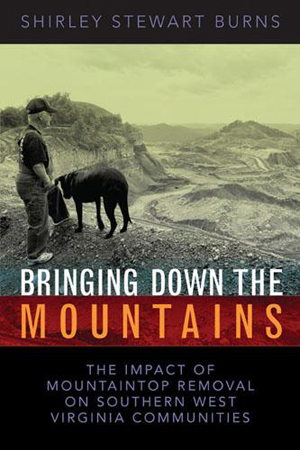
An Appalachian Reawakening: West Virginia and the Perils of the New Machine Age, 1945–1972

An Appalachian Reawakening

Jerry Bruce Thomas

November 2010
470pp
PB  978-1-933202-58-7
$28.99
PDF  978-1-933202-98-3
$23.99
PDF  (120 Days)
$10.00

Purchase the Kindle Edition at Amazon


Summary

As the long boom of post–World War II economic expansion spread across the globe, dreams of white picket fences, democratic ideals, and endless opportunities flourished within the United States. Middle America experienced a period of affluent stability built upon a modern age of industrialization. Yet for the people of Appalachia, this new era brought economic, social, and environmental devastation, preventing many from realizing the American Dream. Some families suffered in silence; some joined a mass exodus from the mountains; while others, trapped by unemployment, poverty, illness, and injury became dependent upon welfare. As the one state most completely Appalachian, West Virginia symbolized the region’s dilemma, even as it provided much of the labor and natural resources that fueled the nation’s prosperity.

An Appalachian Reawakening: West Virginia and the Perils of the New Machine Age, 1945–1972 recounts the difficulties the state of West Virginia faced during the post–World War II period. While documenting this turmoil, this valuable analysis also traces the efforts of the New Frontier and Great Society programs, which stimulated maximum feasible participation and led to the ultimate rise of grass roots activities and organizations that improved life and labor in the region and undermined the notion of Appalachian fatalism.

Contents

  • Acknowledgments
  • Introduction
  • 1. A New Machine Age in the Hills
  • 2. American Paradox, Appalachian Stereotype
  • 3. Civil Rights in the New Machine Age
  • 4. Good Intentions: The New Frontier and the War on Poverty
  • 5. Raising Hell in the Hills and Hollows: AVs, VISTAs, and Community Action
  • 6. From the Silver Bridge to Farmington and Rumblings at the Grassroots
  • 7. The Black Lung Association, Miners for Democracy, and the New Feminism
  • 8. The Strip Mining Dilemma and a Climactic Debate
  • 9. Buffalo Creek: Appalachian Apotheosis
  • Epilogue: Another Reawakening?
  • Notes
  • Bibliography
  • Index

Author

Jerry Bruce Thomas is professor emeritus of history at Shepherd University, Shepherdstown, WV.

EmailFacebookInstagramPinterestTwitter

Roll Out the Carpet: 101 Seasons of West Virginia University Basketball

Roll Out the Carpet

John Antonik
With a foreword by Rod Thorn and
afterword by Bob Huggins
September 2010
288pp
HC/J  978-1-933202-66-2
$39.95


Summary

Roll Out the Carpet is the story of West Virginia University basketball. This comprehensive history chronicles over one hundred seasons of the game, from the early years of the Tri-State and Eastern Conferences, to the golden era of Hot Rod Hundley, Jerry West, and Rod Thorn, to the Mountaineer’s most recent triumphs under coaches John Beilein and Bob Huggins.

For Mountaineers, it’s not just about winning a prize, trophy or title—it’s about the work ethic, pride, and loyalty that embodies the spirit of the state. With unparalleled insider access, alumnus and longtime athletic department official John Antonik details the vibrant history of the players, coaches, and fans that created the finest moments of Mountaineer basketball. These pages overflow with accounts of nail-biting tension leading to buzzer-beating shots, thrilling game-saving moments, and rich, intimate details of the superstar players and coaches that built an institution of gold and blue.

From the first game in 1904 against rival Pitt to West Virginia’s glorious return to the 2010 NCAA Final Four, Roll Out the Carpet celebrates the tradition of Mountaineer basketball. With over five hundred  photographs—many of which have never been published before—and articles of memorabilia from the WVU athletic department, university archives, and personal collections, this book is a must-have for any West Virginia University basketball fan. It’s a great day to be a Mountaineer!

Contents

  1. Foreword by Rod Thorn
  2. Introduction: Let's Roll Out the Carpet...
  3. The Early Years (1903-1919)
  4. S-t-a-d-s-v-o-l-d Spells Stability (1920-1933)
  5. The Marshall Plan (1934-1938)
  6. Taking a Bite Out of the Big Apple (1939-1942)
  7. The War Years (1943-1945)
  8. Triumph and Tragedy (1946-1950)
  9. Picking up the Pieces (1951-1954)
  10. A Golden Era (1955-1960)
  11. King and His Court (1961-1965)
  12. Running Waters (1966-1969)
  13. Years of Transition (1970-1978)
  14. The Years of the Cat (1978-2002)
  15. Beilein Brings 'em Back (2003-2007)
  16. Huggs Comes Home (2007-2010)
  17. Afterword by Bob Huggins
  18. Acknowledgements
  19. Bibliography

Author

A native of West Virginia, John Antonik received a Bachelor’s Degree in Journalism and a Master’s Degree in Sports Management from West Virginia University. He is Director of New Media for Intercollegiate Athletics, West Virginia University and author of West Virginia University Football Vault: The History of the Mountaineers.

With a foreword by Rod Thorn and an afterword by Bob Huggins.

Reviews

"...a well-researched work documenting 101 years of WVU lore."
Doug Huff, The Wheeling Intelligencer

"...a must for WVU basketball lovers of the past and present."
Mickey Furfari, The Beckley Register-Herald

"...a veritable encyclopedia, of all things West Virginia basketball."
Colin DunlapThe Pittsburgh Post-Gazette

"Antonik has turned out a fact-stuffed, story-enhanced read..."
Jack BogaczykThe Charleston Daily-Mail

"Sports enthusiasts will revel in the 100-plus seasons covered in this book..."
West Virginia Living

Vidcast

EmailFacebookInstagramPinterestTwitter

Still Life with Plums

Still Life with Plums

Marie Manilla
October 2010
172pp
PB  978-1-933202-60-0
$16.95
PDF  978-1-933202-61-7
$15.99
EPUB 978-1-943665-60-0
$15.99

Summary

Still Life with Plums is a vibrant collection of short stories that weaves together the outwardly distant lives of several strangers. With heaping doses of dark humor and magical realism, these ten stories enliven a cast of characters carefully speckled throughout the southern portion of the United States. From West Virginians, to Texans and Latinos, Still Life with Plums circles the paths of a Black-Irish West Virginian, a wise-cracking dog groomer, an emasculated husband, a Guatemalan widow, a Japanese-Latin-American poster child from WWII, and a meticulous predator. Marie Manilla’s accessible prose is deceptively layered, as she births and wrestles this quirky ensemble that unflinchingly probes the human psyche, while affirming a concrete connection to a shared place and identity.

Contents

  • Hand. Me. Down.
  • Childproof
  • Grooming
  • Amnesty
  • Distillation
  • Still Life with Plums
  • Counting Backwards
  • Crystal City
  • The Wife You Wanted
  • Get Ready

Author

West Virginia native Marie Manilla is a graduate of the Iowa Writers’ Workshop. Her stories have appeared in The Chicago Tribune, Prairie Schooner, Mississippi Review, Calyx Journal, Kestrel, Portland Review, GSU Review, and other journals. She is the author of the upcoming novel Shrapnel, a Fred Bonnie Award for Best First Novel winner.

Reviews

"Marie Manilla’s Still Life With Plums houses in its pages a repository of heartache and joy.  Its soul lies in life’s little moments, somehow still yet perpetually fleeing.  Manilla’s words take flight in the mind and dance “like paper birds in the wind.”  Inevitably, the words will root inside the reader, like the memory of a fossil or a Polaroid picture, and once there, they will cease to be still.  Just as the people in these stories, they will keep on humming."
Glenn Taylor, author of The Ballad of Trenchmouth Taggart  and National Book Critics Circle Award finalist

"This mesmerizing collection of stories is full of my favorite things: brilliantly vivid characters, rich cultural textures, bleak humor and surprising story turns. Manilla weaves a kind of literary magic that kept me reading late into the night."
Zoë Ferraris, author of Finding Nouf and City of Veils

"Any reader who cares about mature, intelligent, graceful storytelling should be thinking very seriously about getting Still Life with Plums into their life--buy it, download it, check it out of the library--whatever it takes to be able to read and savor and learn from Marie Manilla's fine and resonant stories."
Richard Currey, author of Fatal Light and Lost Highway

“This is an accomplished collection, displaying a variety of voices, settings, conflicts, and surprising resolutions. The writing is sure, and the stories demonstrate a writer who is confident in her vision.”
Kevin Stewart, author of The Way Things Always Happen Here

EmailFacebookInstagramPinterestTwitter

Perspectives on the Old Saxon Heliand: Introductory and Critical Essays, with an Edition of the Leipzig Fragment
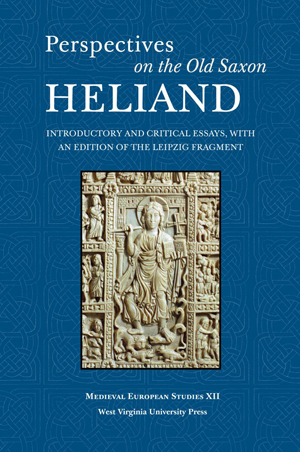

Perspectives on the Old Saxon Heliand

Edited by
Valentine A. Pakis
May 2010
PB  978-1-933202-49-5
$44.95
PDF  978-1-935978-35-0
$43.99
PDF  (120 Days)
$20.00

Summary

Heliand, the Old Saxon poem based on the life of Christ in the Gospels, has become more available to students of Anglo-Saxon culture as its influence has reached into a wider range of fields from history to linguistics, literature, and religion. In Perspectives on the Old Saxon Heliand, Valentine Pakis brings together recent scholarship that both addresses new turns in the field and engages with the relevant arguments of the past three decades. Furthering the ongoing critical discussion of both text and culture, this volume also reflects on the current state of the field and demonstrates how it has evolved since the 1970s.

Volume 12 in the Medieval European Studies Series.

Contents

  1. Preface
    Valentine A. Pakis
  2. Introductions to the Heliand and its Language
    • The Historical Setting of the Heliand, the Poem, and the Manuscripts
        James E. Cathey
    • The Old Saxon Heliand
        G. Ronald Murphy
    • An Overview of Old Saxon Linguistics, 1992–2008
        Marc Pierce
  3. The Diatessaronic Tradition
    • The Parable of the Fisherman in the Heliand: The Old Saxon Version of Matthew 13:47-50
        Tjitze Baarda
    • (Un)Desirable Origins: The Heliand and the Gospel of Thomas
        Valentine A. Pakis
  4. Orality and Narrative Tradition
    • Was the Heliand Poet Illiterate?
        Harald Haferland
    • The Hatred of Enemies: Germanic Heroic Poetry and the Narrative Design of the Heliand
        Harald Haferland
  5. The Portrayal of the Jews in the Heliand
    • The Jews in the Heliand
        G. Ronald Murphy
    • Jesus Christ between Jews and Heathens: The Germanic Mission and the Portrayal of Christ in the Old Saxon Heliand
        Martin Friedrich
  6. The Discovery of the Leipzig Fragment (2006)
    • A New Heliand Fragment from the Leipzig University Library
         Hans Ulrich Schmid
  7. Plates
    1. 1. Leipzig, Universitätsbibliothek, omas 4073 (MS), outer side
    2. 2. Leipzig, Universitätsbibliothek, omas 4073 (MS), inner side
  8. Works Cited
EmailFacebookInstagramPinterestTwitter

Cross and Cruciform in the Anglo-Saxon World: Studies to Honor the Memory of Timothy Reuter

Cross and Cruciform in the Anglo-Saxon World

Edited by
Sarah Larratt Keefer,
Karen Louise Jolly, and
Catherine E. Karkov

May 2010
PB  978-1-933202-50-1
$44.95

Summary

Cross and Cruciform in the Anglo-Saxon World: Studies to Honor the Memory of Timothy Reuter is edited by Sarah Larratt Keefer, Karen Louise Jolly, and Catherine E. Karkov and is the third and final volume of an ambitious research initiative begun in 1999 concerned with the image of the cross, showing how its very material form cuts across both the culture of a society and the boundaries of academic disciplines—history, archaeology, art history, literature, philosophy, and religion—providing vital insights into how symbols function within society. The flexibility, portability, and adaptability of the Anglo-Saxon understanding of the cross suggest that, in pre-Conquest England, at least, the linking of word, image, and performance joined the physical and spiritual, the temporal and eternal, and the earthly and heavenly in the Anglo-Saxon imaginative landscape.

This volume is divided into three sections. The first section of the collection focuses on representations of “The Cross: Image and Emblem,” with contributions by Michelle P. Brown, David A. E. Pelteret, and Catherine E. Karkov. The second section, “The Cross: Meaning and Word,” deals in semantics and semeology with essays by Éamonn Ó Carragáin, Helen Damico, Rolf Bremmer, and Ursula Lenker. The third section of the book, “The Cross: Gesture and Structure,” employs methodologies drawn from archaeology, new media, and theories of rulership to develop new insights into subjects as varied as cereal production, the little-known Nunburnholme Cross, and early medieval concepts of political power.

Cross and Cruciform in the Anglo-Saxon World: Studies to Honor the Memory of Timothy Reuter is a major collection of new research, completing the publication series of the Sancta Crux/Halig Rod project. Cross and Culture in Anglo-Saxon England: Studies in Honor of George Hardin Brown, Volume 2 in this series, remains available from West Virginia University Press.

Volume 11 in the Medieval European Studies Series

Contents

  • Abbreviations
  • In Memoriam Timothy Reuter
  • Introduction
    Sarah Larratt Keefer, Trent Universty, Ontario
    Karen Louise Jolly, University of Hawai'i at Ma̅noa
    Catherine E. Karkov, University of Leeds
  • I. The Cross: Image and Emblem
    • The Cross and the Book: the Cross-Carpet Pages of the Lindisfarne gospels as Sacred Figurae
        Michelle P. Brown
    • A Cross and an Acrostic: Boniface's Prefatory Poem to his Ars grammatica
        David A. E. Pelteret
    • Abbot Ælfwine and the Sign of the Cross
        Catherine E. Karkov
  • II. The Cross: Meaning and Words
    • Sources or Analogues? Using Liturgical Evidence to Date The Dream of the Rood
        Éamonn Ó Carragáin
    • Writing/Sounding the Cross: The Dream of the Rood as Figured Poetry
        Helen Damico
    • Old English "Cross" Words
        Rolf H. Bremmer Jr.
    • Signifying Christ in Anglo-Saxon England: Old English Terms for the Sign of the Cross
        Urula Lenker
  • III. The Cross: Gesture and Structure
    • The Staff of Life: Cross and Blessings in Anglo-Saxon Cereal Production
        Debby Banham
    • The Anglo-Saxon Chapel at Bradford on Avon, Wiltshire
        David A. Hinton
    • New Media and the Numburnholme Cross
        Martin K. Foys
    • The Enkolpion of Edward the Confessor: Byzantium and Anglo-Saxon Concepts of Rulership
        Lynn Jones
  • Index

Reviews

This volume makes valuable contributions and should appeal not only to Anglo-Saxonists but also to those with interests in early medieval intellectual and cultural history, liturgy, and iconography.
Nicole Guenther Discenza, University of South Florida

EmailFacebookInstagramPinterestTwitter

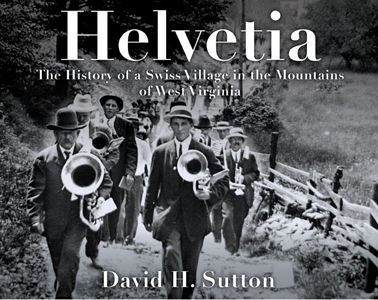
Helvetia: The History of a Swiss Village in the Mountains of West Virginia

Helvetia

David H. Sutton

April 2010
192pp
PB  978-1-933202-56-3
$32.99


Summary

Helvetia: The History of a Swiss Village in the Mountains of West Virginia explores the unique founding and development of a community nestled within the wilderness of Appalachia. Established in 1869, this tiny Swiss settlement embodies the American immigrant experience, reflecting the steadfast desire of settlers to preserve cultural traditions and values while adapting to new and extraordinary surroundings. From ramp suppers to carnivals, traditional architecture, folk music, and cheese making, this book documents a living community by exploring the ethnic customs, farming practices, community organization, and language maintenance of Helvetia residents. Drawing upon a diverse body of resources such as Swiss and American archival documents and local oral accounts, this chronicle depicts the everyday social and economic life of this village during the past two centuries. Helvetia celebrates a small community where residents and visitors alike continue to practice a Swiss American culture that binds an international history to a local heritage.

Long out of print, this reissued edition of the history of Helvetia contains a new introduction, a concise index, a bibliography, an appendix of foreign-born immigrants, and an exquisite photographic essay featuring archival images of a Swiss village still thriving within the isolated backcountry of central West Virginia.

Contents

  • Acknowledgements
  • Author's Note
  • Introduction to the Second Edition
  • Preface
  • 1. The Immigration of Swiss to America and Migrations to the Central Appalachian Mountains
  • 2. Helvetia's Founding
  • 3. Building the New Community
  • 4. An Agricultural Way of Life
  • 5. Forces of Change
  • 6. Continuity and Change: Helvetia's Social and Cultural Life
  • 7. The Community in Context
  • 8. Helvetia Life: 1950–2009
  • Notes
  • Appendices
  • Bibliography
  • Index

Author

David H. Sutton is a native of Helvetia, WV. He received his bachelor's degree from Davis & Elkins College and a master's in history from West Virginia University. As an archivist and manuscripts curator, he has worked for the Washburn Norlands Foundation in Livermore Falls, ME, and the Balch Institute for Ethnic Studies in Philadelphia. 

Reviews

“David Sutton’s history of Helvetia, a small Swiss village founded in the wilderness of West Virginia, is a brilliantly researched, succinct account of individual fortitude and communal purpose. It is an important contribution to the history of immigration in the United States and to the study of cultural diversity in the Appalachian region. Most remarkable is Sutton’s subtle treatment of the interplay between the ideals of Swiss settlers and the challenging environment of a mountain frontier.”
George Parkinson, former curator and associate professor of history, West Virginia University

“A vivid portrait of the emergence of a Swiss settlement, drawn with impressive empathy and scholarly competence. It will delight the general reader and enrich the scholar’s understanding of Swiss migration.”
Leo Schelbert, professor of history emeritus, University of Illinois at Chicago

Vidcast

EmailFacebookInstagramPinterestTwitter

Old South, New South, or Down South?: Florida and the Modern Civil Rights Movement

Old South, New South, or Down South?

Edited by
Irvin D. S. Winsboro

November 2009
352pp
PB 978-1-933202-44-0
$24.95
PDF 978-1-935978-00-8
$23.99
PDF (120 days)
$10.00

Purchase the Kindle Edition at Amazon


Summary

How does a state, tarnished with a racist, violent history, emerge from the modern civil rights movement with a reputation for tolerance and progression? Old South, New South, or Down South?: Florida and the Modern Civil Rights Movement exposes the image, illusion, and reality behind Florida’s hidden story of racial discrimination and violence. By exploring multiple perspectives on racially motivated events, such as black agency, political stonewalling, and racist assaults, this collection of nine essays reconceptualizes the civil rights legacy of the Sunshine State. Its dissection of local, isolated acts of rebellion reveals a strategic, political concealment of the once dominant, often overlooked, old south attitude towards race in Florida.

2010 Harry T. and Harriette V. Moore Award Recipient

Contents

  • Preface and Acknowledgements
  • Introduction: Image, Illusion, and Reality: Florida and the Modern Civil Rights Movement in Historical Perspective
      Irvin D. S. Winsboro
  • The Illusion of Moderation: A Recounting and Reassessing of Florida’s Racial Past
      Marvin Dunn
  • From Old South to New South, or Was It?: Jacksonville and the Modern Civil Rights Movement in Florida
      Abel A. Bartley
  • Brotherhood of Defiance: The State-Local Relationship in the Desegregation of Lee Country Public Schools, 1954–1969
      Irvin D. S. Winsboro
  • Toms and Bombs: The Civil Rights Struggle in Daytona Beach   
  •   Leonard R. Lempel
  • Planting the Seeds of Racial Equality: Florida’s Independent Black Farmers and the Modern Civil Rights Era
      Connie L. Lester
  • Justice Delayed Is Justice Denied: Florida’s “Public Mischief” Defense and Virgil Hawkins’s Protracted Legal Struggle for Racial Equality
      Amy Sasscer
  • “Wait” Has Almost Always Meant “Never”: The Long Road to School Desegregation in Palm Beach County
      Lise M. Steinhauer
  • The Triumph of Tradition: Haydon Burns’s 1964 Gubernatorial Race and the Myth of Florida’s Moderation
      Abel A. Bartley
  • From Old South Experiences to New South Memories: Virginia Key Beach and the Evolution of Civil Rights to Public Space in Miami
      Gregory W. Bush
  • Afterword: Old South, New South, or Down South?: Florida and the Modern Civil Rights Movement: Towards a New Civil Rights History in Florida
      Paul Ortiz
  • Contributors
  • Index

Author

Irvin D.S. Winsboro is professor of history, African American studies, and Florida studies at Florida Gulf Coast University. He is the author of Feminism and Black Activism in Contemporary America: An Ideological Assessment, and numerous other works and articles.

Contributors Include: Abel A. Bartley, Gregory Bush, Marvin Dunn, Leonard R. Lempel, Connie L. Lester, Paul Ortiz, Amy Sasscer, Lise M. Steinhauer.

Reviews

“Local histories, based on research in grass-roots communities, often challenge the stereotypes we have been taught. These superb essays explode the myth of Florida as an ‘exceptional’ state noted for its ‘moderation’ in race relations. Instead, they show vividly the degree to which racism—and black resistance—were as endemic to Florida as they were to Mississippi. Winsboro’s book is a powerful tribute to the long history of black struggle in Florida, the entrenched barriers that had to be overcome, and the effectiveness of historians of Florida in revealing the truth of the state’s past.”
William H. Chafe, Alice Mary Baldwin Professor of History, Duke University

“This is revisionism as it’s meant to be: careful research that examines a major issue and as a result fundamentally changes how we think about something we thought we knew. It will be an important, much cited, and respected book.”
John B. Boles, Professor of History, Rice University and Editor, Journal of Southern History

“This study stikes a serious blow at the misperception of Florida’s progressive past by examining its civil rights history. In this vein, it provides enriching essays that shed more light on the Jim Crow era and civil rights movement in Florida and places the Sunshine State in its proper historical place alongside other deep South states like Mississippi, Georgia, and Alabama.”
David H. Jackson, Professor of History & Chairman of Department of History, Political Science, Public Administration, Geography and African American Studies, Florida A&M University

“These thoroughly researched and well-written essays directly challenge the conventional wisdom that Florida followed a more moderate form of Jim Crow than its southern peers. This collection chronicles the agonizing history of segregation and repression in the state, and demonstrates conclusively that only after long and persistent struggles by African Americans at the community level and intervention by the federal government was Florida finally forced to modify its resistance to civil rights reform. By reconceptualizing the struggle for civil rights in Florida, this book also advances the national project of rewriting America’s racial history.”
Ronald L. Lewis, Stuart and Joyce Robbins Chair and Professor Emeritus of History, West Virginia University

“This collection of authors—all either Florida natives or professors in the state—outlines the contours of an interplay of repression and liberation that enriches the understanding of past battles (in curriculum, work, law, and public space) and provides context for those battles in the nation that are yet to be waged.”
Stephanie Y. Evans, The Journal of American History

EmailFacebookInstagramPinterestTwitter

East Africa: An Introductory History, 3rd and Revised Edition

East Africa

Robert M. Maxon
August 2009
320pp
PB  978-1-933202-46-4
$29.95
PDF  978-1-933202-83-9
$28.99
PDF (120 days)
$10.00

Summary

In this third edition of East Africa: An Introductory History, Robert M. Maxon revisits the diverse eastern region of Africa, including the modern nations of Kenya, Tanzania, and Uganda. With revised sections and a new preface, this comprehensive text surveys East Africa’s political, economic, and social history from pre-colonial to modern times. Maxon reveals the physical movement and societal development of and between ethnic groups before the 1890s; the capitalistic impact of European colonialism in the early nineteenth century; and the achievement and aftermath of independence in East Africa during the later part of this century.

East Africa: An Introductory History, 3rd and Revised Edition offers the student and scholar:

• the only revision of this title in over a decade
• a complete index and glossary of African terms that promote an effortless navigation of the complex history of this region
• over twenty maps and diagrams that provide visual depictions of the development of eastern Africa
• detailed geographical and topographical analysis that supplement the historical scope and investigation of this region
East Africa: An Introductory History documents the transformation of East Africa from the Stone Age to the first decade of the twenty-first century. The book is ideal for any reader interested in unraveling the intricate history of this East Africa, and especially for students coming to the study of this region for the first time.

Contents

  • 1. East African Geography
    • Topography
    • Climate
    • Vegetation and Soil
  • 2. The Peopling of East Africa to C. 1000 A.D.
    • Early Stone Age
    • Middle Stone Age
    • Late Stone Age
    • Populations and Languages of East Africa
    • Food Production and Iron Working
    • The Early Iron Age and Bantu Migrations
    • Early Nilotic Migrations
    • Population Interaction and Absorption
  • 3. The East African Coast to 1800
    • The Coastal Plain
    • Azania: The Coast to 1000 A.D.
    • The Swahili Period: 1000–1500
    • The Coming of Portuguese Dominance: 1500–1600
    • The Decline of Portuguese Control: 1600–1700
    • The Omani Period at the Coast: 1700–1800
  • 4. The East African Interioe: C. 1000 TO 1650
    • Uganda
    • The Rise of the Interlacustrine Kingdoms: Bunyoro-Kitara
    • Origin of the Kingdom of Nkore
    • Buganda Origins
    • Lwoo Migration into Uganda
    • Lwoo Migrations within East Africa
    • Kenya
    • Highlands Nilotes
    • Plains Nilotes
    • Bantu and River-Lake Nilotes of Western Kenya: the Luhya and the Luo
    • The Thagicu Peoples
    • Mainland Tanzania
    • West Lake Region: the Haya States
    • West Central Tanzania: the Ntemi Chieftaincies
    • Eastern Tanzania
  • 5. The East African Interior From the Mid-Seventeenth to Mid-Nineteenth Century
    • Uganda
    • Bunyoro-Kitara
    • Kabarega and the Rejuvenation of Bunyoro
    • Buganda: Territorial Expansion
    • Centralization and Strengthening of the Monarchy in Buganda
    • The Kingdom of Nkore
    • The Kingdom of Toro
    • Lwoo-Speaking Communities
    • Karamojong-Teso Movements
    • Kenya
    • Highlands Nilotes
    • Plains Nilotes
    • Western Kenya: the Luhya, Luo, and Gusii
    • The Thagicu Peoples: Kikuyu and Kamba
    • Mainland Tanzania
    • Northwestern Tanzania
    • Northeastern Tanzania
    • Southern and Western Tanzania; the Coming of the Ngoni
    • Long Distance Trade in Tanzania
    • West-Central Tanzania: Trade and Political Centralization
  • 6. East Africa and the Wider World in the Nineteenth Century
    • Oman and the East African Coast
    • Seyyid Said and Zanzibar
    • Economic Impact of Nineteenth Century Trade
    • Growth of External Commerce
    • Anti-Slave Trade Impetus to European Involvement in East Africa
    • Missionary Impetus to European Involvement in East Africa
    • Christian Missions and Buganda
    • European Adventurers as Precursors of European Involvement in East Africa
  • 7. The Scramble for East Africa
    • Britain and Zanzibar: “Informal Empire”
    • Egypt and the Scramble for East Africa
    • Germany Enters East Africa
    • Chartered Companies and the Scramble for Uganda
    • From Chartered Companies to Protectorates
  • 8. The Establishment of European Rule: 1890S TO 1914
    • Conquest and Resistance
    • The Ecological Catastrophe
    • Beginning Administration
    • Economic and Social Considerations
    • Uganda
    • Britain and Buganda
    • Buganda Sub-imperialism
    • The Buganda Agreement of 1900
    • Further Resistance to British Rule
    • Further Expansion of Colonial Rule
    • The Colonial Economy
    • Missions and Western Education
    • Kenya
    • The Uganda Railway
    • The Conquest of Kenya
    • European Settlement and Land
    • The Colonial Economy
    • Missions and Western Education
    • Social and Political Dominance of the Europan Settlers
    • German East Africa
    • The Conquest of German East Africa
    • The Colonial Economy
    • The Maji Maji Rebellion
    • Reform and Development Under Rechenberg
    • Zanzibar
  • 9. East Africa From the First World War to the Second: 1914–1939
    • Tanganyika
    • The War and German East Africa
    • The Start of British Rule in Tanganyika
    • Sir Donald Cameron and Indirect Rule
    • The Depression and After
    • Improvement and African Politics
    • Uganda
    • Peasant or Plantation Agriculture for Uganda
    • African Discontent and Politics
    • Education
    • Uganda’s Asians
    • The Colonial Economy
    • Kenya
    • Kenya Africans and the War
    • Toward European Domination
    • The Asian Question
    • African Political Activism after the War
    • Settler Politics, Closer Union, and the Colonial Office
    • The Colonial Economy
    • African Protest in the 1930s
    • Zanzibar
  • 10. The Rise of Nationalism and Achievement of Independence in East Africa: 1939–1963
    • World War II and East Africa
    • Tanganyika
    • Development and the Post-war Economy
    • Colonial Policy and African Politics after the War
    • TANU and the Triumph of Mass Nationalism
    • The Colonial Economy
    • Uganda
    • Popular Discontent in Buganda
    • Sir Andrew Cohen and the “Kabaka Crisis”
    • National Politics and Buganda Separatism
    • Toward Independence
    • The Colonial Economy
    • Kenya
    • The War and the Mitchell Era
    • The Coming of Mau Mau
    • The Emergency
    • Toward African Self-Government
    • The Colonial Economy
    • Zanzibar
    • Evolution of Political Parties
    • Toward Independence
  • 11. Independant East Afirica 1960S TO 1990S
    • Independence and Dependency
    • Attempts to Achieve Closer Cooperation in East Africa
    • Tanzania
    • Establishment of a Republic
    • Tanganyika to Tanzania
    • The One-Part State
    • Socialism and Self-reliance: the Arusha Declaration
    • Building a Socialist Tanzania
    • Retreat from Ujamaa
    • Foreign Affairs
    • Uganda
    • Cooperation and Conflict with Buganda
    • Political Turmoil and the Kabaka’s Downfall
    • Uganda’s New Republic
    • Obote’s Fall and the Amin Dictatorship
    • Post-Amin Uganda
    • Foreign Affairs
    • Kenya
    • KANU and the Unitary State
    • Two-Party Politics: the KPU
    • Kenya in the 1970s
    • The Moi Presidency
    • End of the Moi Era
    • Foreign Affairs
  • Selected Bibliography
  • Glossary of African Terms
  • Index
  • Maps
    •  1. Main Physical Features of East Africa
    •  2. Simplified Vegetation Patterns of East Africa
    •  3. Modern Distribution of Languages in East Africa
    •  4. Bantu Languages of East Africa
    •  5. Distribution of Early Iron Age
    •  6. Dating the Early Iron Age
    •  7. Bantu Migrations
    •  8. East African Coast
    •  9. West-Central Uganda
    • 10. Lwoo Migrations to East Africa
    • 11. Lwoo Migrations within East Africa
    • 12. Highlands and Plains Nilotes Before 1800
    • 13. Western Kenya
    • 14. Modern Distribution of Thagicu-Speaking Peoples
    • 15. Mainland Tanzania
    • 16. Buganda Expansion, Sixteenth Through Nineteenth Centuries
    • 17. Teso Movements
    • 18. Western Kenya in the Nineteenth Century
    • 19. Ngoni in Tanzania
    • 20. Nineteenth Century Trade Routes
    • 21. Partition of East Africa to 1895
    • 22. Colonial Uganda
    • 23. Colonial Kenya
    • 24. German East Africa

Author

Robert M. Maxon is a Professor of History at West Virginia University. He served as an Education Officer in Kenya from 1961-64 and has served as a Visiting Professor of History at Moi University in Kenya on four separate occasions. Maxon has carried out research in East Africa on numerous visits since 1968.
 

EmailFacebookInstagramPinterestTwitter

The Pale Light of Sunset: Scattershots and Hallucinations in an Imagined Life

The Pale Light of Sunset

Lee Maynard
October 2009
348pp
HC/J  978-1-933202-42-6
$23.95
PDF  978-1-933202-72-3
$22.99

Purchase the Kindle Edition at Amazon


Summary

Real people don’t run away from. . .But real people can run away to. . .

In 1936, a child is born in the mountains of West Virginia. In 2005, he scatters his past into a deep canyon of rock. The Pale Light of Sunset: Scattershots and Hallucinations in an Imagined Life illuminates the journey of this boy, a constant tourist and visitor, who travels everywhere, yet belongs nowhere. Through tales of swarming hornets and swinging bullies, love affairs with the land and its people, and near death by frostbite and heat stroke, the absurd hilarity and clear, tender voice found within this story navigates a surreal road paved by the experiences of one man.

Author of nationally acclaimed and locally banned novels Crum and Screaming with the Cannibals, Lee Maynard details an imaginative account of his journey through seventy years of hard living—from West Virginia, to Mexico, the Arctic Circle, and beyond. Scattered and hallucinated, The Pale Light of Sunset grants a long-awaited glimpse into the bent condition of the Maynard brain.

2009 New Mexico Book Award Finalist

Contents

  • Foreword
  • 1936 The Parlor
  • 1941 The Shotgun
  • 1942 Hornets 1
  • 1943 Thanksgiving
  • 1944 Delivery Boy 1
  • 1945 Delivery Boy 2
  • 1946 Sometimes It Will Be Harder
  • 1947 Hornets 2
  • 1948 My Mother’s Coat
  • 1949 Mean Rafe
  • 1950 The Constable
  • 1951 Tommy Hatfield 1
  • 1952 Tiny Rooms
  • 1953 The Train
  • 1954 Saying Goodbye
  • 1955 Booze Runner
  • 1956 Dark Swimmer
  • 1957 What Am I Doing Here? 1
  • 1958 Accounting Class
  • 1959 Final Exam
  • 1960 Midnight Pub
  • 1961 The Dude
  • 1962 Whorehouse
  • 1963 The Journal
  • 1964 Portland in the Night
  • 1965 Faggot
  • 1966 Dying in San Francisco
  • 1967 Helen 1
  • 1968 Ruker and the Bikers
  • 1969 Toy Beggar
  • 1970 Reunion
  • 1971 Horizon
  • 1972 The Patience of Dead Men
  • 1973 Low Rider
  • 1974 The Buick
  • 1975 The Typewriter
  • 1976 Tommy Hatfield 2
  • 1977 The Funeral of Cousin Elijah
  • 1978 Ice
  • 1979 When Will They Find Me Out?
  • 1980 Hornets 3
  • 1981 The Prayer Horse
  • 1982 The Gift
  • 1983 Lowenstein 1
  • 1984 What Am I Doing Here? 2
  • 1985 Scorpion
  • 1986 Dream World
  • 1987 Helen 2
  • 1988 Morning Prayer
  • 1989 A Mark on the Wind
  • 1990 The Button
  • 1991 Boy on a River
  • 1992 Arrow in the Light
  • 1993 Lowenstein 2
  • 1994 Peyote
  • 1995 Belonging
  • 1996 Lujan’s Place
  • 1997 Dinner with Carmen
  • 1998 A Finding in the Sky
  • 1999 Arctic Circle
  • 2000 Fantasy World
  • 2001 Friendship
  • 2002 A Death in the Mountains
  • 2003 Where I’m From
  • 2004 The Mountain
  • 2005 Journal’s End

Author

Lee Maynard was born and raised in the hardscrabble ridges and hard-packed mountains of West Virginia, an upbringing that darkens and shapes much of his writing. His work has appeared in such publications such as Columbia Review of Literature, Appalachian Heritage, Kestrel, Reader's Digest, The Saturday Review, Rider Magazine, Washington Post, Country America, and The Christian Science Monitor. Maynard gained public and literary attention for his depiction of adolescent life in a rural mining town in his first novel, Crum, and received a Literary Fellowship in Fiction from the National Endowment for the Arts to complete its sequel, Screaming with the Cannibals.

An avid outdoorsman and conservationist, Maynard is a mountaineer, sea kayaker, skier, and former professional river runner. Currently, Maynard serves as President and CEO of The Storehouse, an independently funded, nonprofit food pantry in Albuquerque, New Mexico. He received the 2008 Turquoise Chalice Award to honor his dedication to this organization.

Read More about Lee Maynard.

Reviews

"The Pale Light of Sunset features Maynard’s most lyric and elegant prose and his most complex vision. Miniature masterpieces like “Arrow in the Light” and “A Death in the Mountains” chilled my skin in awe. Throughout the novel, Maynard’s trademark outrageousness is deepened by a tender vulnerability. I was moved by the poignancy and gentleness of the childhood chapters; I was breathless during the suspense and hard violence of those recounting the protagonist’s prime. But the novel is at its most rare and its most profound when it climaxes in the perspective of maturity and its celebration of the beauty and fragility of life."
Ann Pancake, author Strange as this Weather Has Been

"That old outlaw author Lee Maynard has really gone and done it this time. His new Tall Tale of a memoir/novel, The Pale Light of Sunset, is jam-packed with more action and adventure, more outlandish characters and bizarre events, more outrageous behavior, more laughs and tears, not to mention more pure poetry and heartfelt emotion than any book I have read in recent memory. And it is all rendered in language often so luminous that whole paragraphs seem to simply lift up off the page. Maynard says somewhere in here that we search all of our lives, some of us, for that one great thing that makes us who we are. Let me tell you folks, for Maynard that great thing is this deeply spiritual journey of a book, which is basically a roadmap of his never-ending quest for that elusive place in the heart we call home."
Chuck Kinder, author Honeymooners: A Cautionary Tale and Last Mountain Dancer: Hard-Earned Lessons in Love, Loss, and Honky-Tonk Outlaw Life

"If the slices of life Lee Maynard offers in this book have been lived by the writer, well bless his heart, as we West Virginians are wont to say. If they are a product of his extraordinary imagination and perspicacity, well bless his heart even more. In any event, you can't go wrong reading these servings of pure genius from a native writer who will remain a West Virginian no matter where he goes."
Dave Peyton, The Charleston Daily Mail

"Lee Maynard's vivid and heart-wrenching writing packs a wallop that left me reeling. In The Pale Light of Sunset, Maynard's stories take us on his sometimes harrowing journey from the hills of West Virginia to a mountaintop in Santa Fe, New Mexico where we learn along with him his life lessons. Seldom have I come across a book of short stories that read like such a compelling novel. I couldn’t put it down."
Sandy Johnson, author The Book of Elders, The Book of Tibetan Elders, The Brazilian Healer with the Kitchen Knife and most recently, The Thirteenth Moon

"A superb book. These stories of a lifetime are infused with a wanderer’s soul, a seeker no less spiritual than what we see in the accounts of itinerant Zen monks from medieval Japan. Indeed, The Pale Light of Sunset is just such a narrative of the mind and spirit for our own time. If rural West Virginia is the point of departure and emotional keystone throughout the book, Maynard's internal and external geography is the Great Wide Open of both the planet and the human heart. This book is filled with surprise, humor (sometimes riotous, at other times wry and sly), full-bore old fashioned adventure, violence, mystery, and, finally, tenderness. Lee Maynard is teaching us to pay attention, to live the moments when they come, and savor them forever as the reasons that we are here."
Richard Currey, author Fatal Light and Lost Highway

"Lee Maynard writes better than anyone else I know about how a boy is infused with the rules of American manhood. This new book The Pale Light of Sunset is a fictional memoir– a kind of heightened and imagined life that Maynard describes in the subtitle as Scattershots and Hallucinations in an Imagined Life."
Meredith Sue Willis, author Oradell at Sea

"This memoir is earthy in the best sense. It's haunting. It has miracles. It also has earnest and honest questions and moments of grace."
Marie Manilla, author of Shrapnel

"Lee Maynard's latest book is his best yet."
Dory Adams, author and blogger

"There's nothing pale about Pale Light. It is a powerful work from a mature writer with an uncanny talent. His full-throttle style an powers of description propel you into and along with the story. He raises the bar for future writers sure to be influenced and inspired by his body of work."
Phyllis Wilson Moore, Appalachian Heritage

"...just as scatological, just as punchy (literally), just as colorfully told as Crum."
Douglas Imbrogno, The Charleston Gazette

"...incisive vignettes of a life journey strung together in novel form."
Norman Julian, The Dominion Post

"..fast-paced, a combination of tall tale and action movie."
Edwina Pendarvis, Now & Then

"Maynard's short, descriptive sentences and his journalist's eye for details link readers closely to the experiences and the emotions of the Appalachian protagonist. . . . Not for the squeamish, this story of a boy's journey from birth to maturity is told by an eloquent writer steeped in place and in the mountain tradition of storytelling."
Phyllis Wilson Moore, Journal of Appalachian Studies

Vidcast

Links

Watch Lee Maynard reading from this novel: Part One | Part Two | Part Three
Listen to a WV Writers Podcast featuring Lee Maynard.

EmailFacebookInstagramPinterestTwitter

Defending the Homeland: Historical Perspectives on Radicalism, Terrorism, and State Responses

Defending the Homeland

Edited by
Melinda M. Hicks and
C. Belmont Keeney

2007
234pp
PB  978-1-933202-16-7 
$27.95

Summary

Terrorism and national security have been in the foreground of the nation’s political landscape since the uncertain times brought on by the attacks of September 11, 2001. This collection of scholarly essays provides a chance to learn from the past by offering an analytic—and sometimes provocative—look at the inseparability of security and history. This work is divided into separate elements depicting security on the national and international levels. "Part One–The US and National Security," focuses on topics such as “Rank-And-File Rednecks: Radicalism and Union Leadership in the West Virginia Mine Wars,” among others. "Part Two–International Terrorism," looks at violence overseas, such as “Beyond Victims and Perpetrators: Women Terrorists and Their Own Stories.”

2007 ForeWord Magazine Finalist, Political Science category

Contents

  • Acknowledgements
       C. Belmont Keeney and Melinda M. Hicks
  • Foreword
       Jeffery H. Norwitz
  • Part I - The U.S. and National Security
    • National Security: A Pretext for Repression?
         Ellen Shrecker
    • Rank-and-File Rednecks: Radicalism and Union Leadership in the West Virginia Mine Wars
         C. Belmont Keeney
    • The Overlooked Success: A Reconsideratoin of the U.S. Interventions in Mexico During the Wilson Presidency
         Mark Mulcahey
    • No More Cubas! The Lessons of Counterinsurgency
         David Lauderback
    • The Rhetoric of National Security: The George H. W. Bush Administration and the New World Order
         James DePalma
  • Part II - International Terrorism
    • Beyond Victims and Perpetrators: Women Terrorists Tell Their Own Stories
         Jamie H. Trnka
    • When Do Womem Kill? Life and Death in Tsarist Russia
         Jean K. Berger
    • A Troubled Past, an Uncertain Future: Radical Islam and the Prospects for Nigeria's Stability
         Josh Arinze
    • Is terrorism Unique? A Tactical and Ideological Appraisal
         Benjamin Grob-Fitzgibbon

Author

C. Belmont Keeney and Melinda M. Hicks obtained the idea for Defending the Homeland when they reviewed submitted papers for the 2005 Senator Rush D. Holt History Conference at West Virginia University. While the conference produced a variety of excellent presentations, some of the scholarship stood out so much that they felt it deserved a broader audience.  Kenney is an author, historian musician, professor, and mountaineer. Hicks is a Visiting Professor of History, Marietta College, Ohio.

Reviews

"Defending the Homeland—as a whole and through its individual chapters—will be of interest to general readers and to students and academics from a range of disciplines. This book is bound to be included on many syllabi and reading lists, as well as among the sources cited in scholars’ publications."
Dr. Pete Lentini, director, Global Terrorism Research Centre, Monash University, Australia

EmailFacebookInstagramPinterestTwitter