AWP26
This is the page for information about AWP26
Test
Hello, this is a test.

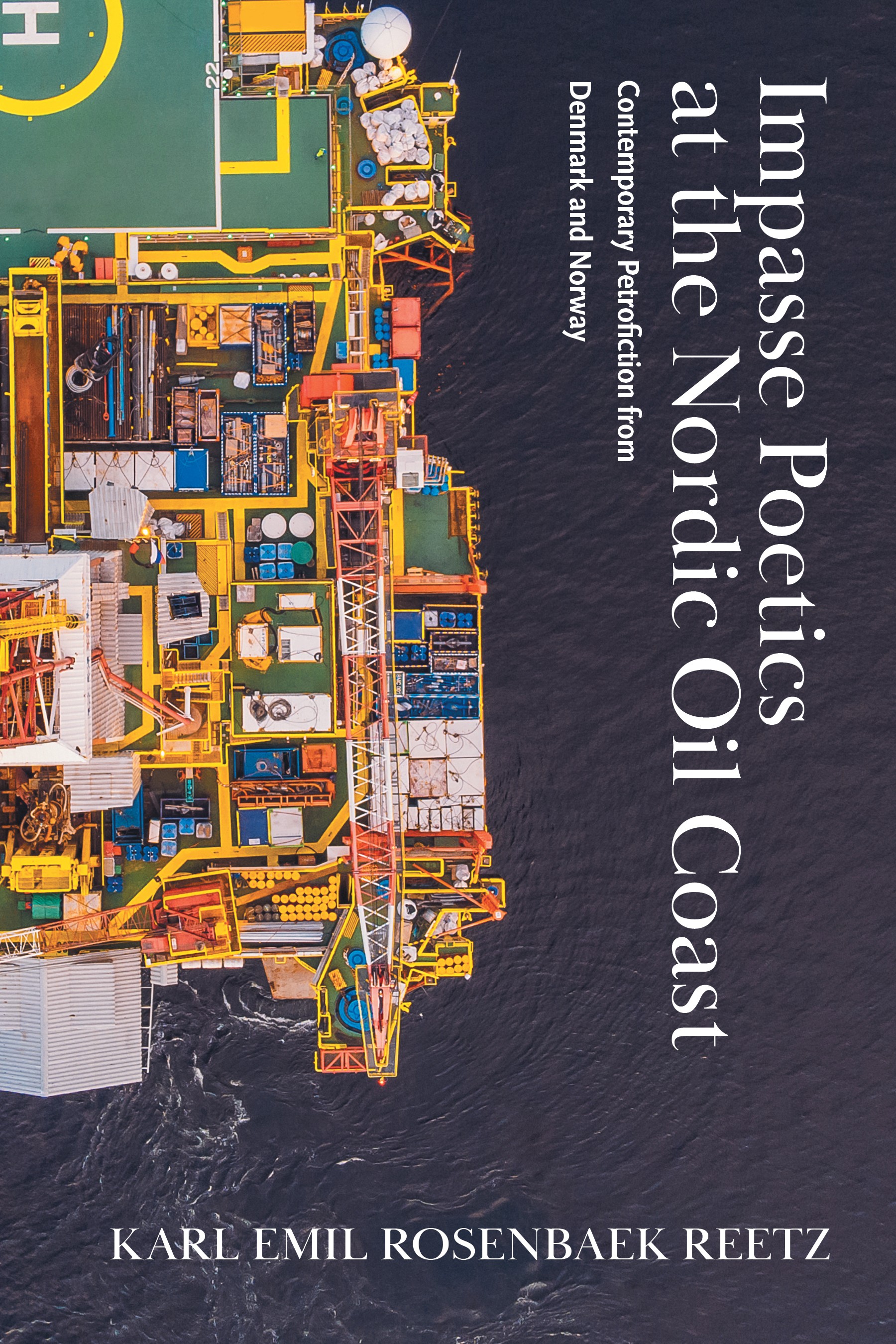
Karl Emil Rosenbaek Reetz
May 26 2026
260pp
11 b/w images
PB 978-1-959000-76-1
$27.99
ePub 978-1-959000-77-8
$27.99
PDF 978-1-959000-78-5
$27.99
Energy and Society series
In Impasse Poetics at the Nordic Oil Coast, Karl Emil Rosenbaek Reetz examines the viscosity of our current bitumen foundation through the representation of oil as more than mere energy in Danish and Norwegian literature and culture from 1992 to today. The 1990s mark the beginning of institutionalized, supranational recognition of climate change with the initiation of the Conference of the Parties (COP, 1995), the UN Earth Summit of 1992, and the Kyoto Agreement of 1997. The last thirty years have seen a huge public and political increase in awareness of climate change, perfectly aligned with a huge increase in the production and consumption of fossil fuels.
In the quest for a greener future, the Nordic countries proclaim to be green frontier nations, yet Denmark and especially Norway also continue to extract natural gas and oil from the seabed of the North Sea and further North. This has led to a peculiar sense of oil impasse present in contemporary fiction from this region. The Nordic green frontier myth, it seems, does not instil the intelligentsia with a sense of accomplishment as much as a sense of despair.
Chapter 1 Introduction: From Peak Oil Frenzy to Tough Oil Impasse
Part I: Oil and Water
Chapter 2 “Below, Everything Is Speculation”: Oceanic Irrealism
Chapter 3 Smilla and the Arctic Petroleumscape: Offshore Nordic Noir
Chapter 4 Roustabout Narratives: North Sea Oil Work and the Peripheralization of Worker Rights
Intermezzo Oil Adventure Inc.: A Story of Concrete and Discursive Ingenuity
Part II: Stuck in a Moment
Chapter 5 Pedal off the Metal: Breaking the Habit of Careless Car Culture
Chapter 6 Future Energyscapes: Nordic After-Oil Imaginings
Conclusion: From Impasse to Dissonance
Appendix: Original Danish and Norwegian Poetry and Prose Selections from the Book
Notes
Karl Emil Rosenbaek Reetz is the Carlsberg Internationalization Postdoc Fellow, Faculty of the Humanities, Department of Nordic Studies and Linguistics at University of Copenhagen. He holds a PhD in comparative literature from the University of Southern Denmark. He is a literary scholar specializing in the interrelations and cultural implications of energy sources, particularly oil. His primary area of interest concerns contemporary literary fiction from the Nordic countries and their intermixture with energy, particularly the heavily fossilized North Sea. Rosenbaek Reetz has published in The Journal of Energy History; Women, Gender & Research; and Ecozon@. He has contributed to The Cambridge Companion to World Gothic Literature, The Sea in Nordic Literature, and the Handbook of Research on Sustainable Lifestyles.
“An important—even necessary—contribution to a growing body of work on petroculture, from a region with a significant, yet understudied, greenhouse gas footprint. This culture of oil extraction in Norway is fascinatingly contradictory, even monstrous.”
—Karen Pinkus, Cornell University professor emerita and author of Subsurface and Fuel: A Speculative Dictionary

Danielle Raad
April 7 2026
298pp
14 b/w images 1 map
PB 978-1-959000-68-6
$26.99
ePub 978-1-959000-69-3
$26.99
PDF 978-1-959000-86-0
$26.99
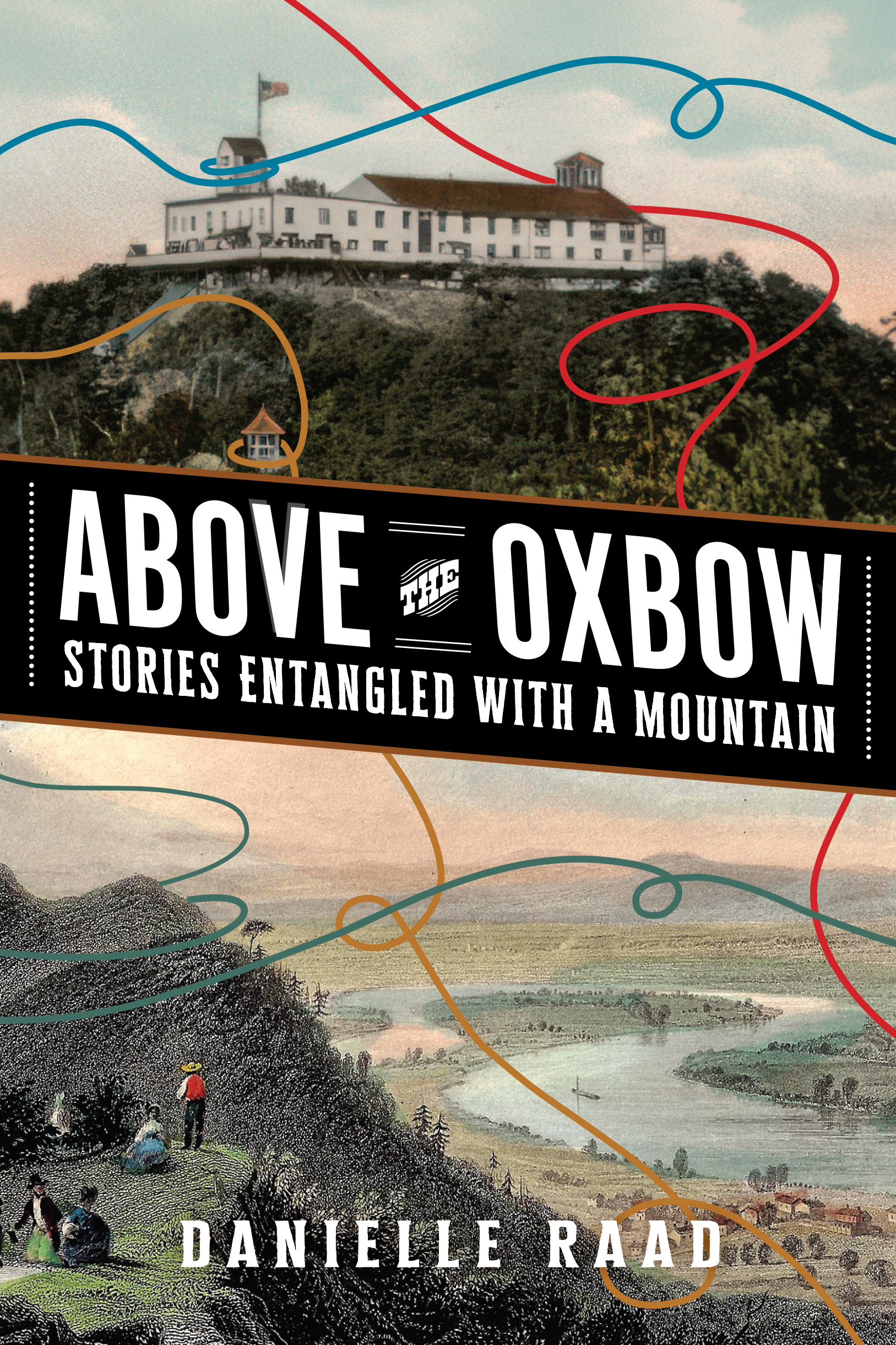
Above the Oxbow is a journey through the tangle of rich narratives surrounding Mount Holyoke, a locally cherished mountain in Western Massachusetts. It explores how visitors have forged connections with the mountain through various activities over the past two centuries. In an accessible blend of storytelling and scholarly analysis, Danielle Raad shows the significance of the landscape, historic sites, and material culture, revealing how cultural perspectives, community activism, collective memory, and personal experiences shape our understanding of a place. Situated at the intersection of public history and environmental history, this ethnography of place also discloses the curious stories of the Summit House, an erstwhile tramway, an airplane crash, and the local fight to conserve Mount Holyoke as a natural space and celebrates its myriad uses today.
List of Figures
Acknowledgments
One The Ascent: An Introduction
Two Narrating the Mountain’s Past
Three “Is Not the Scene Magnificent?”: The View from Mount Holyoke
Four Participation and Parcel: Conserving and Experiencing Nature
Five Ruin to Museum: Historical Engagement at the Summit House
Six Materializing Memory on the Mountain
Coda The Descent
Endnotes
Bibliography
Index
Danielle Raad is assistant professor of history and museum studies at the University of Georgia. She is a public historian, anthropologist, archeologist, and curator with a focus on how people in the present make meaning from the material culture—art, artifacts, and historic sites—of the past.
Raad held positions as the curator and assistant director of the Stanford University Archaeology Collections and as a postdoctoral fellow at Yale University Art Gallery. She has been published in Historical Archaeology, Journal of Cultural Geography, Journal of Archaeological Science, and University Museums and Collections Journal.
“Raad brings new ideas to play in this inquiry, such as a different sense of place created by a mostly natural rather than constructed setting . . . a good addition to a bookshelf containing histories of places and their cultural significances and meanings.”
—Dan Allosso, author of Peppermint Kings: A Rural American History

Catherine Gander and Stefania Heim, editors
April 7 2026
276pp
21 b/w images
6x9in
PB 978-1-959000-66-2
$27.99
ePub 978-1-959000-67-9
$27.99
PDF 978-1-959000-79-2
$27.99
Muriel Rukeyser has many faces: poet, biographer, theorist, playwright, novelist, story-writer, filmmaker, translator, ethnographer, and innovator of social, documentary poetics; feminist, queer, Jewish, single mother, and social justice activist. Yet above all, she was a poet. Threaded through her work, politics, and life was the conviction that poetry is an animating force that connects people and disciplines. Recent years have seen a surge of renewed interest in Rukeyser’s work, bringing her back into public consciousness as a crucial voice on the relations between poetry and social life in America and beyond.
Beyond Ourselves is the first volume of its kind to comprehensively consider the continued urgency and lasting legacy of Rukeyser’s work as a key source and inspiration for poets working today. Volume editors Catherine Gander and Stefania Heim—both scholars and poets—have gathered critical and creative contributions from some of the most innovative, exciting, and socially engaged poets writing today. In lyric and braided essays, scholarly critique, hybrid investigations, documentary collages, and collaborative poetry, these poets dive deeply into Muriel Rukeyser’s work and life to interrogate, explore, and challenge the models she provides for thinking and writing in our own social, political, and poetic moment. These essays address a range of themes, from the transhistorical politics of motherhood and contemporary relational and feminist poetics of war to communal history via documentary film and the possibilities of coalition-building beyond borders. As in Rukeyser’s own work, the forms of these texts animate their inquiries.
Beyond Ourselves is a volume at the intersections of creative and critical thought, reflecting on how Rukeyser’s expansive body of work offers a vision for, as she writes, “a kind of imagination with which to meet the world.”
List of Figures
Acknowledgments
Chapter 1
Introduction
Catherine Gander and Stefania Heim
Chapter 2
Dynamic Equilibrium of Word and World: What Muriel Rukeyser Knows About Poetry
Stefania Heim
Chapter 3
The Breathers
Daniel Borzutzky and Stacy Hardy
Chapter 4
On Milkweed, Fences, and Webs
Susan Briante
Chapter 5
The Open Self: On Muriel Rukeyser’s Poetics
Khadijah Queen
Chapter 6
The Song Starts in My Body: On Muriel Rukeyser and the Forms of Poetry
Philip Metres
Chapter 7
The Synthetic Dreams of Muriel Rukeyser’s A Place to Live
Jena Osman
Chapter 8
Resurrection Music
Erika Meitner
Chapter 9
“The Faces Going Home into War”: The Legacy of Muriel Rukeyser’s Anti-Epic Poetics
Deborah Paredez
Chapter 10
A Boy Among the Ways: A Poem-Essay on Mazes, Motherhood, and Witness
Nomi Stone
Chapter 11
“Something Already in Ourselves, But Not Discovered”: Learning from Muriel Rukeyser in Ireland
Catherine Gander
Afterword: How Else to End It
Solmaz Sharif
Catherine Gander is associate professor of American literature at Maynooth University, Ireland. Her authored books include Muriel Rukeyser and Documentary: The Poetics of Connection and Extending the Document: Contemporary Transmedial Poetics; she is coeditor of the volumes Mixed Messages: American Correspondences in Visual and Verbal Practices and The Edinburgh Companion to Don DeLillo and the Arts. Gander holds a PhD in English from King’s College London.
Stefania Heim is associate professor of English at Western Washington University. She is the author of award-winning poetry collections A Table That Goes On for Miles and Hour Book. Heim has been a recipient of the National Endowment for the Arts translation fellowship and has translated Geometry of Shadows: Giorgio de Chirico’s Italian Poems and de Chirico’s posthumous novel, Mr. Dudron. She is the cofounder of the journal Circumference: Poetry in Translation. She holds an MFA in poetry from Columbia University and a PhD in English from the CUNY Graduate Center.
Contributors: Daniel Borzutzky, Susan Briante, Catherine Gander, Stacy Hardy, Stefania Heim, Erika Meitner, Philip Metres, Jena Osman, Deborah Paredez, Khadijah Queen, Solmaz Sharif, and Nomi Stone.
“A wonderfully tessellated congregation of contemporary takes on one of the most significant polymaths of American modernism. This rousing, open-hearted collection demonstrates how Rukeyser’s impressive oeuvre continues to inspire new instances of critical inquiry and creative expression.”
—Michael Leong, Robert P. Hubbard Assistant Professor of Poetry, Kenyon College

Corinna Cook
February 24 2026
298pp
PB 978-1-959000-70-9
$22.99
ePub 978-1-959000-71-6
$22.99
PDF 978-1-959000-85-3
$22.99
In Place series
A lyrical essay collection exploring reconciliation, colonial legacies, and climate
change in the Raven Biome of the Alaska-Yukon borderlands through research,
personal reflection, and ekphrastic meditations on maps and artifacts; Corinna Cook
wrestles with difficult pasts while facing an uncertain ecological future.
The Photographer (a prelude)
Part One
The Slower Questions
The Black Spruce
Distance Over Light
Sister Essays: The Young and the Old
The Young
The Old
Swan Signs
Part Two
The Story of the Day
Atlin
Permafrost Is an Archive
YFN 101: What We Give to One Another
Chooutla: Truth and Reconciliation
Government Documents: A Lineage of Blades
Part Three
The Trails are Always There
Under the Bridge at Johnson’s Crossing
The Kohklux Map
The Ash and the Literature: A Diptych
A Triangle of Sun
Salsa
The End
Acknowledgments
Notes
Corinna Cook is the author of the essay collection Leavetakings. Her writing has been published in Alaska Quarterly Review, Assay: A Journal of Nonfiction Studies, Terrain.org, and Pedagogy and American Literary Studies. Cook, a former Fulbright Fellow and an Alaska Literary Award recipient, is a graduate of Pomona College and the University of Alaska Fairbanks and holds a PhD in English and creative writing from the University of Missouri. She serves as core nonfiction faculty at Alaska Pacific University’s low-residency MFA program in creative writing and lives in Juneau, Alaska.
"[Cook] invites readers to join her in her process of asking questions about culture, art, Indigenous learning and northern science. The reader is challenged to make meaning right along with her. Permafrost is an Archive is, ultimately, a book of questioning and imagining, rich in metaphor and lyricism. Its many references to other texts and to cultural theory contribute significantly to understanding the North. — its past, present and future. Notes at the end add more context and sources for consideration."
—Nancy Lord, Anchorage Daily New
“This volume is a spiritual cartography, a deep map of aching, of longing. Cook’s essays chart our small human awareness as one part of geologic time, taking in spiritual, scientific, and metaphysical ways of knowing. She draws from archives and from culture-bearers. Her finely crafted essays become forms of reconciliation storytelling. Cook asserts that a shared future requires everyone to enter into right relationships with divisive histories, and then to pitch in to help carry the difficult past (and present).”
—Peggy Shumaker, author of Cairn and former poet laureate of Alaska
“This book follows a lineage of Alaska writers reckoning with belonging to a vast and wild place but Cook forges new ground in her unique combination of rigorous scholarship and thinking, her wry original voice, and her poetic leaps and stunning imagery.”
—Anne Haven McDonnell, author of Living with Wolves and Breath on a Coal

Rachel Weaver
February 10 2026
324pp
PB 978-1-959000-74-7
$21.99
ePub 978-1-959000-75-4
$21.99
PDF 978-1-959000-84-6
$21.99
Connective Tissue Series
A Memoir
Days before starting her MFA grad program, Rachel Weaver woke up dizzy and unable to function – a condition that persisted daily for twenty years and stumped over thirty doctors before she received a diagnosis. What begins as a mysterious symptom quickly transforms into a lengthy odyssey through a broken medical system, where she encounters dismissive doctors, misdiagnoses, and treatments that often worsen her condition.
Hear Maureen Corgan's review of Dizzy on NPR's Fresh Air from February 9, 2026!
Rachel Weaver is a writer of fiction and nonfiction. Her debut novel Point of Direction was chosen by the ABA in spring 2014 as a Top Ten Debut and awarded the 2015 Willa Cather Award for Contemporary Fiction. Her second novel, The Last Run, is forthcoming. Prior to earning her MFA in writing and poetics from Naropa University, Weaver worked for the Forest Service in Alaska studying bears, raptors, and songbirds. She is on faculty at Wilkes University’s low-residency MFA program and at Lighthouse Writers Workshop. She lives in Colorado.
“An arresting new memoir….”
—Maureen Corrigan, NPR’s Fresh Air
“Dizzy is a testament to the power of hope. Weaver’s courage and strength are so inspiring they encourage the same in the reader. If all of that isn’t enough, the beauty and agility of the prose may make you regret reaching the last page.”
—Beverly Donofrio, author of Riding in Cars with Boys
“Dizzy is a memoir of the highest quality. It brings beauty and urgency to the overall necessary conversation about the U.S. medical system, while also functioning as a beautifully written literary memoir. This high-stakes story is spiked with moments of uncommon wisdom, poignancy, and deep emotion. I was moved to tears many times.”
—Erika Krouse, author of Tell Me Everything: The Story of a Private Investigation
"Dizzy evokes what life is in wreckage of chronic illness, with suffering compounded by abandonment by specialist medicine that has no means to care for those it cannot treat. Ill people will find a lifeline of companionship in Dizzy; healthcare professionals will face a challenge. Rachel Weaver never softens her story, and that gives it truth as a testimonial to the will to live fully in whatever conditions life throws at you."
—Arthur W. Frank, author of At the Will of the Body and The Wounded Storyteller: Body, Illness, and Ethics

Helen Kapstein
Energy and Society Series
November 2025
182pp
PB 978-1-959000-56-3
$23.99
eBook 978-1-959000-57-0
$23.99
Oil and the Shaping of Nigerian Aesthetics
2026 PROSE Award Finalist, Humanities: Literature
Petroforms contributes a much-needed theory of form and genre to the cutting-edge field of petrocriticism, itself an offshoot of developments in postcolonial ecocriticism. Studies of resource fiction and inquiries in the energy humanities have recently taken their rightful place as necessary reflections on the role of the literary imagination in intervening in the Anthropocene as we find ourselves precariously placed in the face of a fossil fuel crisis, climate change, and mass extinctions.
With Petroforms, Helen Kapstein undertakes close readings of a range of Nigerian aesthetic forms: short stories, romance novels, documentary film, the “Nollywood” film industry, fine art sculpture, and poetry. She uses these forms to argue that the demands of paying attention to petroleum extraction, production, consumption, and distribution in the creation of resource fictions must necessarily alter and affect conventional forms and structures. What results is a new set of genre-bending forms, like documentary film that we can read as horror, in response to the forceful and fluid demands of the petroleum industry and its master narrative.
Nigeria is one of the world’s largest oil-producing nations, in which that production is concentrated in the Niger Delta, resulting in a local environment that has been steadily degraded by oil spills, flares, pollution, and contamination, and a local culture shaped by false scarcity in a space of abundance, murderous politics, and escalating violence. At the same time as the Niger Delta grounds Kapstein’s argument in its own political realities and cultural responses, Nigeria’s participation in a global economy of petrodependency allows her theory of petroforms to be extended and applied more generally.
What Peter Hitchcock calls “oil’s generative law” is that it is “everywhere and obvious, it must be opaque or otherwise fantastic.” He means the coexistence of oil’s taken-for-granted qualities is something constitutive of every level of everyday life and its spectacular displays—gushers, spills, explosions. Oil’s nature, the fact that it is everywhere, unctuously oozing into every corner of everyday life, means that it constantly spills over out of our existing forms, genres, and systems, demanding accommodation. To try to contain it, we create new forms. Thus, a petroform is simultaneously reactionary (a necessary response to oil’s pressures, a by-product of the commodity itself) and resistant (an attempt at containment, at generating a retort to the very thing that shapes it). Each form figures oil and then configures and reconfigures itself in reaction to it.
List of Illustrations
Acknowledgments
Introduction
1. Crude Fictions
2. Petrofeminism
3. Petroart
4. Petrohorror
5. Petrocinema
6. Petrodrama
Conclusion
Works Cited
Helen Kapstein is professor of English at John Jay College, The City University of New York. She is the author of Postcolonial Nations, Islands, and Tourism: Reading Real and Imagined Spaces (Rowman & Littlefield, 2017). Her work has appeared in Postcolonial Text, ISLE: Interdisciplinary Studies in Literature and Environment, and Safundi: The Journal of South African and American Studies. She holds a PhD in English and comparative literature from Columbia University.
“Petroforms is a remarkable study of the manifold genres produced not merely by what we in the energy humanities term petromodernity; it attends to those ‘crude’ genres that arise organically from the extraction, refinement and distribution of petroleum within global markets. The central argument—that oil engenders its own forms, because it exceeds the ontological containers available through conventional literary-critical protocols—is one that has often been made in the context of reader reception but not necessarily in terms of artistic production.”
—Stacey Balkan, associate professor of Environmental Humanities at Florida Atlantic University, is the author of Rogues in the Postcolony: Narrating Extraction and Itinerancy in India and coauthor of Oil Fictions: World Literature and Our Contemporary Petrosphere
“Responding to the sense that oil encounters are difficult to capture in literature, Petroforms demonstrates how literary, filmic, sculptural, and pop-cultural forms from Nigeria stretch and change to represent oil. Helen Kapstein locates this formal stretching not only in documentaries and short stories that portray devastation in the Niger Delta but also in the other face of Nigerian oil: the romance––even the eroticism––of petromodernity for more privileged subjects in Lagos and beyond. Recognizing that petromodernity is classed and regionalized but also gendered, Kapstein foregrounds the ambivalent participation of Nigerian women as both protestors of oil extractivism and beneficiaries of petromodernity. Taking readers from short story to romance novel, sculpture, drama, and even sitcom, Petroforms illustrates the wide-ranging formal innovation prompted by Nigeria’s ongoing enmeshment with oil.”
—B. Jamieson Stanley, associate professor of English at the University of Delaware and author of Precarious Eating: Narrating Environmental Harm in the Global South
“[A]n urgent intervention into the cultural politics of energy, showing how Nigerian artists make visible and reckon with the costs, consequences, and contradictionsof life in oil zones.”
—Imre Szeman, coeditor of Power Shift: Keywords for a New Politics of Energy

Henry T. Ireys and Priscilla M. Ireys
October 2025
302pp
PB 978-1-959000-52-5
$22.99
eBook 978-1-959000-53-2
$22.99
When a mid-life couple finds an old farm that promises refuge from hectic lives and encroaching illness, their world opens up to unexpected adventures: breeding heritage goats, hogs, and cattle; managing a half-dozen large guardian dogs; dealing with barn fires, rapacious logging, and the death of treasured animals. The farm and the surrounding forest also lead to surprising moments of beauty—from sublime sunsets and powerful connections with animals to an outpouring of help from neighbors.
Written separately by wife and husband with distinctly separate voices, the book’s essays illustrate different perspectives of life on a farm dedicated to the compassionate treatment of livestock and a deep appreciation of nature’s complexities. Priscilla embraces the intensity of loving animals; Henry explores the mysteries of living in a beautiful place. And, in telling their tales, the authors provide a glimpse into their own marriage—as complicated, improbable, and enduring as life itself. The Keep—the term for “the strongest or central tower of a castle, acting as a final refuge”—is a love letter to an unexpected place and adopted lifestyle.
Preface
Introduction
A Place to Love
Letter to Mom
Mud Between My Toes
Decisions
Tiny Tim
All that the Land Contains
Sid’s Twins
Mindful Meddling
The Dilemma of Loving Hogs
Surprises
Of These Mountains
Early Years
Hercules
Morels on the Mountain
Arnost and the Eagle
“Say What? No Way!”
Hog Gossip
The Duckness
Sex in the Pasture
Hat of Shame
From Power Take Off to Artificial Intelligence
Hard Times
Pedro
Death on the Farm
January 11, The Fire
January 12, The Fire
The Forgiving Land
The Old Oak
Gifts
Winter’s Wood
Unexpected Outcomes
Lucy
Izzy’s Bridge
Home Before Breakfast
Quiet Times
The Pond
On a Summer Breeze
A Fisher’s Solitude
Lovely October
Epilogues
The Near Final
Letter for Alice
Acknowledgements
Henry T. Ireys has a forty-year career as a health policy researcher working for Vanderbilt University, Albert Einstein College of Medicine, and Johns Hopkins School of Public Health. He later became a senior researcher for Mathematica Policy Research in Washington, DC. He published numerous papers in health policy journals and, since his retirement, has been writing for The Hampshire Review about farming and the natural world. He holds a PhD from Case Western Reserve University. Priscilla M. Ireys attended the Pittsburg Institute of Art and FIT in New York. She designed and made stage clothes for country music stars such as Loretta Lynn. Under her own label, she sold expensive handmade scarves to Norstrom’s, Henri Bendel, and many high-end boutiques. She left the fashion industry after thirty years to focus on farming and the conservation of heritage breeds. She has written numerous stories for Small Farmer’s Journal. Together, Henry and Priscilla have lived on a farm in Hampshire County since 2001, tending a core herd of fifty Spanish and Savanna goats. The Keep is their first book together.
“The Keep is honest and compelling storytelling told through the contrasting and complementarity of Priscilla’s and Henry’s individual voices. Priscilla has an intimate view of animal husbandry, while Henry is more prone to philosophizing; yet both are deeply engaged with the land, and both are thoughtful and lively storytellers. Neither shies away from complexities and challenges. In her accounts of raising goats and hogs, Priscilla captures both the necessary brutality and profound tenderness required for successful animal husbandry.”
—Arwen Donahue is the author of the graphic memoir Landings: A Crooked Creek Farm Year (Hub City, 2022) and the oral history collection This is Home Now: Kentucky’s Holocaust Survivors Speak (University Press of Kentucky, 2022). She lives on a farm in Kentucky.
“A delightful chronicle of a moment in time on a parcel in Appalachia. I enjoyed reading about this couple, their purchase of this land, the way they cared for it, raised a family on it, the hard work of raising goats, other interactions with the natural world and with their neighbors.”
—Gretchen Legler is the author of Woodsqueer: Crafting a Sustainable Rural Life (Trinity University Press, 2022); On the Ice: An Intimate Portrait of Life at McMurdo Station, Antarctica (Milkweed Editions, 2005); and All the Powerful Invisible Things: A Sportswoman’s Notebook (Milkweed Editions, 1995). She is professor of creative writing at the University of Maine Farmington. Legler holds a PhD in English and feminist studies and a master’s of divinity from Harvard Divinity School.
You are being redirected to The Chicago Distribution Center.
West Virginia University Press is not responsible for content on external sites.